
A clogged condensate drain line is the most common reason an air conditioner leaks indoors or suddenly shuts off. If you see standing water in the drip pan or water pooling near your indoor unit, cut power to the system at the thermostat and the service switch right away. Once the power is off, check the drain pan and cleanout, then test the line with a small amount of water to confirm the blockage before you try to clear it.
TL;DR:
- Most clogs are caused by algae, dust, and rust flakes buildup inside the drain line, which can often be cleared with physical methods.
- Using a wet/dry vacuum and gentle wiring or a plumber’s snake helps physically remove soft debris more reliably than chemical treatments.
- Preventative maintenance includes annual line cleaning, vinegar flushes every few months, and inspecting the discharge point during cooling season.
- Never work around electrical components with water present or use chemicals like bleach, and seek professional help if heavy mold or persistent clogs occur.
- Costs vary, but a professional service typically includes line clearing, pump or float switch checks, and potential repairs, with upfront estimates recommended.
Table of Contents
- How to tell if your condensate drain line is clogged
- Step-by-step DIY process to clear a clogged condensate drain line
- What to avoid: safety warnings and common DIY mistakes
- Preventing future clogs: maintenance checklist and useful upgrades
- When to call a pro and what to expect
- Why trust MDTECH with your condensate drain
- Quick homeowner checklist to try now
- Book MDTECH for on-site drain repairs
- FAQ
- Sources
How to tell if your condensate drain line is clogged
A few signs point clearly to a clogged condensate drain line rather than another HVAC problem. Water stains spreading across a ceiling or around a closet floor, a musty smell near the indoor unit, and an AC that doesn’t turn on all suggest the drain is backed up. Many modern systems include a safety float switch that shuts the unit off automatically once water rises in the pan, so a dead system is often the equipment protecting itself rather than a sign of major mechanical failure.
Start your inspection by locating the indoor air handler, usually in a closet, attic, or utility space, and finding the drain pan beneath the evaporator coil. Look for a cleanout port, often a capped T-shaped fitting, along the drain line near the unit.
- Check the pan for standing water or visible debris.
- Pour a small cup of water into the pan and watch where it drains.
- Walk outside to the discharge point and confirm water is actually exiting the line.
If water sits in the pan without draining, or nothing comes out of the exterior discharge, the line is blocked somewhere between the pan and the outside termination.
Step-by-step DIY process to clear a clogged condensate drain line
Before touching anything, turn off the AC at the thermostat and flip the service disconnect switch near the outdoor unit or air handler. Keep electrical panels and outlets dry throughout the process, and put on gloves and a mask if you notice mold around the pan or coil.
Once power is off, locate both ends of the line: the cleanout port near the indoor unit and the PVC pipe that terminates outside, often near the foundation. Clear any visible debris sitting in the pan itself before working on the line, since loose dirt there can wash back into the drain.
- Attach a wet/dry vacuum to the cleanout port or the outside discharge pipe and run it for a minute or two to pull out sludge, algae, or rust flakes.
- If suction alone doesn’t clear it, gently feed a stiff, flexible wire or a short plumber’s snake a short distance into the line to break up soft buildup, never forcing it against resistance.
- Flush the line with a cup of water, followed if needed by a cup of distilled white vinegar to loosen remaining residue, then rinse again with plain water.
- Turn the system back on and run a short cooling cycle to confirm water flows freely again.
Industry guidance from UC Davis HVAC testing resources notes that physical removal methods like vacuuming, wiring, or manual pumping clear clogs more reliably than chemical treatments alone, since most blockages are soft buildup rather than solid debris. The same guidance points out that reversing suction and pressure, rather than only pulling in one direction, often dislodges stubborn buildup that won’t move otherwise.
Pro Tip: Alternate a few seconds of vacuum suction with a light push from a hand pump at the opposite end. That back-and-forth pressure change often breaks loose buildup that a single-direction vacuum pass leaves behind.
After clearing the line, watch for water exiting steadily at the outdoor termination, confirm the pan stays dry during a full cooling cycle, and check that any secondary or overflow pan is also empty.
What to avoid: safety warnings and common DIY mistakes
A few habits turn a simple drain clog into a bigger problem. Never work around the air handler’s electrical components while water is present, and skip the DIY attempt entirely if you can’t safely reach or isolate the power source.
- Don’t pour bleach, drain cleaner, or mixed chemicals down the line since they rarely clear solid buildup and can damage PVC fittings.
- Avoid compressed air or nitrogen unless you have the correct fittings and training, since excess pressure can push water into ceilings or crack joints.
- Skip DIY cleanup entirely if you see heavy mold growth, and bring in a professional instead.
EPA guidance on mold remediation recommends wearing an N95 respirator, gloves, and goggles when cleaning mold-affected areas, since dead mold spores can still trigger allergic reactions even after cleaning.
Preventing future clogs: maintenance checklist and useful upgrades
Most condensate clogs come from the same culprits: algae, dust, and rust flakes accumulating slowly inside the line rather than sudden solid blockages. A short annual routine keeps the drain flowing and protects against mold.
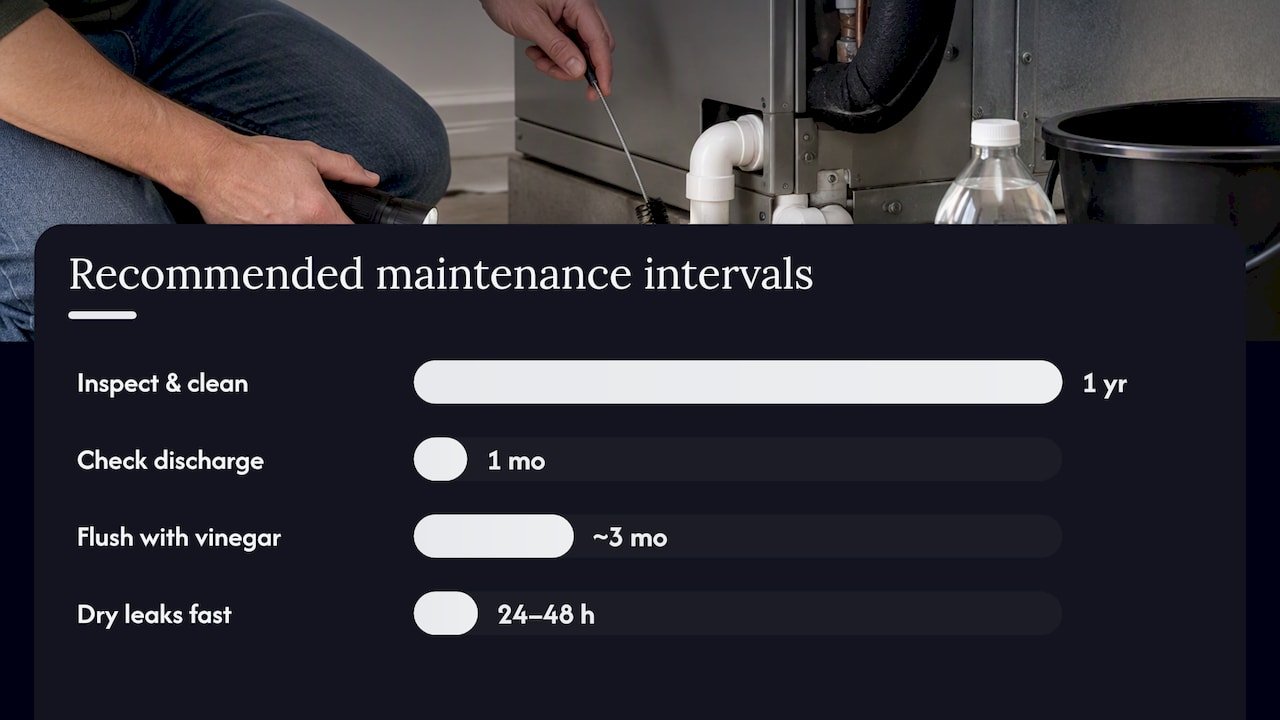
- Inspect and clean the drain line, trap, and pan once a year, and test that the float switch actually shuts the system off when triggered, following the ENERGY STAR maintenance checklist.
- During cooling season, glance at the exterior discharge point monthly to confirm water is flowing and nothing is blocking the opening.
- Flush the line with a cup of diluted vinegar every few months to slow algae growth without overusing chemicals.
- Add a float switch, a condensate pump, or an accessible cleanout fitting if your system lacks one, making future maintenance far easier.
Pro Tip: If your attic unit lacks a secondary drain pan with its own shutoff switch, that single upgrade can prevent a slow clog from ever becoming ceiling damage.
Keeping indoor relative humidity between 30% and 50%, and drying any water leak within 24 to 48 hours, meaningfully lowers mold risk according to EPA moisture-control guidance.
When to call a pro and what to expect
Some situations call for a technician rather than another DIY attempt. Watch for a secondary pan that keeps filling with water, clogs that return within weeks of clearing them, visible mold on ceilings or walls, or piping you simply can’t reach.
- A technician typically performs a full line blow-out or snake, checks the condensate pump or float switch, and repairs or replaces a damaged pan.
- Expect the visit to include a broader check of related HVAC faults, since a clog sometimes signals a deeper drainage or slope problem.
- Ask upfront what the service call covers, whether a float switch or preventive check is included, and be wary of unusually low advertised prices that often lead to upsells once a technician arrives.
ACCA’s condensate removal guidance treats inspecting, cleaning, and verifying condensate flow as a standard annual maintenance item, not an optional extra.
Why trust MDTECH with your condensate drain
We have technicians who handle HVAC repairs, condensate pump service, and drain line clearing as part of regular service calls. On a visit, we diagnose the blockage on-site, clear it safely, test the float switch and pump, and walk you through steps to prevent it from recurring. For more background, our guide on what a condensate pump does and our HVAC repair page cover the related equipment in more detail. The same careful approach to clear discharge points applies outside the HVAC world too, as this sauna floor drain guide shows for a different kind of drainage system entirely.

Quick homeowner checklist to try now
Here’s the short version: power off at the thermostat and service switch, check the pan, vacuum the cleanout, flush and retest, and call a pro the moment you see mold, repeat clogs, or standing water you can’t clear yourself. Keep gloves and a mask handy, and never work near water with the power still on.
— MDTECH
Book MDTECH for on-site drain repairs
We book HVAC and condensate drain visits online, with technicians who diagnose the clog, clear it, and check the pump or float switch before leaving.

A typical visit covers diagnosis, unclogging or pump repair, a flow check, and an estimate for any parts or further repairs needed.
- We confirm the actual blockage point before recommending any repair.
- We check the float switch and pump operation as part of the same visit.
- We provide a clear estimate before starting parts replacement.
Request a visit through our HVAC repair services page and see what a typical appointment involves on our HVAC repair process guide.
FAQ
Will the AC shut off if the drain is clogged?
Yes, many systems include a safety float switch that cuts power to the unit once water rises in the pan, preventing overflow damage. If your AC won’t turn on, check this switch before assuming a bigger mechanical issue.
Should I pour vinegar down my condensate drain line?
A cup of diluted white vinegar flushed through the line every few months can slow algae growth, but it rarely clears an existing solid clog on its own. Physical removal methods like a wet/dry vacuum work better for an active blockage, according to UC Davis HVAC guidance.
How much does it cost to fix a clogged condensate drain line?
Costs depend on access, parts needed, and whether a pump or float switch requires replacement, so pricing varies by region and job. We provide a clear estimate after on-site diagnosis through our HVAC repair services.
What happens when a condensate drain line is clogged?
Water backs up into the drip pan and can overflow into ceilings, walls, or flooring, or trigger a float switch that shuts the AC off entirely. Left unaddressed, standing moisture also raises the risk of mold growth near the indoor unit.
Sources
- ENERGY STAR – Heating & cooling maintenance checklist
- WCEC / UC Davis HVAC air trap and condensate testing guidance
- ACCA standard/guidance on condensate removal
- A Brief Guide to Mold, Moisture, and Your Home (EPA)