
If your washer smells like mildew, scrub the door gasket and detergent dispenser by hand, then run a hot cleaning cycle with bleach or a manufacturer-approved cleaner. Leave the door and dispenser drawer open between loads so the drum can air out completely. That combination clears most mildew smells within a day. If the odor still lingers, especially anything closer to sewage, the cause is likely mechanical or in the drain line, and it’s time for a technician to look at it.
TL;DR:
- Regular scrubbing of the gasket folds and detergent dispenser, combined with hot bleach cycles, can eliminate most mildew smells within a day, especially in front-load washers.
- Persistent odors, especially sewage-like smells, often indicate plumbing issues such as drain line problems or a failing drain pump, not just accumulated biofilm.
- Hard water accelerates residue buildup and biofilm growth, requiring more frequent cleaning and possibly water softening to prevent recurring odors.
- If odors persist after thorough cleaning and hot cycles, a professional inspection is recommended to diagnose mechanical issues like trapped water, mold growth, or drain faults.
- Maintaining open doors and dispenser drawers, limiting softener use, and regular monthly cleaning help prevent mildew smells from returning.
Table of Contents
- Why Does My Washer Smell Like Mildew?
- The Full Cleaning Routine: From Scrubbing to the Hot Cycle
- Cleaning the Specific Parts Mildew Loves Most
- When the Smell Won’t Go Away
- Stopping Mildew Odor Before It Starts Again
- When Cleaning Isn’t Enough: Signs You Need a Technician
- How to Tell Mildew Smell From Mold, Mustiness, or Sewer Gas
- What Actually Works to Kill Washer Mildew Smell
- Does Hard Water Make Washer Odor Worse?
- Editor Perspective: DIY Limits and When a Repair Visit Makes Sense
- Book MDTECH for Professional Washer Diagnosis and Repairs
- Sources
Why Does My Washer Smell Like Mildew?
A mildew smell almost always traces back to biofilm, a slimy layer of bacteria and fungus that grows wherever water and residue sit undisturbed. In a washing machine, that means the folds of the rubber door gasket, the inside of the detergent dispenser housing, and the drain pump filter. These spots stay damp between cycles and rarely get touched by the wash itself.
Front-load machines are more prone to this problem by design. The rubber door gasket that seals a front-load washer creates folds that trap water and never fully drain, which gives mildew a head start that top-loaders don’t have. Add fabric softener into the mix, and you get a waxy film that feeds biofilm growth, along with over-dosed detergent that leaves suds behind instead of rinsing clean.
Several everyday habits and mechanical issues drive the smell:
- Leaving wet clothes sitting in the drum for hours after a cycle finishes
- Using too much detergent or liquid fabric softener, especially in high-efficiency machines
- Poor laundry room ventilation that keeps humidity trapped near the machine
- A clogged or dirty drain pump filter that holds standing water
- Drain hose or standpipe problems that let sewer gas creep back into the drum
That last point matters because it changes your whole approach. A musty, damp smell usually means mildew you can clean away. A rotten-egg or sewage smell points toward the plumbing, not the washer itself, and no amount of scrubbing fixes that.
The Full Cleaning Routine: From Scrubbing to the Hot Cycle
Set aside about 45 minutes for this. Rushing it is the number one reason people re-clean the same machine two weeks later.
Before you start, gather what you need: rubber gloves, an old toothbrush or small scrub brush, microfiber cloths, mild dish detergent, and either chlorine bleach or a manufacturer-approved washer cleaner. Unplug the machine if you’re working near the dispenser drawer or filter access panel, and clear anything sitting on top of the washer so you have room to work.
- Pull the dispenser drawer. Most slide out with a firm tug or a small release tab underneath. Soak it in warm water with a bit of dish soap for ten minutes, then scrub every compartment with your brush.
- Attack the gasket folds. Pull back each fold of the rubber seal, you’ll likely find a gray, slimy buildup underneath. Scrub with the toothbrush and a damp cloth until the rubber looks clean, then wipe dry.
- Clear visible lint and debris from anywhere you can reach without disassembling parts, including the rim under the gasket and the edges of the drum opening.
- Run a hot “clean washer” cycle. Use chlorine bleach in the bleach dispenser or a manufacturer-approved cleaning tablet, never both, and never mixed with vinegar. This flushes debris the manual scrubbing loosened but couldn’t fully remove.
- Follow with a rinse cycle if your machine doesn’t automatically add one, to clear any lingering bleach smell.
- Deodorize, if your manual allows it, by running a short cycle with a cup of baking soda in the drum. Skip this step if your owner’s manual specifically warns against it.
- Leave everything open to dry. Door, dispenser drawer, and any access panels stay open until the drum and rubber gasket are completely dry to the touch.
Tub-clean cycles alone often reach only a fraction of the interior surfaces where biofilm actually lives, which is why the manual scrubbing step isn’t optional if you want the smell gone for good.
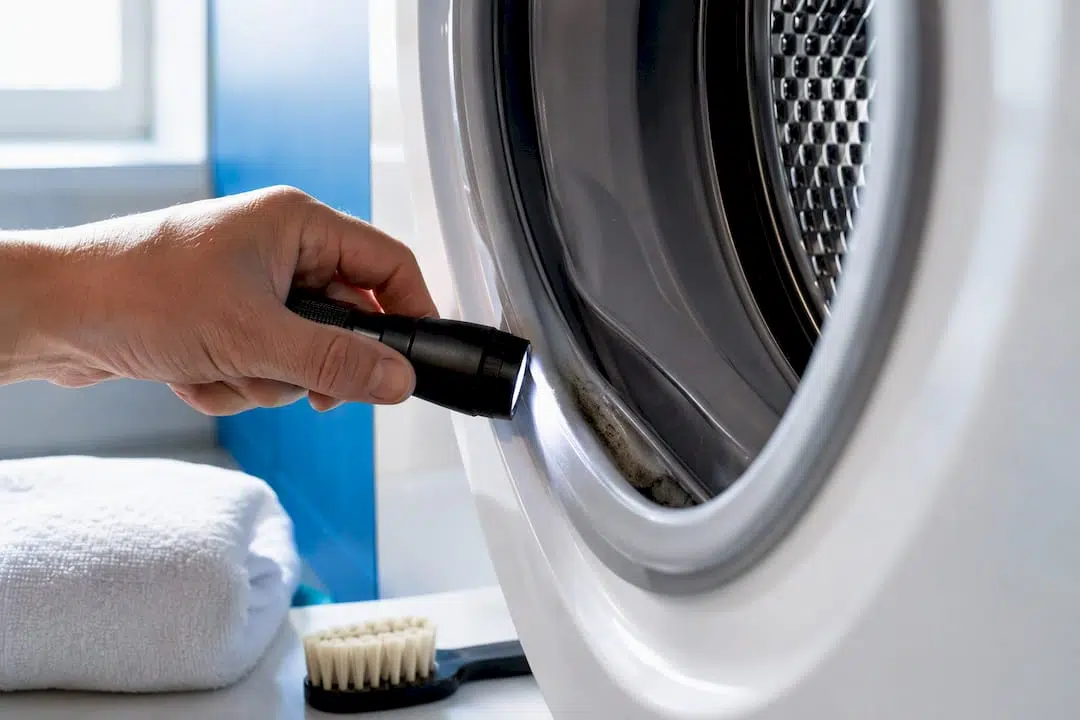
Pro Tip: Keep a small flashlight or your phone’s light handy while scrubbing the gasket. Biofilm hides in the deepest part of each fold, and you’ll miss half of it working in dim laundry room lighting.
Cleaning the Specific Parts Mildew Loves Most
Four spots do the most damage when neglected, and each one needs a slightly different approach.
- Door gasket: Peel back every fold and check the rubber for tears, permanent black staining, or a texture that feels sticky no matter how much you scrub. A gasket in that condition needs replacing rather than cleaning, since damaged rubber holds moisture no matter what you do to it.
- Dispenser drawer and tubes: After scrubbing the drawer itself, don’t skip the narrow tubes feeding it. A pipe cleaner or thin bottle brush clears buildup inside those channels that a sponge can’t reach. Let every piece air-dry fully before sliding the drawer back in.
- Drain pump filter: Check your owner’s manual for the access panel location, usually a small door at the front base of the machine. Place a towel or shallow tray underneath first; residual water will drain out the moment you open it. Remove trapped lint, coins, and debris, then wipe the housing clean before closing it back up.
- Drain hose and standpipe: Look for kinks in the hose and confirm it isn’t sitting in standing water at the connection point. A hose installed incorrectly can siphon water back into the drum between cycles, which recreates the smell no matter how often you clean.
If you’re dealing with a Bosch or similar front-load model, filter access and gasket removal steps vary enough between brands that it’s worth checking model-specific instructions before forcing a panel open.
When the Smell Won’t Go Away
If you’ve done a full manual clean and run the hot cycle and the smell is still there, don’t just repeat the process. Figure out what kind of smell you’re actually dealing with first.
- Musty or damp smell that persists: Likely leftover biofilm you missed, often in the drain hose itself rather than the drum.
- Rotten egg or sewage smell: Almost always a plumbing issue, specifically a standpipe or trap problem letting sewer gas travel back up the drain line.
- Sharp chemical smell: Usually leftover bleach or cleaner residue that needs another rinse cycle, not a sign of a bigger problem.
Check the drain hose routing for kinks, confirm the standpipe height matches your washer’s specifications, and look for water sitting in the hose that shouldn’t be there. If the smell returns within days of cleaning, a failing drain pump that leaves standing water behind each cycle is a common culprit, and you’ll often notice slower draining or unusual noise alongside the odor.
When you’re not confident diagnosing which one you’re dealing with, a technician visit costs less than a wrong guess that damages a part or voids your warranty.
Stopping Mildew Odor Before It Starts Again
A washer that’s been properly cleaned once still needs upkeep, or the smell comes right back within a few weeks.
Manufacturers and cleaning experts generally recommend a deep clean roughly every 30 cycles, which for most households works out to about once a month. Build a few small habits into your laundry routine and you’ll rarely need a full scrub-down again:
- Wipe the gasket dry with a cloth after the last load of the day
- Leave the door and dispenser drawer cracked open between loads
- Measure detergent carefully. HE machines need noticeably less than standard detergent caps suggest
- Skip or limit liquid fabric softener, since residue from softener is one of the most common contributors to recurring odor
- Run an empty hot cycle with bleach or an approved cleaner monthly
- Improve airflow around the machine, especially in closets or tight laundry nooks
Our washing machine care guide covers this monthly rhythm in more detail if you want a printable version for the laundry room. A little humidity control goes further than most people expect, too. Cracking a window or running a small fan near the machine for an hour after washing cuts drying time on the gasket significantly.
When Cleaning Isn’t Enough: Signs You Need a Technician
Some odors are mechanical, not something a brush and bleach cycle will ever fix. Call a professional if you notice any of the following:
- The smell returns within a week or two despite a full, proper cleaning
- You smell sewage or rotten eggs rather than a musty, damp odor
- The machine isn’t draining fully between cycles
- You can see mold growth inside the tub or behind the gasket that won’t come off with scrubbing
- Standing water shows up under or near the machine after a cycle
A licensed technician checks things a homeowner usually can’t from the outside: the drain plumbing and standpipe height, the condition of the pump and hoses, whether the gasket needs replacing rather than cleaning, and whether mold has worked its way into the tub or dispenser housing itself. Catching a drain pump issue early usually means a simple part swap instead of a bigger repair down the line. MDTECH sends licensed technicians for exactly this kind of diagnostic visit, with a clear recommendation on repair versus replacement once they’ve actually seen the machine.
How to Tell Mildew Smell From Mold, Mustiness, or Sewer Gas
Not every bad smell coming from your washer is the same problem, and lumping them together leads to the wrong fix.
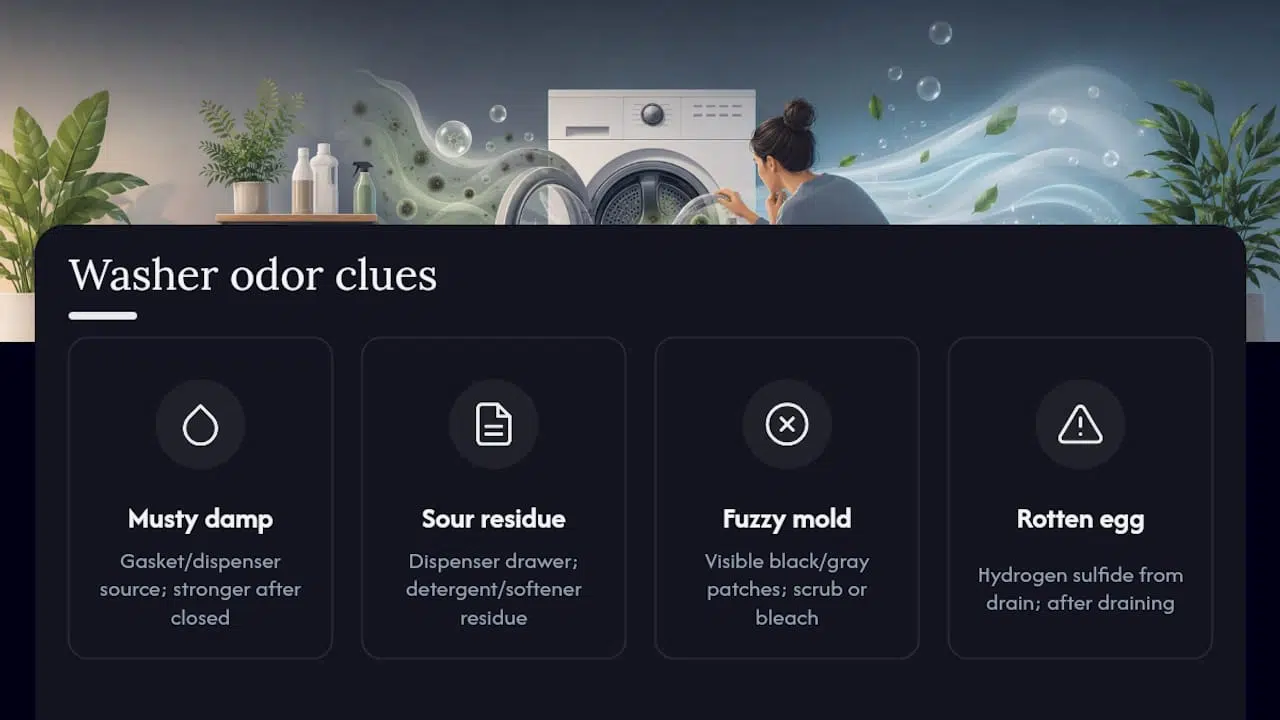
A musty, damp smell, the kind you’d notice in a basement, usually points to mildew sitting in the gasket folds or dispenser housing. It’s often faint right after a cycle and stronger after the door’s been closed for a few hours.
A sour or vinegar-like smell frequently means detergent or softener residue rather than active mold growth. It tends to show up strongest in the dispenser drawer itself rather than the drum.
Visible black or gray fuzzy patches in the gasket folds confirm active mold growth rather than just bacterial film, and these spots often need more aggressive scrubbing or a bleach solution applied directly rather than relying on the wash cycle alone.
A rotten egg or sewage smell is in a different category entirely. That’s hydrogen sulfide gas from the drain system, not anything living in your washer. If you smell this specifically after the drum drains rather than during the wash itself, it’s a strong signal the standpipe or trap needs attention, not the machine.
When you’re not sure which you’re smelling, run one clean cycle and reassess afterward. If the smell fades noticeably, it was mildew or residue. If it’s identical after cleaning, the source isn’t inside the drum at all.
What Actually Works to Kill Washer Mildew Smell
Not every product marketed for washer odor earns its price tag, and a few home remedies do more harm than good over time.
Chlorine bleach remains one of the most reliable options because it kills mold on contact when used in the bleach dispenser during a hot cycle. Manufacturer-approved washer cleaning tablets work similarly and are formulated specifically for the internal components, which makes them a safer bet if you’re at all unsure about your machine’s finish or seals.
Baking soda works well as a mild deodorizer for the drum itself, especially between deeper cleanings, but it won’t break down established biofilm the way bleach does. Think of it as maintenance, not a cure.
White vinegar gets recommended constantly online, but treat it carefully. It can help cut through mineral deposits, yet it should never be mixed with bleach, and some manufacturers warn that regular vinegar use degrades rubber seals and hoses over time. Check your owner’s manual before making vinegar a routine step.
For the gasket and exterior door specifically, a mild all-purpose cleaner and a soft brush usually outperform harsh chemicals. If you’re also cleaning laundry room surfaces or doors nearby, general cleaning techniques for interior surfaces apply reasonably well to the painted exterior of your washer, just avoid abrasive pads on any plastic or rubber components.
Does Hard Water Make Washer Odor Worse?
Hard water doesn’t cause mildew directly, but it makes the conditions that cause mildew worse. Mineral deposits from calcium and magnesium build up inside hoses, the dispenser drawer, and along the drum’s rubber seal, creating a rougher surface that traps residue and moisture more easily than a clean one would.
That mineral scale also interferes with how well detergent rinses away. In hard water areas, soap doesn’t break down as efficiently, which means more residue sits behind after every cycle, exactly the food source biofilm needs to establish itself. Homeowners in hard water regions often notice they need to clean the gasket and dispenser more frequently than the standard monthly schedule just to stay ahead of it.
If you’re dealing with visible white or gray crust around the dispenser or gasket, that’s mineral buildup, not mold, though the two frequently show up together. A monthly hot cycle with a descaling cleaner formulated for hard water helps break up scale before it hardens further. Softening the water supply to the machine, either with a whole-home softener or a simple inline filter, cuts down on how often you need to deep clean in the first place. It won’t eliminate the need for gasket maintenance, but it slows how fast residue accumulates between cleanings.
Editor Perspective: DIY Limits and When a Repair Visit Makes Sense
Most mildew smells respond to the cleaning routine above within a single session. Where DIY runs out of road is anything mechanical: a pump that’s losing efficiency, a drain line installed at the wrong height, or a gasket too far gone to save with scrubbing. Weigh the real cost of your time against a diagnostic visit, especially if you’ve already cleaned twice and the smell keeps coming back. MDTECH’s technicians are trained to spot the difference between residue and a failing part fast, which usually saves homeowners from paying for repeat cleanings that were never going to fix the actual problem.
— MDTECH
Book MDTECH for Professional Washer Diagnosis and Repairs
If you’ve scrubbed the gasket, run the hot cycle, and the smell keeps coming back anyway, that’s not a cleaning problem anymore, it’s a mechanical one. MDTECH sends licensed technicians who can diagnose drain and pump issues, inspect gasket condition, and tell you honestly whether a repair or a part replacement makes more sense for your situation.
The process is straightforward: a diagnostic visit to identify the actual source of the odor, a transparent estimate before any work starts, and repair or replacement options laid out clearly so you’re deciding with full information. If the smell has a sewage undertone or your washer has stopped draining properly, don’t wait on another DIY attempt. Book a washer repair visit with MDTECH and get a technician looking at the actual cause rather than guessing at it yourself.
Sources
- How to Clean a Front-Load Washer and Prevent Mold for Good — Martha Stewart
- Why your washing machine smells (and how to fix it for good) — iFixit
- Why Does My Washing Machine Smell? — Affresh