
TL;DR:
- A condensate pump is an essential device that removes water produced by HVAC systems when gravity drainage is unavailable. Regular cleaning and inspection every three to six months prevent slime buildup and pump failure, ensuring reliable operation. Homeowners should check lift ratings, route discharge lines properly, and consider professional help for persistent issues.
A condensate pump is an electrically powered device that collects and removes water produced by HVAC systems when gravity drainage is not possible. Air conditioners, high-efficiency furnaces, and dehumidifiers all generate moisture during normal operation. Without a working condensate pump, that water has nowhere to go. The result is overflow, water damage to walls and ceilings, and an HVAC system that shuts itself down at the worst possible time. A secondary safety shutoff switch is a standard feature that cuts power to the HVAC unit if the pump fails, protecting your home from flooding.
How does a condensate pump work?
A condensate pump collects water in a small reservoir, then uses a float switch and motor to push that water out through a discharge line. Understanding each part makes maintenance far less intimidating.
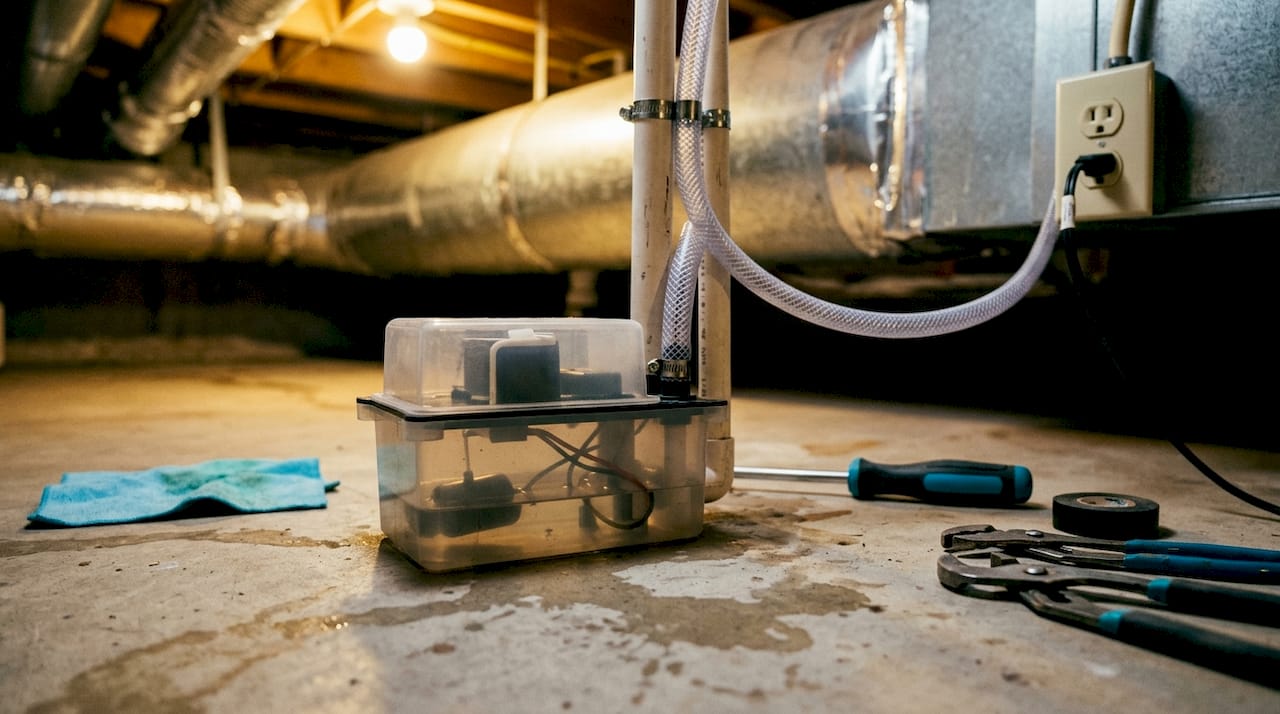
The reservoir and float switch
The reservoir is a plastic tank that sits beneath your HVAC unit and catches dripping condensation. Inside the reservoir, a float switch activates the motor when water rises to a set level. Think of it like the float inside a toilet tank. When the water gets high enough, the float triggers the pump to run until the reservoir empties.
The pump motor and discharge line
Once the float switch fires, the pump motor forces water up through a small plastic tube called the discharge line. That line routes the water to a floor drain, utility sink, or exterior wall. The key word here is “up.” The pump must push water vertically, which is why the lift rating matters so much.
The safety switch
A second float, set higher than the first, acts as a backup. The safety switch shuts off the HVAC system if the pump fails and water keeps rising. Many homeowners mistake this for an AC breakdown. Cleaning the float and reservoir usually restores full operation within 30 minutes.
Pro Tip: Pour a small amount of water directly into the reservoir to test the pump before cooling season starts. The motor should kick on within seconds. If it doesn’t, the float switch may be stuck.
- Reservoir catches dripping condensation from the HVAC coil
- Float switch triggers the motor at a preset water level
- Pump motor forces water up and out through the discharge line
- Safety switch cuts HVAC power if overflow is detected
- Discharge line routes water to a drain, sink, or exterior point
What are the common uses and types of condensate pumps?
Condensate pumps appear in three main residential systems: central air conditioners, high-efficiency gas furnaces, and standalone dehumidifiers. Each produces water as a byproduct of its normal operation, and each needs a reliable way to remove that water.
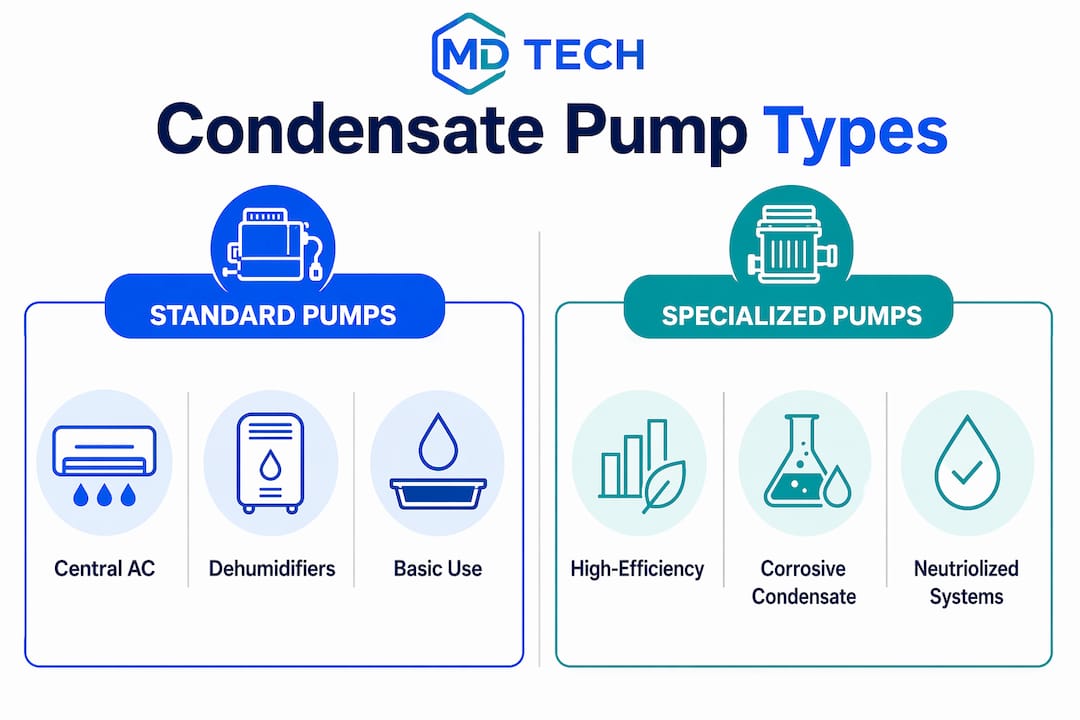
Air conditioners pull humidity from indoor air across cold evaporator coils. That moisture drips into a drain pan. When the pan sits below the nearest drain, gravity handles removal. When it doesn’t, a pump is required. High-efficiency furnaces extract so much heat from exhaust gases that those gases condense into liquid inside the heat exchanger. That liquid must also be removed. Dehumidifiers in basements or crawl spaces face the same challenge when no floor drain sits nearby.
The type of pump you need depends on your system and its location.
| Pump type | Best use | Key feature |
|---|---|---|
| Standard condensate pump | Central AC and dehumidifiers | Basic float switch and motor |
| Mini condensate pump | Ductless mini-split systems | Compact size for tight spaces |
| Neutralizing condensate pump | High-efficiency furnaces | Neutralizes acidic condensate |
High-efficiency HVAC systems produce acidic condensate that can corrode copper or cast iron drainpipes over time. A neutralizing pump contains a limestone or calcium carbonate media that raises the pH of the water before it enters your plumbing. Skipping this step on a high-efficiency system is a common and costly mistake.
Gravity drainage works when the drain pan sits above a nearby floor drain. A pump is required when the unit is in a basement, attic, or interior closet with no accessible drain below the pan. Checking your system’s location before purchasing a pump saves time and money.
What are key considerations for condensate pump installation?
Correct installation prevents the most common pump failures before they start. Four factors determine whether a new pump will work reliably for years or fail within months.
-
Match the lift rating to your installation height. A pump rated for 15 feet of vertical rise will fail if the actual rise exceeds that number. Measure the vertical distance from the pump to the discharge point before buying. Add a small buffer to that measurement when selecting a pump.
-
Route the discharge line without kinks or sags. Water collects in low spots and breeds algae. Keep the line as straight and short as possible. Secure it with clips every 18–24 inches to prevent sagging.
-
Connect the safety switch to the HVAC control board. Most pumps include a safety switch wire that connects to the low-voltage terminal on your air handler. This connection is what shuts down the system during overflow. Skipping it leaves your home unprotected.
-
Confirm local code requirements for the discharge point. Many municipalities prohibit discharging condensate onto public sidewalks or into sewer cleanouts. A floor drain, utility sink, or exterior wall above a landscaped area are the most common approved options.
Pro Tip: Check your appliance installation safety guide before starting. Disconnecting power at the breaker, not just the thermostat, is the correct first step every time.
Local code compliance is not optional. Orange County and Los Angeles County both follow California Mechanical Code standards, which specify acceptable discharge locations and require proper support for condensate lines. When in doubt, a licensed technician can confirm compliance in under an hour.
How can homeowners maintain and troubleshoot condensate pumps?
Routine maintenance is the single most effective way to prevent pump failure. Slime and algae growth inside the reservoir is the leading cause of float switch failure and overflow. The good news is that preventing it costs almost nothing.
Recommended cleaning schedule
Inspect your condensate pump every 3–6 months, with more frequent cleaning during summer in humid climates or homes with pets. Regular DIY maintenance prevents about 80% of pump-related leaks and costs under $20 in supplies. That statistic alone makes a strong case for spending 30 minutes twice a year on this task.
Step-by-step cleaning process
- Disconnect power at the breaker before touching any component
- Remove the reservoir lid and pour out any standing water
- Wipe the reservoir walls with a soft cloth to remove slime
- Pour half a cup of distilled white vinegar into the reservoir to inhibit future growth
- Reconnect power and pour water into the reservoir to confirm the pump activates
Enzyme-based cleaners are preferred over bleach for routine maintenance. Bleach degrades flexible condensate tubing over time and can damage plastic pump components. Vinegar and enzyme cleaners do the same job without the long-term damage.
Signs your pump needs attention or replacement
- Gurgling or grinding noise during operation
- Water pooling around the base of the unit
- HVAC system shutting off unexpectedly during hot weather
- Visible cracks in the reservoir or discharge line
- Pump motor running continuously without emptying the reservoir
Condensate pumps typically last 3–5 years. Noisy operation, frequent failures, or visible cracks are clear signs that replacement is overdue. Replacement costs range from $150 to $500 depending on system type and installation complexity. A professional service call runs $100 to $250 and is the right call when you see persistent electrical faults or recurring overflow despite a clean reservoir.
Knowing when to call a pro versus handle it yourself is part of being a prepared homeowner. Cleaning, testing the float, and replacing the discharge line are all reasonable DIY tasks. Rewiring the safety switch connection or diagnosing a failed motor requires a licensed technician. Checking your full HVAC maintenance checklist each season keeps the condensate pump as one item in a broader system review, not an afterthought.
Key Takeaways
A condensate pump is a small but critical HVAC component that prevents water damage, and routine cleaning every 3–6 months eliminates the majority of failures before they start.
| Point | Details |
|---|---|
| Core function | The pump removes condensation water when gravity drainage is not available. |
| Float switch role | The float switch triggers the motor and safety shutoff to protect your home from overflow. |
| Lift rating matters | Always match the pump’s lift rating to the actual vertical rise at your installation. |
| Cleaning prevents failure | Vinegar or enzyme cleaners used every 3–6 months stop slime buildup and float switch sticking. |
| Know when to call a pro | Electrical faults, motor failure, and recurring overflow require a licensed technician. |
What I’ve learned after years of seeing condensate pump failures
Most homeowners never think about their condensate pump until water is dripping from the ceiling or the AC stops working on the hottest day of the year. That pattern is predictable, and it’s preventable.
The misconception I see most often is that an AC shutdown caused by the safety switch means the compressor or refrigerant is the problem. Homeowners call for emergency service, pay for a diagnostic visit, and find out the reservoir was full of slime. A 30-minute cleaning job becomes a $200 service call because the pump was never on anyone’s radar.
The other mistake is buying a pump without checking the lift rating. A pump that can’t push water to the discharge point will run constantly, burn out the motor, and still leave water on your floor. Measuring first takes two minutes. Replacing a failed motor takes two hours and costs real money.
My honest advice: add the condensate pump to your seasonal HVAC walkthrough. Look at it. Pour in a cup of water and watch it run. Check the discharge line for kinks. That three-minute check, done twice a year, will keep this device out of your emergency repair budget for years. You can also review signs of appliance failure to catch problems across your whole home before they escalate.
— MDTECH
When a professional makes the difference for your HVAC system
A noisy pump, a cracked reservoir, or an HVAC system that keeps shutting off despite a clean float are all signs that a professional inspection is the right next step.

Appliancesrepairmdtech serves homeowners across Orange County and Los Angeles County with licensed HVAC technicians who handle condensate pump diagnosis, replacement, and full system checks. Whether you need a quick part swap or a complete HVAC repair assessment, the team at Appliancesrepairmdtech can schedule a visit fast. For homeowners who prefer to handle parts themselves, the appliance parts replacement guide walks through the process step by step. When the issue goes beyond a DIY fix, professional service protects your home and your warranty.
FAQ
What is a condensate pump used for?
A condensate pump removes water produced by air conditioners, furnaces, and dehumidifiers when gravity drainage is not available. It collects water in a reservoir and pumps it to a drain, sink, or exterior discharge point.
How do I know if my condensate pump is failing?
Common signs include gurgling or grinding noise, water pooling near the unit, and the HVAC system shutting off unexpectedly. A condensate pump typically lasts 3–5 years before replacement is needed.
Can I clean a condensate pump myself?
Yes. Disconnect power at the breaker, remove the reservoir lid, wipe out slime, and add half a cup of distilled white vinegar. This process takes about 30 minutes and prevents the majority of pump-related leaks.
Why does my AC keep shutting off?
The safety switch on the condensate pump may be detecting an overflow condition and cutting power to the HVAC system. Cleaning the float switch and reservoir usually restores normal operation without a service call.
Do all HVAC systems need a condensate pump?
No. Systems where the drain pan sits above a nearby floor drain can use gravity drainage. A pump is required when the unit is in a basement, attic, or interior space with no accessible drain below the pan.