
TL;DR:
- Regular appliance maintenance extends their lifespan, improves efficiency, and prevents costly breakdowns.
- Homeowners should follow scheduled cleaning routines, use proper tools, and log maintenance tasks consistently.
- When visible issues or warning signs occur, consulting a professional becomes necessary for timely repairs.
Most homeowners don’t think about their refrigerator until it stops cooling or their dryer until laundry sits wet for hours. Appliance breakdowns are inconvenient, expensive, and almost always preventable. Following solid preventative appliance maintenance steps, what industry professionals call a “preventive maintenance program,” is the difference between a machine that lasts 15 years and one that dies at 8. This guide gives you a practical, room-by-room plan to keep your appliances running longer, perform better, and cost you far less over time.
Table of Contents
- Key takeaways
- Preventative appliance maintenance steps: tools and prep
- Step-by-step maintenance for major appliances
- Common maintenance mistakes to avoid
- Verifying results and building long-term habits
- What I’ve learned from years of appliance maintenance work
- When maintenance reveals it’s time to call a pro
- FAQ
Key takeaways
| Point | Details |
|---|---|
| Prepare before you maintain | Gather tools, review manuals, and schedule reminders before starting any upkeep routine. |
| Follow per-appliance intervals | Each appliance has specific cleaning tasks and timelines that directly impact lifespan and efficiency. |
| Catch problems early | Routine inspections reveal warning signs long before they become expensive repairs. |
| Avoid the self-cleaning myth | Built-in cleaning cycles do not replace manual filter and component maintenance. |
| Log everything | Keeping a maintenance record helps you spot patterns and stay consistent year after year. |
Preventative appliance maintenance steps: tools and prep
Before you touch a single appliance, getting organized saves time and prevents mistakes. The good news is that you don’t need a toolbox full of specialty equipment. Most home appliance maintenance requires items you probably already own.
Here’s what to gather before you start:
- A vacuum with a crevice tool and brush attachment
- Microfiber cloths and soft-bristle brushes
- Mild dish soap and white vinegar
- A flashlight for inspecting tight spaces
- Pipe cleaners or small bottle brushes for narrow vents
- Appliance-specific cleaning tablets (for dishwashers and washing machines)
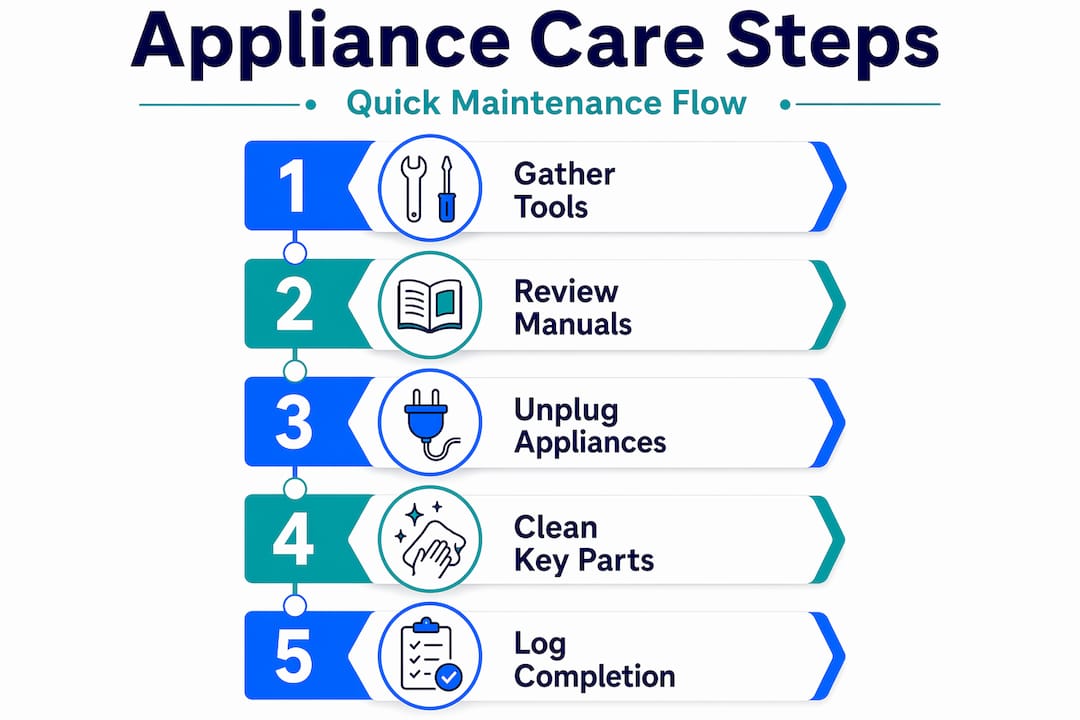
Beyond supplies, your appliance manuals are your most underused resource. Converting manual tasks into recurring calendar reminders is one of the most reliable ways to prevent predictable failures. Pull out the manual for each major appliance in your home and note every recommended cleaning interval.
Pro Tip: Set quarterly phone reminders labeled by appliance, such as “refrigerator coils” or “dryer vent,” so maintenance never slips past you.
Safety matters too. Before cleaning any appliance, unplug it or turn off the circuit breaker. Never clean around electrical components with wet cloths. For gas appliances, shut off the gas supply valve before inspecting burners or connections.
A quick reference for scheduling your routine:
| Appliance | Task | Frequency |
|---|---|---|
| Refrigerator | Condenser coil vacuuming | Every 6 months |
| Dishwasher | Filter removal and cleaning | Monthly |
| Dryer | Lint trap cleaning | Before every load |
| Washing machine | Drum cleaning cycle | Monthly |
| Oven | Spill wipe-down | After each use (once cool) |
| Boiler/HVAC | Condensate trap cleaning | Annually |
Step-by-step maintenance for major appliances
This is the core of your routine. Work through each appliance systematically. You don’t need to do everything in one day. Spreading tasks across a weekend works just as well.
Refrigerator
The condenser coils on your refrigerator release heat from the cooling process. When they’re coated in dust and pet hair, they can’t do that job properly. Clogged coils increase compressor workload and are a leading cause of cooling failures.
Here’s how to clean them:
- Pull the refrigerator away from the wall or remove the front grille panel, depending on your model.
- Use the brush attachment on your vacuum to gently remove dust from the coils.
- Follow with the crevice tool to reach between the coils.
- Wipe down the area around the coils with a dry microfiber cloth.
- Push the refrigerator back and plug it in.
For detailed guidance, this condenser coil cleaning guide from Appliancesrepairmdtech walks through the full process. Homes with pets or dusty environments should clean coils every six months rather than waiting a full year.
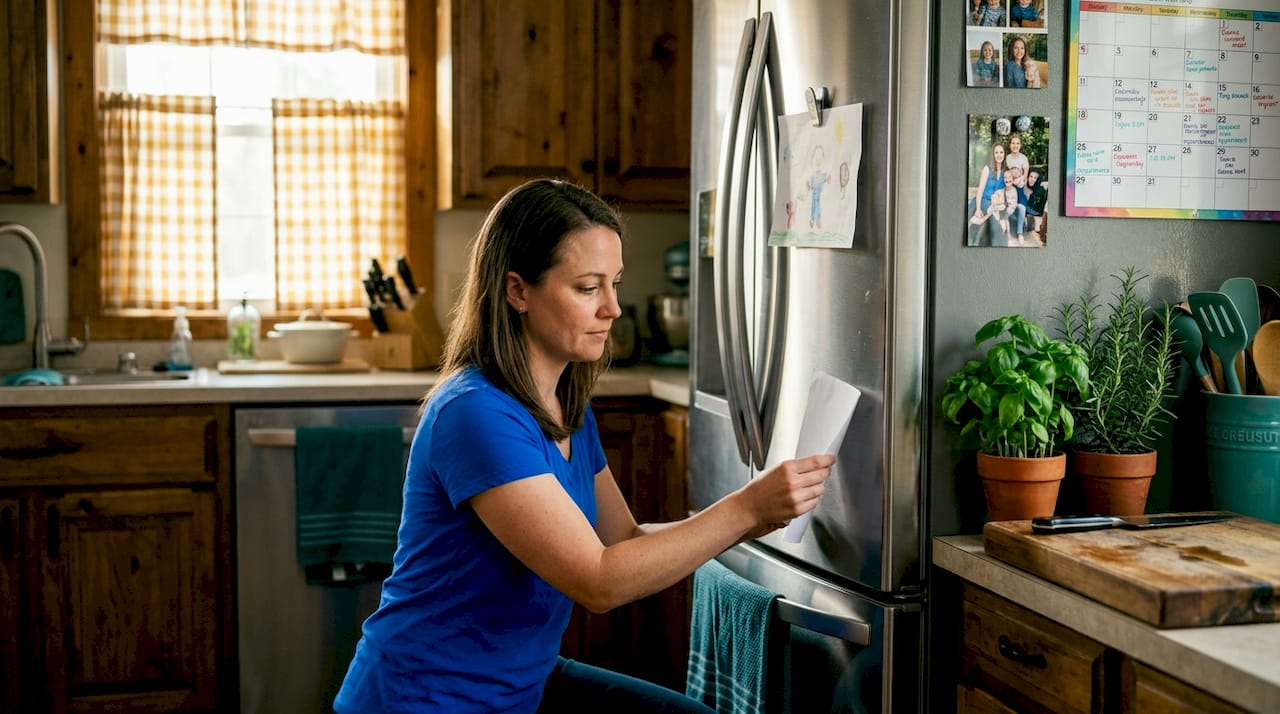
While you’re at it, check the door seals by closing the door on a piece of paper. If you can pull the paper out without resistance, the seal is worn and needs replacing. Also wipe out the drip pan beneath or behind the unit. It collects mold-forming moisture and most homeowners never touch it.
Dishwasher
Your dishwasher filter is doing heavy lifting every cycle. Manual filters need monthly cleaning, while self-cleaning models still need attention every two to three months. Many homeowners assume the cleaning cycle handles everything. It does not.
To clean the filter:
- Remove the bottom rack.
- Twist and pull out the cylindrical filter, then lift out the flat mesh screen beneath it.
- Rinse both pieces under warm running water.
- Use a soft brush with dish soap to scrub away trapped food debris.
- Soak stubborn buildup in warm, soapy water for 10 minutes before scrubbing.
- Reinstall and run an empty hot water cycle.
Filter removal and manual scrubbing is the only reliable way to prevent hidden buildup that causes drainage issues and that unpleasant swamp smell from your machine. Learn more about how filters work at this dishwasher filter guide.
Oven and stove
The oven maintenance rule that saves the most headaches is simple: clean spills immediately after the oven cools. Hardened boil-overs become nearly impossible to remove and can cause smoking and odors during future use. A damp cloth right after cooling takes 30 seconds. Scraping carbonized residue takes an hour.
For stove burners, lift the grates and soak them in warm soapy water monthly. On glass top stoves, use a razor scraper to remove hardened spills before they pit the surface.
Pro Tip: Avoid using the self-cleaning oven feature more than twice a year. The extreme heat can damage the heating element and door gasket over time.
Washing machine
Two habits protect your washing machine more than anything else: don’t overload it, and use the right amount of detergent. Excess detergent creates buildup in the drum and hoses that eventually causes odor and drainage problems.
Run a cleaning cycle with a washing machine tablet or two cups of white vinegar monthly. For front-loaders, wipe the rubber door gasket after every wash. That gasket collects lint, hair, and moisture and becomes a mold farm fast if ignored. Leave the door cracked open between uses to let the drum dry out.
Dryer
The dryer is where skipping maintenance becomes genuinely dangerous. Lint trap cleaning before and after every load is non-negotiable. Lint buildup restricts airflow, causes overheating, and is a leading cause of residential house fires.
Beyond the lint trap, the exhaust duct running from your dryer to the outside vent needs cleaning at least once a year. Disconnect the duct, vacuum out the lint, and check that the exterior flap opens freely during operation. A duct stuffed with lint turns your dryer into a fire hazard regardless of how religiously you clean the trap.
Boiler and HVAC basics
For homeowners with a boiler, the most overlooked maintenance step is also the one that causes the most expensive repairs. Cleaning the condensate trap annually prevents clogs that trigger control malfunctions, which are more common than burner failures and often cost hundreds to thousands of dollars to fix. The condensate trap collects acidic water produced during combustion. When it clogs, the boiler shuts down.
For central HVAC systems, replace air filters every 90 days, or every 60 days if you have pets. A clogged air filter makes your system work harder, raises energy bills, and shortens the unit’s life. For professional HVAC service in Orange County, Appliancesrepairmdtech offers expert HVAC repair if inspections reveal bigger issues.
Common maintenance mistakes to avoid
Even homeowners who do maintenance regularly make errors that undermine their efforts. Knowing what goes wrong keeps your routine effective.
- Skipping coil cleaning. It feels invisible because the coils are hidden. But this is one of the highest-impact tasks for refrigerator longevity, and missing it for a year or two causes compressor strain that shaves years off the unit’s life.
- Trusting the self-clean label. Self-cleaning ovens and dishwashers still require manual attention. The label refers to a specific function, not a complete maintenance solution.
- Using too much detergent. More soap does not mean cleaner clothes. It means residue buildup in hoses, pumps, and drums across both dishwashers and washing machines.
- Ignoring small sounds. A grinding noise from a refrigerator fan or a thumping washing machine drum are early warnings. Catching them early usually means a cheap fix. Ignoring them usually means a parts replacement.
Preventive maintenance is essentially converting owner’s manual tasks into recurring calendar events. The homeowners who do this consistently almost never face surprise appliance failures.
When you notice something odd during a routine check, start by looking at filters, vents, and seals before calling anyone. Many “appliance problems” resolve with a cleaning. If a basic check doesn’t explain the issue, that’s when a licensed technician is worth calling.
Verifying results and building long-term habits
Maintenance without tracking is guesswork. After completing your first full round of appliance upkeep, note the date and condition of each component in a notebook or a simple phone note. Future sessions become faster because you know exactly what you checked and when.
A few simple performance checks confirm your work is paying off:
- Refrigerator should reach and hold 37°F in the fresh food section
- Dryer should fully dry a medium load in 45 minutes or less
- Dishwasher should exit cycles without standing water at the bottom
- Washing machine should complete drain cycles without unusual noise
Pro Tip: Pull your utility bills from three months before and three months after starting a maintenance routine. Most homeowners notice a measurable drop in energy costs within the first season.
Many homeowners replace appliances before their time simply because degraded performance feels “normal.” Regular upkeep resets that baseline. For practical scheduling templates and seasonal reminders, Appliancesrepairmdtech’s preventive maintenance guide is a useful starting point.
Know when to call a professional. If your refrigerator still runs warm after a coil cleaning, if your dryer duct shows signs of damage, or if your boiler is cycling on and off unexpectedly, those are signals that exceed DIY territory.
What I’ve learned from years of appliance maintenance work
I’ve seen the full range. Homeowners who meticulously maintain their machines and get 18 years out of a refrigerator. And homeowners who’ve never cleaned a condenser coil and wonder why they’re buying a third fridge in 15 years.
The pattern I keep noticing is that most people underestimate the value of boring, repetitive maintenance. Cleaning a lint trap takes 10 seconds. Replacing a drum bearing because lint-caused overheating damaged the motor costs $200 to $400 and a week without your dryer.
Here’s the counterintuitive insight I’d share: the appliances that break down most often are not the oldest ones. They’re the ones in homes where maintenance was inconsistent. A 12-year-old washer that gets monthly drum cleanings and annual hose inspections will outlast a 6-year-old washer that’s been overloaded and run with the wrong detergent for three years straight.
My honest advice is to stop treating maintenance as a task you’ll get to eventually and start treating it the same way you treat changing smoke alarm batteries. Set the reminders. Keep a log. And when an inspection turns up something you can’t explain, don’t wait. Small problems caught early cost a fraction of what they cost after six months of being ignored.
— MDTECH
When maintenance reveals it’s time to call a pro
Even the most consistent home appliance maintenance routine has limits. Some issues require a trained technician, proper diagnostic equipment, or replacement parts you can’t source at a hardware store.
If your inspections turn up warning signs like unusual motor noise, water pooling under appliances, or unexplained spikes in your energy bill, Appliancesrepairmdtech is ready to help. The team serves homeowners across Orange County and Los Angeles County with fast, licensed repair service for refrigerators, washers, dryers, dishwashers, ovens, and HVAC systems. For Samsung appliance owners specifically, the Samsung appliance repair page covers what to expect. If maintenance reveals a worn part, the appliance parts replacement guide walks you through what’s involved before a technician visit. And if you’re weighing whether to repair or replace, the repair vs. replacement guide makes that decision straightforward.
FAQ
How often should I clean refrigerator condenser coils?
Clean refrigerator condenser coils at least once a year, or every six months if you have pets or a dusty home. Regular vacuuming prevents compressor strain and extends the refrigerator’s life significantly.
Is cleaning a dishwasher filter really necessary?
Yes. Manual filters need monthly cleaning and even self-cleaning models require attention every two to three months. Running cleaning cycles alone does not remove the trapped food debris that causes drainage problems and odors.
How do I know if my dryer vent needs cleaning?
If your dryer takes longer than 45 minutes to dry a normal load, or if the exterior of the machine feels hot to the touch during operation, the vent likely has significant lint buildup. Clean the duct at least once a year as part of your regular maintenance steps for appliances.
What is the most overlooked appliance maintenance task?
Boiler condensate trap cleaning is the most commonly skipped task. Clearing the condensate trap annually prevents control malfunctions that are both more common and more expensive than burner repairs.
When should I stop maintaining and just replace an appliance?
When repair costs exceed 50% of the replacement cost, or when the appliance is beyond its typical lifespan (10 to 15 years for most major appliances), replacement often makes more financial sense. A professional assessment from Appliancesrepairmdtech can help you weigh that decision clearly.