
TL;DR:
- Plumbing vents are essential for maintaining pressure balance and safely releasing sewer gases from homes. Proper venting prevents slow drains, odors, and sewer gases from entering living spaces, requiring regular inspection and correct installation. Homeowners should understand vent types, signs of blockages, and seek professional help for maintenance or remodeling to avoid costly future repairs.
Most homeowners look at those pipes sticking out of the roof and assume they are just exhaust pipes doing something vague in the background. That assumption costs people real money. A plumbing vent is one of the most critical components of your home’s drain system, and understanding what is plumbing vent means understanding why your drains flow freely, why your bathroom does not smell like a sewer, and why your P-traps stay full. This article breaks down exactly how your plumbing vent system works, what can go wrong, and what you should check before calling a plumber.
Table of Contents
- Key takeaways
- What is a plumbing vent and what does it actually do
- How plumbing vents work and signs of trouble
- Plumbing vent installation: what homeowners should know
- Maintenance, troubleshooting, and when to call a pro
- My take on plumbing vents after years in the field
- Get professional vent and plumbing help from Appliancesrepairmdtech
- FAQ
Key takeaways
| Point | Details |
|---|---|
| Vents regulate pipe pressure | Without vents, negative pressure in drain pipes siphons water out of P-traps, allowing sewer gas into your home. |
| Gurgling drains signal vent problems | That gurgling sound is usually a venting failure, not a clog, and misdiagnosing it wastes time and money. |
| Vent height is code-regulated | Roof vent terminations must meet minimum height requirements to stay clear of debris and function correctly. |
| AAVs have real limitations | Air admittance valves work in many situations but are not permitted in every jurisdiction or every location in a home. |
| Early detection prevents major repairs | Routine checks like clearing roof vent openings and watching for odors can catch problems before they become health hazards. |
What is a plumbing vent and what does it actually do
Think of your home’s plumbing system in three parts: supply lines that bring fresh water in, drain pipes that carry wastewater out, and vent pipes that keep the whole drain side working properly. The vent is the part most people forget about, but it does two jobs nothing else in your plumbing system can do.
Job one: pressure balance. Every time water drains through a pipe, it pushes air ahead of it and tries to pull air behind it. Without a way for air to enter the system, that suction creates negative pressure in drains that literally pulls the water out of your P-traps. Once the trap is dry, sewer gas has a straight path into your living space.
Job two: gas removal. Sewer gas is not just unpleasant. It contains hydrogen sulfide and methane, both of which can be harmful at elevated concentrations. Plumbing vents safely release sewer gases to the outside atmosphere through the roof, well above where anyone breathes.

The main types of plumbing vents
Plumbing venting explained in simple terms comes down to four main configurations:
- True vent (stack vent): A dry vent pipe connected directly to the drain line and running up through the roof. This is the most common type in single-family homes.
- Common vent: Two fixture drains connect to a single shared vent. Often used for back-to-back sinks on opposite sides of a wall.
- Wet vent: A single pipe serves as both a drain line and a vent for another fixture. Common in bathrooms where space is tight.
- Air admittance valve (AAV): A mechanical device installed under a sink that opens to let air in when draining but stays sealed otherwise. It handles the pressure side of venting but does not vent gases to the outside.
Pro Tip: If your remodel adds a new sink or toilet, you cannot assume an existing vent will cover the new fixture. Every fixture has a maximum distance it can sit from a properly sized vent stack, and that distance is spelled out in your local plumbing code.
Plumbing vent requirements also include code-mandated P-trap seals of 2 to 4 inches, which work together with vents to block sewer gases from entering. The trap holds water. The vent holds pressure. Together, they form the barrier between your home’s air and the sewer.
How plumbing vents work and signs of trouble
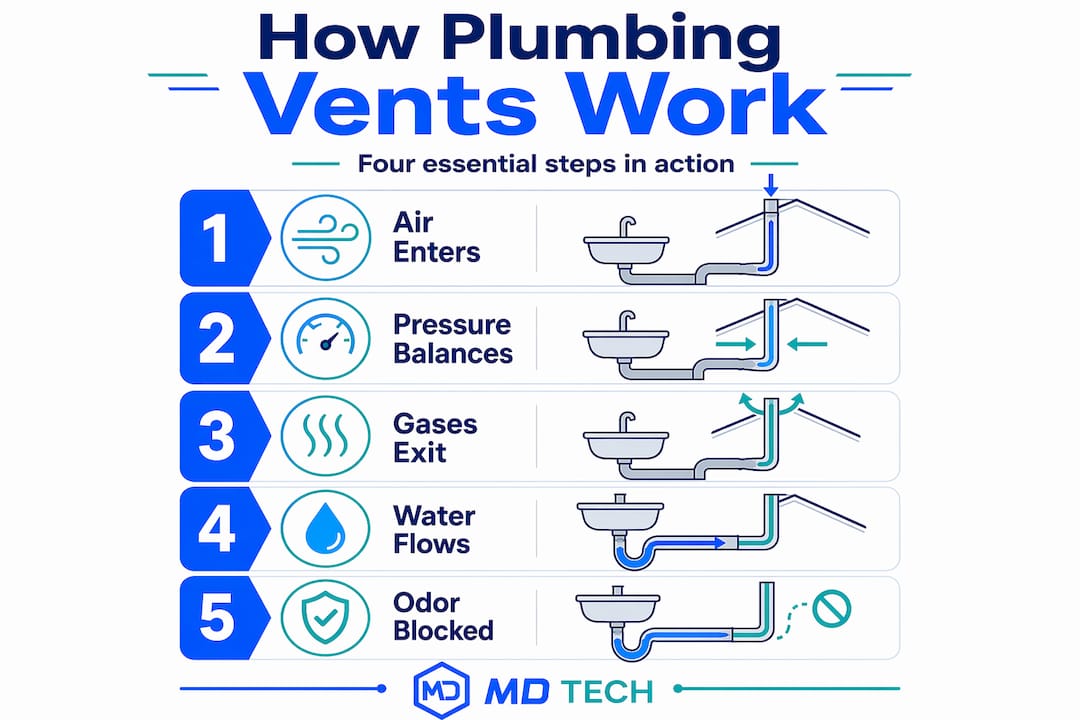
When you flush a toilet or drain a bathtub, water rushes down the drain pipe. Air flows in through the vent stack to replace the air displaced by that moving water. Without that incoming air, you get a partial vacuum. Here is what that vacuum does in sequence:
- Water drains slowly or not at all because there is no air to equalize pressure behind it.
- The suction pulls water out of nearby P-traps, breaking the seal that blocks sewer gases.
- Sewer gases enter the home through those now-empty traps.
- Gurgling noises in drains start appearing as air is forced through whatever water remains in the traps.
- Eventually, multiple fixtures show slow drainage simultaneously, which almost never happens with an ordinary clog.
A single slow drain usually means a clog. Multiple slow drains combined with gurgling sounds almost always mean a venting problem. Treating a vent issue as a clog by snaking the drain will temporarily move water but will not fix the pressure problem causing the symptom.
One more interaction worth understanding: the Drain-Waste-Vent system is designed as one connected network. When your vent gets partially blocked, the effects ripple through every fixture connected to that stack. A blocked roof vent over your bathroom can make the kitchen sink gurgle two floors below.
Plumbing vent installation: what homeowners should know
Most plumbing vent installation runs from the drain pipe, up through interior walls, and exits through the roof. The path matters as much as the destination. Vents cannot terminate inside attics because sewer gases in attic spaces create both health and fire hazards under IPC §903.1 and UPC §906.1.
| Vent type | Best for | Key limitation |
|---|---|---|
| True vent through roof | All fixtures, all buildings | Requires roof penetration and proper flashing |
| Common vent | Back-to-back fixtures | Both fixtures must be at the same drain level |
| Wet vent | Bathrooms with limited wall space | Strict sizing and distance rules apply |
| Air admittance valve | Remodels, island sinks, limited access | Not permitted in all jurisdictions; no gas release to exterior |
Roof terminations carry specific vent height requirements under IPC §903.1: the vent pipe must extend at least 6 inches above the roof surface. In areas with heavy snow, local codes may require even more clearance to keep the opening above the snow line.
Island sink venting is one of the trickier situations homeowners run into during kitchen remodels. A sink placed in a kitchen island has no wall to run a vent through. The solution is typically a loop vent or an AAV, depending on local code. Island vents that are installed wrong are among the most common plumbing inspection findings for homes in Orange and LA County.
In multi-unit buildings, the stakes get higher. Improperly designed vent systems in apartment buildings can allow odors and even airborne contaminants to migrate between units through shared vent shafts. Professional, code-compliant design is not optional in those settings.
Pro Tip: Before any kitchen or bathroom remodel, pull the permit and have your plumber confirm the new vent path before walls close up. Retrofitting a vent after drywall is on costs five to ten times more than planning it correctly upfront.
Maintenance, troubleshooting, and when to call a pro
The good news about plumbing vent maintenance: most of it is straightforward and costs nothing.
- Inspect the roof vent opening twice a year. Leaves, bird nests, and even wasp nests are the most common causes of partial vent blockages. A flashlight from outside is usually enough to spot a problem.
- Trim trees above or near the roof. Overhanging branches drop debris directly into open vent pipes.
- Run water in rarely-used fixtures every few weeks. Infrequently used floor drains and guest bathroom sinks can lose their trap seals through evaporation, not venting failure. Topping off the trap with water takes ten seconds.
- Take sewer odors seriously. A faint smell occasionally near a floor drain might mean an evaporated trap. A persistent smell throughout a room or house means you likely have a blocked vent causing trap depletion, and that needs a plumber.
The trickiest diagnostic call for homeowners is separating a vent problem from a simple drain clog. Clogs usually affect one fixture. Vent problems spread across multiple fixtures. But a severely blocked main drain line can mimic venting symptoms too. If snaking a drain does not resolve the gurgling within a day, stop treating it as a clog.
When a professional inspects your vents, they will typically run a water test at each fixture while listening for pressure changes, and may use a sewer camera to look for obstructions inside the vent stack from the roof down. For AAVs, they check whether the valve opens freely and whether local code permits it in that specific installation location. Understanding ventilation and appliance safety goes hand in hand with any vent inspection, especially in homes with gas appliances.
Pro Tip: If you are buying a home, ask your inspector specifically about vent terminations. Many older homes have vent pipes that were extended but not properly flashed, leading to roof leaks directly above bathroom walls. Two problems for the price of one.
Before hiring anyone for this work, check out a contractor red flags checklist to make sure you are dealing with a licensed, trustworthy professional rather than someone who will charge you for guesswork.
My take on plumbing vents after years in the field
I have been on enough service calls to know that vent problems are the most consistently misunderstood issue homeowners face. People spend years tolerating slow drains, running drain cleaner monthly, and assuming the pipes are just old. Nobody connects the slow kitchen sink to the blocked bird nest on the roof vent eight feet away.
What I have learned is that homeowners who understand what do plumbing vents do are the ones who catch problems before they become expensive. Not because they fix it themselves, but because they know what to look for and what questions to ask. Telling a plumber “I think the vent might be blocked” saves you from paying for a drain cleaning that solves nothing.
The other thing I want to say plainly: skipping the vent on a DIY remodel is almost never worth it. I have seen finished kitchens torn apart six months after a remodel because the island sink vent was run wrong or skipped entirely. An AAV installed somewhere it is not code-approved can fail a home sale inspection years later. Do the vent right the first time, get it inspected, and move on.
Routine attention to your regular plumbing checks is honestly the best money you will not spend on emergency repairs.
— MDTECH
Get professional vent and plumbing help from Appliancesrepairmdtech
If any of the symptoms in this article sound familiar, whether it is gurgling drains, persistent odors, or a remodel where the venting was never quite right, Appliancesrepairmdtech can help. The team serves homeowners across Orange County and Los Angeles County with licensed technicians who handle plumbing pipe repair and full vent system inspections. From blocked roof vents to code-compliant AAV installations, every job comes with the kind of accountability that protects your home and passes inspection. Book your appointment online and get the problem diagnosed correctly the first time, without guesswork and without wasted service calls.
For specialized work on your vent stack, the vent repair service covers everything from partial blockages to full vent rerouting on older homes.
FAQ
What is a plumbing vent and where is it located?
A plumbing vent is a pipe connected to your drain system that runs up through the house and exits through the roof. It regulates air pressure in the drain pipes and routes sewer gases safely outside.
What are the signs of a blocked plumbing vent?
The most common signs are gurgling noises from multiple drains, slow drainage across more than one fixture, and sewer odors inside the home. These symptoms often appear together and worsen over time.
Can I use an air admittance valve instead of a roof vent?
An AAV works for pressure regulation and is allowed in many situations, but it does not vent sewer gases to the outside and is not permitted in all jurisdictions. Always check local code before installing one.
How high does a plumbing vent need to be above the roof?
Under IPC §903.1, a vent pipe must extend at least 6 inches above the roof surface. Colder climates with heavy snowfall may require additional height per local code amendments.
Do plumbing vents need regular maintenance?
Yes. Inspect the roof vent opening at least twice a year for nests, leaves, or debris. Keep nearby trees trimmed, and watch for gurgling sounds or odors as early indicators that your vent needs attention.