
Your outdoor HVAC unit works harder than almost any appliance in your home, yet most homeowners barely glance at it. While you’re focused on filters and thermostats inside, the condenser sitting outside is quietly losing efficiency, accumulating debris, and inching toward an expensive breakdown. In Orange and Los Angeles Counties, coastal air, wildfire ash, and heavy pollen seasons make this problem even worse. This guide covers what outdoor unit maintenance actually involves, how often you need it, what you can do yourself, and when to call a local professional to protect your investment.
Table of Contents
- Why outdoor unit maintenance matters
- What is outdoor unit maintenance? Key components explained
- How often should you maintain your outdoor unit?
- Professional maintenance versus DIY: What’s best for homeowners?
- Common mistakes and must-know tips for outdoor unit care
- The real key to HVAC longevity isn’t just maintenance frequency
- Professional outdoor unit care and next steps
- Frequently asked questions
Key Takeaways
| Point | Details |
|---|---|
| Dirty coils waste energy | Unmaintained outdoor units increase costs and reduce HVAC system lifespan. |
| Annual pro service matters | A yearly professional inspection and cleaning is essential to keep your unit efficient and reliable. |
| DIY can help, but has limits | Homeowners can remove debris and check airflow but should leave deep cleaning and repairs to professionals. |
| Local climate affects care | Southern California’s pollen, salt air, and wildfire debris mean more attention may be needed. |
Why outdoor unit maintenance matters
Your outdoor HVAC unit is the engine of your cooling system. It houses the compressor, condenser coils, and a fan that work together to release heat pulled from inside your home. When that unit is dirty or obstructed, the entire system has to work harder to do the same job. That extra strain shows up directly on your energy bill.
“Dirty coils can reduce system efficiency by 20 to 30 percent, while proper maintenance can yield energy savings of 10 to 30 percent and prevent premature system failure.”
Think about what that means in practical terms. A system running at 70 percent efficiency because of neglected coils is costing you significantly more every month than one that’s properly maintained. Over a summer in Southern California, that difference adds up fast.
The main threats to your outdoor unit include:
- Dust and dirt buildup on condenser coils, which blocks heat transfer
- Debris accumulation such as leaves, twigs, and grass clippings clogging the unit
- Plant overgrowth restricting airflow around the cabinet
- Wildfire ash and soot, which is a real concern for Orange and LA County homeowners
- Salt air corrosion for homes near the coast
The benefits of regular maintenance are just as clear. A well-maintained unit can reduce energy use by up to 30 percent, extends system lifespan by several years, reduces the chance of mid-summer breakdowns, and keeps your manufacturer warranty valid. Ignoring your outdoor unit isn’t just a minor oversight. It’s a slow and steady drain on your budget.
What is outdoor unit maintenance? Key components explained
Outdoor unit maintenance means inspecting, cleaning, and servicing all the components of your condenser unit to keep it running at peak performance. It’s not just hosing it down once a year. Real maintenance covers several specific tasks.
Here’s what a thorough service typically involves:
- Cleaning the condenser coils to remove dirt, dust, and debris that block heat exchange
- Straightening bent fins on the coil surface to restore proper airflow
- Checking refrigerant levels to ensure the system is charged correctly
- Inspecting electrical connections and tightening any that are loose
- Lubricating the fan motor and checking the fan blades for damage
- Clearing the area around the unit of any vegetation or debris
- Testing system performance to verify it’s operating within normal parameters
ASHRAE Standard 180 sets the industry benchmark for HVAC inspection and maintenance. It calls for annual professional tune-ups that include refrigerant checks and deep cleaning, tasks that go beyond what most homeowners can safely do themselves. Scheduling an annual HVAC inspection is the single most important step you can take.
| Task | DIY or Pro | Frequency |
|---|---|---|
| Clear debris around unit | DIY | Monthly |
| Rinse coils with garden hose | DIY | Every 2-3 months |
| Check and replace air filter | DIY | Monthly |
| Deep coil cleaning | Pro | Annually |
| Refrigerant level check | Pro | Annually |
| Electrical connection inspection | Pro | Annually |
| Full system performance test | Pro | Annually |
Pro Tip: Never use a high-pressure washer on your condenser fins. The thin aluminum fins bend easily, and once bent, they restrict airflow and reduce efficiency. A regular garden hose with a gentle spray is all you need for rinsing. Use your appliance maintenance checklist to track these tasks throughout the year.
How often should you maintain your outdoor unit?
This is where homeowners get mixed signals. Some sources say once a year is enough. Others recommend twice yearly or even seasonal service. The honest answer is that it depends on where you live and how hard your system works.
| Maintenance Type | Recommended Frequency | Who Does It |
|---|---|---|
| Debris clearing and visual check | Monthly | Homeowner |
| Coil rinse and filter change | Every 2-3 months | Homeowner |
| Professional tune-up | At least once yearly | HVAC technician |
| Full seasonal service | Twice yearly (spring and fall) | HVAC technician |
For most HVAC maintenance for homeowners, expert guidance consistently agrees on one thing: at minimum, a professional should inspect your outdoor unit once a year. The debate is really about whether twice yearly is better, and for Southern California, it often is.
Here’s why Orange and LA County homes often need more frequent attention:
- Coastal salt air accelerates corrosion on metal components
- Wildfire season deposits ash and fine particles inside the unit
- High pollen counts in spring clog coils faster than in drier climates
- Year-round cooling demand means your system never really gets a break
Pro Tip: Schedule your professional service in early spring, before the heat hits. That way, your unit is clean and ready for the heavy summer workload. If you live near the coast or in a wildfire-prone area, consider a second check in the fall. You can schedule annual service online to lock in your preferred time before the busy season.
Professional maintenance versus DIY: What’s best for homeowners?
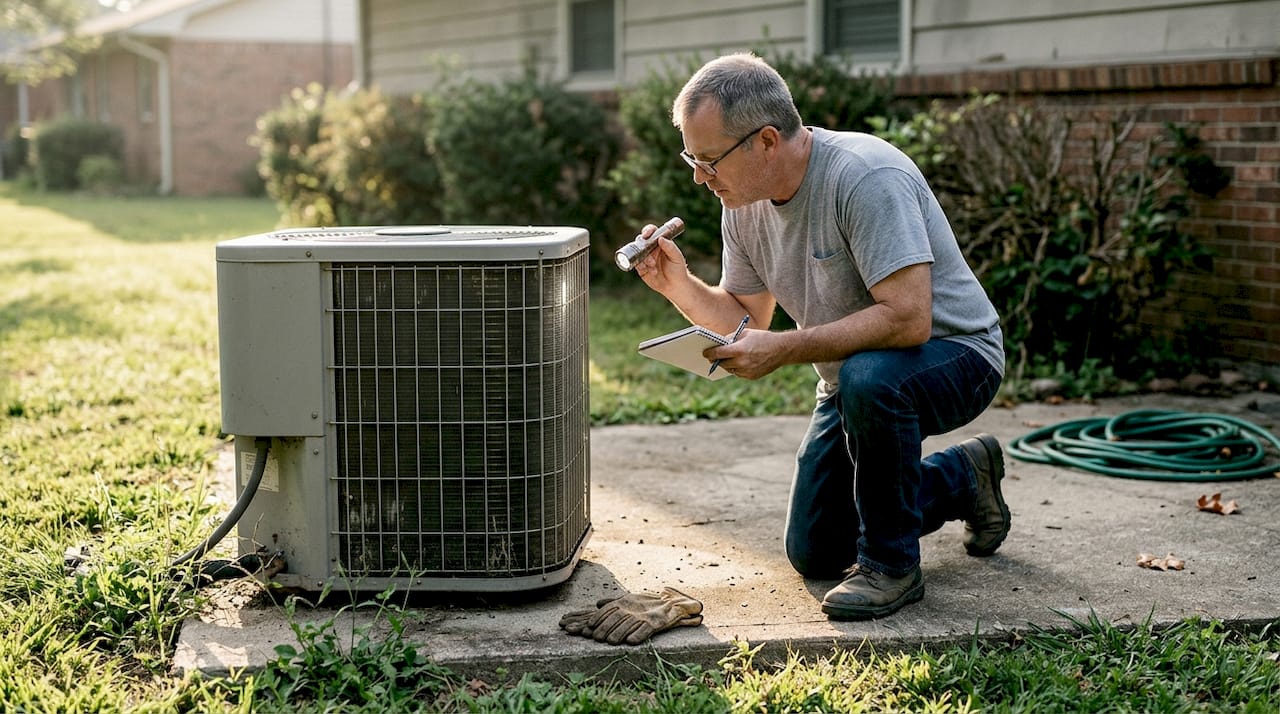
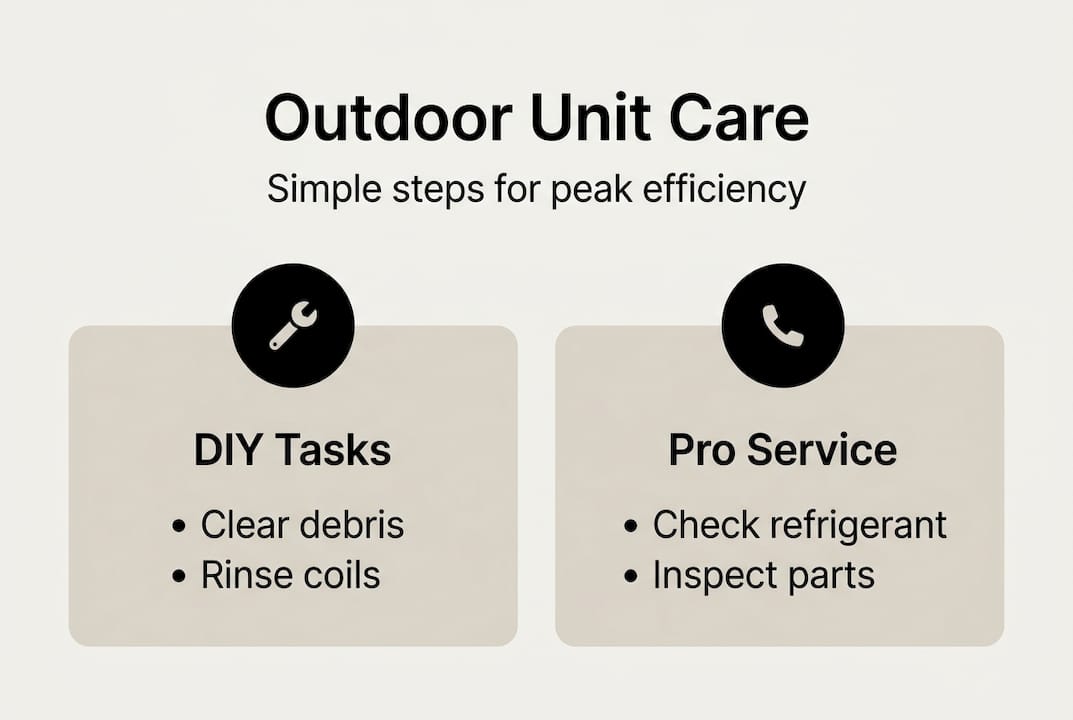
Once you know how often outdoor unit maintenance should happen, it’s important to decide which tasks to handle yourself and when to call in a pro. Both approaches have a role, and combining them is the smartest strategy.
| Factor | DIY | Professional |
|---|---|---|
| Cost | Low (your time) | $80 to $200 per visit |
| Refrigerant handling | Not legal without certification | Required by law |
| Coil deep cleaning | Surface rinse only | Full chemical clean |
| Electrical safety | Risk of shock | Trained and insured |
| Warranty protection | May void if skipped | Keeps warranty valid |
Here are the top three reasons to call a professional:
- Refrigerant handling is regulated by federal law. Only certified technicians can legally check or recharge refrigerant levels.
- Electrical components inside the unit carry high voltage. Inspecting capacitors and contactors without training is genuinely dangerous.
- Warranty requirements for most HVAC brands specify annual professional service. Skipping it can void your coverage.
For preventative HVAC care, industry standards are clear that annual professional service is non-negotiable for refrigerant and deep cleaning tasks.
Pro Tip: The best approach is to combine monthly DIY checks with one or two professional visits per year. You handle the simple stuff like clearing debris and rinsing coils. Let the technician handle everything that requires tools, training, or legal certification. This combination keeps costs reasonable while protecting your system. Check out these maintenance tips to build a simple monthly routine.
Common mistakes and must-know tips for outdoor unit care
With a clear understanding of your options, it’s just as important to avoid common missteps. These are the errors we see most often from homeowners in Orange and LA Counties.
Mistakes to avoid:
- Blocking airflow by planting shrubs or stacking items within two feet of the unit
- Skipping post-wildfire cleanup, which allows ash and fine debris to cake onto coils
- Using a pressure washer on fins, which bends them and reduces airflow
- Covering the unit completely in the off-season without proper ventilation, which traps moisture and promotes corrosion
- Ignoring strange noises like rattling or grinding, which are early warning signs of mechanical problems
- Waiting until something breaks to schedule service, which almost always costs more than prevention
Must-do tips for Southern California homeowners:
- After wildfire events, visually inspect your unit and rinse it gently if ash is visible
- During heavy pollen season in spring, check your coils monthly rather than quarterly
- Keep at least two feet of clear space on all sides of the unit at all times
- Listen to your system. A unit that runs longer than usual to cool your home is losing efficiency from dirty coils
For more guidance on getting the most from your system, the high efficiency HVAC guide covers upgrades and habits that make a real difference.
Pro Tip: Set a phone reminder on the first of every month to do a two-minute visual check on your outdoor unit. Look for debris, listen for odd sounds, and make sure nothing is blocking airflow. Catching a problem early is almost always cheaper than fixing it after a breakdown.
The real key to HVAC longevity isn’t just maintenance frequency
Here’s something most maintenance articles won’t tell you: locking yourself into an annual service schedule and doing nothing in between is not enough. The homeowners who get the longest life from their outdoor units aren’t just checking a box once a year. They’re paying attention year-round.
The real value of outdoor unit care comes from the compounding effect of small, consistent actions. Clearing debris monthly, rinsing coils after pollen season, and catching a bent fin before it becomes a blocked coil, these small steps add years to your system’s life. No single service visit can replicate that.
Southern California adds layers of risk that most generic maintenance guides ignore entirely. Salt air from the coast corrodes metal components faster than inland climates. Wildfire smoke leaves behind fine particles that standard cleaning doesn’t fully address. These are real, local threats that require a local mindset.
Building ongoing maintenance routines means treating your outdoor unit like a living part of your home, not a set-it-and-forget-it appliance. The homeowners who avoid expensive replacements aren’t lucky. They’re paying attention.
Professional outdoor unit care and next steps
If you’re ready to protect your HVAC investment and avoid surprise breakdowns, local experts are here to help.
Our team serves homeowners across Orange and Los Angeles Counties with licensed technicians who understand the specific demands of Southern California’s climate. Whether you need a first-time inspection, a deep coil cleaning after wildfire season, or a full HVAC repair, we make it easy to book online and get a fast response. Understanding the role of professional maintenance is the first step. Taking action is the next one. Schedule your annual inspection today and go into summer with confidence that your system is ready.
Frequently asked questions
What does outdoor unit maintenance include?
Outdoor unit maintenance includes cleaning coils, checking refrigerant, removing debris, inspecting mechanical and electrical parts, and ensuring airflow clearance. Industry standards require annual professional service for refrigerant and deep cleaning tasks.
How often should outdoor HVAC units be serviced in Southern California?
Service at least once a year, but consider twice yearly or seasonal checks for homes near the coast, wildfire zones, or areas with heavy pollen. Expert sources agree that professional involvement at least annually is essential regardless of how often you do DIY checks.
What are signs your outdoor unit needs maintenance?
Rising energy bills, reduced cooling, odd noises, or visible debris are all signals your unit needs attention. Dirty coils alone can cut efficiency by 20 to 30 percent before you notice any obvious symptoms.
Can I perform outdoor unit maintenance myself?
You can safely clear debris and rinse coils with a garden hose, but professional maintenance is required for deep cleaning, refrigerant checks, and mechanical inspections. ASHRAE Standard 180 makes clear that annual pro service is the standard for complete outdoor unit care.