
TL;DR:
- Water hammer is a hydraulic shock caused by fast-closing valves and high water pressure, leading to pipe damage.
- Installing mechanical arrestors and managing system pressure effectively prevents costly failures and appliance wear.
Water hammer is defined as a hydraulic shockwave that occurs when flowing water suddenly stops or reverses direction inside your pipes. The technical term used by plumbers and engineers is “hydraulic shock.” That loud banging or thudding you hear behind your walls after a washing machine cycle ends or a faucet shuts off fast is not a structural problem. It is a pressure event, and it can cause real damage if you ignore it. Understanding what triggers it and how to stop it protects your pipes, your appliances, and your wallet.
What is water hammer and how does it work?
Water hammer is a fluid dynamics problem rooted in two physical properties of water: it cannot be compressed, and it carries momentum when moving. When a valve closes fast, that moving water column has nowhere to go. The kinetic energy converts instantly into a high-pressure shockwave that slams into the pipe walls.
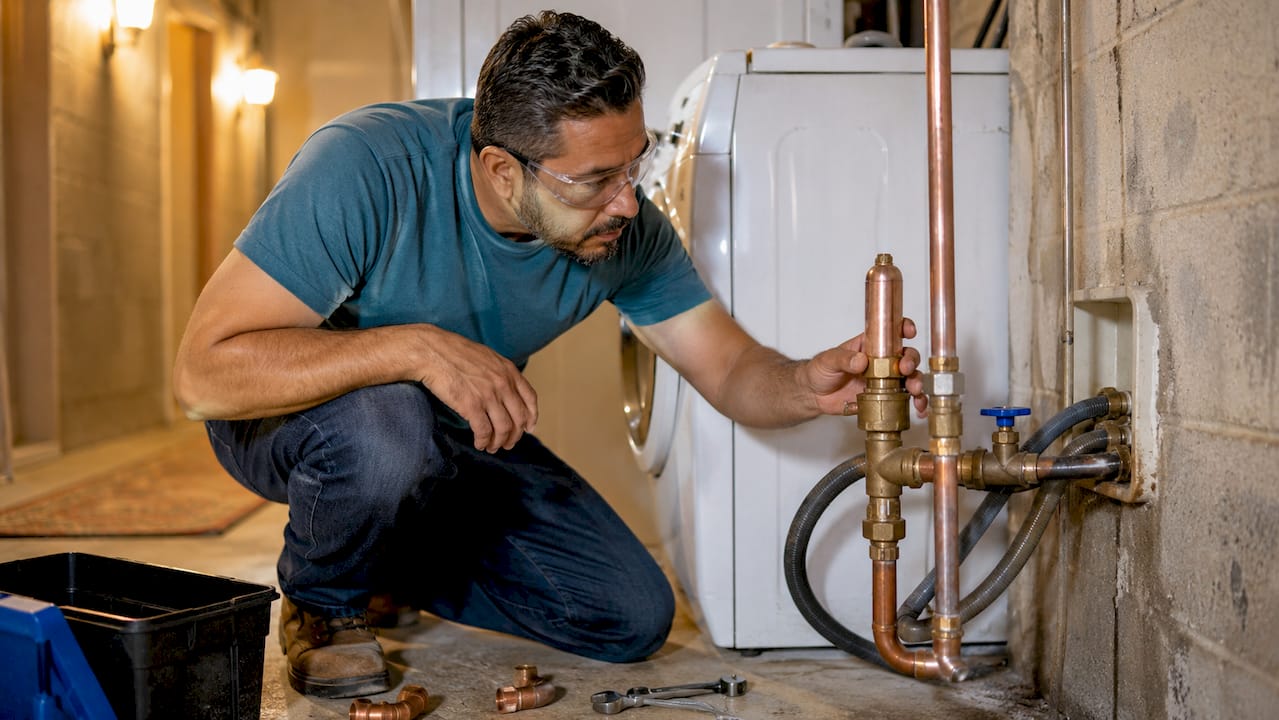
Those pressure waves travel at 3,000–5,000 ft/s and can spike to 5–10 times your normal system pressure. That means a home running at 60 PSI could experience a momentary surge of 300–600 PSI inside the pipe. That level of force is enough to crack fittings, loosen joints, and stress valves over time.
The shock wave does not stay in one spot. It bounces back and forth through the pipe network until the energy dissipates. Each bounce is a separate impact on your plumbing. The faster the valve closes and the higher the flow velocity, the more violent the event.
Pro Tip: If you hear banging only when a specific appliance shuts off, that appliance’s inlet valve is almost certainly the source. Start your troubleshooting there before checking anything else.
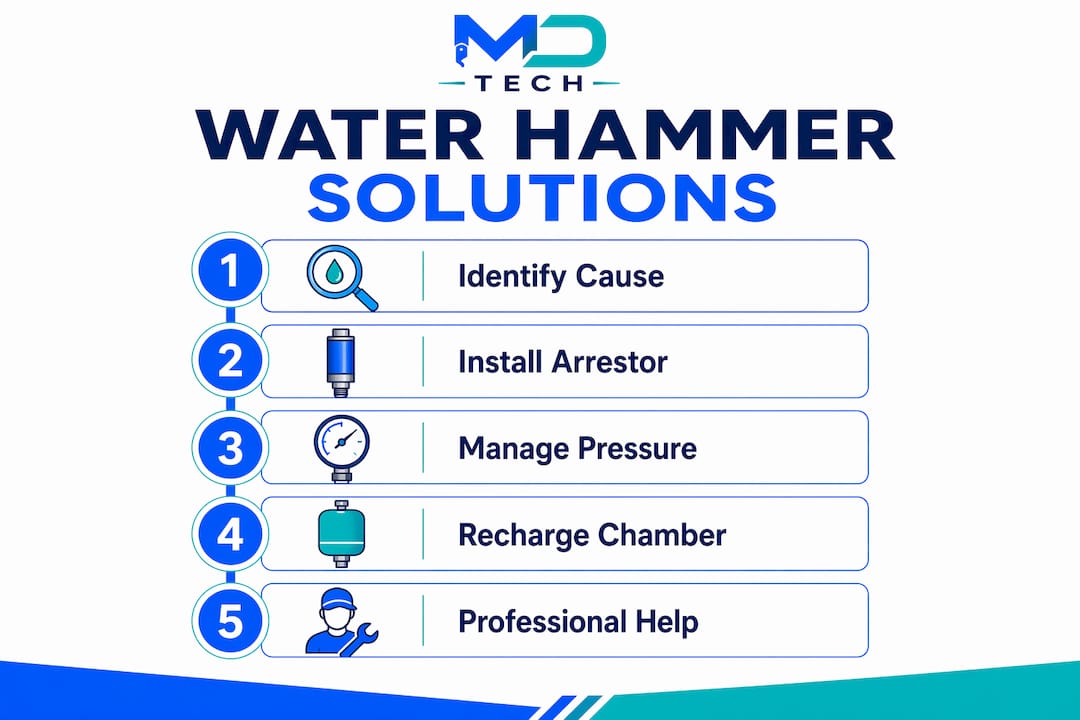
What are the common causes of water hammer in homes?
Several specific conditions in residential plumbing create the right environment for hydraulic shock. Here are the most frequent culprits:
-
Fast-closing solenoid valves. Washing machines and dishwashers are the top offenders. Their solenoid valves close in as little as 30 milliseconds, which is fast enough to create a significant shockwave every single cycle. If your washer runs two to three loads a day, that is hundreds of pressure spikes per week hitting your pipes. Check the washer repair warning signs that often accompany this kind of valve stress.
-
High water pressure. Homes with supply pressure above 75–80 PSI face a much higher risk of severe water hammer. High pressure means more energy in the moving water column, which translates directly to a bigger shockwave when flow stops.
-
Waterlogged air chambers. Older plumbing systems used vertical pipe stubs filled with air as a cushion against pressure spikes. Over time, water absorbs that air and the chamber fills completely. A waterlogged air chamber provides zero protection.
-
Thermal expansion. In homes with check valves or pressure-reducing valves, heated water has nowhere to expand. Thermal expansion can raise system pressure by 50–100+ PSI, which compounds the effect of any hydraulic shock event.
-
Long, straight pipe runs. Longer pipes allow water to build more momentum before a valve stops it. The more momentum, the harder the impact.
Each of these causes is fixable. The key is identifying which one applies to your home before spending money on a solution that does not match the problem.
What problems and damage can water hammer cause if ignored?
The banging noise is the warning. The real problem is what happens inside the walls when you do not act on it.
“Ignoring water hammer noise risks costly repairs as the repeated shocks fatigue plumbing components over time.” — The Spruce
Long-term structural damage from repeated hydraulic shock includes cracked pipe joints, loosened fittings, and eventually burst pipes. These failures often appear far from the original source because the shockwave travels the entire pipe network. A burst pipe behind drywall can cause thousands of dollars in water damage before you even notice it.
Appliances suffer too. The same solenoid valves that trigger water hammer also absorb the backlash from it. Repeated pressure spikes shorten valve lifespan and can cause premature failure in washing machines, dishwashers, and refrigerator ice makers. Fixing a valve is cheap. Replacing an appliance is not.
Pipe joints and fittings take the worst of it. Each impact works like a small hammer blow on the connection points. Solder joints in copper pipe systems are especially vulnerable. Over months or years, those joints develop micro-cracks that grow into active leaks. By the time you see water stains on the ceiling, the damage has been building for a long time.
The noise itself is a diagnostic tool. A single loud bang points to one fast-closing valve. A series of rapid knocks suggests pipe movement from loose pipe straps. A low rumble or vibration often means high system pressure is the root cause. Pay attention to the sound pattern. It tells you where to look.
What are the most effective water hammer solutions?
Fixing hydraulic shock is not complicated, but the right solution depends on the cause. Here is how the main options compare:
| Solution | Best For | Difficulty | Long-Term Effectiveness |
|---|---|---|---|
| Mechanical water hammer arrestor | Fast-closing valves (washers, dishwashers) | Low | High |
| Recharging air chambers | Older homes with existing chambers | Low | Moderate (temporary) |
| Pressure-reducing valve (PRV) | Homes with supply pressure above 75 PSI | Medium | High |
| Expansion tank | Closed systems with thermal expansion | Medium | High |
| Larger pipes or flow controls | High-velocity flow in long runs | High | High |
Mechanical water hammer arrestors are the most reliable fix for appliance-related banging. These devices contain a sealed, gas-filled diaphragm that compresses when a pressure spike hits, absorbing the shockwave before it travels through the pipe. Modern mechanical arrestors are required by most plumbing codes because older air chambers fail over time. You can find arrestors at any hardware store for under $20, and most homeowners can install them without a plumber.
Placement matters more than most people realize. Installing an arrestor within six pipe diameters of the quick-closing valve maximizes its ability to absorb the shockwave. Mount it too far away and the pressure spike reaches the pipe network before the arrestor can respond. For a washing machine, that means the arrestor goes on the hot and cold supply lines right at the back of the machine, not somewhere down the line.
Recharging air chambers is a DIY fix that takes 30–60 minutes. You shut off the main water supply, open every faucet in the house to drain the system completely, then close the faucets and restore pressure. This refills the air chambers with air. The fix works, but it is only a temporary solution compared to permanent mechanical arrestors. The air gets absorbed again within months.
Pressure management is the fix most homeowners overlook. Maintaining home water pressure between 50–65 PSI keeps shockwave energy within safe limits. A pressure-reducing valve (PRV) installed at the main supply line controls this automatically. If you do not own a water pressure gauge, buy one at a hardware store for under $15 and test your supply pressure at an outdoor hose bib. Anything above 75 PSI needs attention.
For homes with check valves or closed-loop systems, an expansion tank handles the thermal pressure component. Thermal expansion in closed systems can add 50–100+ PSI on top of normal operating pressure. An expansion tank gives that pressure a safe place to go. This is especially relevant in California homes where water heater installations often include check valves by code.
Pro Tip: Address both the arrestor and the pressure together. Installing an arrestor on a system running at 90 PSI is like putting a bandage on a wound that keeps reopening. Fix the pressure first, then add the arrestor for appliance protection.
For a deeper look at how these devices work mechanically, the water hammer arrestor guide on the Appliancesrepairmdtech site covers the internal mechanics in plain language.
Key takeaways
Water hammer is a hydraulic shock problem caused by fast valve closure, high pressure, or failed air chambers, and it requires a matched solution to stop pipe and appliance damage.
| Point | Details |
|---|---|
| Root cause is hydraulic shock | Fast-closing valves convert water momentum into pressure spikes of up to 5–10 times normal system pressure. |
| Appliances are the top trigger | Solenoid valves in washers and dishwashers close in 30 milliseconds, generating shockwaves with every cycle. |
| Ignored damage compounds fast | Repeated pressure spikes crack joints, loosen fittings, and shorten appliance valve lifespan over months. |
| Mechanical arrestors are the best fix | Sealed gas-diaphragm arrestors outperform air chambers and are required by most modern plumbing codes. |
| Pressure control is non-negotiable | Keep supply pressure at 50–65 PSI. Anything above 75 PSI multiplies shockwave severity significantly. |
What i’ve learned diagnosing water hammer in real homes
Most homeowners I talk to assume the banging noise means a pipe has come loose. They tighten a strap, hear the noise again the next day, and give up. The pipe was never the problem. The pressure event causing the pipe to move was.
The second most common mistake is buying one arrestor, installing it on the hot water line only, and calling it done. Both the hot and cold supply lines to a washing machine need arrestors. Miss one and you have solved half the problem at best.
My honest recommendation: start with a $15 pressure gauge before you buy anything else. If your supply pressure is above 70 PSI, a PRV installation will do more for your plumbing than any number of arrestors. I have seen homes where a single PRV adjustment eliminated water hammer completely without any other changes. That is a $150 fix that protects every pipe and appliance in the house.
Call a licensed plumber if you hear banging in multiple locations, if you find wet spots near pipe joints, or if the noise started suddenly after a water heater replacement. Those scenarios point to system-level pressure problems that go beyond a simple arrestor install. Catching it early is always cheaper than dealing with a plumbing emergency after a pipe fails.
— MDTECH
Get professional help with water hammer and plumbing repairs
If you have identified water hammer in your home and want a lasting fix, Appliancesrepairmdtech serves homeowners across Orange County and Los Angeles County with licensed plumbing and appliance repair technicians.
Whether the problem is a solenoid valve in your washing machine, a pressure issue at the main line, or pipe damage from years of hydraulic shock, the Appliancesrepairmdtech team diagnoses the root cause and fixes it correctly the first time. For homeowners dealing with pipe stress or joint damage, the plumbing pipe repair service covers residential systems throughout the region. Book an appointment online or call to get a same-day quote from a licensed technician who knows your local water system.
FAQ
What is water hammer in simple terms?
Water hammer is a loud banging sound and pressure spike that happens when flowing water stops suddenly inside your pipes. The technical term is hydraulic shock, and it is caused by the water’s momentum converting into a pressure wave.
Is water hammer dangerous to my home?
Yes. Repeated hydraulic shock damages pipe joints, fittings, and valves over time and can lead to leaks or burst pipes if left unaddressed.
How do i fix water hammer myself?
Install a mechanical water hammer arrestor on the supply lines of any fast-closing appliance, such as a washing machine or dishwasher. Place it within six pipe diameters of the valve for maximum effectiveness.
What PSI should my home water pressure be?
The recommended range is 50–65 PSI for residential systems. Pressure above 75–80 PSI significantly increases the risk and severity of water hammer events.
Can a washing machine cause water hammer?
Yes. Washing machine solenoid valves close in as little as 30 milliseconds, which is fast enough to generate a shockwave on every fill cycle. Installing arrestors on both supply lines is the standard fix.