
TL;DR:
- HVAC static pressure measures the resistance air encounters in duct systems, affecting system efficiency and longevity. High static pressure caused by dirty filters or undersized ducts forces the blower motor to work harder, increasing energy costs and wear, while low pressure results in uneven airflow and comfort issues. Regularly measuring static pressure with a digital manometer and addressing identified issues through maintenance helps optimize HVAC performance and extend system lifespan.
HVAC static pressure is the resistance air encounters as it moves through your duct system, filters, coils, and vents. Think of it as the invisible friction your blower motor fights every time it pushes conditioned air through your home. When that resistance is too high or too low, your system works harder, costs more to run, and wears out faster. A manometer measures this resistance in inches of water column (in. w.c.), and understanding what the numbers mean gives you real power over your home’s comfort and energy bills.
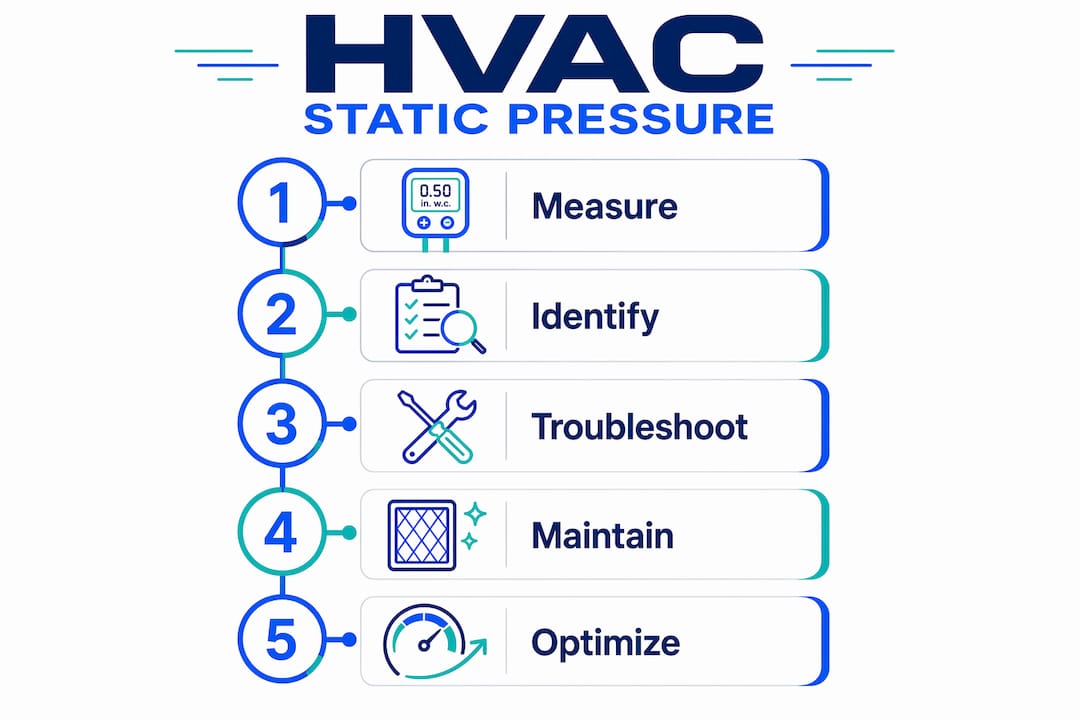
What is HVAC static pressure and how does it affect your home system?
Static pressure in HVAC systems is the outward force air exerts on duct walls when it is not in motion. It differs from dynamic pressure, which is the force created by air actually moving. Your HVAC system deals with both, but static pressure is the number technicians focus on because it tells you how hard the system is working to push air through every obstacle in its path.
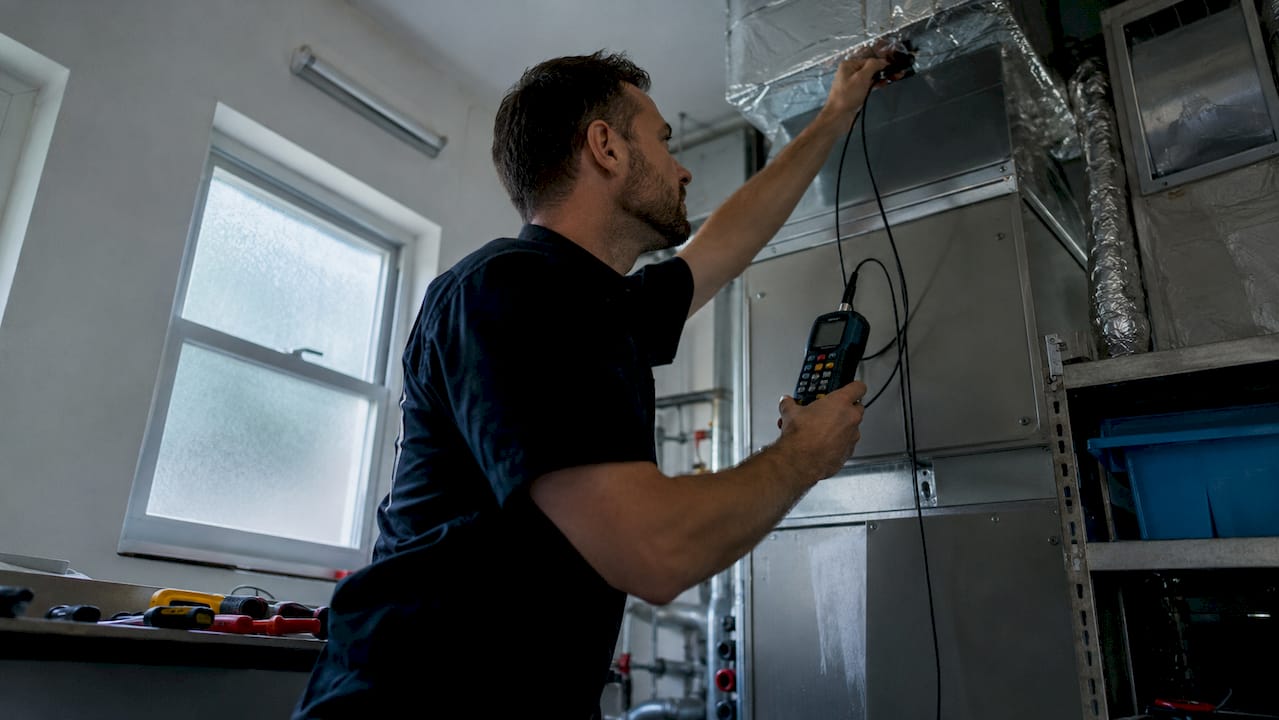
Several components add resistance and raise static pressure: air filters, evaporator coils, supply ducts, return ducts, dampers, and registers. Each one creates friction. When you stack them together across a full duct system, the cumulative resistance is called Total External Static Pressure, or TESP. High static pressure forces the blower motor to work harder, increasing energy use, noise, and shortening equipment lifespan. That is not a minor inconvenience. It is the difference between a system that lasts 15 years and one that needs replacing in 10.
The blower motor is the component that suffers most. When static pressure climbs, the motor draws more amperage to maintain airflow. Over time, that extra electrical load generates heat inside the motor windings, accelerating wear. You might notice the system getting louder, rooms that used to cool quickly now taking longer, or your utility bills creeping up without an obvious reason. All three are classic signs that static pressure is out of range.
Pro Tip: If your system sounds like it is straining or humming louder than usual, check your air filter first. A clogged filter is the single fastest way to spike static pressure and stress your blower motor.
Low static pressure causes its own set of problems. Weak airflow, uneven temperatures between rooms, and poor humidity control are all symptoms of a system that is not generating enough resistance to distribute air properly. Both extremes hurt comfort and efficiency, which is why balance is the goal.
What affects HVAC static pressure? Common causes and contributing factors
Static pressure does not spike or drop randomly. Specific conditions inside your duct system drive it in one direction or the other. Knowing the causes lets you catch problems before they become expensive repairs.
Common causes of high static pressure:
- Dirty or clogged air filters. A mid-life MERV 13 filter alone can add 0.70 in. w.g. of resistance, which is already above the standard residential target.
- Fouled evaporator coils. Dust and debris coat the coil fins and restrict airflow through the coil itself.
- Undersized ductwork. Ducts that are too small for the system’s airflow capacity create a bottleneck that raises pressure throughout the system.
- Closed or blocked supply registers. Shutting registers in unused rooms does not save energy. It redirects pressure and strains the blower.
- Added accessories like whole-home humidifiers, UV air purifiers, or media air cleaners. Each one adds measurable resistance.
Common causes of low static pressure:
- Duct leaks. Air escaping through gaps in ductwork before it reaches living spaces reduces pressure and wastes conditioned air.
- Oversized systems. A unit too large for the home short-cycles and never builds adequate pressure to distribute air evenly.
- Missing or improperly sized return air grilles. Insufficient return air starves the system and drops pressure on the supply side.
Total External Static Pressure is the sum of all these individual resistances. Static pressure targets must be equipment-specific. A one-size-fits-all number leads to misdiagnosis and unnecessary repairs. Your air handler’s data plate lists the maximum static pressure rating for that specific blower. That number is your real ceiling, not a generic figure from the internet.
Pro Tip: Before adding any accessory to your HVAC system, ask your technician to calculate the pressure drop that accessory will add. Stacking accessories without checking the math is one of the most common ways homeowners unknowingly push their system past its limits.
Duct design also plays a major role. Sharp bends, long duct runs, and abrupt diameter changes all add resistance. The index run, which is the most restrictive path in the duct system, is where pressure problems show up first. If a room at the far end of your home never gets adequate airflow, the index run to that room is the likely culprit.
How to measure static pressure in your HVAC system
Measuring TESP accurately requires the right tools and the right test locations. Here is how to do it correctly.
What you need:
A digital manometer (such as the Fieldpiece SM380V or the Testo 510i), two pressure hoses, and two test ports drilled into the ductwork. One port goes on the supply side, downstream of the blower. The other goes on the return side, upstream of the blower and filter.
Step-by-step measurement process:
- Turn the system on and let it run for at least five minutes to stabilize airflow before taking readings.
- Connect the manometer’s positive port hose to the supply-side test port and the negative port hose to the return-side test port.
- Read the supply-side pressure (positive value) and the return-side pressure (negative value) separately.
- Add the absolute values of both readings together. That sum is your TESP.
- Compare the result to the blower’s nameplate rating, not a generic target.
| Reading | Typical range | What it means |
|---|---|---|
| TESP below 0.30 in. w.c. | Low | Possible duct leaks or oversized system |
| TESP at 0.50 in. w.c. | Normal | Residential TESP target for most systems |
| TESP at 0.70 to 0.80 in. w.c. | Elevated | Near blower limits; investigate causes |
| TESP above 0.80 in. w.c. | High | System strain; immediate attention needed |
One measurement mistake that catches DIYers off guard involves the evaporator coil. Most homeowners blame only the air filter for high TESP, but the internal evaporator coil is often the primary cause. Measuring the coil’s pressure drop at system startup creates a baseline you can compare against future readings. When TESP climbs months later, that baseline tells you whether the coil is fouling or whether something else changed.
Factory ratings for air handlers sometimes include the internal coil and internal filter in the “as-shipped” static pressure measurement. Treating those internal components as external during field measurement produces confusing results and can make a healthy system look like it is failing. Always confirm what your manufacturer’s data plate includes before interpreting your numbers.
How to troubleshoot and reduce problematic static pressure at home
Most static pressure problems have straightforward fixes. The key is identifying which cause is driving the problem before spending money on solutions.
Signs your system has a static pressure problem:
- Rooms that are consistently warmer or cooler than the thermostat setting
- Unusual noise from the air handler or registers, particularly a rushing or whistling sound
- Higher-than-normal electricity bills without a change in usage habits
- Frequent short cycling or the system running continuously without reaching the set temperature
For high static pressure, start with the simplest fix: replace the air filter. If TESP drops after a fresh filter, you have your answer. If it stays high, move to the evaporator coil. A dirty coil requires professional cleaning with the right coagulants and rinse procedures. Do not attempt coil cleaning with household sprays. You can damage the fins and make the problem worse.
For low static pressure caused by duct leaks, a duct blaster test performed by a licensed HVAC technician will locate the leaks precisely. Sealing ducts with mastic sealant or metal tape (not standard duct tape, which fails over time) restores pressure and can cut energy waste significantly. Reviewing HVAC troubleshooting tips before calling a technician can help you describe the problem accurately and speed up the diagnosis.
Routine preventive HVAC maintenance is the most reliable way to keep static pressure in range. Change filters every one to three months depending on the MERV rating and household conditions. Schedule a professional coil cleaning and system inspection once a year. These two habits alone prevent the majority of static pressure problems homeowners face.
Pro Tip: Keep a log of your TESP readings each time you change your filter. A pattern of rising pressure between filter changes points to coil fouling or duct restriction, not just a dirty filter.
Key takeaways
Balanced static pressure is the single most important factor in keeping your HVAC system efficient, quiet, and long-lived.
| Point | Details |
|---|---|
| TESP target | Most residential systems target 0.50 in. w.c.; always verify against your equipment’s data plate. |
| Top cause of high pressure | Dirty filters and fouled evaporator coils are the most common drivers of elevated TESP. |
| Low pressure matters too | Duct leaks and oversized systems cause low static pressure, leading to uneven comfort and wasted energy. |
| Measure at the right spots | Test supply and return sides separately, then add the values to get accurate TESP. |
| Maintenance prevents problems | Annual coil cleaning and regular filter changes keep static pressure within safe limits. |
What I’ve learned from years of watching homeowners ignore static pressure
Static pressure is the most misunderstood number in residential HVAC, and I say that from watching the same pattern repeat itself across hundreds of service calls in Orange County and Los Angeles County. A homeowner calls because their system is loud, their bills are high, or one room never gets comfortable. Nine times out of ten, static pressure is the root cause. But because the system is still technically running, they assumed everything was fine.
The mistake I see most often is treating static pressure as a technician’s concern rather than a homeowner’s concern. You do not need a degree to understand that a clogged filter raises resistance and makes your motor work harder. That is physics you already understand from everyday life. A kinked garden hose makes the pump work harder. A blocked air filter does the same thing to your blower.
What surprises people most is how much a single dirty coil can raise TESP. I have seen systems where the filter looked clean but TESP was 0.85 in. w.c. because the coil had not been cleaned in three years. The homeowner had been diligently changing filters and assumed the system was healthy. It was not. That is why measuring coil pressure drop at startup and tracking it over time is worth the effort. It turns a vague feeling that something is wrong into a specific, fixable diagnosis.
My honest advice: buy a basic digital manometer, learn to read your system’s data plate, and take a TESP reading every time you change your filter. That 10-minute habit will tell you more about your system’s health than any symptom you can hear or feel.
— MDTECH
Get professional help with HVAC static pressure in Orange County and LA
If your TESP readings are outside the normal range or you are not sure where to start, Appliancesrepairmdtech has licensed HVAC technicians serving Orange County and Los Angeles County who diagnose and fix static pressure problems every day. From coil cleaning and duct sealing to blower motor inspection and full system tune-ups, the team at Appliancesrepairmdtech brings the tools and experience to get your system back into balance. Book an appointment online or call for same-day availability. For residents dealing with persistent comfort issues or rising energy costs, professional HVAC repair is the fastest path to a system that runs the way it was designed to.
FAQ
What is a normal static pressure reading for a home HVAC system?
The standard residential target is around 0.50 in. w.c. for Total External Static Pressure, though some blowers are rated up to 0.80 in. w.c. Always check your equipment’s data plate for the correct limit.
Can I measure HVAC static pressure myself?
Yes. A digital manometer like the Fieldpiece SM380V and two test ports drilled into the supply and return ducts give you accurate TESP readings. Follow the manufacturer’s instructions and compare results to your air handler’s nameplate rating.
What causes high static pressure in an HVAC system?
The most common causes are dirty air filters, fouled evaporator coils, undersized ducts, and closed supply registers. ACCA recommends staying within 10 to 20 percent of the blower’s nameplate limit to avoid motor strain.
Is low static pressure a problem?
Yes. Low static pressure typically signals duct leaks or an oversized system, both of which cause uneven airflow and wasted energy. Both high and low extremes reduce comfort and shorten equipment life.
How often should I check my HVAC static pressure?
Take a TESP reading every time you change your air filter, typically every one to three months. Tracking readings over time helps you spot trends like rising coil resistance before they become serious problems.