
TL;DR:
- A home energy audit is a professional evaluation that identifies where a house wastes energy and suggests improvements. It can reduce utility bills by 5% to 30% and often uncovers safety risks like faulty venting and mold. Regular audits every five to seven years help maintain efficiency, especially after renovations or bill spikes.
A home energy audit is a systematic, professional evaluation of how your house uses energy, identifying exactly where energy is wasted and what changes will lower your utility bills. The U.S. Department of Energy confirms that homeowners can save 5%–30% on annual utility bills by acting on audit recommendations. That range is wide because every home is different. A 1970s ranch house in a hot climate loses energy in completely different places than a 2005 two-story in a mild coastal area. The Building Performance Institute (BPI) and RESNET both certify auditors who use tools like blower door testing and infrared thermal cameras to find those losses with data, not guesswork.
What is an energy audit and how does it work?
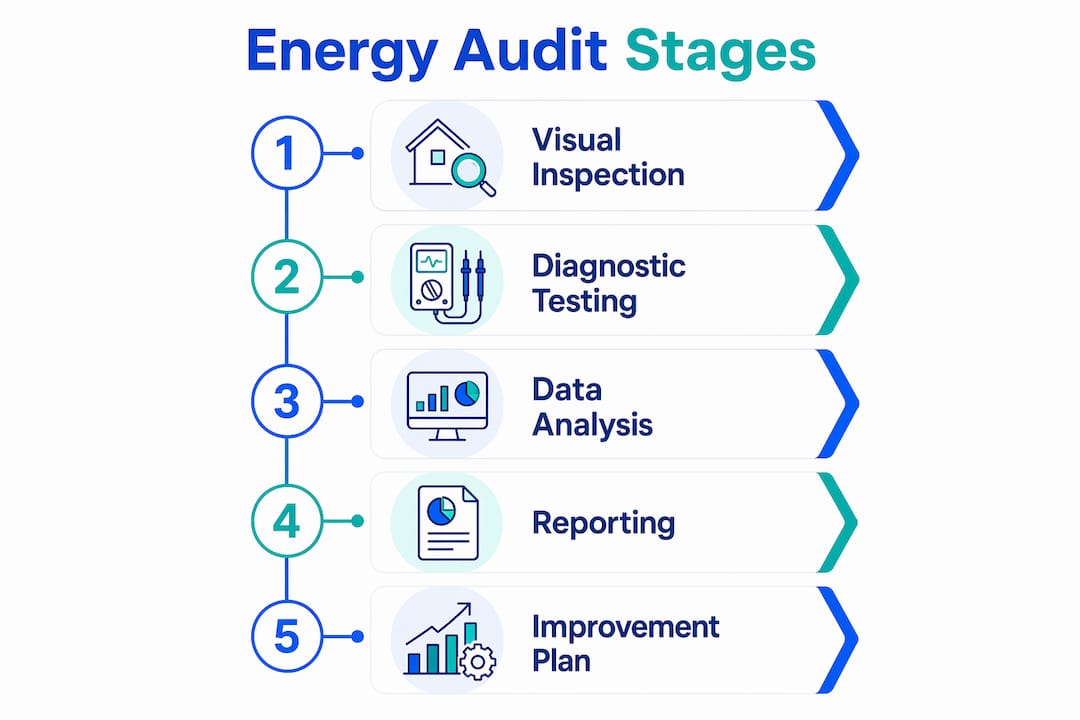
An energy audit is a three-stage process: visual inspection, diagnostic testing, and data analysis. Each stage builds on the last, producing a ranked list of improvements specific to your home.
Stage 1: Visual inspection
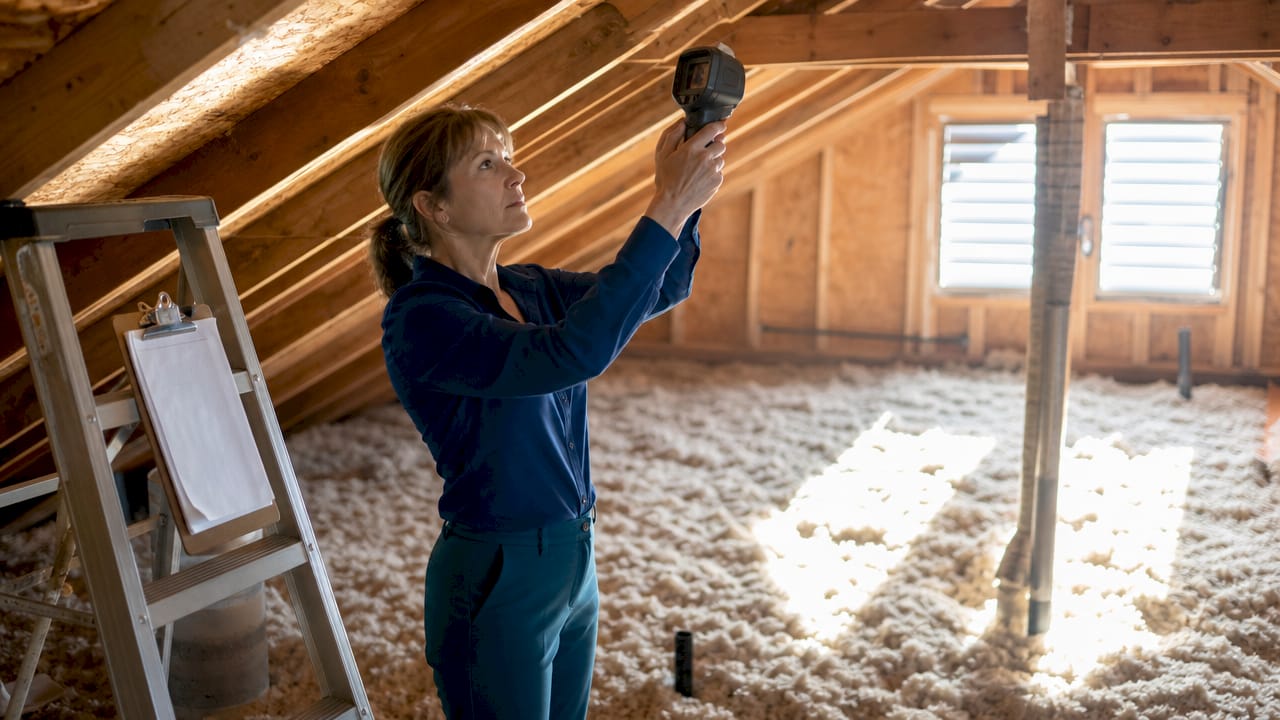
The auditor walks every part of your home, from the attic to the crawl space. They check insulation levels, window seals, duct connections, and the condition of your HVAC equipment. This stage takes roughly 30–45 minutes and flags obvious problems before the diagnostic tools come out.
Stage 2: Diagnostic testing
This is where a home energy assessment separates itself from a standard home inspection. Auditors use blower door tests and infrared thermal cameras to measure air leakage in CFM (cubic feet per minute) and ACH (air changes per hour). A blower door depressurizes the house so the auditor can pinpoint exactly where conditioned air escapes. Infrared cameras reveal temperature differences in walls and ceilings that indicate missing insulation or hidden moisture. These tools produce objective numbers, not opinions.
Pro Tip: Ask your auditor to show you the infrared camera images in real time. Seeing a glowing red streak around your attic hatch or electrical outlets makes the problem concrete and motivates follow-through.
Stage 3: Data analysis and reporting
The auditor feeds diagnostic measurements and 12 months of utility data into energy modeling software. The model calculates your home’s current energy baseline and projects realistic savings for each potential upgrade. The final report ranks improvements by cost-effectiveness, so you know whether to tackle air sealing before insulation or replace the water heater before the furnace.
A home energy audit is distinct from a home inspection. Home inspections identify structural defects. Audits measure energy performance and require utility bill history for accurate modeling. Hiring a home inspector will not tell you why your heating bill spiked last winter.
What types of home energy audits exist?
Audit types range from a simple walkthrough to a full certified rating, and the right choice depends on your goals and budget.
| Audit type | Typical cost | Duration | What you get |
|---|---|---|---|
| Walkthrough audit | ~$100 | 1 hour | Visual checklist, basic recommendations |
| Standard BPI audit | $300–$600 | 2–3 hours | Blower door test, infrared scan, prioritized report |
| RESNET HERS rating | $400–$800 | 2–4 hours | Certified HERS Index score, energy model |
| Full rater audit | up to $1,400 | 3–5 hours | Modeled savings projections, rebate-eligible report |
A few points worth knowing before you choose:
- Walkthrough audits are fine for a quick gut check but lack the diagnostic data to catch hidden air leaks or insulation gaps.
- BPI-certified audits follow a building science protocol and include combustion safety testing, which walkthroughs skip entirely.
- RESNET HERS ratings assign your home a numeric score. A score of 100 matches a standard new home; lower is better. This score is required for many utility rebate programs.
- Full rater audits are the right choice if you plan major renovations or want to qualify for federal HOMES rebate program funding. Federal rebates like the HOMES program require specific certified audits, making auditor credentials a financial decision, not just a quality preference.
Why should homeowners conduct an energy audit?
The clearest reason is money. Implementing audit recommendations cuts annual energy bills by 5%–30%. On a $2,400 annual utility bill, that is $120–$720 back in your pocket every year. The savings compound over time, especially after upgrades like air sealing and insulation that require no ongoing maintenance.
The less obvious reason is safety. Auditors trained as building scientists detect carbon monoxide risks from faulty combustion appliance venting, moisture damage that leads to mold, and indoor air quality problems that a standard inspection misses entirely. A cracked heat exchanger in your furnace can vent carbon monoxide into living spaces for years without triggering a CO detector if the leak is slow. An auditor with combustion safety training finds it.
“Homeowners should see energy audits as more than efficiency checks. They serve as customized road maps tailored by climate, home specifics, and occupant needs.” — Trane Residential Resources
Comfort is the third benefit, and homeowners often rank it above savings once they experience it. Cold spots in winter, rooms that never cool down in summer, and humidity problems all trace back to the same root causes an audit identifies: air leaks, duct losses, and undersized or poorly maintained HVAC equipment. Fixing those issues makes the whole house feel better, not just cheaper to run. Pairing audit findings with energy efficient HVAC upgrades addresses both comfort and cost at the same time.
How often should you get a home energy audit?
Industry guidance recommends a comprehensive audit every 5–7 years. That interval reflects how long it typically takes for a home’s energy profile to shift meaningfully through normal aging, equipment wear, and occupant changes.
Several situations call for an earlier assessment. Schedule an audit sooner if:
- Your energy bills increase significantly without an obvious cause like rate hikes or extreme weather.
- You complete a major renovation, addition, or HVAC replacement.
- You notice persistent comfort problems such as drafty rooms, uneven temperatures, or high humidity.
- You purchase an older home, particularly one built before 1990 when insulation and air sealing standards were far less strict.
An audit also fits naturally into a broader home maintenance calendar. Think of it the way you think about an annual HVAC inspection: a periodic check that catches problems before they become expensive. The difference is that an audit looks at the whole house as a system, not just one component.
How to use energy audit results to improve your home’s efficiency
An audit report is only valuable if you act on it. Most homeowners do not fully implement an audit’s prioritized recommendations, which limits their actual savings. The fix is straightforward: follow the ranked list in order.
Here is how to work through audit findings effectively:
- Start with air sealing. It is almost always the highest-return measure. Sealing gaps around recessed lights, plumbing penetrations, and attic hatches costs little and delivers immediate results.
- Add or upgrade insulation. Air sealing and insulation work together. Insulating before sealing traps conditioned air loss inside the wall assembly and reduces the insulation’s effectiveness.
- Address duct leakage. Leaky ducts in unconditioned spaces like attics or crawl spaces can waste 20%–30% of your HVAC output before it reaches living areas.
- Upgrade HVAC equipment last. New equipment installed in a leaky, poorly insulated house is sized for the old, inefficient conditions. Fix the shell first, then right-size the system.
- Replace inefficient appliances. After the building envelope is addressed, swapping out old appliances for energy saving models captures the remaining savings identified in the audit.
Pro Tip: Get contractor quotes for the top three measures on your audit report before you do anything else. Knowing the actual cost lets you calculate a real payback period and prioritize with confidence.
Spot fixes based on assumptions rather than data reduce the audit’s long-term value. If a neighbor tells you to replace your windows first, check your audit report. Windows are rarely the top priority, and they carry the longest payback period of any common upgrade. Follow the data your auditor produced, not general advice.
Hiring certified professionals for follow-up work matters as much as the audit itself. Proper credentials ensure the work meets building science standards and does not create new problems like moisture trapping or combustion air deprivation.
Key Takeaways
A home energy audit is the most reliable way to identify exactly where your house wastes energy and which upgrades will deliver the fastest return.
| Point | Details |
|---|---|
| Definition of energy audit | A professional, data-driven evaluation of home energy use using blower door tests and thermal imaging. |
| Potential savings | Implementing audit recommendations saves 5%–30% on annual utility bills. |
| Audit frequency | Schedule a full audit every 5–7 years, or sooner after renovations or unexplained bill increases. |
| Follow the ranked list | Address air sealing and insulation before HVAC or appliance upgrades for the best return. |
| Credentials matter | BPI or RESNET-certified auditors qualify you for federal HOMES rebates and catch safety hazards. |
What I’ve learned after years of home energy work
Most homeowners come to an energy audit expecting a bill-reduction exercise. What surprises them is how much the audit reveals about the health and durability of their home. I have seen audits uncover combustion appliance venting defects and hidden mold that had nothing to do with the homeowner’s original concern about high gas bills. Those findings are not side notes. They are the reason a credentialed auditor is worth the cost over a free utility company walkthrough.
The other thing I see consistently is homeowners who get a great audit report and then implement only the cheapest items on the list. They skip air sealing because it sounds unglamorous and spend the money on a new smart thermostat instead. Thermostats do reduce energy waste, but they cannot compensate for a house that leaks conditioned air through every penetration in the ceiling. The audit tells you the order of operations. Ignoring that order cuts your actual savings in half.
My honest recommendation: treat the audit report as a multi-year plan, not a to-do list you complete in a weekend. Tackle the top two or three measures each year. Within three years, most homeowners have addressed the high-impact items and are seeing the full savings the audit projected.
— MDTECH
Professional home services that support your audit findings
An energy audit gives you a clear picture of what your home needs. Acting on those findings is where the real work begins.
Appliancesrepairmdtech serves homeowners across Orange County and Los Angeles County with licensed HVAC repair, appliance service, and installation. When your audit flags an aging furnace, a poorly performing air conditioner, or appliances that are dragging up your energy costs, the team at Appliancesrepairmdtech handles the follow-through. You can book professional HVAC repair or review the full HVAC maintenance checklist to keep your system running at peak performance after your audit recommendations are in hand.
FAQ
What is the definition of an energy audit?
A home energy audit is a professional assessment of how a house uses and loses energy, using diagnostic tools like blower door tests and infrared cameras to produce a ranked list of efficiency improvements.
How much does a home energy audit cost?
A professional audit typically costs $450–$1,400 depending on the depth of testing, and lasts 2–3 hours. Basic walkthroughs start around $100 but lack diagnostic data.
Is an energy audit the same as a home inspection?
No. A home inspection identifies structural defects. An energy audit measures energy performance and requires utility bill history. They serve different purposes and neither replaces the other.
How do I qualify for federal energy rebates?
Selecting the correct audit certification pathway, such as a RESNET HERS rating, is required for federal HOMES program rebates and ENERGY STAR certifications. A standard walkthrough does not qualify.
What upgrades do audits most commonly recommend?
Air sealing and insulation top most audit reports, followed by duct sealing and HVAC improvements. Proper credentials among auditors ensure recommendations address both energy savings and safety issues like combustion venting and moisture control.