
TL;DR:
- A smart thermostat is a Wi-Fi-connected device that learns your habits and automatically controls your home’s heating and cooling. It offers energy savings of 10 to 15 percent annually and provides remote control through a smartphone app. Proper installation and placement maximize its efficiency and ensure reliable performance.
A smart thermostat is a Wi-Fi-enabled device that automatically controls your home’s heating and cooling based on your habits, schedule, and real-time occupancy. Unlike a basic dial or a programmable timer, it learns from your behavior, responds to your location, and lets you adjust the temperature from anywhere using a smartphone app. Heating and cooling account for over 50% of U.S. home energy use. That single fact explains why swapping your old thermostat for a smart one is one of the highest-return upgrades a homeowner can make. Brands like Honeywell Home and ENERGY STAR-certified devices have made this technology widely accessible and genuinely practical.
What is a smart thermostat and how does it work?
A smart thermostat connects to your home’s Wi-Fi network and communicates with a smartphone app, giving you full control over your HVAC system from anywhere. That remote access alone separates it from every thermostat that came before it. But the real power sits in the software running underneath.
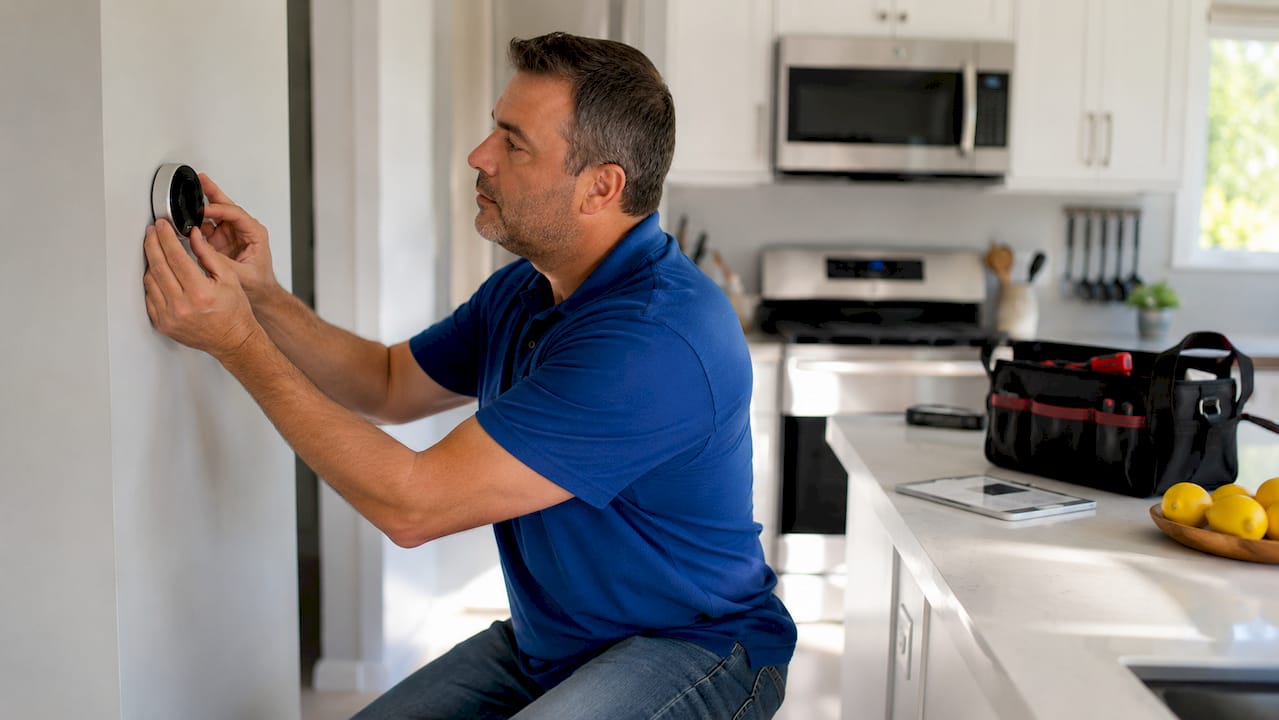
These devices use learning algorithms and geofencing to manage your home’s temperature without you lifting a finger. Learning algorithms track when you wake up, leave for work, and return home. After a week or two, the thermostat builds a schedule around those patterns automatically.
Geofencing uses your phone’s GPS to detect when you leave or approach your home. When you cross a set boundary, the thermostat shifts into an away mode or begins warming the house before you arrive. You never walk into a cold house or waste energy heating an empty one.
Occupancy sensors add another layer of intelligence. They detect motion inside the home and adjust accordingly. Some models, like those in the Google Nest lineup, combine occupancy data with local weather forecasts to fine-tune temperature decisions in real time.
- Wi-Fi connectivity links the thermostat to your router and app.
- Learning algorithms build a schedule from your daily routine.
- Geofencing triggers temperature changes based on your location.
- Occupancy sensors detect whether anyone is home.
- Voice assistant integration lets you control temperature by voice.
Smart thermostats connect with Alexa, Google Assistant, and Siri, so you can say “set the temperature to 70 degrees” without touching anything. That convenience is real, not a gimmick.
Pro Tip: Set your geofencing radius to at least one mile from home. A tighter radius can trigger false arrivals when you’re stuck at a nearby traffic light, causing your system to cycle on and off unnecessarily.
What are the benefits of smart thermostats for homeowners?
The financial case for a smart thermostat is straightforward. These devices reduce heating and cooling bills by 10–15% annually by matching system operation to actual occupancy and habits. For a household spending $2,000 a year on energy, that’s $200–$300 back in your pocket every year.
The comfort benefits are equally real. A smart thermostat adapts to weather changes, occupancy shifts, and your personal preferences without requiring you to reprogram anything. You stop waking up to a freezing bedroom or coming home to a stuffy house.
- Energy savings: Consistent 10–15% annual reduction in HVAC costs through automated scheduling.
- Remote control: Adjust temperature from your phone while traveling, at work, or in bed.
- Adaptive scheduling: The device learns your routine and stops asking you to manage it manually.
- HVAC diagnostics: Smart thermostats provide real-time alerts for issues like slow cooling or furnace failures, helping you catch problems before they become expensive repairs.
- Environmental impact: Lower energy consumption means a smaller carbon footprint without any extra effort on your part.
The diagnostics feature deserves more attention than it usually gets. Most homeowners don’t realize their furnace is struggling until it stops working entirely. A smart thermostat sends you a notification when your system takes longer than usual to reach the target temperature. That early warning can mean the difference between a $150 service call and a $3,000 emergency replacement.
Smart thermostats also reduce the long-term value through data analytics and proactive system management. Monthly energy reports show exactly when your system ran, for how long, and at what cost. That data helps you make smarter decisions about insulation, window upgrades, and equipment replacement timing.
Smart thermostat vs traditional thermostat: which one wins?
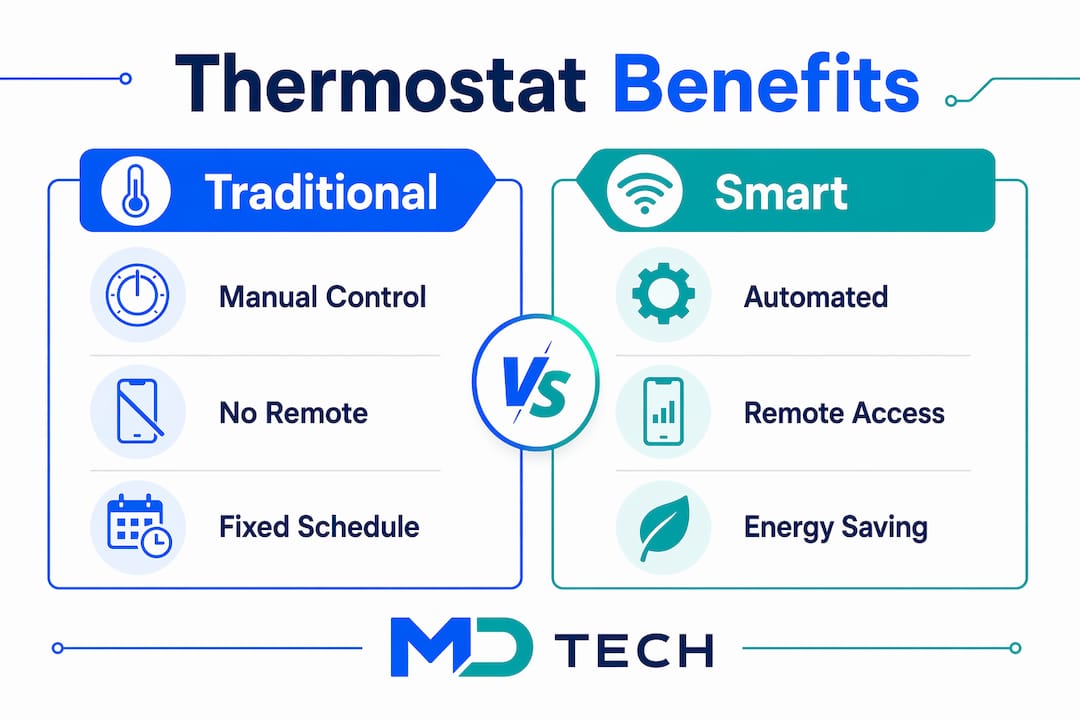
The gap between a smart thermostat and a traditional one is wider than most homeowners expect. A traditional thermostat does one thing: hold a temperature you set manually. It has no memory, no connectivity, and no ability to respond to changes in your schedule or the weather outside.
Programmable thermostats were supposed to solve that problem. They let you set different temperatures for different times of day. The problem is that programmable thermostats often cause high energy use due to user programming errors. Most homeowners set them once and never update the schedule when seasons change, vacations happen, or work schedules shift. The result is a device that runs on a stale program and delivers none of the promised savings.
| Feature | Traditional thermostat | Programmable thermostat | Smart thermostat |
|---|---|---|---|
| Remote access | No | No | Yes, via app |
| Learning capability | No | No | Yes |
| Geofencing | No | No | Yes |
| HVAC diagnostics | No | No | Yes |
| Voice control | No | No | Yes |
| Energy reports | No | No | Yes |
| Requires manual updates | Yes | Yes | No |
Smart thermostats eliminate user error by automating the scheduling process entirely. The device observes your behavior and adjusts without you needing to reprogram anything. That automation is the core reason smart thermostats deliver actual savings while programmable thermostats often don’t.
Pro Tip: If you’re upgrading from a programmable thermostat, resist the urge to manually override the smart thermostat’s schedule during the first two weeks. Let it observe your real habits before you judge its performance.
Installing a smart thermostat: what homeowners need to know
Installation is where many homeowners hit their first obstacle. The most common issue is the C-wire, or common wire. Many homes lack a C-wire, which smart thermostats need to draw continuous power for Wi-Fi connectivity. Without it, the device may not power on reliably or may drain your system’s batteries quickly.
Several solutions exist. Some smart thermostat models include an adapter kit that works without a C-wire. Others require a licensed technician to run a new wire. Checking your existing thermostat’s wiring before purchasing a new device saves you from an unpleasant surprise on installation day.
Placement matters just as much as wiring. Avoid installing your thermostat in direct sunlight, near drafts, or in rarely used hallways. A thermostat in direct sun reads a higher temperature than the rest of your home and runs your air conditioner longer than necessary. Proper thermostat placement is one of the most overlooked factors in getting accurate, efficient performance.
- Check for a C-wire before purchasing. Look at your current thermostat’s wiring panel for a wire connected to the “C” terminal.
- Confirm HVAC compatibility. Most smart thermostats work with standard forced-air systems but may not support multi-stage heat pumps or steam boilers without additional hardware.
- Choose the right location. An interior wall in a frequently used room, away from windows and vents, gives the most accurate readings.
- Consider professional installation. A licensed technician handles wiring, compatibility checks, and placement in one visit, reducing the risk of sensor errors or connectivity problems.
- Watch for subscription fees. Some advanced features, like detailed energy reports or extended diagnostics, require a monthly subscription on certain platforms.
DIY installation is manageable for homeowners comfortable with basic wiring. However, if your system is older or uses non-standard wiring, professional installation protects both your equipment and your warranty. The HVAC efficiency gains you expect only materialize when the device is correctly wired and placed.
Key Takeaways
A smart thermostat delivers real energy savings only when it is correctly installed, properly placed, and given time to learn your actual routine.
| Point | Details |
|---|---|
| Core definition | A smart thermostat is a Wi-Fi-enabled device that automates home heating and cooling based on habits and occupancy. |
| Energy savings | Homeowners can reduce HVAC costs by 10–15% annually through automated, occupancy-based scheduling. |
| Key advantage over programmable | Smart thermostats eliminate user programming errors by learning your schedule automatically. |
| Installation requirement | Check for a C-wire before buying; its absence may require an adapter kit or professional wiring. |
| Placement accuracy | Install away from sunlight, drafts, and unused rooms to prevent false sensor readings that waste energy. |
What I’ve learned after seeing hundreds of thermostat installs
Most homeowners I talk to underestimate how much a thermostat’s location affects its performance. They buy a well-reviewed device, install it in the hallway near the front door, and then wonder why their energy bills barely move. The device isn’t the problem. The placement is.
The other thing I’ve noticed is that homeowners who let the learning algorithm run without interference for the first two weeks get dramatically better results than those who constantly override it. The device needs real behavioral data to build an accurate schedule. Every manual override resets part of that learning process.
I’m also watching the integration between smart thermostats and whole-home systems get tighter every year. The 2025 HVAC trends point toward thermostats that communicate directly with air quality monitors, water heaters, and solar inverters. That level of coordination will make today’s standalone smart thermostat look like a first draft. Homeowners who invest in a compatible ecosystem now will be positioned to add those layers without replacing everything.
The honest truth is that a smart thermostat is not magic. It works best in homes where the HVAC system itself is in good condition. A device that detects your furnace struggling to reach temperature is valuable. But it cannot fix a failing heat exchanger or a refrigerant leak. The thermostat is the brain. The HVAC system still has to be the body.
— MDTECH
Professional smart thermostat and HVAC services in Orange County
Choosing the right smart thermostat is only half the equation. Correct installation and a healthy HVAC system are what actually deliver the energy savings and comfort you’re expecting.

Appliancesrepairmdtech serves homeowners across Orange County and Los Angeles County with licensed HVAC technicians who handle smart thermostat installation, compatibility checks, and full HVAC repair services. Whether you need a C-wire added, a system compatibility assessment, or a full HVAC tune-up before installing a new device, the team at Appliancesrepairmdtech gets it done right the first time. Book an appointment online and get your home’s climate control working the way it should.
FAQ
What does a smart thermostat do differently than a regular one?
A smart thermostat learns your schedule, uses geofencing to detect when you’re home, and lets you control temperature remotely via a smartphone app. Traditional thermostats require manual adjustments and have no connectivity or learning capability.
How much can a smart thermostat save on energy bills?
Smart thermostats reduce heating and cooling costs by 10–15% annually by matching system operation to actual occupancy rather than a fixed schedule.
Do I need a C-wire to install a smart thermostat?
Most smart thermostats require a C-wire for continuous power. If your home lacks one, you can use a manufacturer-supplied adapter kit or have a licensed technician install the wire directly.
Can a smart thermostat work with Alexa or Google Assistant?
Yes. Most current smart thermostats connect with Alexa, Google Assistant, and Siri, allowing voice-controlled temperature adjustments without touching the device or your phone.
Where is the best place to install a smart thermostat?
Install it on an interior wall in a frequently used room, away from direct sunlight, drafts, and exterior walls. Poor placement causes false temperature readings that force your HVAC system to run longer than needed.