
TL;DR:
- A circuit breaker automatically cuts off electrical power to protect your home from faults and overloads. It operates using thermal and magnetic mechanisms to trip during overloads or short circuits, preventing fires and damage. Regular maintenance and professional inspection ensure safety, especially for older panels or recurrent trip issues.
A circuit breaker is defined as an automatic safety switch that cuts off electrical power when a circuit carries too much current or develops a fault. Every home in the United States relies on these devices to prevent electrical fires, protect appliances, and keep wiring from overheating. Understanding how a circuit breaker works, which types exist, and when yours needs attention gives you real control over your home’s safety. This guide covers all of it in plain language, with practical steps you can act on today.
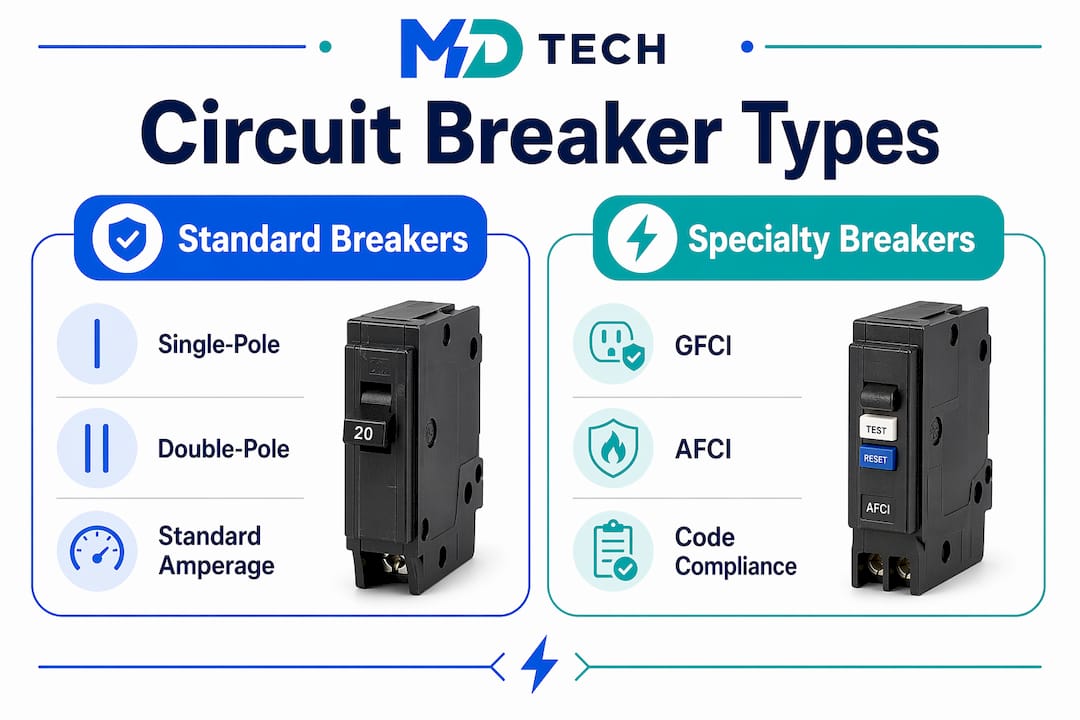
What is a circuit breaker and how does it protect your home?
A circuit breaker is the first line of defense between your home’s wiring and a dangerous electrical fault. When current exceeds the safe limit for a circuit, the breaker trips and cuts power instantly. Circuit breakers interrupt power in as little as 4 milliseconds on a fault. That speed is what separates a tripped breaker from a house fire.
The breaker sits inside your main electrical panel, which is usually mounted on a wall in a garage, utility room, or basement. Each breaker controls one circuit in your home, such as the kitchen outlets, the master bedroom lights, or the dryer. When that circuit draws too much power, the breaker trips to the OFF position and stops the flow of electricity. You reset it manually once the problem is resolved.
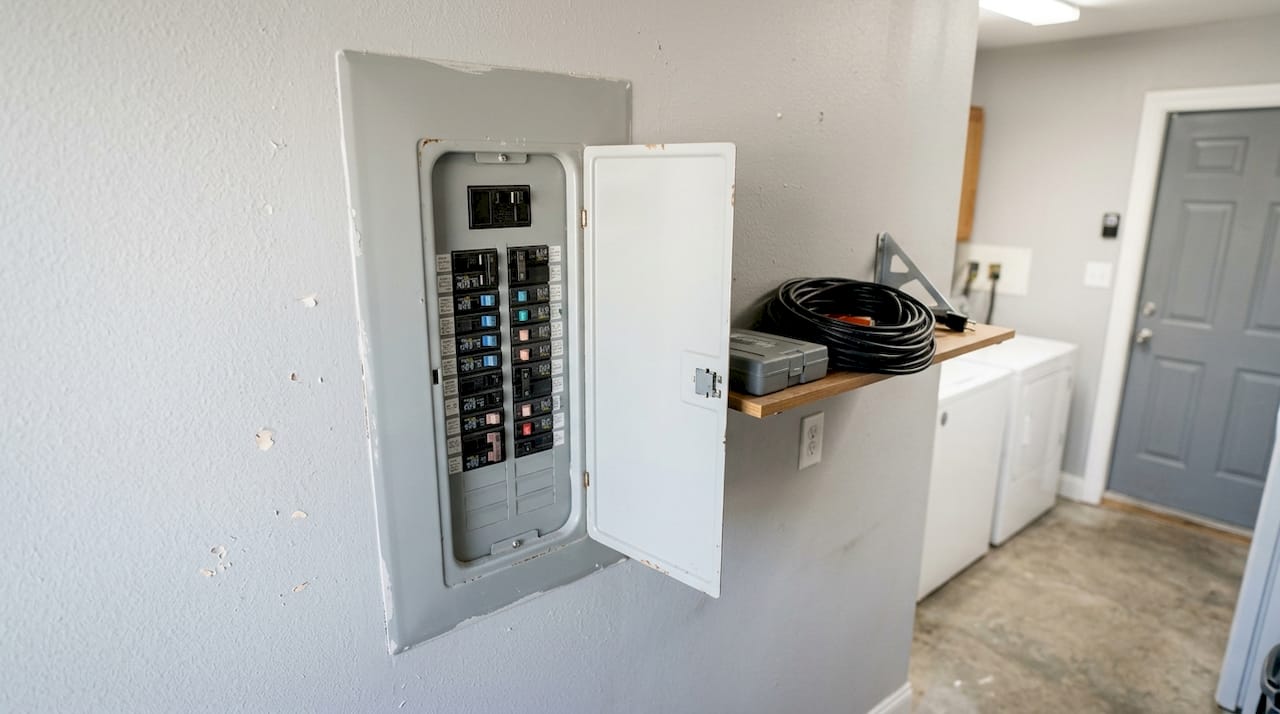
This resettable design is the key advantage over older fuses. A fuse burns out and must be replaced after every fault. A breaker resets in seconds. That said, a breaker that trips repeatedly is telling you something is wrong with the circuit, not just asking you to flip a switch.
How does a circuit breaker work inside your electrical panel?
Two separate mechanisms inside a breaker detect different types of faults, and each one trips the breaker in a different way.
The thermal trip uses a bimetallic strip, which is two metals bonded together that expand at different rates when heated. When a circuit draws more current than its rated limit for a sustained period, the strip heats up, bends, and releases the breaker’s latch. This protects against overloads, such as running too many appliances on one circuit at the same time.
The magnetic trip uses an electromagnet. A short circuit sends a sudden, massive surge of current through the breaker. That surge instantly magnetizes the coil, which pulls the latch and trips the breaker in milliseconds. This is the mechanism that responds to a direct wire-to-wire fault or a failed appliance.
Here is what each trip type signals:
- Overload trip: The circuit is carrying more load than it was designed for. Unplug some devices and reset.
- Short circuit trip: A wiring fault or failed appliance caused a sudden surge. Investigate before resetting.
- Ground fault trip (on GFCI breakers): Current is leaking to ground, often through water or damaged insulation.
Pro Tip: Before resetting a tripped breaker, always move the handle fully to OFF first, then back to ON. Skipping the full OFF position means the breaker may not reset properly and can trip again immediately.
Understanding why breakers trip helps you respond correctly instead of just flipping the switch and hoping for the best.
What types of circuit breakers are common in residential panels?
Residential panels use several distinct breaker types, and each one serves a specific purpose. Choosing the wrong type, or skipping a required type, creates real safety and code compliance problems.
Standard single-pole breakers handle most household circuits. Standard residential breakers are rated at 15A or 20A for 120V circuits, covering lights, outlets, and small appliances. A 15A breaker protects bedroom and hallway circuits. A 20A breaker handles kitchen countertop outlets and bathroom receptacles.
Double-pole breakers occupy two slots in the panel and supply 240V to large appliances. They are rated from 30A to 60A and power electric dryers, water heaters, central air conditioners, and electric ranges.
Specialized breakers go beyond simple overload protection:
- GFCI breakers (Ground Fault Circuit Interrupter): Detect tiny current leaks to ground and trip in milliseconds. Required by code in bathrooms, kitchens, garages, and outdoor circuits.
- AFCI breakers (Arc Fault Circuit Interrupter): Detect dangerous electrical arcing in wiring and connections. AFCI and GFCI requirements are now standard in modern residential codes for bedrooms and living areas. Learning about electrical arcing dangers explains why these breakers matter so much.
- Dual-function breakers: Combine both AFCI and GFCI protection in a single unit, required in some newer construction zones.
| Breaker type | Voltage | Typical amperage | Primary use |
|---|---|---|---|
| Single-pole | 120V | 15A–20A | Lights, outlets, small appliances |
| Double-pole | 240V | 30A–60A | Dryers, HVAC, water heaters |
| GFCI | 120V | 15A–20A | Wet locations: baths, kitchens, outdoors |
| AFCI | 120V | 15A–20A | Bedrooms, living rooms, arc fault protection |
| Dual-function | 120V | 15A–20A | Combined arc and ground fault protection |
Code compliance increasingly requires AFCI and GFCI breakers in specific home zones. Older homes built before these requirements may lack this protection entirely.
When does your circuit breaker need servicing or replacement?
Residential circuit breakers last 25–30 years under normal conditions. Frequent trips, high humidity, and physical damage all shorten that lifespan. Knowing the warning signs prevents a failing breaker from becoming a fire hazard.
Watch for these specific signs that a breaker needs professional attention:
- Scorch marks or melted plastic on or around the breaker. Visible damage like scorch marks signals hazardous failure and requires immediate replacement.
- Burning smell from the panel, even without visible marks.
- Breaker trips immediately when reset. A breaker that trips instantly on reset usually points to a wiring or appliance fault, not the breaker itself.
- Handle moves to ON but circuit stays dead. This indicates stuck contacts inside the breaker, which is a mechanical failure.
- Breaker feels warm with no load on the circuit. A warm breaker under heavy use is normal. A warm breaker with nothing running signals internal arcing or resistance.
- Rust or corrosion on the breaker body or panel interior.
A circuit breaker that shows physical damage, trips without a clear load reason, or fails to restore power after resetting is not a nuisance. It is a fire risk. Do not delay calling a licensed electrician when any of these signs appear.
Pro Tip: Check your panel’s manufacture date, usually printed on a label inside the door. If the panel is over 25 years old, schedule a professional inspection even if nothing looks wrong. Age alone increases failure risk.
Reviewing your appliance lifespan expectations alongside your panel age gives you a clearer picture of what needs attention in your home.
What maintenance habits keep your circuit breakers safe?
Regular attention to your electrical panel costs nothing but time and prevents expensive repairs. Most homeowners never open the panel door until something goes wrong. That is the wrong approach.
Do these things regularly:
- Open the panel door every six months and look for rust, scorch marks, moisture, or any breaker that sits at an angle.
- Test GFCI breakers monthly by pressing the TEST button. The circuit should go dead. Press RESET to restore power.
- Label every breaker clearly so you know which circuit each one controls. Unlabeled panels slow down emergency response.
- Match replacement breakers to your panel’s brand and model. Breakers must be compatible with the panel brand to avoid overheating and nuisance trips. Mixing brands compromises contact pressure and trip accuracy.
Avoid these common mistakes:
- Never use a higher-amperage breaker to “fix” a circuit that keeps tripping. That removes the protection the breaker provides.
- Do not ignore a breaker that trips more than twice in a week. Repeated trips mean a real problem exists on that circuit.
- Avoid resetting a breaker more than twice without diagnosing the cause. Repeated resets stress the internal mechanism.
- Do not attempt to replace a main breaker or add new circuits yourself. Those tasks require a licensed electrician.
Upgrading older breakers to AFCI or GFCI models where code now requires them is one of the highest-value safety improvements you can make in an older home. A licensed electrician can assess your panel and recommend which circuits need upgraded protection.
How to troubleshoot a tripped breaker safely
A tripped breaker does not always mean the breaker is broken. Breakers trip mainly due to circuit faults, not mechanical failure. Working through a simple process before calling an electrician saves time and money.
Follow these steps in order:
- Identify the tripped breaker. It will be in the middle position between ON and OFF, or fully in the OFF position depending on the panel brand.
- Unplug every device on that circuit. Do not skip this step. Resetting without unplugging causes repeated trips and stresses the breaker.
- Reset the breaker. Move the handle fully to OFF, then firmly to ON.
- Plug devices back in one at a time. If the breaker trips when you plug in a specific appliance, that appliance is the problem, not the circuit.
- If the breaker trips with nothing plugged in, the fault is in the wiring itself. Stop resetting and call a licensed electrician.
- If the breaker trips immediately every time you reset it, do not reset it again. A breaker that trips instantly on reset signals a wiring fault or a failed appliance that needs professional diagnosis.
The most common homeowner mistake is assuming the breaker is faulty when the circuit or an appliance is the real problem. Replacing the breaker without diagnosing the underlying fault results in the new breaker tripping immediately. A homeowner’s guide to circuit breaker issues reinforces this point: the breaker is the messenger, not the cause.
Key Takeaways
A circuit breaker is an automatic safety switch that protects your home’s wiring, appliances, and occupants by cutting power the instant a dangerous fault occurs.
| Point | Details |
|---|---|
| Core function | Circuit breakers interrupt power in as little as 4 milliseconds to prevent fires and equipment damage. |
| Breaker types matter | Match the breaker type to the circuit: single-pole for 120V, double-pole for 240V, GFCI for wet areas, AFCI for living spaces. |
| Lifespan is finite | Breakers last 25–30 years; humidity, frequent trips, and physical damage shorten that window. |
| Trips signal problems | A tripped breaker is protecting you. Unplug devices and diagnose before resetting to avoid repeated stress. |
| Visible damage is urgent | Scorch marks, melted plastic, or a warm breaker with no load require an electrician, not a reset. |
What I’ve learned from years of watching homeowners handle breaker problems
Homeowners treat a tripped breaker like a minor inconvenience, and that attitude is the root of most electrical problems I see. The breaker tripped because it was doing its job. Flipping it back without asking why is like silencing a smoke alarm and going back to sleep.
The second pattern I see constantly is deferred maintenance. A panel that smells faintly of burning, a breaker that trips every few weeks, a label that reads “unknown” on three slots. These are not minor issues. They are a slow-moving hazard that homeowners normalize because nothing has gone wrong yet.
The practical truth is this: most breaker problems are circuit problems. The breaker is fine. An overloaded outlet, a failing appliance, or aging wiring is the real culprit. Spending $200 on a new breaker when the dryer motor is the problem solves nothing. Diagnose first, replace second.
My honest recommendation is to treat your electrical panel the way you treat your HVAC system. Schedule a professional inspection every few years, test your GFCI breakers monthly, and replace anything that shows physical damage without waiting to see what happens next. The cost of prevention is always lower than the cost of a fire.
— MDTECH
Appliancesrepairmdtech is here when your home needs expert help
Electrical and appliance problems rarely happen at a convenient time. Appliancesrepairmdtech serves homeowners across Orange County and Los Angeles County with fast, reliable repair and inspection services from licensed technicians who know what to look for.
Whether you need help diagnosing a repeatedly tripping circuit, replacing a damaged appliance component, or scheduling a panel inspection, Appliancesrepairmdtech connects you with the right professional quickly. The team handles everything from refrigerators and dryers to HVAC systems, with online booking available for both urgent and scheduled appointments. If you are weighing your options, the repair vs. replacement guide helps you make the right call before spending money on the wrong fix. For appliance part issues specifically, the appliance parts repair guide walks you through what to expect from a professional repair.
FAQ
What is a circuit breaker in simple terms?
A circuit breaker is an automatic switch that cuts off electrical power when a circuit carries too much current or develops a fault, protecting your home from fires and equipment damage.
How does a circuit breaker work when it trips?
A bimetallic strip responds to sustained overloads by bending and releasing the breaker’s latch, while an electromagnet responds to sudden short circuits by tripping the breaker in milliseconds.
What are the main types of circuit breakers for homes?
The main types are single-pole (15A–20A for 120V), double-pole (30A–60A for 240V), GFCI for wet locations, AFCI for living areas, and dual-function breakers that combine both AFCI and GFCI protection.
How long do circuit breakers last?
Residential circuit breakers typically last 25–30 years, though frequent trips, high humidity, and physical damage can shorten that lifespan significantly.
When should I call an electrician for a circuit breaker?
Call a licensed electrician if you see scorch marks, smell burning from the panel, or if the breaker trips immediately every time you reset it. These signs indicate a fault that resetting alone cannot fix.