
TL;DR:
- Surge protectors prevent electrical damage by diverting voltage spikes to ground and absorbing excess energy. They degrade over time and require regular replacement, especially after major surge events. Proper grounding and layered protection at the panel and individual outlets are essential for effective safeguarding of electronics.
Surge protectors are devices that block harmful voltage spikes and divert excess current to ground before it reaches your electronics. The role of surge protectors in a home is more significant than most homeowners realize. The National Electrical Code (NEC) now mandates surge protection device installation whenever a home’s electrical service is replaced or modified in jurisdictions that have adopted the 2020 NEC standards or newer. Yet millions of homes still run expensive appliances and electronics with zero protection. Understanding what surge protectors actually do, and how to use them correctly, is the most cost-effective step you can take to protect your appliances.
How do surge protectors work to prevent electrical damage?
Surge protectors work by creating a low-impedance path to ground that safely dissipates excess voltage before it reaches your devices. The core component inside every surge protector is a Metal Oxide Varistor, or MOV. When voltage spikes above a safe threshold, the MOV absorbs the excess energy and redirects it away from your connected electronics.
The catch is that MOVs degrade with every surge they absorb. A surge protector that has taken several hits may still power your devices while offering zero actual protection. This is why a protection indicator light is not optional; it is the only way to know whether your unit is still doing its job.
Proper grounding is equally critical. Without a grounded outlet, surge protectors cannot divert excess current effectively. The ground wire is the escape route for surge energy. Plug a surge protector into an ungrounded two-prong outlet and you have a power strip, not a protective device.
Common causes of power surges fall into two categories:
- External surges: Lightning strikes, utility grid switching, and downed power lines
- Internal surges: Large appliances like refrigerators, air conditioners, and washing machines cycling on and off
Pro Tip: Use a simple outlet tester, available at any hardware store, to confirm your outlets are properly grounded before plugging in any surge protector.
Surge protectors are not the same as lightning rods. A lightning rod diverts a direct strike away from a structure. A surge protector handles the residual voltage that travels through your home’s wiring after a nearby strike or grid event. Both serve different functions and neither replaces the other.
What is the importance of surge protectors in modern homes?
87% of buildings experience at least 50 power surges annually, and 23% of those surges exceed 1,500 volts. Voltage at that level causes irreversible damage to circuit boards, processors, and sensitive electronics. That statistic reframes the importance of surge protectors entirely. This is not a rare-weather problem. It is a daily electrical reality in nearly every home.
The more surprising finding is where most damaging surges actually originate. Major surges come primarily from large appliances cycling and utility-side grid events, not lightning. Your refrigerator compressor kicking on sends a small voltage spike through your home’s wiring every single time. Over months and years, those minor spikes degrade the sensitive components inside your TV, laptop, and smart home devices.
The real threat is not the dramatic lightning strike. It is the quiet, daily accumulation of small voltage spikes that slowly destroy the electronics you rely on most. A single surge event rarely kills a device outright. Cumulative damage does.
The NEC’s updated requirements reflect this reality. NEC code adoption and grid instability have made surge protection a recognized necessity, not an optional upgrade. Homeowners who have recently had their electrical panels replaced or upgraded may already be required to have surge protection installed under local code.
Whole-home surge protection and point-of-use protectors serve different but complementary roles. A whole-home surge protector installs at the electrical panel and absorbs large surges before they enter your home’s wiring. Point-of-use protectors at individual outlets catch whatever smaller surges make it through. Using only one layer leaves gaps. Using both creates a defense that covers the full range of surge types your home faces.
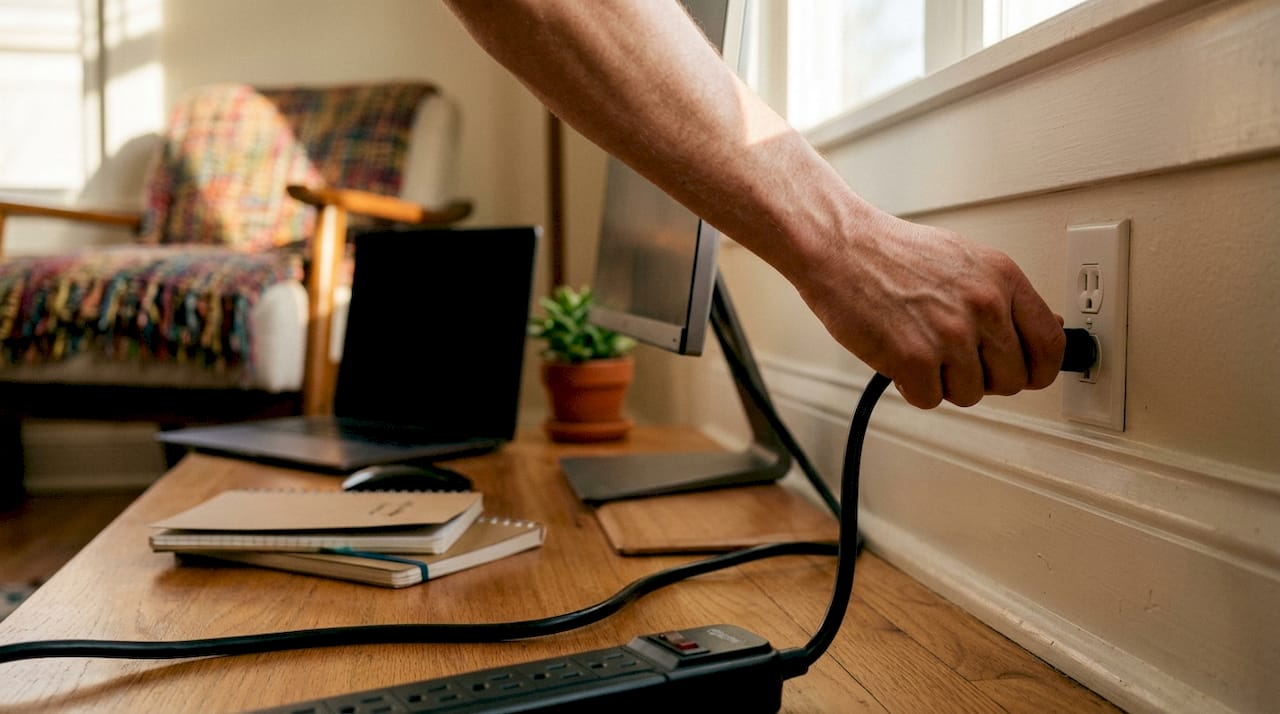
Renters face a specific challenge here. You cannot install a whole-home device without landlord approval. That makes high-quality point-of-use surge protectors your primary line of defense. Prioritize them for your most expensive and sensitive electronics first: computers, televisions, gaming consoles, and home office equipment.
Understanding electrical arcing dangers and surge-related risks together gives you a clearer picture of how electrical problems compound over time in a home.
What types of surge protectors are available?
Choosing the right surge protector starts with understanding joule ratings and let-through voltage. Joule ratings measure how much surge energy a protector can absorb before its MOVs fail. Let-through voltage is the maximum voltage that passes through to your devices during a surge event.
| Device type | Recommended joule rating | Notes |
|---|---|---|
| Lamps and small appliances | Up to 1,000 J | Basic protection is sufficient |
| Computers and TVs | 1,000–2,000 J | Higher sensitivity requires more capacity |
| Home theater or audio equipment | 2,000 J or higher | Multiple sensitive components need maximum coverage |
| Refrigerators, AC units, microwaves | Direct wall outlet only | High-power appliances must never use plug-in protectors |
The three main product categories each serve a distinct purpose:
Plug-in surge protectors are the most common. They fit into a standard outlet and protect whatever is plugged into them. Look for UL 1449 certification, a protection indicator light, and a connected equipment warranty. The warranty signals that the manufacturer stands behind the device’s actual protective capability.
Whole-home surge protection devices install at the electrical panel and handle large-scale surges from the grid or nearby lightning. They do not replace point-of-use protectors but significantly reduce the surge energy that reaches individual outlets.
Power strips with built-in surge protection look identical to basic power strips. The difference is internal MOV components. Always check for a joule rating on the label. A power strip with no joule rating listed offers no surge protection at all, regardless of what the packaging implies.
Pro Tip: Never plug a refrigerator, air conditioner, or microwave into a standard plug-in surge protector. The high current draw creates a fire risk and can damage both the appliance and the protector. These appliances connect directly to a dedicated wall outlet.
Checking your circuit breaker behavior alongside surge protector use helps you identify whether your home’s electrical system is handling load demands safely.
How to properly use and maintain surge protectors
Getting the most from surge protection requires more than buying the right device. Correct installation and regular maintenance determine whether your protectors actually work when a surge hits.
-
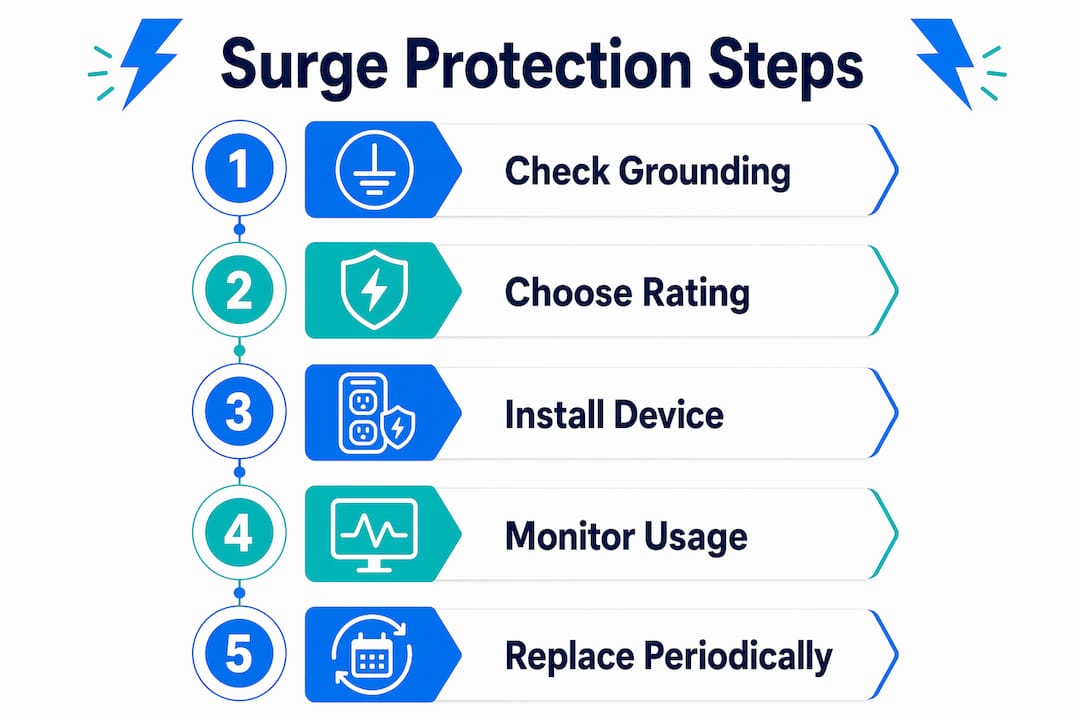
Verify outlet grounding first. Plug a surge protector only into a three-prong grounded outlet. An ungrounded outlet renders the protector ineffective. Use an inexpensive outlet tester before installation.
-
Check the protection indicator light regularly. A lit indicator confirms the MOVs are still functional. If the light is off but the unit still powers devices, the protector has failed silently. Replace it immediately.
-
Replace after significant surge events. A major lightning storm or grid event can exhaust a protector’s joule capacity in a single incident. MOV degradation is cumulative and invisible. Do not assume a protector that survived a storm is still protecting your devices.
-
Replace on a schedule regardless of events. Even without major surges, years of minor spikes degrade MOV components. Most manufacturers recommend replacement every two to three years for units in active use.
-
Layer your protection. Combine a whole-home surge protection device at the electrical panel with point-of-use protectors at individual outlets. Whole-home devices absorb large surges at the panel, and point-of-use protectors handle residual spikes that make it through.
Pro Tip: Label your surge protectors with the installation date using a piece of tape. This makes replacement scheduling simple and removes any guesswork about how long a unit has been in service.
Surge protectors are not a “set it and forget it” solution. Treating them as permanent fixtures is one of the most common and costly mistakes homeowners make. An expired protector provides false confidence while leaving your electronics fully exposed. Pair surge protection awareness with a broader preventive maintenance routine to keep your home’s electrical systems in reliable condition.
Key Takeaways
Surge protectors are the most cost-effective defense against the daily voltage spikes that silently degrade and destroy home electronics over time.
| Point | Details |
|---|---|
| MOVs degrade over time | Replace surge protectors every two to three years or after any major surge event. |
| Grounding is non-negotiable | A surge protector in an ungrounded outlet provides no protection at all. |
| Layer your defense | Combine whole-home panel protection with point-of-use protectors for full coverage. |
| Joule ratings matter | Use 1,000–2,000 joules for computers and TVs; higher for home theater equipment. |
| High-power appliances are excluded | Refrigerators, AC units, and microwaves must plug directly into wall outlets, not surge protectors. |
What I’ve learned from years of surge-damaged appliances
Most homeowners I talk to think surge protection is a lightning problem. They live in a mild-weather area, they have never seen a dramatic strike, and so they assume their electronics are fine. That assumption is wrong, and it costs them real money.
The refrigerator compressor cycling in your kitchen sends a small voltage spike through your home’s wiring dozens of times a day. Your HVAC system does the same. None of these events feel dramatic. None of them trip a circuit breaker. But over two or three years, those spikes quietly degrade the control boards inside your washer, the processor in your smart TV, and the power supply in your laptop.
The other mistake I see constantly is treating surge protectors as permanent fixtures. A homeowner buys a quality unit, plugs it in behind the entertainment center, and never thinks about it again for five years. By year three, the MOVs are likely exhausted. The unit still powers every device. The protection indicator light may even still glow. But the actual protection is gone.
My honest recommendation: invest in a whole-home surge protection device at your electrical panel if you own your home. The upfront cost is modest compared to replacing a refrigerator control board or a high-end television. If you rent, prioritize quality point-of-use protectors with high joule ratings for your most expensive electronics, and replace them on schedule. Consult a licensed electrician for panel-level installation. This is not a DIY project.
— MDTECH
Appliance protection starts with the right foundation
Surge protectors guard your electronics from the inside out, but even the best protection cannot undo damage that has already occurred. When a surge event does affect an appliance, fast and accurate diagnosis makes the difference between a simple repair and a full replacement.
Appliancesrepairmdtech serves homeowners and renters across Orange County and Los Angeles County with licensed technicians who diagnose and repair surge-related appliance damage quickly. Whether your refrigerator control board took a hit or your washer stopped responding after a grid event, the team at Appliancesrepairmdtech provides reliable appliance repair services to get your home running again. If you are weighing whether to repair or replace a damaged appliance, the Appliancesrepairmdtech repair vs. replacement guide gives you a clear framework for making the right call.
FAQ
What is the main role of surge protectors in a home?
Surge protectors limit voltage spikes and divert excess current to ground, preventing that energy from reaching and damaging connected electronics. They protect devices from both external events like grid switching and internal sources like large appliances cycling.
How often should I replace a surge protector?
Replace surge protectors every two to three years under normal use, or immediately after a major surge event such as a lightning storm. MOV components degrade with each surge absorbed and may stop protecting your devices without any visible sign of failure.
Do surge protectors work without a grounded outlet?
No. A surge protector requires a properly grounded outlet to divert excess current safely to earth. Plugging one into an ungrounded two-prong outlet turns it into a basic power strip with no protective function.
Can I plug my refrigerator into a surge protector?
Refrigerators, air conditioners, and microwaves must plug directly into a dedicated wall outlet. High-current appliances draw too much power for standard plug-in surge protectors and create a fire risk when connected to them.
What joule rating do I need for a computer or TV?
A joule rating of 1,000–2,000 joules is the recommended range for computers and televisions. Higher-value or more sensitive equipment benefits from ratings above 2,000 joules for stronger protection against larger surge events.