
TL;DR:
- Pilot light failure occurs when the small flame inside a gas appliance goes out or cannot stay lit, disrupting operation. The primary causes include thermocouple degradation and clogged pilot orifices, both diagnosable before calling a professional. Homeowners can safely relight pilots by following proper steps, but persistent issues require professional repair to ensure safety and proper functioning.
Pilot light failure is defined as the condition where the small standing flame inside a gas appliance extinguishes or refuses to stay lit, cutting off the ignition source that keeps your furnace, water heater, or boiler running. The industry term for this condition is “pilot outage,” though homeowners and technicians alike use pilot light failure interchangeably. Two components sit at the center of almost every case: the thermocouple, a heat-sensing safety device, and the pilot orifice, the tiny opening that delivers gas to the flame. When either fails, your appliance stops producing heat or hot water. Understanding why this happens is the fastest path to fixing it safely.
What is pilot light failure in gas appliances?
Pilot light failure means the continuous flame that triggers combustion in your gas appliance has gone out and cannot maintain itself. The pilot light serves one job: stay lit long enough to heat the thermocouple, which then signals the gas valve to stay open. When that chain breaks, the entire appliance shuts down as a safety measure.
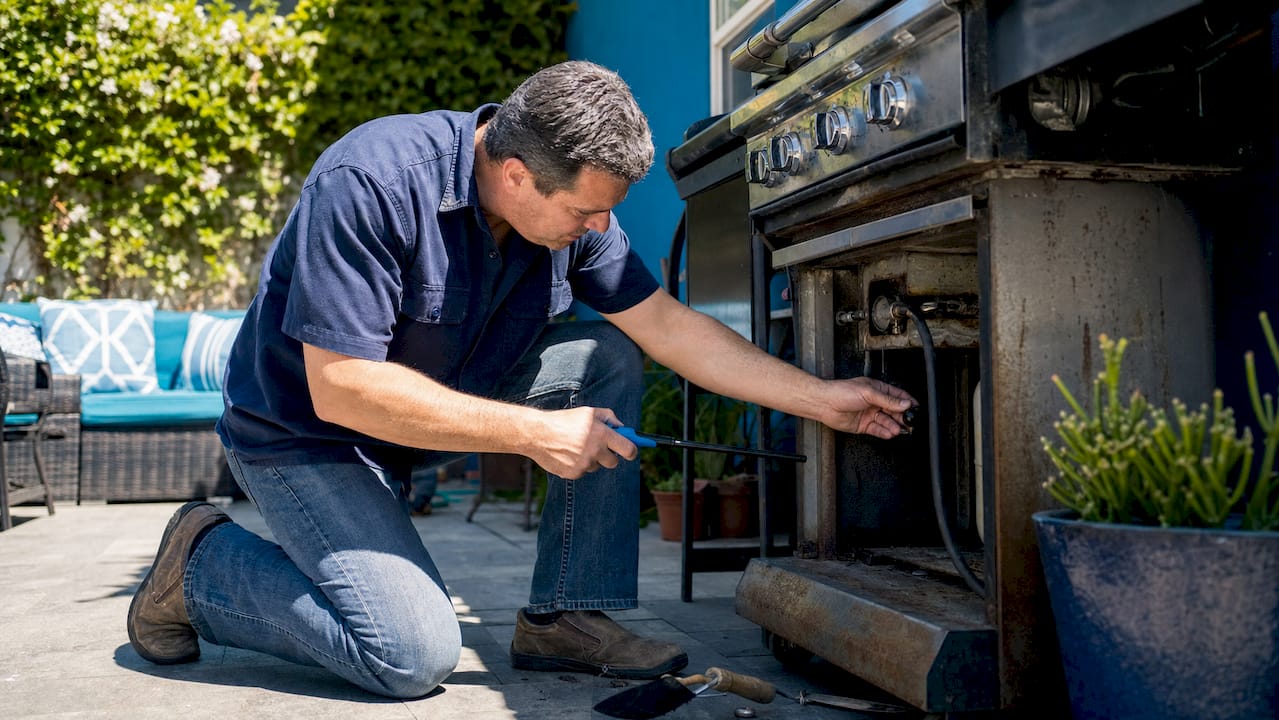
The thermocouple must generate 20–30 millivolts through direct flame contact to hold the gas valve open. That is a razor-thin margin. Even a slight shift in flame position can drop the voltage below the threshold and close the valve, even when the flame appears steady to the naked eye.
Faulty or dirty thermocouples cause over 50% of pilot failure service calls. That single statistic tells you where to look first before assuming a bigger problem exists. The pilot orifice ranks second, with soot or debris narrowing the opening and producing a weak flame that cannot heat the thermocouple properly.
What are the main causes of pilot light failure?
Several distinct problems trigger pilot outages. Knowing which one applies to your appliance saves you time and prevents unnecessary part replacements.
- Thermocouple failure: The thermocouple degrades from thermal stress and soot buildup over years of use. A worn thermocouple cannot generate enough voltage to hold the gas valve open, so the pilot goes out seconds after you release the control knob.
- Clogged pilot orifice: Dust, rust, and combustion debris collect inside the tiny orifice over time. The result is a weak, unstable flame that fails to make full contact with the thermocouple tip.
- Gas supply interruptions: Low gas pressure or a temporarily closed supply valve starves the pilot of fuel. This is common after utility work in your neighborhood or after someone accidentally bumps the shutoff valve.
- Drafts and poor ventilation: External drafts can physically blow out a standing pilot flame. Appliances installed near vents, open windows, or in poorly sealed utility closets are especially vulnerable.
- Modern ignition differences: Many modern appliances use electronic ignition instead of standing pilots. These systems spark only on demand, so they do not have a thermocouple in the traditional sense. If you own a post-2010 furnace or water heater, your troubleshooting steps differ significantly from older standing-pilot models.
Pro Tip: Before touching anything, check whether your appliance uses a standing pilot or electronic ignition. Look for a small always-on flame through the inspection window. No flame visible between cycles means you have electronic ignition, and the fix involves the igniter or control board, not the thermocouple.
Standing pilot lights consume gas continuously, costing roughly $7–$12 per year, and electronic ignition systems common since 2010 eliminate that waste entirely. The energy savings are modest, but the elimination of thermocouple failure risk is the real benefit of upgrading.
How can you recognize signs of pilot light problems?
Pilot light problems announce themselves clearly if you know what to watch for. The flame itself is your best diagnostic tool.
A healthy pilot flame is a stable, sharp blue cone. A yellow or lifting flame is a critical warning sign indicating incomplete combustion, risk of carbon monoxide production, and soot buildup. Yellow means the gas-to-air ratio is off. A lifting flame means the gas pressure is too high or the orifice is partially blocked. Both conditions require immediate attention, not just a relight attempt.
Beyond flame color, watch for these symptoms:
- Pilot light keeps going out: The flame lights but dies within 30–60 seconds of releasing the control knob. This points directly to thermocouple failure or poor flame-to-thermocouple contact.
- No heat or hot water: Your furnace or water heater cycles on but produces nothing. The pilot outage has closed the main gas valve, so no fuel reaches the burner.
- Gas odor near the appliance: A faint smell of gas near the unit without a visible flame is a serious warning. It means gas is escaping without igniting.
- Flame position problems: If the flame does not make full contact with the thermocouple tip, the safety sensor voltage drops and the gas valve closes. The flame can look fine and still cause failure.
Industry experts confirm that flame color and shape offer immediate diagnostic clues. Homeowners who learn to read their pilot flame catch problems early, before a full appliance shutdown occurs.
How to fix a pilot light: safe relighting steps
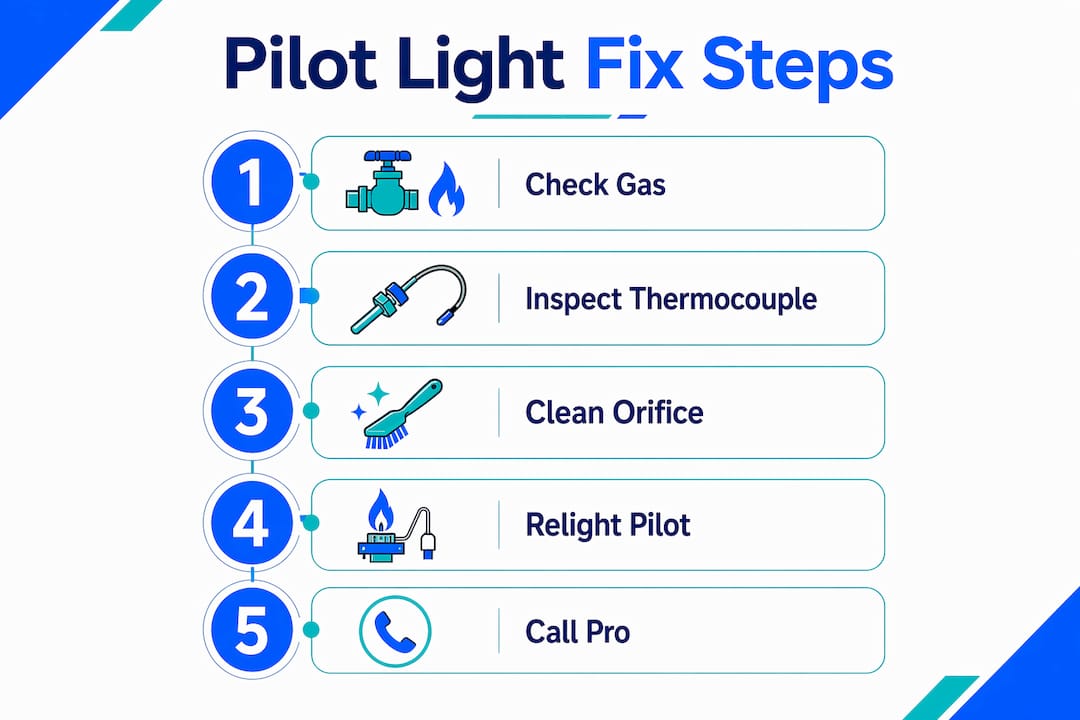
Relighting a pilot is a task most homeowners can handle safely. Follow these steps in order and do not skip the safety checks.
- Check for gas odor first. If you smell gas strongly near the appliance, stop immediately, leave the property, avoid all electrical switches and open flames, and call your gas provider from outside. Never attempt a relight when you detect a strong gas smell.
- Turn the gas control knob to “Off.” Wait a full 5 minutes. This clears any accumulated gas from the combustion chamber before you introduce a spark.
- Locate the pilot assembly. Remove the access panel on your furnace or water heater. You will see a small metal tube leading to the burner area. That tube is the pilot supply line.
- Set the control knob to “Pilot.” Press and hold the knob down. This manually opens the pilot gas supply valve.
- Ignite the pilot. Use a long fireplace lighter or a lit match held near the pilot orifice. Some units have a built-in ignition button you press while holding the control knob.
- Hold the knob down for 30–60 seconds. This gives the thermocouple time to heat up and generate enough voltage to hold the gas valve open on its own.
- Release slowly and observe. If the flame stays lit, turn the control knob to “On” and replace the access panel. If it goes out, repeat once or twice.
Attempting to relight more than 2–3 times without success usually indicates thermocouple failure or a deeper fault. Stop retrying and call a technician at that point.
Pro Tip: Clean the pilot orifice with a thin needle or compressed air before relighting. A partially blocked orifice produces a weak flame that fails the thermocouple test every time, even with a brand-new thermocouple installed.
For ongoing prevention, a furnace maintenance checklist helps you track pilot assembly cleaning, thermocouple inspection, and gas line checks on a regular schedule.
When should you replace parts or call a professional?
DIY troubleshooting has clear limits. Knowing when to stop and call a licensed technician protects both your appliance and your household.
| Component | Symptom | Recommended Fix |
|---|---|---|
| Thermocouple | Pilot goes out within 60 seconds of release | Replace thermocouple ($10–$25, about 30 minutes) |
| Pilot orifice | Weak or yellow flame | Clean with needle or compressed air |
| Gas control valve | Pilot stays lit but main burner won’t fire | Professional replacement required |
| Pilot control knob | Knob feels loose or does not click into position | Professional inspection and replacement |
| Electronic igniter | Clicking sound but no flame on modern unit | Professional diagnosis of igniter or control board |
Replacing a thermocouple costs $10–$25 and takes most homeowners about 30 minutes with basic tools. That makes it the one repair worth attempting yourself before calling for service.
Call a licensed technician when you encounter any of the following:
- Gas odor persists after the pilot is lit
- The main gas valve or control assembly shows physical damage
- The pilot fails repeatedly after thermocouple replacement
- You own a post-2010 appliance with electronic ignition and the igniter does not spark
Appliances with intermittent pilot or direct spark ignition eliminate continuous thermal stress on the thermocouple, which reduces pilot-related failures overall. If your appliance is more than 15 years old and experiencing repeated outages, the cost of ongoing repairs may exceed the value of the unit. The repair vs. replacement decision depends on repair frequency, part availability, and appliance age.
Preventive maintenance is the most cost-effective strategy. Scheduling annual HVAC service extends appliance life and catches thermocouple degradation before it causes a full shutdown.
Key takeaways
Pilot light failure is almost always caused by thermocouple degradation or a clogged pilot orifice, and both issues are diagnosable at home before calling a technician.
| Point | Details |
|---|---|
| Thermocouple is the primary culprit | Faulty thermocouples cause over 50% of pilot failure calls; check it first. |
| Flame color reveals the problem | A blue flame is healthy; yellow or lifting flames signal incomplete combustion and safety risk. |
| Safe relighting has a limit | Stop after 2–3 failed attempts and call a professional to avoid gas hazards. |
| Thermocouple replacement is DIY-friendly | At $10–$25 and 30 minutes, it is the most cost-effective first repair to attempt. |
| Modern appliances need different troubleshooting | Post-2010 electronic ignition systems do not use thermocouples; the fix involves igniters or control boards. |
What i’ve learned after years of pilot light calls
The most common mistake I see homeowners make is relighting the pilot without looking at the flame first. They hold the knob, the flame appears, they call it fixed, and the appliance shuts down again an hour later. The flame was there. The problem was that it was yellow, weak, or angled away from the thermocouple tip. Relighting a bad flame just delays the real diagnosis.
The second mistake is assuming a new thermocouple fixes everything. I have seen units where the thermocouple was replaced twice in a year because nobody cleaned the pilot orifice. A partially blocked orifice produces a flame that cannot heat even a brand-new thermocouple to the required voltage. Clean the orifice every time you replace the thermocouple.
Modern appliances post-2010 have genuinely changed the troubleshooting picture. Electronic ignition systems are more reliable, but when they fail, the fix is rarely a $15 part. It usually involves a control board or igniter module that costs significantly more and requires a technician. Knowing which system you have before you start troubleshooting saves an hour of frustration.
My honest advice: learn to read your pilot flame, clean the assembly once a year, and replace the thermocouple yourself when it fails. Beyond that, call a licensed technician. Gas appliances reward careful maintenance and punish guesswork.
— MDTECH
Get expert pilot light and HVAC repair in orange county
When relighting and basic troubleshooting do not solve the problem, the issue is almost always deeper than a DIY fix can reach.
Appliancesrepairmdtech serves homeowners across Orange County and Los Angeles County with licensed technicians who diagnose pilot light problems, thermocouple failures, gas valve issues, and full HVAC system faults. The team handles both standing pilot systems and modern electronic ignition appliances. If your furnace, water heater, or boiler keeps losing its flame, book a service call with HVAC repair specialists who carry the parts and tools to fix it the same day. Stop guessing and get a confirmed diagnosis from a pro who has seen every version of this problem.
FAQ
What is pilot light failure exactly?
Pilot light failure is when the small standing flame inside a gas appliance goes out and cannot stay lit, preventing the appliance from igniting its main burner. The thermocouple and pilot orifice are the two components most often responsible.
Why does my pilot light keep going out after relighting?
A pilot that dies within 30–60 seconds of releasing the control knob almost always points to a failing thermocouple that cannot generate enough voltage to hold the gas valve open. A clogged pilot orifice producing a weak flame is the second most common cause.
Is it safe to relight a pilot light myself?
Yes, if you follow the correct procedure and detect no strong gas odor before starting. If you smell gas strongly, leave the property immediately and call your gas provider from outside before attempting anything.
How much does it cost to fix a pilot light?
Thermocouple replacement costs $10–$25 in parts and takes about 30 minutes for most homeowners. Gas valve or control board repairs require a licensed technician and cost significantly more depending on the appliance and part.
How do i know if my appliance has a standing pilot or electronic ignition?
Look through the inspection window on your furnace or water heater. A small flame that burns continuously between heating cycles is a standing pilot. No visible flame between cycles means your appliance uses electronic ignition, which is standard on most units manufactured after 2010.