
Dealing with a broken washer can disrupt your entire household routine, leaving laundry piling up and stress mounting. Whether your machine refuses to spin, leaks water across the floor, or displays cryptic error codes, you need practical solutions fast. This guide walks you through effective troubleshooting steps that Orange and Los Angeles county homeowners can use to diagnose and fix common washer problems before calling in professional help. You’ll learn how to identify issues, perform simple repairs, and maintain your appliance to prevent future breakdowns.
Table of Contents
- Understanding Common Washer Problems and Basic Troubleshooting Criteria
- Top Washer Troubleshooting Tips Every Homeowner Should Try
- Maintaining Your Washer to Prevent Future Breakdowns
- When to Call a Professional and Choosing Repair vs Replacement
- Get Expert Washer Repair and Advice in Orange and Los Angeles Counties
- Frequently Asked Questions
Key takeaways
| Point | Details |
|---|---|
| Decode error codes | Check your manual or online resources to understand what specific error messages mean for your washer model. |
| Inspect essential parts | Examine hoses, power connections, and door locks before assuming major component failure. |
| Practice preventive care | Regular cleaning of filters, seals, and detergent compartments extends washer lifespan significantly. |
| Know repair limits | Recognize when DIY fixes end and professional technician expertise becomes necessary for safety and effectiveness. |
Understanding common washer problems and basic troubleshooting criteria
Before grabbing tools and diving into repairs, you need to understand what you’re dealing with. Modern washers communicate problems through error codes that signal specific malfunctions, from drainage failures to motor issues. These codes vary by manufacturer, so keep your user manual handy or search online using your model number.
Safety comes first in any troubleshooting scenario. Always unplug your washer from the electrical outlet before inspecting internal components or touching any wiring. Turn off water supply valves to prevent flooding during hose inspections. Wear work gloves when handling sharp edges or moving heavy parts.
Prioritize issues based on severity and safety risk. Water leaks demand immediate attention to prevent floor damage and mold growth. Electrical problems like sparking or burning smells require professional intervention right away. Performance issues like slow spinning or incomplete cycles can usually wait for scheduled troubleshooting.
Know when to stop and call for help. If you encounter exposed wiring, smell gas, see visible motor damage, or feel uncertain about any repair step, contact a licensed technician. Some repairs void warranties if performed incorrectly, and safety risks aren’t worth the savings.
Common symptoms and their likely causes:
- Washer won’t start: Check power supply, door latch, and control panel settings
- Excessive vibration: Inspect load balance, leveling feet, and shock absorbers
- Water won’t drain: Look for clogged pump filter, kinked hose, or blocked drain line
- Unusual noises: Examine drum bearings, foreign objects in tub, or worn belt
- Leaking water: Inspect door seal, hose connections, and detergent dispenser
Top washer troubleshooting tips every homeowner should try
Start with the simplest solutions before moving to complex repairs. Many washer problems stem from user error or minor maintenance oversights rather than mechanical failure. Following these steps systematically can resolve most common issues without professional help.
-
Verify power supply and connections. Check that the washer is plugged in securely and the outlet has power by testing with another device. Inspect the circuit breaker panel for tripped breakers. Examine the power cord for damage or fraying that might interrupt electrical flow.
-
Test the door lock mechanism. Front-load washers won’t operate if the door doesn’t latch properly. Clean around the door strike and latch area, removing any debris or detergent buildup. Listen for the clicking sound when closing the door that indicates proper engagement.
-
Address spinning and draining failures by checking the drain hose first. Remove the hose from the standpipe or sink connection and inspect for clogs or kinks. Run water through it to verify clear flow. Check the pump filter, usually located behind a small panel at the washer’s base, and remove any lint, coins, or small items blocking water flow.
-
Balance your loads properly to prevent spin cycle problems. Overloading forces the washer to work harder and can trigger safety sensors that stop the spin cycle. Redistribute heavy items like towels and jeans evenly around the drum. Add a few smaller items to large single pieces like comforters to improve balance.
-
Clean the detergent dispenser and inlet screens. Remove the dispenser drawer completely and soak it in warm water to dissolve built-up detergent and fabric softener. Locate the water inlet valve screens where hoses connect to the washer back panel. Use needle-nose pliers to carefully remove and rinse these screens under running water.
-
Inspect water supply hoses for proper flow. Turn off the water supply, disconnect hoses, and check for cracks, bulges, or internal deterioration. Replace any hose showing wear signs every three to five years regardless of visible damage. Ensure hot and cold connections match the corresponding washer inlets.
-
Reset the washer’s computer system. Many electronic control issues resolve with a simple reset. Unplug the washer for 60 seconds, then plug it back in. Some models have specific reset procedures outlined in the manual involving button combinations on the control panel.
Pro Tip: Keep a maintenance log noting when you perform cleaning tasks and any symptoms you observe. This record helps identify patterns and provides valuable information if you eventually need professional service.
For detailed step-by-step repair procedures, refer to model-specific guides that walk through component replacement and testing. Understanding your washer’s rinse and spin cycle operation helps diagnose when these functions fail to complete properly.
Maintaining your washer to prevent future breakdowns
Preventive maintenance costs far less than emergency repairs and extends your washer’s functional life by years. Establishing simple routines keeps your machine running efficiently and helps you catch small problems before they become expensive failures.
Clean the drum and door seal monthly. Wipe down the rubber gasket on front-load washers after every few loads to prevent mildew growth. Run an empty hot water cycle with two cups of white vinegar monthly to remove detergent residue and mineral deposits. Leave the door open between uses to allow interior moisture to evaporate.
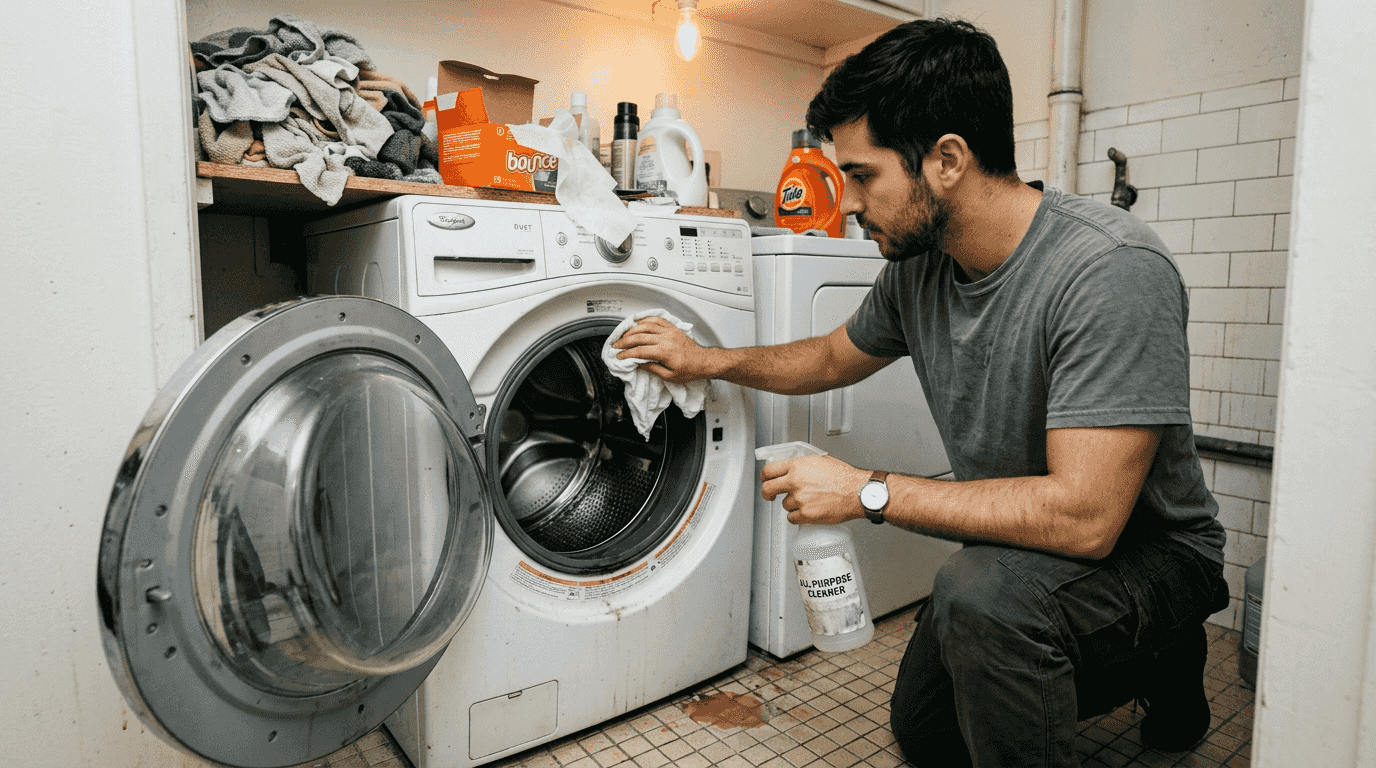
Inspect and maintain hoses regularly. Check supply hoses quarterly for signs of wear, cracks, or loose connections. Replace standard rubber hoses with braided stainless steel versions that resist bursting and last longer. Ensure hoses have at least four inches of space behind the washer to prevent kinking. Clean inlet screens annually to maintain proper water flow.
Use appropriate detergent amounts and types. High-efficiency washers require HE-specific detergent formulations that produce fewer suds. Excess detergent leaves residue that clogs components and creates odors. Follow manufacturer guidelines for load size and detergent quantity rather than filling to the dispenser’s maximum line.
Level your washer properly. An unbalanced washer vibrates excessively, stressing internal components and potentially damaging flooring. Use a bubble level on top of the washer and adjust the leveling feet until perfectly balanced front to back and side to side. Tighten the lock nuts on adjustable feet once positioned correctly.
Pro Tip: Schedule a thorough washer inspection every six months, checking all accessible components, testing cycles, and addressing any unusual sounds or behaviors immediately rather than waiting for complete failure.
Maintenance task frequency and benefits:
| Task | Frequency | Primary Benefit | Time Required |
|---|---|---|---|
| Clean door seal and drum | Monthly | Prevents mold and odors | 10 minutes |
| Inspect supply hoses | Quarterly | Avoids water damage from bursts | 5 minutes |
| Clean pump filter | Every 3 months | Maintains drainage efficiency | 15 minutes |
| Check leveling | Annually | Reduces vibration and wear | 10 minutes |
| Deep clean with vinegar | Monthly | Removes buildup and deposits | 5 minutes |
Regular hose maintenance and inspection prevents the most common cause of catastrophic washer failures that result in significant water damage to homes. Taking these preventive steps protects both your appliance investment and your property.
When to call a professional and choosing repair vs replacement
Some washer problems exceed DIY capabilities and require professional diagnosis and repair. Recognizing these situations saves you time, prevents injury, and avoids causing additional damage through incorrect repairs. Licensed technicians have specialized tools, replacement parts access, and training that homeowners lack.
Call a professional immediately for these issues:
- Electrical problems including burning smells, sparking, or repeated breaker trips
- Motor failure indicated by humming without drum rotation or complete silence
- Transmission or clutch problems causing grinding noises or failure to agitate
- Control board malfunctions where multiple functions fail simultaneously
- Gas dryer conversions or any work involving gas lines
- Warranty-covered repairs that require authorized service to maintain coverage
The repair versus replacement decision depends on multiple factors beyond simple cost comparison. Consider your washer’s age, repair history, energy efficiency, and the specific problem’s severity. A general guideline suggests replacing rather than repairing if the repair cost exceeds 50% of a new comparable model’s price.
Evaluate these factors when deciding:
- Age: Washers typically last 10 to 14 years with proper maintenance
- Repair cost: Compare professional estimate to new model prices
- Energy efficiency: Newer models use significantly less water and electricity
- Frequency: Multiple repairs in short periods indicate declining reliability
- Features: Consider if current technology offers desirable improvements
- Parts availability: Discontinued models may face expensive or unavailable components
Repair vs replacement comparison:
| Factor | Repair | Replace |
|---|---|---|
| Upfront cost | Lower immediate expense | Higher initial investment |
| Long-term value | Uncertain lifespan remains | Fresh warranty and efficiency |
| Energy bills | Continues current usage | Reduces monthly costs |
| Features | Maintains existing functions | Gains modern technology |
| Best when | Under 7 years old, minor issue | Over 10 years, major component failure |
Professional washing machine repair services provide accurate diagnostics, quality parts, and labor warranties that protect your investment. Technicians can often identify underlying issues that cause recurring problems, addressing root causes rather than symptoms.
Get expert washer repair and advice in Orange and Los Angeles counties
When DIY troubleshooting reaches its limits, you need reliable professional support close to home. Local appliance repair specialists understand the unique challenges Orange and Los Angeles county homeowners face, from hard water effects to high-efficiency model complexities.
Experienced technicians provide comprehensive diagnostics, honest assessments of repair feasibility, and transparent pricing before starting work. They stock common replacement parts and can source specialized components quickly, minimizing your time without a functioning washer. Whether you need guidance on appliance parts replacement or full-service repair for your Samsung appliance, professional support ensures safe, effective solutions. Licensed professionals also provide valuable maintenance advice tailored to your specific model and usage patterns, helping prevent future problems.
Frequently asked questions
What does it mean when my washer displays an error code?
Error codes are diagnostic messages that pinpoint specific malfunctions within your washer’s systems. Each manufacturer uses unique codes detailed in your user manual or available through online lookup tools using your model number. Common codes indicate drainage problems, door lock failures, water temperature issues, or motor malfunctions. Recording the exact code helps technicians diagnose problems quickly if professional service becomes necessary.
How can I prevent my washer from leaking water?
Regularly inspect all hose connections for tightness and replace supply hoses every three to five years before deterioration causes bursts. Clean the door seal on front-load washers weekly to prevent detergent and debris buildup that compromises the seal. Check that the washer sits level to ensure proper door closure and seal compression. Avoid overloading, which can force water past seals during agitation.
Why won’t my washer spin or drain properly?
Spin and drainage failures typically result from clogged pump filters, kinked drain hoses, or unbalanced loads triggering safety sensors. Remove and clean the pump filter located behind the lower front panel, checking for coins, lint, or small items blocking water flow. Verify the drain hose has no kinks and the standpipe isn’t clogged. Redistribute loads evenly and reduce the quantity of items if overloaded. If these steps don’t resolve the issue, the lid switch or drain pump may require professional replacement.
Is it safe to repair my washer myself?
Basic troubleshooting and maintenance tasks like cleaning filters, inspecting hoses, and balancing loads are safe for homeowners following proper precautions. Always unplug the washer before performing any internal inspections or repairs. Avoid electrical component work, motor repairs, or gas line modifications unless you have specific training. If you feel uncertain about any procedure or encounter unexpected complexity, stop and consult a licensed technician to prevent injury or additional damage.