
Choosing the right appliance or HVAC repair service can feel overwhelming, especially when a broken refrigerator or failing air conditioner disrupts your daily routine. Homeowners and property managers in Orange and Los Angeles Counties face dozens of options, but not all providers deliver the reliability, transparency, and expertise you need. This guide walks you through practical, evidence-based steps to evaluate repair services confidently, avoid costly mistakes, and ensure your home systems are restored quickly and correctly. You’ll learn how to assess your repair needs, verify technician credentials, apply cost-benefit decision frameworks, and recognize the warning signs of unreliable providers.
Table of Contents
- Understand Your Repair Needs And Legal Responsibilities
- How To Evaluate And Select Trustworthy Repair Services
- Deciding Between Repair And Replacement: Applying The $5,000 Rule
- What To Expect During The Repair Service And Verification Steps
- Reliable Local Repair Services In Orange And Los Angeles Counties
- FAQ
Key takeaways
| Point | Details |
|---|---|
| Online reviews matter | Consistent ratings above 4.7 stars on Google and Yelp signal reliable, trustworthy repair services. |
| Apply the $5,000 Rule | Multiply appliance age by repair cost; if it exceeds $5,000, replacement is usually smarter. |
| Know legal duties | California landlords must complete urgent repairs within 24 hours under AB 628 for safety compliance. |
| Verify credentials | Licensed, insured, and certified technicians ensure quality work and protect your home investment. |
| Choose local providers | Local repair services offer faster response times and build community trust for urgent needs. |
Understand your repair needs and legal responsibilities
Before you contact any repair service, take time to assess what you’re dealing with. Is your appliance making unusual noises, failing to start, or showing visible damage? Distinguishing between urgent repairs like a gas leak or broken refrigerator and scheduled maintenance like annual HVAC tune-ups helps you communicate clearly with technicians and prioritize your budget. Urgent issues demand immediate attention, while routine maintenance can be planned around your schedule.
Understanding typical appliance lifespan for homeowners is equally critical. Refrigerators typically last 10 to 15 years, washers and dryers around 10 to 12 years, and HVAC systems between 12 and 20 years depending on maintenance. If your appliance is nearing the end of its expected lifespan, investing in expensive repairs may not make financial sense. Knowing these benchmarks helps you decide whether to repair or replace before you even call a technician.
For landlords and property managers in California, legal responsibilities add another layer of urgency. Under AB 628, landlords must provide and maintain working refrigerators and stoves, and complete urgent repairs within 24 hours for safety-related issues like gas leaks, broken heating, or non-functional cooling systems. Failing to meet these timelines can result in tenant complaints, legal action, and penalties. Understanding your obligations protects both your tenants and your property value.
Pro Tip: Create a simple checklist of your appliance’s symptoms, age, and recent maintenance history before contacting repair services. This preparation speeds up diagnostics and helps technicians provide accurate estimates.
Key factors to assess before calling a repair service:
- Symptom severity: Is the appliance completely non-functional or just underperforming?
- Appliance age: How many years has it been in use compared to its expected lifespan?
- Maintenance history: Have you kept up with routine cleaning and servicing?
- Warranty status: Is the appliance still covered under manufacturer or extended warranties?
- Safety concerns: Are there gas leaks, electrical issues, or other hazards requiring immediate attention?
How to evaluate and select trustworthy repair services
Once you’ve clarified your repair needs, the next step is filtering through local providers to find the most reliable option. Start by checking online reviews on trusted platforms like Google, Yelp, and Angi. Consistent high scores of 4.7 stars or above indicate a track record of satisfied customers, while patterns of complaints about missed appointments, hidden fees, or poor workmanship are red flags. Pay close attention to how companies respond to negative reviews; professional, constructive responses suggest accountability.
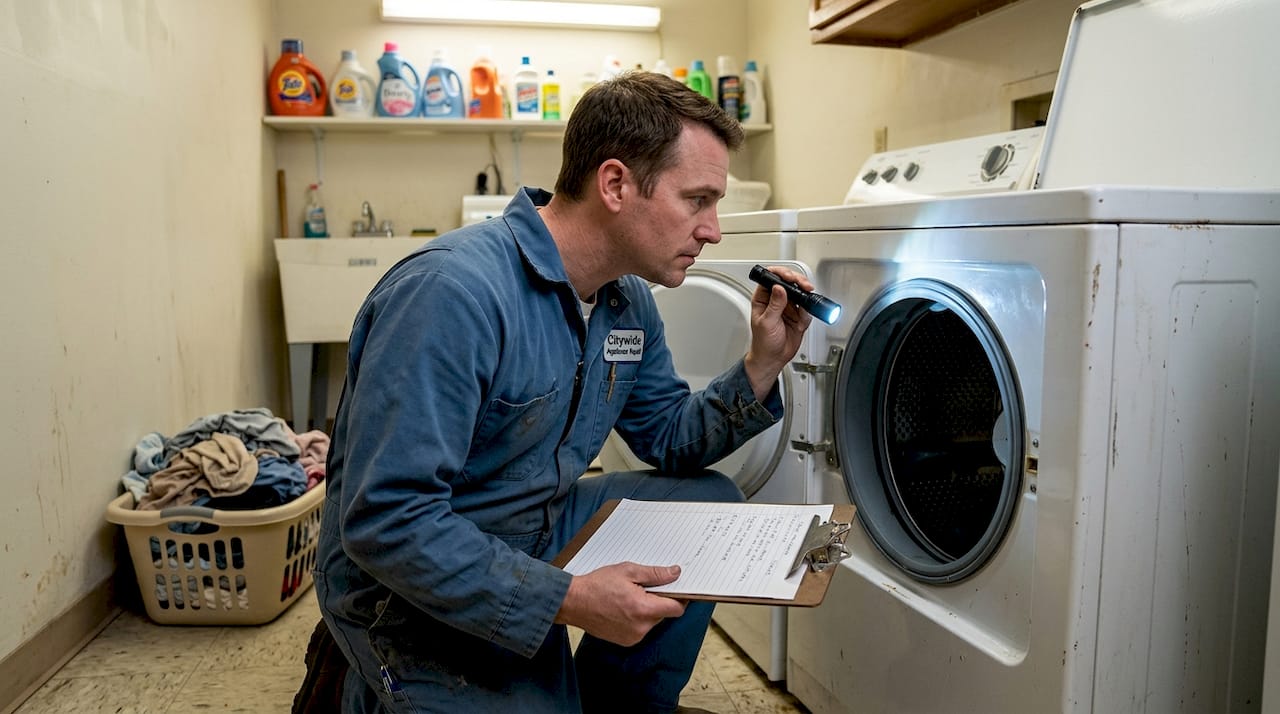
Beware of lead-generation platforms that appear to be repair companies but actually act as middlemen connecting you to unknown contractors. These aggregators often lack actual technicians, charge referral fees that inflate your costs, and provide little accountability if service quality suffers. Verify that the company you’re considering has its own team of licensed technicians and a physical business address in your area.
Licensing and certification are non-negotiable. Licensed technicians for appliance repair ensure that work meets safety codes and industry standards. For HVAC repairs, look for EPA certification for refrigerant handling and state-issued contractor licenses. Insurance coverage protects you from liability if accidents occur during service. Don’t hesitate to ask for proof of credentials before scheduling an appointment.
Transparency in pricing and service guarantees separates trustworthy providers from opportunistic ones. Reputable companies offer clear, written estimates before starting work, explain what parts and labor are included, and stand behind their repairs with warranties. Avoid services that pressure you into immediate decisions, provide only verbal quotes, or refuse to itemize costs. Customer reviews for repair services often highlight these transparency issues, so read between the lines.
Pro Tip: Ask potential repair services if they use genuine manufacturer parts or quality aftermarket alternatives. Cheap, generic parts may save money upfront but often fail quickly and void warranties.
“A reliable repair service should feel like a partner, not a salesperson. Look for companies that educate you about your options, respect your budget, and prioritize long-term solutions over quick fixes.”
Criteria for selecting a trustworthy repair provider:
- Consistent ratings above 4.7 stars on multiple review platforms
- Direct employment of licensed, insured, and certified technicians
- Transparent, written estimates with itemized costs and warranties
- Local presence with verifiable business address and service area
- Positive customer feedback about punctuality, professionalism, and follow-up support
- Clear communication about parts sourcing, timelines, and guarantees
For additional guidance, explore these tips for choosing appliance repair services to refine your selection process.
Deciding between repair and replacement: applying the $5,000 rule
Even with a trustworthy repair service lined up, you still need to decide whether repairing your appliance or HVAC system makes financial sense. The age multiplied by repair cost exceeding $5,000 typically signals replacement is smarter, a straightforward formula that balances cost, efficiency, and reliability. For example, if your 8-year-old air conditioner needs a $700 repair, the calculation is 8 x $700 = $5,600, suggesting replacement is the better investment.
This rule works because older appliances not only cost more to repair but also consume more energy and are more likely to break down again soon. Air conditioning systems typically last 12 to 15 years, furnaces 15 to 20 years, and major appliances like refrigerators and washers around 10 to 15 years. If your unit is already in the final third of its lifespan, replacement offers better long-term value through improved energy efficiency, modern features, and manufacturer warranties.
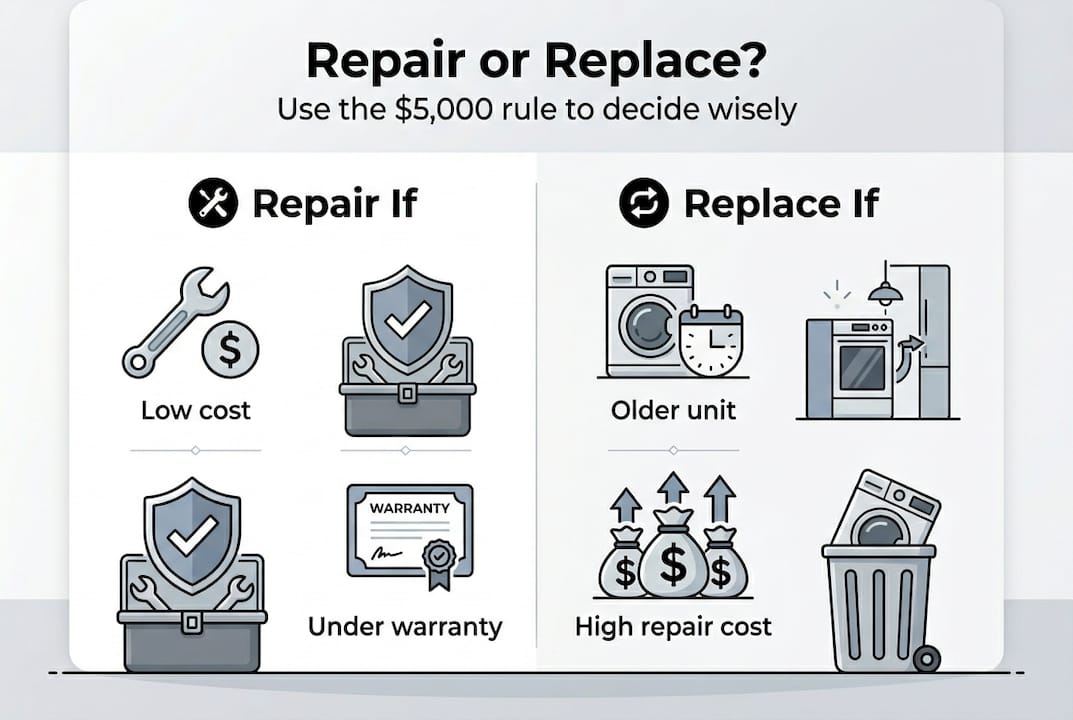
Beyond the $5,000 threshold, consider additional factors like energy efficiency ratings, repair frequency, and extended warranty coverage. Newer models with Energy Star certification can reduce utility bills by 20% to 30%, offsetting the upfront replacement cost over time. If you’ve already paid for multiple repairs in the past two years, continuing to fix an aging appliance often becomes a money pit.
Pro Tip: Request a detailed breakdown of the repair estimate including labor, parts, and any diagnostic fees. Compare this total against the cost of a new, energy-efficient model to make an informed choice.
Step-by-step decision process:
- Calculate the product of appliance age in years and estimated repair cost.
- Compare the result to the $5,000 threshold; above it favors replacement.
- Review your appliance’s maintenance history and frequency of recent breakdowns.
- Check current energy efficiency ratings and potential utility savings with a new model.
- Factor in any remaining manufacturer or extended warranty coverage that could reduce repair costs.
- Consult with your repair technician about the likelihood of future issues based on the appliance’s condition.
| Appliance Type | Typical Lifespan | $5,000 Rule Example | Recommendation |
| — | — | — |
| Air Conditioner | 12-15 years | 10 years x $600 repair = $6,000 | Replace |
| Furnace | 15-20 years | 8 years x $500 repair = $4,000 | Repair |
| Refrigerator | 10-15 years | 12 years x $450 repair = $5,400 | Replace |
| Washer | 10-12 years | 6 years x $300 repair = $1,800 | Repair |
For more detailed analysis, review these resources on repair vs replacement decisions and why fix versus replace appliances to ensure you’re making the smartest financial choice.
What to expect during the repair service and verification steps
Once you’ve decided to proceed with repair, preparation and clear communication ensure the process goes smoothly. Before the technician arrives, clear access to the appliance or HVAC unit by moving furniture, pets, and clutter. Gather any warranty documents, previous repair records, and a list of symptoms you’ve observed. This preparation saves time and helps the technician diagnose issues accurately.
During the appointment, communicate clearly about what you’ve noticed: unusual sounds, error codes, or performance changes. Ask the technician to explain the diagnosis in plain language and provide a written estimate before starting work. A professional will walk you through the problem, outline repair steps, and discuss any alternative solutions. If something feels unclear or rushed, don’t hesitate to ask questions or request a second opinion.
Avoid common mistakes that lead to dissatisfaction or unexpected costs. Never accept vague estimates like “a few hundred dollars” without itemized breakdowns. Reject pressure tactics pushing you to approve work immediately without time to review options. Insist on genuine or quality-certified replacement parts rather than generic components that may fail quickly. Verify that the estimate includes labor, parts, disposal fees, and any applicable warranties.
After the repair is completed, test the appliance or system thoroughly before the technician leaves. Run a full cycle on washers and dryers, check temperature settings on refrigerators and HVAC units, and listen for any unusual noises. Confirm that you receive a detailed invoice, warranty documentation, and contact information for follow-up support. Keep all paperwork organized for future reference and warranty claims.
Pro Tip: Take photos or videos of the appliance before and after repair, especially if you’re a landlord managing multiple properties. This documentation protects you in disputes and helps track maintenance history.
Steps to ensure a successful repair experience:
- Prepare your home by clearing access and gathering relevant documentation.
- Communicate symptoms, history, and urgency clearly with the technician.
- Request and review a written, itemized estimate before approving any work.
- Verify that the technician uses genuine or certified replacement parts.
- Test the repaired appliance thoroughly and confirm proper function before sign-off.
- Collect all invoices, warranties, and follow-up contact information for your records.
For hands-on guidance, explore this appliance parts replacement guide to understand common repair components and procedures.
Reliable local repair services in Orange and Los Angeles Counties
With a solid understanding of how to evaluate and select repair services, consider MDTECH as your trusted local expert for appliance and HVAC repairs throughout Orange and Los Angeles Counties. MDTECH employs licensed, certified technicians who understand the unique needs of Southern California homeowners and property managers, offering transparent pricing, strong customer reviews, and prompt service for both urgent and scheduled repairs.
Whether you need emergency HVAC support or routine appliance maintenance, MDTECH’s team brings the expertise and reliability you deserve. Explore specialized services like HVAC repair services in Orange County for climate control solutions, Samsung appliance repair services for brand-specific expertise, and comprehensive guidance on repair vs replacement decisions to make informed choices. Trust MDTECH to protect your home’s comfort, function, and value with on-time, professional service every time.
FAQ
How quickly should I expect urgent repairs to be completed under California law?
California landlords must complete urgent repairs within 24 hours under AB 628 for safety-related issues like gas leaks, broken heating, or non-functional refrigeration. This legal requirement ensures tenant safety and protects landlords from liability. For homeowners, urgent repairs like HVAC failures in extreme weather or gas leaks should be prioritized immediately, with reputable services often offering same-day or next-day appointments. Always communicate the urgency clearly when booking to ensure proper scheduling.
What should I look for in online reviews to trust a repair service?
Look for consistent ratings above 4.7 stars on Google, Yelp, and similar platforms, and avoid lead-generation aggregators that aren’t actual repair providers. Read detailed comments about punctuality, professionalism, transparency in pricing, and follow-up support. Pay attention to how companies respond to negative feedback; constructive, respectful replies indicate accountability. Patterns of complaints about hidden fees, no-shows, or poor workmanship are clear red flags. For more insights, review customer reviews for repair services to understand what separates trustworthy providers from unreliable ones.
How do I know if an appliance is worth repairing or should be replaced?
Apply the formula: age in years multiplied by repair cost; if it exceeds $5,000, replacement is typically smarter. For example, a 10-year-old air conditioner needing a $600 repair equals $6,000, suggesting replacement. Also consider the appliance’s energy efficiency, frequency of recent breakdowns, and remaining warranty coverage. Newer models often deliver 20% to 30% energy savings, offsetting replacement costs over time. For detailed analysis, explore why fix versus replace appliances to ensure you’re making the best financial decision.
What certifications should repair technicians have to ensure quality?
Look for state-issued contractor licenses, liability insurance, and EPA certification for HVAC technicians handling refrigerants. Appliance repair experts should have manufacturer-specific certifications for brands like Samsung, LG, or Whirlpool to ensure they understand proprietary systems and use genuine parts. Certifications demonstrate that technicians have completed formal training, passed competency exams, and stay current with industry standards. Always ask for proof of credentials before scheduling service. Learn more about licensed repair technicians and why certification matters for your home’s safety and appliance longevity.