
Choosing kitchen appliances for your Orange or Los Angeles County home shouldn’t feel overwhelming. With hundreds of models, confusing features, and varying price points, homeowners often struggle to identify what truly matters. This guide cuts through the noise with clear, data-driven criteria and practical examples to help you select reliable appliances that match your cooking style, space, and budget.
Table of Contents
- Understanding How To Choose Kitchen Appliances
- Essential Kitchen Appliances With Examples
- Evaluating Kitchen Appliance Brands And Reliability
- Comparing Appliance Types With Practical Use Cases
- Summary Comparison Table Of Kitchen Appliances
- Situational Picks: Recommendations Based On Your Needs
- Explore Expert Appliance Repair And Replacement Services
- Frequently Asked Questions
Key takeaways
| Point | Details |
|---|---|
| Selection criteria matter most | Focus on energy efficiency, size measurements, brand reliability, and warranty length before comparing models. |
| Major appliance categories | Refrigerators, ovens, dishwashers, and countertop devices each serve distinct cooking and storage needs. |
| Top reliable brands | Samsung, LG, and Whirlpool lead in durability, warranty support, and smart technology integration. |
| Technology trade-offs exist | Gas ovens heat faster, induction cooktops maximize efficiency, and smart features add convenience at higher costs. |
| Match appliances to your situation | Consider kitchen size, natural gas availability, tech preferences, and conservation priorities when selecting. |
Understanding how to choose kitchen appliances
Before exploring specific models, you need a clear framework for evaluation. Start by measuring your kitchen space accurately, noting cabinet dimensions, door clearances, and outlet locations. Appliances that don’t fit your layout create installation headaches and wasted money.
Energy efficiency directly impacts your operating costs for years. ENERGY STAR certified appliances use 10-50% less energy than standard models, translating to lower utility bills. Look for the yellow EnergyGuide labels that display estimated annual costs, and prioritize models with superior ratings in your budget range.
Brand reputation and warranty coverage protect your investment. Research manufacturer track records for reliability, customer service responsiveness, and local appliance repair guide homeowners oc la availability. Warranties ranging from one to five years indicate manufacturer confidence, and extended coverage reduces out-of-pocket repair expenses.
Feature evaluation requires matching technology to your actual cooking habits. Smart connectivity, sensor automation, and specialized cooking modes add convenience, but only if you’ll use them regularly. Avoid paying premiums for features that sound impressive but don’t align with your daily routines.
Common mistakes include buying solely on upfront price, ignoring warranty terms, or choosing trendy features over proven functionality. Understanding why fix vs replace appliances helps you balance initial costs with long-term value. Calculate total ownership costs by adding purchase price, estimated energy use over five years, and typical maintenance expenses.
Pro Tip: Create a prioritized checklist of must-have features versus nice-to-have options before shopping. This prevents impulse purchases driven by salespeople or flashy displays, keeping you focused on appliances that truly serve your needs.
Key criteria to evaluate:
- Exact measurements of installation space and clearance requirements
- Energy efficiency ratings and estimated annual operating costs
- Brand reliability scores from consumer testing organizations
- Warranty duration and coverage details for parts and labor
- Feature utility based on your actual cooking patterns and household size
Essential kitchen appliances with examples
Refrigerators form the centerpiece of kitchen food storage. Side-by-side models offer equal freezer and refrigerator access with narrow door swings, ideal for tight spaces. French door designs provide wide refrigerator shelves and bottom freezers, maximizing fresh food visibility. Compact models measuring 4.5 to 6.5 cubic feet suit apartments and small kitchens without sacrificing essential storage.
Cooking appliances present distinct technology choices. Gas ovens deliver faster preheating and precise flame control, preferred by serious home cooks. Electric ovens distribute heat more evenly across racks, simplifying batch baking. Induction cooktops achieve the highest energy efficiency at roughly 84%, heating cookware directly while keeping surfaces cool to touch.
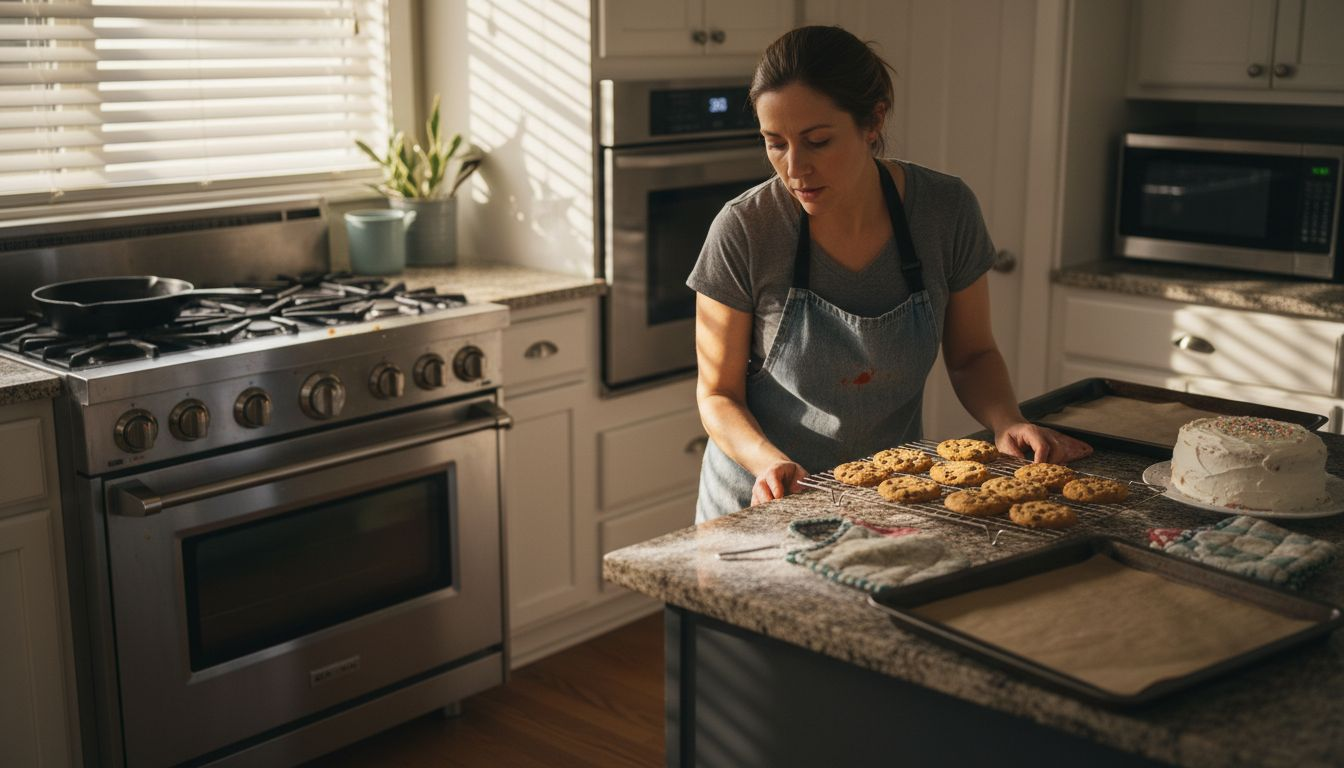
Dishwashers have evolved beyond simple spray cycles. Modern units feature soil sensors that adjust water temperature and cycle length based on dish dirtiness, reducing waste. Energy-saving modes cut electricity and water consumption by 15 to 25 percent per load. Third rack designs accommodate flatware and utensils, increasing capacity without enlarging the unit footprint.
Countertop appliances fill specialized cooking roles. KitchenAid mixers were ranked top stand mixers for durability and performance by 78% of culinary professionals in 2025, demonstrating their reliability for frequent baking. Stand mixers handle dough kneading, whipping, and mixing tasks that tire hand tools. Microwave ovens typically cost $100-$300 and provide heating cycles under 5 minutes, essential for speed-focused households.
Each appliance category serves distinct purposes:
- Refrigerators preserve food with temperature control ranging from 35 to 38 degrees Fahrenheit
- Ovens and cooktops enable diverse cooking methods from baking to searing
- Dishwashers automate cleaning while conserving water compared to handwashing
- Countertop devices like mixers and microwaves expand cooking capabilities in limited spaces
Understanding these fundamental appliance types helps you prioritize purchases based on your cooking frequency and food preparation style. Professional home appliances repair services maintain performance across all categories, extending appliance lifespans through regular maintenance and timely fixes.
Evaluating kitchen appliance brands and reliability
Brand selection significantly impacts your long-term satisfaction and repair costs. Samsung, LG, and Whirlpool are top reliable brands with strong warranty support and smart appliance leadership, consistently earning high marks in consumer testing. These manufacturers back products with warranties extending two to five years, covering parts and labor that protect against early failures.
Warranty duration correlates directly with manufacturer quality confidence. Brands offering longer coverage invest more in component durability and quality control. When appliances do malfunction, comprehensive warranties minimize your out-of-pocket costs for repairs, parts, and service calls. Understanding warranty role in appliance repairs helps you leverage coverage effectively and avoid unnecessary expenses.
Smart appliance technology has shifted from novelty to mainstream expectation. Smart appliance adoption is rapidly growing with leading brands integrating advanced connectivity features that enable remote monitoring, voice control, and energy tracking. Samsung’s SmartThings integration, LG’s ThinQ platform, and Whirlpool’s connected appliances offer varying levels of smart home compatibility.
Consumers increasingly demand reliability paired with innovation. You want appliances that deliver core functions flawlessly while offering modern conveniences like smartphone alerts, diagnostic troubleshooting, and automated settings. Brands that balance these priorities earn loyalty and reduce service calls.
Top brand characteristics:
- Consistent high reliability scores across independent consumer testing
- Warranty coverage extending beyond industry minimums
- Active customer service networks with responsive support
- Smart technology integration that enhances rather than complicates operation
- Parts availability and authorized repair networks in Orange and Los Angeles Counties
Choosing established brands with proven track records reduces risk and ensures access to qualified technicians when maintenance becomes necessary. Prioritize manufacturers with local service presence to minimize downtime during repairs.
Comparing appliance types with practical use cases
Gas versus electric ovens present clear trade-offs for different cooking styles. Gas ovens heat 20-30% faster than electric, offering superior temperature control for precision cooking. The visible flame provides immediate feedback, and burners respond instantly to adjustments. However, gas requires proper ventilation and natural gas line access, limiting installation flexibility.
Electric ovens excel at even heat distribution, critical for baking delicate pastries and multiple-rack cooking. Convection modes circulate air for uniform browning, and self-cleaning features simplify maintenance. Installation only requires a 240-volt outlet, offering more placement options than gas.
Induction cooktops represent the efficiency frontier, converting approximately 84% of energy directly into cookware heat. Magnetic fields heat ferrous pots and pans while keeping the cooktop surface cool, reducing burn risks. Rapid temperature changes rival gas responsiveness, but you must use magnetic-compatible cookware.
Smart refrigerators transform food management through inventory cameras, expiration tracking, and remote temperature monitoring. You can check contents from the grocery store, adjust settings via smartphone, and receive alerts about temperature fluctuations that risk food safety. These features add $500 to $1,500 to base model costs.
Dishwashers with soil sensors adjust water temperature, spray intensity, and cycle duration based on actual dish dirtiness. This automation cuts water use by up to 30% compared to fixed cycles, lowering utility costs. Quiet operation at 44 decibels or less allows running loads during conversations or sleeping hours.
Pro Tip: Match appliance technology to your actual usage patterns. If you rarely cook elaborate meals, basic models with solid reliability outperform feature-packed units you won’t fully utilize. Prioritize durability and why use local repair services availability over flashy add-ons.
| Appliance Type | Energy Efficiency | Key Advantage | Best Use Case |
|---|---|---|---|
| Gas Oven | Moderate | Fast heating, precise control | Frequent cooking, natural gas access |
| Electric Oven | Good | Even heat distribution | Baking, multiple-rack cooking |
| Induction Cooktop | Excellent (84%) | Speed, safety, efficiency | Modern kitchens, compatible cookware |
| Smart Refrigerator | Variable | Remote monitoring, inventory | Tech-savvy users, large households |
| Soil-Sensing Dishwasher | Excellent | Adaptive cycles, water savings | Eco-conscious, varied dish loads |
Summary comparison table of kitchen appliances
This comprehensive table consolidates appliance categories, representative models, energy ratings, and practical guidance to streamline your selection process. Use it as a quick reference when comparing options or narrowing choices based on your priorities.
| Appliance Category | Example Models | Energy Rating | Best For | Typical Warranty | Notes |
|---|---|---|---|---|---|
| Compact Refrigerator | Danby 4.4 cu ft, Midea 5.0 cu ft | ENERGY STAR | Small kitchens, apartments | 1-2 years | Space-saving under 24 inches wide |
| French Door Refrigerator | Samsung RF28, LG LFXS30 | ENERGY STAR | Family homes, fresh food focus | 2-5 years | Wide shelves, bottom freezer |
| Gas Range | Whirlpool WFG505, GE JGBS66 | Moderate | Natural gas homes, cooking enthusiasts | 1-2 years | Faster heating, precise flames |
| Electric Range | Frigidaire GCRE3060, Samsung NE63 | Good | Even baking, easy maintenance | 1-2 years | Uniform heat distribution |
| Induction Cooktop | Bosch NIT8068, GE PHP9036 | Excellent | Efficiency priority, modern kitchens | 2-3 years | Requires magnetic cookware |
| Dishwasher | Bosch 300 Series, KitchenAid KDTM404 | ENERGY STAR | Water/energy conservation | 2-5 years | Soil sensors, quiet operation |
| Stand Mixer | KitchenAid Artisan, Cuisinart SM-50 | N/A | Frequent baking, dough preparation | 1-3 years | Durable motors, multiple attachments |
| Microwave Oven | Panasonic NN-SN966, Toshiba EM131 | Moderate | Quick heating, limited cooking | 1-2 years | Compact, affordable, fast |
Energy ratings reflect typical performance within each category. ENERGY STAR certification guarantees 10 to 50 percent better efficiency than standard models. Warranty durations vary by manufacturer, with premium brands often extending coverage to demonstrate quality confidence.
Space constraints significantly influence appliance selection. Measure carefully and consult installation guides before purchasing. Consider door swing clearances, ventilation requirements, and electrical or gas connection locations to avoid costly modifications.
When evaluating kitchen knife buying factors, similar principles apply: match tools to your actual use patterns, prioritize quality over quantity, and invest in items you’ll use daily. The same logic guides smart appliance choices.
Situational picks: recommendations based on your needs
Small kitchens and apartments demand compact solutions without sacrificing functionality. Refrigerators measuring 4.5 to 6.5 cubic feet fit tight spaces while providing adequate fresh and frozen storage for one to two people. Countertop dishwashers or 18-inch models clean dishes efficiently without requiring full-size installation space. Combination microwave-convection ovens replace separate appliances, freeing valuable counter area.
Homeowners with natural gas connections gain significant advantages using gas ranges and cooktops. Faster heating reduces cooking time, and precise flame control improves results for sautéing and simmering. Gas dryers also cost less to operate than electric models, leveraging your existing gas infrastructure for maximum efficiency.
Tech-savvy users benefit from smart appliance ecosystems that integrate with existing home automation. LG ThinQ appliances communicate with Google Assistant and Amazon Alexa, enabling voice commands and routine automation. Samsung SmartThings creates unified control across appliances, lighting, and security systems. Remote diagnostics alert you to maintenance needs before failures occur, and usage data helps optimize energy consumption.
Energy and water conservation priorities align perfectly with ENERGY STAR dishwashers and induction cooktops. Dishwashers with soil sensors reduce water waste by 30% compared to handwashing or fixed cycles. Induction cooking transfers 84% of energy to food, minimizing heat loss and lowering utility bills. These choices deliver environmental benefits while cutting operating costs over appliance lifespans.
Maintaining appliances extends their useful life and preserves performance. Regular cleaning, proper loading techniques, and prompt attention to minor issues prevent major breakdowns. Professional maintenance from local appliance repair guide homeowners oc la technicians ensures optimal operation and identifies problems early.
Situational recommendations:
- Small spaces: Compact refrigerators, 18-inch dishwashers, combination microwave-convection ovens
- Natural gas homes: Gas ranges, gas dryers for lower operating costs and faster performance
- Tech enthusiasts: LG ThinQ or Samsung SmartThings ecosystems for integrated smart home control
- Conservation focus: ENERGY STAR dishwashers, induction cooktops for maximum efficiency
- Frequent cooks: Gas ranges with precise control, large-capacity refrigerators, powerful stand mixers
Understanding repair vs replacement key difference helps you make informed decisions when appliances malfunction. Newer units under warranty often merit repair, while older models with repeated failures justify replacement. Expert kitchen appliance repair services evaluate cost-effectiveness and provide honest recommendations based on appliance age, condition, and repair expenses versus replacement costs.
Explore expert appliance repair and replacement services
After selecting the perfect appliances for your Orange or Los Angeles County home, maintaining peak performance requires professional support. MDTECH specializes in Samsung appliance repair and services for all major brands, ensuring your investment delivers reliable performance for years. Our licensed technicians diagnose issues quickly, access genuine parts, and complete repairs efficiently to minimize disruption.
Understanding repair vs replacement key difference empowers you to make cost-effective decisions when problems arise. Our team provides transparent assessments, explaining whether repair or replacement offers better long-term value based on appliance age, repair costs, and remaining lifespan. We help you maximize warranty role in appliance repairs coverage, filing claims and coordinating with manufacturers to protect your investment. Whether you need routine maintenance, emergency repairs, or replacement guidance, MDTECH delivers expert service tailored to your appliance care needs throughout Orange and Los Angeles Counties.
Frequently asked questions
What size refrigerator is best for a small apartment?
Compact refrigerators between 4.5 to 6.5 cubic feet are ideal for small apartments, maximizing space without sacrificing storage. These units fit under counters or in tight spaces while providing adequate fresh and frozen compartments for one to two people. Consider professional kitchen aid refrigerator installation for optimal fit and performance.
Are gas ovens better than electric for home use?
Gas ovens heat faster and offer precise temperature control, favored by cooking enthusiasts who appreciate instant flame adjustments. Electric ovens provide even heating and are easier to maintain, making them excellent for baking. Your choice depends on cooking style, natural gas availability, and preference for responsiveness versus consistency.
What are the benefits of smart kitchen appliances?
Smart appliances offer remote control, inventory management, and energy monitoring for convenience. They can integrate with home automation systems to enhance kitchen efficiency through voice commands, automated routines, and diagnostic alerts. Expert kitchen appliance repair services maintain smart features alongside core functions for optimal performance.
How much energy do ENERGY STAR appliances actually save?
ENERGY STAR certified appliances use 10 to 50 percent less energy than standard models, reducing operating costs significantly over their lifespans. Actual savings depend on appliance type, usage patterns, and local utility rates. Dishwashers and refrigerators typically deliver the highest energy savings among kitchen appliances.
Should I prioritize warranty length when buying appliances?
Longer warranties indicate manufacturer confidence in product durability and reduce your repair costs during coverage periods. Prioritize brands offering two to five years of comprehensive parts and labor coverage. Extended warranties protect against expensive repairs and often correlate with higher overall appliance reliability and build quality.