
When the freezer stays cold but the refrigerator turns warm, the fan or vents moving cold air between the two compartments have almost always failed. Grab an appliance thermometer and check both sections: the fridge should read at or below standard safe temperatures and the freezer at standard safe freezing temperatures. If vents are blocked or you spot heavy frost inside the freezer, work through the checks below. If you find ice packed behind interior panels or the evaporator fan isn’t running at all, stop troubleshooting and call a technician.
TL;DR:
- Blocked vents, failed evaporator fans, or ice buildup on the coil are the most common causes of a warm fridge with a cold freezer, often requiring airflow checks.
- Confirm temperatures with a separate thermometer and ensure vents are clear before inspecting internal components like the fan or coil, and avoid internal repairs if frost or ice is visible.
- A stuck or broken damper, faulty thermistor, or malfunctioning control board can cause uneven cooling, but testing actual temperatures first prevents unnecessary part replacements.
- Thawing accumulated frost naturally helps restore airflow temporarily, but a thick ice wall behind interior panels indicates a defrost system failure needing professional repair.
- Call a technician if there are signs of electrical issues, thick interior frost, or no airflow after resets, as repairs like fan or damper replacements are usually straightforward and cost-effective.
Table of Contents
- Why Freezer Cold Fridge Warm Happens: How Cooling Actually Travels
- Top Causes When the Fridge Warms Up but the Freezer Stays Cold
- Safe Homeowner Checks You Can Run Today
- Frost and Defrost Failures: What’s Really Going On
- Could It Be the Sensors or Control Board?
- When to Call a Professional (and What It’ll Cost)
- Why We Tell Homeowners to Check Airflow First
- Book a Refrigeration Diagnostic With MDTECH
- Sources
- FAQ
Why Freezer Cold Fridge Warm Happens: How Cooling Actually Travels
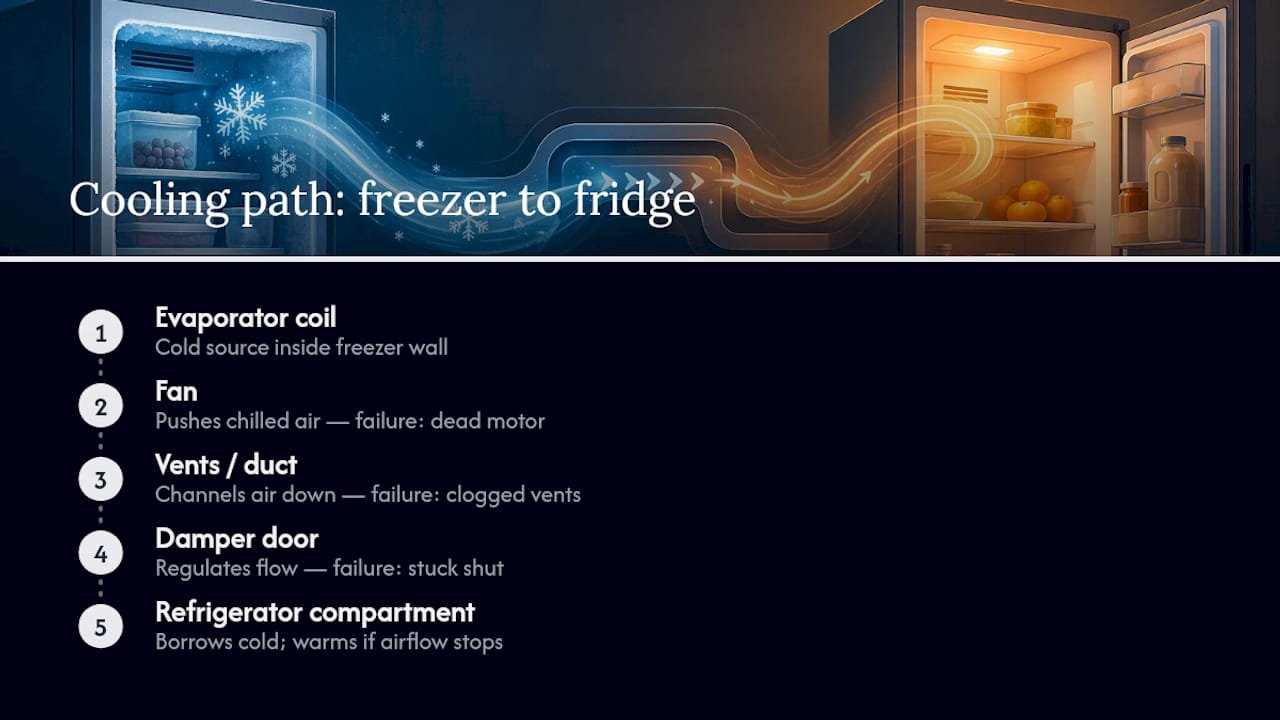
Most home refrigerators use a single evaporator system tucked behind the freezer wall. That one cold coil does all the work for both compartments, and it relies on a fan and a network of vents to push chilled air from the freezer down into the fresh-food section. Nothing about the refrigerator side generates its own cold. It just borrows air from the freezer.
That design explains the exact symptom you’re dealing with. The freezer sits right next to the evaporator coil, so it stays cold even when something downstream fails. The refrigerator compartment depends entirely on airflow reaching it through a fan, a duct system, and usually a damper door that opens and closes to regulate how much cold air gets through.
Break any link in that chain, whether it’s a dead fan motor, a clogged vent, or a damper stuck shut, and the fridge warms up while the freezer keeps chugging along at 0°F. It’s a bit like a house with one furnace and a blocked duct to the living room: the bedroom stays warm, the living room doesn’t, and the furnace itself is fine. Once you understand that single-evaporator layout, the rest of the diagnosis is just tracing where the airflow stopped.
Top Causes When the Fridge Warms Up but the Freezer Stays Cold
Refrigerator repair techs see the same handful of failure points over and over. Here’s what typically causes fridge warm freezer cold problems, roughly in order of how often each one turns out to be the culprit:
- Blocked vents or bad shelf placement. Large containers or overstuffed shelves pressed against the vents inside the fridge or freezer cut off airflow before it even gets a chance to circulate.
- Evaporator fan failure. If the fan motor dies or a chunk of ice jams the blade, no air moves from the freezer to the fridge at all, even though the coil itself stays cold.
- Frost or ice buildup on the coil. A failed defrost heater, thermostat, or timer lets frost accumulate until it smothers the coil and blocks airflow.
- A stuck or broken air damper. This small door controls how much cold air enters the fresh-food section; when it fails shut, the fridge gets starved of cold air regardless of what else works.
- Door gasket or alignment issues. A torn seal or a door that doesn’t latch flush lets warm room air leak in continuously, fighting whatever cold air does make it through.
- Faulty thermistor or control board. These parts tell the system when to run the compressor and fan; bad readings can cause short cycling or misdirected cooling that never properly chills the fridge.
Frequent door opening compounds every one of these problems. Each time you open the fridge, warm humid air rushes in and the system has to work harder to recover, and a compartment that’s already struggling with restricted airflow recovers a lot slower than one that’s healthy.
Safe Homeowner Checks You Can Run Today
Work through these five steps in order. Each one rules out a possibility before you move to the next, and none of them require opening sealed refrigerant lines or removing back panels covering electrical components.
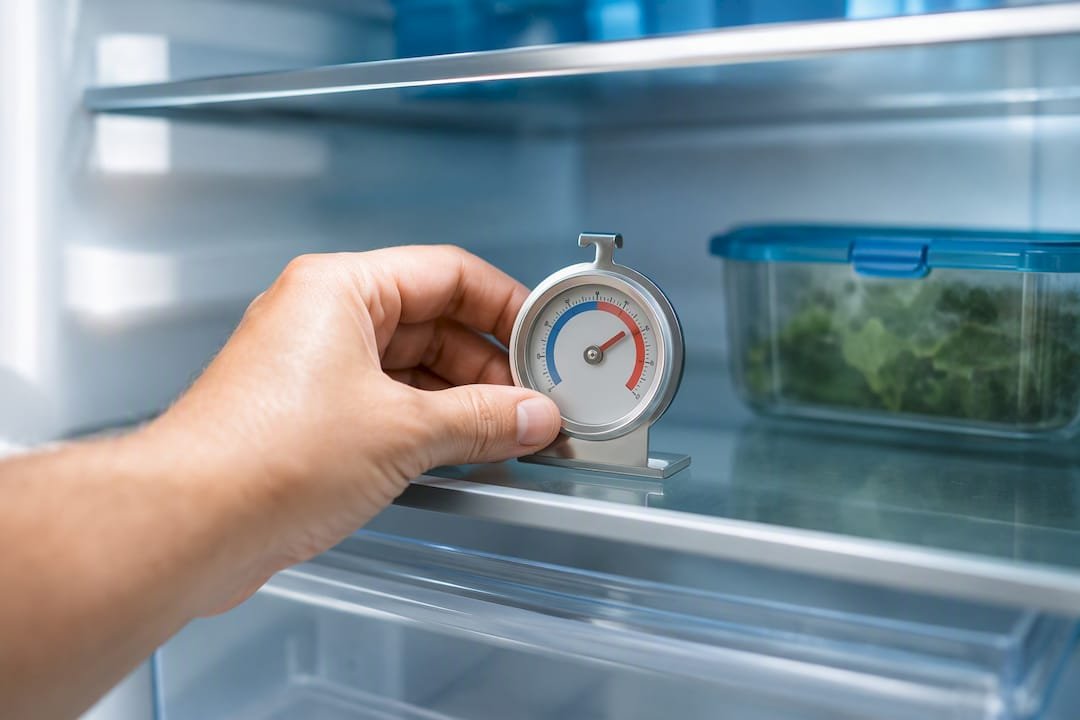
- Verify both temperatures with a separate appliance thermometer. Built-in digital displays can be inaccurate, so confirm the real numbers instead of trusting the readout. After any setting change, wait a full 24 hours before judging the result.
- Clear every vent and rearrange crowded shelves. Pull items away from vent openings in both compartments, and check that nothing large is blocking the return vent near the back.
- Test the evaporator fan. Open the freezer, press the door switch closed with your finger, and listen or feel for airflow. Silence usually means a dead motor or an ice jam.
- Look for visible frost or ice, especially behind the back panel. If you see buildup, unplug the unit and let it thaw naturally. Never chip at coils with a knife or screwdriver.
- Check the door seal with the paper test: close a dollar bill or sheet of paper in the door and see if it slides out easily. Also confirm nothing is holding the door ajar, and rule out a demo or showroom mode on the display.
Pro Tip: Before you touch anything internal, unplug the refrigerator for 30 seconds and plug it back in. This simple reset clears minor control board glitches and sometimes restores normal fan and damper operation on its own.
Frost and Defrost Failures: What’s Really Going On
A failed defrost heater, thermostat, or timer is one of the most common reasons a freezer stays cold while the fridge goes warm. Without regular defrost cycles, frost quietly builds up on the evaporator coil until it forms a wall of ice thick enough to block airflow completely.
Watch for a few telltale signs: visible ice behind the interior back panel, a rhythmic ticking or scraping sound from the fan blade hitting ice, and a noticeable drop in ice maker output. If you catch it early, a manual defrost, unplugging the unit and letting the ice melt naturally for several hours, can restore airflow temporarily. Never use a knife or ice pick on the coils, and only use a steamer if your manufacturer’s guidance specifically allows it.
Could It Be the Sensors or Control Board?
The thermistor is a small sensor that reports temperature readings to the control board, which then decides how long the compressor and fan run. When a thermistor fails or drifts out of calibration, the board gets bad data and can run the cooling cycle incorrectly, sometimes overcooling the freezer while starving the fridge.
A stuck damper causes a similar symptom through a different mechanism: the freezer stays cold because the evaporator still works, but the little door that lets cold air into the fridge simply won’t open. Before you replace any sensor or module, confirm the actual temperature with your own thermometer. Digital readouts can lie, and a $150 control board swap is a rough way to find that out.
When to Call a Professional (and What It’ll Cost)
Stop troubleshooting and call a technician if you smell anything burning, notice sparking or electrical odors, find a thick wall of ice behind interior panels, or the evaporator fan produces no airflow at all even after a reset.
Most repairs at this stage fall into a predictable range. Evaporator fan motor replacement, defrost heater or thermostat repairs, and damper actuator swaps make up the bulk of service calls for this exact symptom, and they’re generally far less expensive than sealed-system or compressor work, which is rarer and costs considerably more. A refrigerator not cooling properly is worth addressing quickly. The USDA advises discarding any perishable food that’s sat above 40°F for more than two hours, so don’t wait too long once you confirm the fridge is genuinely warm.
Why We Tell Homeowners to Check Airflow First
Technicians see the same pattern constantly: a homeowner assumes the compressor is dying when the real problem is a $40 fan motor or a coil buried in frost. Measuring actual temperatures and testing airflow before calling anyone avoids paying for parts that were never the problem.
Licensed technicians regularly find hidden defrost failures or control board issues that only show up after a homeowner has already ruled out the obvious stuff. That order of operations saves money and time both ways.
— MDTECH
Book a Refrigeration Diagnostic With MDTECH
If you’ve cleared the vents, tested the fan, and the fridge is still running warm, it’s time for a proper diagnosis. Our licensed technicians handle refrigeration repair with online booking so you’re not stuck waiting on hold.
Before your appointment, have three things ready: your refrigerator’s model number, the actual thermometer readings from both compartments, and a rough timeline of when the warming started. That information lets a technician narrow down whether you’re looking at a fan, a defrost component, or a damper issue before they even open the panel. For kitchen-specific repairs, a kitchen appliance repair team also handles installation and part replacement on the same visit when needed. Book online to get a technician out before anything in the fridge goes to waste.
Sources
The temperature thresholds and food-safety guidance in this article come from the USDA’s refrigeration safety guidance. Airflow and single-evaporator system details are drawn from GE Appliances’ technical guidance, troubleshooting steps from Maytag, and defrost failure patterns from Whirlpool’s service bulletin on evaporator icing.
- GE Appliances — How air moves in single-evaporator refrigerators
- Whirlpool service pointer — evaporator clogged with ice
FAQ
What Are the Signs of a Failing Freezer?
A failing freezer usually shows warmer-than-normal temperatures, frost buildup that keeps returning even after defrosting, unusual noises from the fan, or ice that softens and refreezes into clumps. If the freezer itself stays consistently cold but the fridge warms up, the freezer isn’t failing. The airflow path between the two compartments is.
Why Is My Freezer Icing Up While the Fridge Stays Warm?
Heavy frost on the evaporator coil almost always points to a defrost system failure, meaning the heater, thermostat, or timer that’s supposed to melt frost periodically has stopped working. That ice buildup blocks airflow to the fridge even though the freezer stays cold right next to the coil.
How Do I Fix a Fridge That’s Warm but the Freezer Is Fine?
Start by verifying temperatures with a separate thermometer, clearing blocked vents, and testing whether the evaporator fan is running. If those checks turn up nothing and the fridge stays above 40°F after 24 hours, the problem is likely a failed fan motor, a stuck damper, or a defrost component that needs professional replacement.
How Do I Reset a Fridge That’s Not Cooling?
Unplug the refrigerator for about 30 seconds, then plug it back in. This clears minor control board errors and can restart the fan and damper cycle, though it won’t fix a genuinely broken part like a dead fan motor or a failed defrost heater.
When Should I Call a Technician Instead of Troubleshooting Further?
Call a professional immediately if you notice burning smells, exposed wiring issues, thick ice behind interior panels, or a completely silent evaporator fan. Appliancesrepairmdtech’s licensed technicians can diagnose and repair fan, defrost, and damper failures without unnecessary part replacements.