
Every homeowner in Southern California knows that energy bills surge when summer arrives. This is where eco-friendly appliances certified by ENERGY STAR make a measurable difference, using less power and water than conventional models while also reducing greenhouse gas emissions. Choosing efficient appliances is an actionable way to lower monthly costs and shrink your environmental footprint. Discover how smart upgrades and proper maintenance can help residents in Orange and Los Angeles counties benefit from local repair services while prioritizing sustainability.
Table of Contents
- What Makes An Appliance Eco-Friendly
- Types Of Eco-Friendly Home Appliances
- How These Appliances Lower Energy Bills
- Environmental Impact In Southern California Homes
- Choosing, Maintaining, And Upgrading Eco-Friendly Models
Key Takeaways
| Point | Details |
|---|---|
| Eco-Friendly Appliances Save Money | Upgrading to eco-friendly appliances can reduce energy and water bills significantly, often saving $100-300 annually. |
| Consider the Total Cost of Ownership | Evaluate long-term savings rather than just the upfront cost; energy-efficient models usually pay for themselves over time. |
| Look for Certifications | Choose appliances with ENERGY STAR and additional labels, as they ensure efficiency and performance standards are met. |
| Take Advantage of Incentives | Check local rebates and incentives, which can cover 10-30% of the purchase costs for eco-friendly models, making upgrades more affordable. |
What Makes an Appliance Eco-Friendly
An eco-friendly appliance isn’t just a marketing label. It’s a measurable commitment to using less energy and water while reducing your household’s environmental impact.
The ENERGY STAR program sets the standard. Appliances earning this certification meet strict energy-efficiency specifications from the U.S. Environmental Protection Agency. This means they perform the same job as traditional models while consuming significantly less power and water.
Think of it this way: your current refrigerator runs 24/7. Over 10 years, that constant operation adds up. An eco-friendly model cuts that energy draw by roughly 15-20%, translating to real savings on your utility bills.
Key Characteristics of Eco-Friendly Appliances
Several factors define what makes an appliance truly eco-friendly:
- Lower energy consumption during daily operation
- Reduced water usage (especially for washers and dishwashers)
- Fewer greenhouse gas emissions when manufactured and used
- Absence of harmful refrigerants in cooling systems
- Durable construction that lasts longer, reducing replacement waste
When evaluating energy-efficient appliances, look beyond the sticker price. A washer using 40% less water doesn’t just sound good—it saves money monthly.
The Technology Behind Eco-Friendly Design
Modern eco-friendly appliances use advanced engineering, not magic. Inverter compressors in refrigerators adjust cooling power based on demand instead of running at full capacity constantly. Smart sensors in dishwashers determine exactly how much water a load requires.
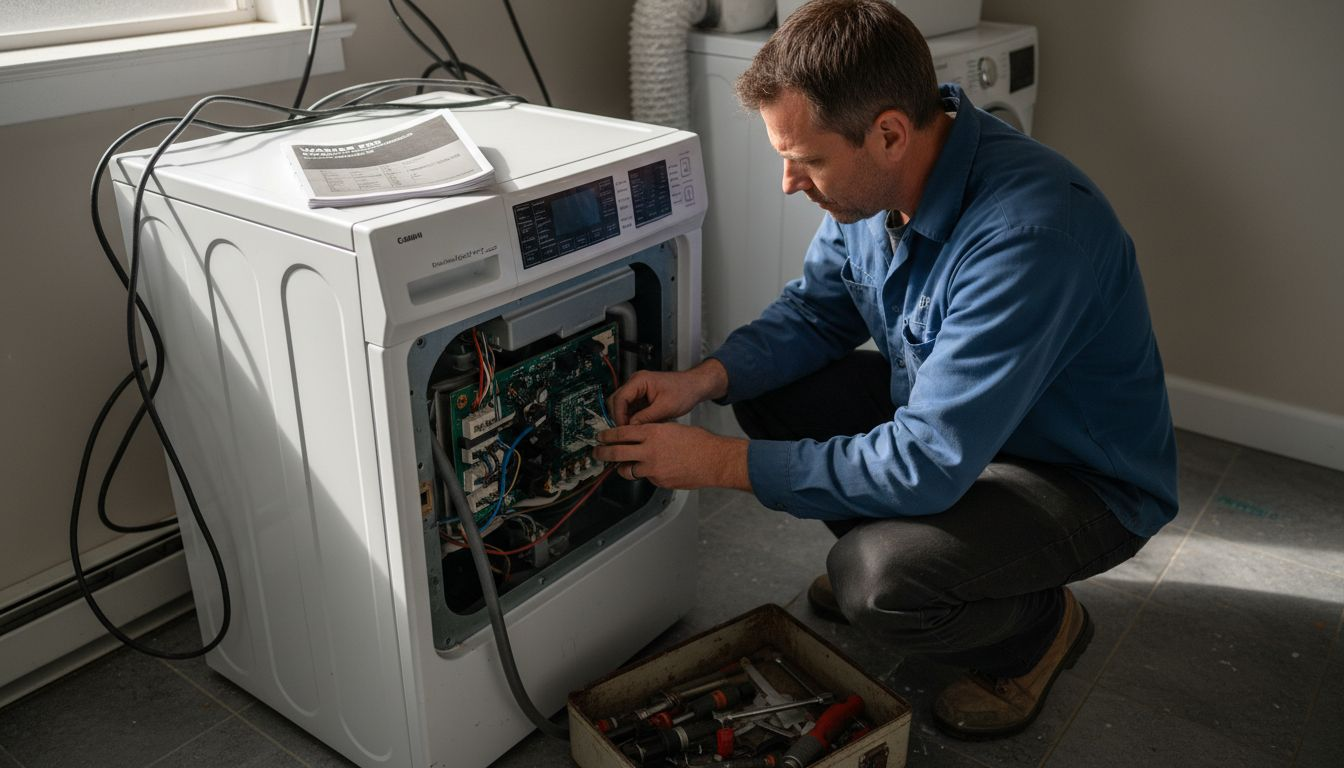
Alternative cooling technologies make a real difference too. Alternative cooling systems like evaporative cooling consume far less energy than traditional vapor-compression units, especially in our Southern California climate where humidity varies seasonally.
Avoiding synthetic refrigerants with high global warming potential matters significantly for air conditioning units and refrigerators.
What Orange County Homeowners Should Know
Your local utility costs and climate make eco-friendly appliances particularly valuable. Summer cooling bills spike here, making efficient air conditioning a legitimate investment.
Many Orange and Los Angeles County residents qualify for rebates when upgrading to eco-friendly models. Check with your water and electric providers—you might recover 10-20% of your purchase cost.
Eco-friendly appliances typically cost 5-15% more upfront but save $100-300 annually through reduced energy and water bills.
Beyond the ENERGY STAR Label
Look for additional certifications that matter. Water use labels tell you exactly how many gallons per cycle your washer uses. Decibel ratings show noise levels—helpful when considering kitchen renovations.
Age matters too. An appliance manufactured before 2010 wastes roughly double the energy of today’s eco-friendly models. If your unit breaks down frequently, replacement often makes financial sense within 3-5 years.
Pro tip: When your appliance fails, choose an eco-friendly replacement. The upfront cost pays itself back through energy savings while reducing your environmental footprint annually.
Types of Eco-Friendly Home Appliances
Eco-friendly appliances come in many forms. Whether you’re replacing a broken unit or upgrading your entire home, understanding your options helps you make smart choices that cut costs and reduce environmental impact.
The ENERGY STAR catalog spans multiple categories. Each type addresses different household needs while delivering measurable energy and water savings.
Kitchen Appliances
Your kitchen contains some of the biggest energy consumers in your home. Eco-friendly options here make a real difference:
- Refrigerators use inverter compressors that reduce energy spikes
- Dishwashers employ smart sensors to minimize water per cycle
- Ranges and ovens feature improved insulation and precise temperature control
- Microwaves with efficient heating elements reduce power draw
A modern eco-friendly refrigerator running continuously uses roughly 15-20% less electricity than models from 2010. Over a decade, that translates to hundreds of dollars saved.
Laundry Appliances
Washers and dryers rank among your home’s thirstiest and most energy-intensive machines. High-efficiency washers reduce water consumption from 40+ gallons per cycle to 15-20 gallons while delivering superior cleaning.
Heat pump dryers revolutionize drying technology. Instead of blasting clothes with extreme heat, they use recycled warm air—cutting energy use by up to 50% compared to traditional electric dryers.
These upgrades matter significantly in Orange and Los Angeles counties where water scarcity affects both availability and pricing.
Here’s how common eco-friendly appliances compare in performance, savings, and environmental impact:
| Appliance Type | Energy Savings (vs. old) | Water Savings | Environmental Impact |
|---|---|---|---|
| Refrigerator | 15–20% lower use | N/A | Lower emissions, less waste |
| High-efficiency Washer | Up to 50% less energy | 40–60% less | Reduced water, less pollution |
| Heat Pump Dryer | Up to 50% less energy | N/A | No fossil fuels, lower output |
| Heat Pump Water Heater | 40–50% less electricity | Some savings | Cuts emissions, saves money |
| Dishwasher (modern) | Up to 20% less energy | 30–50% less | Less water pollution, quieter |
This overview helps you understand which upgrades deliver the greatest impact for energy, water, and environment.
Heating and Cooling Systems
Air-source heat pumps provide heating and cooling with exceptional efficiency. They move existing heat rather than generating it from scratch, using 40-50% less energy than traditional furnaces and air conditioners.
Smart thermostats learn your preferences and adjust temperatures automatically. You might see 10-15% energy reductions simply through smarter scheduling.
Innovative cooling technologies like evaporative cooling represent the future. These systems use less energy by leveraging material science instead of refrigerants, performing especially well in varying humidity levels.
Water Heating Solutions
Tankless water heaters heat water on demand instead of maintaining a constantly warm tank. You eliminate standby losses and reduce energy consumption by 24-34%.
Heat pump water heaters transfer heat from air or ground sources, using up to 50% less electricity than conventional electric models.
Combining an efficient water heater with a high-efficiency washer can cut your household’s water heating costs by 30-40% annually.
Other Eco-Friendly Options
Beyond major appliances, consider:
- LED lighting uses 75% less energy than incandescent bulbs
- Energy Star certified electronics reduce phantom power drain
- Dehumidifiers and ventilation fans with efficient motors lower cooling loads
When choosing energy-efficient appliances, prioritize appliances you use most frequently. A washer or refrigerator replacement pays back faster than upgrading a rarely-used oven.
Pro tip: Ask your local utility provider about rebates before purchasing—many Orange and Los Angeles County programs cover 20-30% of eco-friendly appliance costs, making upgrades far more affordable.
How These Appliances Lower Energy Bills
Eco-friendly appliances don’t just help the environment—they directly reduce what you pay each month. The mechanism is straightforward: use less energy, pay less money.
Your utility bill reflects consumption. Eco-friendly models consume significantly less electricity or gas while delivering identical performance. Over time, these reductions compound into substantial savings.
Understanding Energy Consumption Reduction
Enhanced insulation in refrigerators and water heaters minimizes heat loss. Your appliance doesn’t work as hard maintaining temperature, cutting runtime and energy draw.
Advanced sensors in dishwashers and washers measure load size and soil levels, adjusting water and energy accordingly. Instead of running a fixed cycle every time, the machine adapts to actual needs.
Efficient motors and smart controls optimize operation. A modern refrigerator compressor cycles on and off strategically rather than running continuously at full power.
These technologies work together to reduce consumption by 15-50% depending on the appliance type.
Heating and Cooling Efficiency
Heating and cooling account for roughly 40-50% of household energy costs in Southern California. This is where eco-friendly upgrades deliver dramatic savings.
Heat pump technology transfers existing heat rather than generating it from scratch. Heat pump water heaters use 40-50% less electricity than conventional models. Heat pump dryers cut energy consumption by up to 50% compared to traditional electric dryers.
Smart thermostats and programmable controls learn your schedule and adjust temperatures automatically, preventing heating or cooling when nobody’s home.
Real-World Savings Examples
Consider actual Orange County scenarios:
- High-efficiency washer: Reduces per-cycle consumption from 50+ kWh to 15-20 kWh annually saves $80-120
- Eco-friendly refrigerator: Cuts energy use by 15-20%, saving $100-150 per year
- Heat pump water heater: Uses 40-50% less electricity, potentially saving $200-300 annually
- Smart thermostat: Optimizes heating/cooling for 10-15% savings on HVAC costs
These aren’t theoretical numbers. They’re based on regional electricity rates and actual performance data.
A household upgrading five major appliances to eco-friendly models could reduce annual energy bills by $500-1,000, with payback periods of 5-8 years in many cases.
Financial Incentives Accelerate Savings
Upgrading older appliances becomes significantly more affordable when you factor in available rebates. Federal tax credits and state/local utility rebates cover 20-30% of purchase costs in many Orange and Los Angeles County programs.
These incentives aren’t luxuries—they’re designed to make eco-friendly upgrades financially accessible right now.
Below is a guide to rebate and incentive opportunities for eco-friendly appliances in Southern California:
| Incentive Source | Coverage Amount | Eligible Appliances | Typical Requirements |
|---|---|---|---|
| Federal Tax Credit | 20–30% of purchase | Heat pumps, water heaters | ENERGY STAR or specific models |
| CA State Rebate | 15–25% of cost | Air conditioning, washers | Proof of purchase, new install |
| Local Utility Programs | 10–20% of cost | Most major appliances | Residency, installation evidence |
| Seasonal Promotions | Varies, up to 30% | Refrigerators, dryers | Limited time, local providers |
Check with each provider before buying to maximize your savings and eligibility.
Pro tip: Check your utility provider’s website for current rebate programs before purchasing any appliance; timing your purchase correctly can cut your net cost by hundreds of dollars while maximizing long-term savings.
Environmental Impact in Southern California Homes
Your appliance choices do more than save money. They directly influence air quality, climate outcomes, and the future of energy generation across Southern California.
When you choose eco-friendly appliances, you’re participating in a larger transition away from fossil fuels toward cleaner energy. This shift matters significantly in our region.
Reducing Greenhouse Gas Emissions
Traditional appliances powered by natural gas or older electric models generate substantial greenhouse gas emissions. Every time your furnace kicks on or your water heater fires up, it contributes to climate change.
Eco-friendly alternatives dramatically reduce this impact. Heat pumps eliminate direct fossil fuel combustion entirely by transferring existing heat rather than generating it. This electrification shift is critical for California’s climate goals.
Energy-efficient models use less electricity overall. When paired with California’s increasingly renewable energy grid, this means cleaner power delivery every single day.
Improving Local Air Quality
Southern California has historically struggled with air pollution. Natural gas appliances contribute to this problem through nitrogen oxide emissions and methane leaks.
By switching to electric eco-friendly appliances, you reduce harmful emissions in your neighborhood. This directly benefits respiratory health, particularly for children and elderly residents.
The cumulative effect matters. When thousands of Orange and Los Angeles County homes transition together, air quality improves measurably across the region.
Supporting California’s Clean Energy Goals
California mandates aggressive emissions reductions and renewable energy expansion. Electrification through heat pumps and eco-friendly appliances represents a core strategy for meeting these ambitious targets.
Your individual upgrade contributes to statewide progress. State programs actively encourage appliance transitions through rebates and incentives specifically designed to accelerate this shift.
Water Conservation in a Drought-Prone Region
Southern California faces persistent water scarcity. Traditional washers consume 40+ gallons per cycle. High-efficiency models cut this to 15-20 gallons while cleaning better.
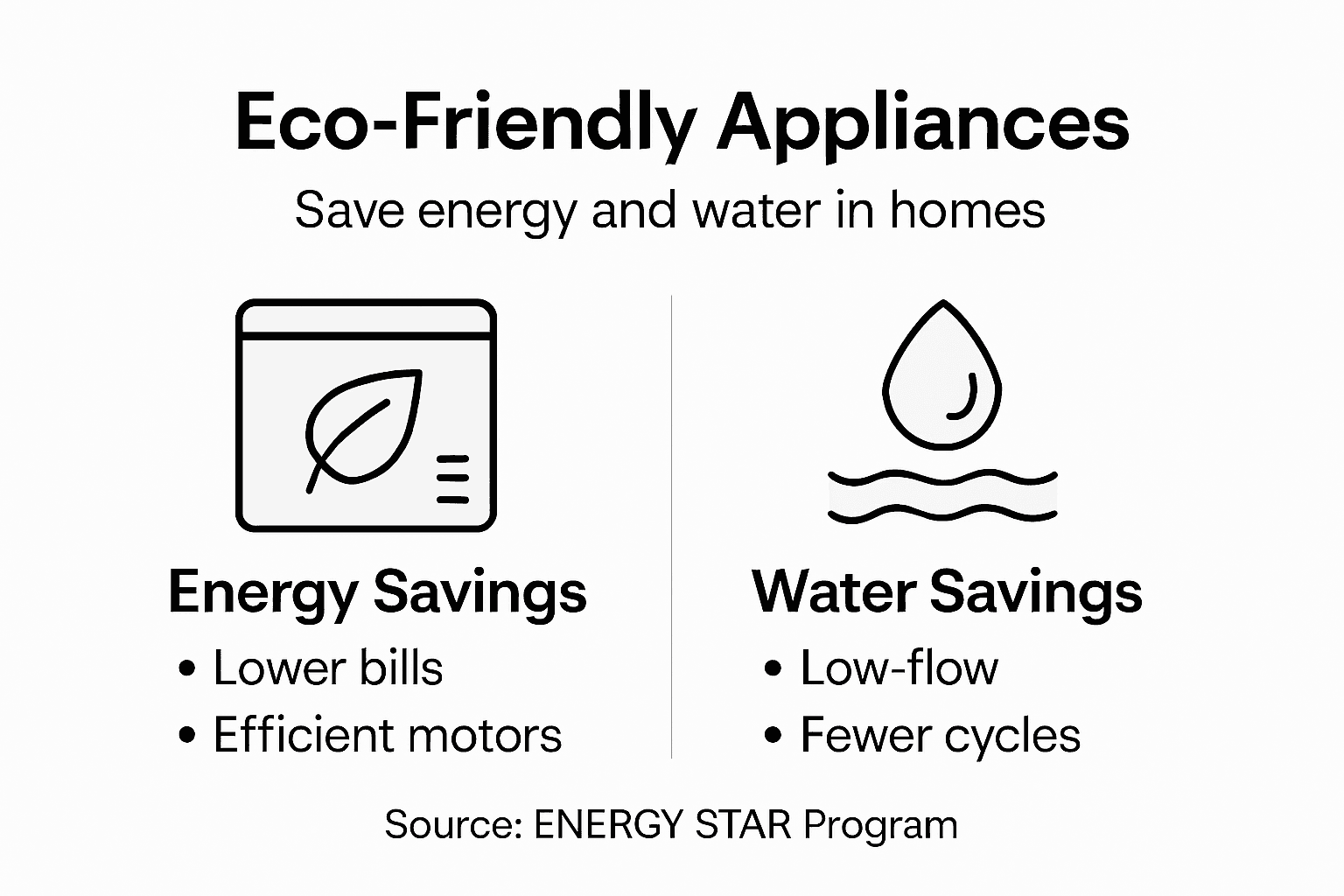
Water heating represents another consumption point. Tankless and heat pump water heaters reduce both water waste and the energy required to heat it.
Key environmental benefits of efficient appliances:
- Reduced greenhouse gas emissions from decreased energy consumption
- Lower demand on electrical grid during peak hours
- Decreased water extraction and treatment needs
- Reduced landfill waste from longer-lasting, durable models
- Improved local air quality through electrification
Widespread adoption of eco-friendly appliances in Southern California could reduce residential greenhouse gas emissions by 20-30% within the next decade.
The Broader Environmental Story
Manufacturing new appliances requires energy and resources. However, the lifetime emissions of an efficient model are substantially lower than replacing an old inefficient unit repeatedly over time.
Proper appliance recycling ensures old units don’t contaminate landfills or waste valuable materials. Many Orange County programs accept old appliances free when you upgrade.
Your choice to upgrade isn’t just personal—it’s environmental action with measurable regional impact.
Pro tip: Coordinate your appliance upgrades with your neighbors; when multiple households in your community transition simultaneously, you create momentum that encourages utility companies to expand incentive programs even further.
Choosing, Maintaining, and Upgrading Eco-Friendly Models
Deciding which eco-friendly appliance to buy is just the first step. Long-term success depends on smart selection, consistent maintenance, and knowing when to upgrade.
The right choices compound over time, delivering years of savings and environmental benefit.
Selecting the Right Eco-Friendly Appliance
Start by identifying your priorities. Are you replacing a broken unit or upgrading voluntarily? Do you need maximum efficiency or balanced cost and performance?
Look for ENERGY STAR certification first. This label guarantees the appliance meets strict efficiency standards and will deliver measurable savings. Without it, you’re guessing at performance.
Beyond the label, examine specific features that matter for your situation:
- Smart sensors in washers and dishwashers adapt cycles to actual load requirements
- Inverter compressors in refrigerators reduce energy spikes
- Heat pump technology in dryers and water heaters transfers heat efficiently
- Programmable controls enable scheduling around peak utility hours
Check your ENERGY STAR product database for specific models and their efficiency ratings. This takes five minutes and eliminates confusion.
Maintenance Keeps Efficiency High
A new eco-friendly appliance loses efficiency quickly without proper care. Think of maintenance as protecting your investment.
Monthly tasks include:
- Cleaning refrigerator coils to maintain airflow
- Checking washer seals for leaks or wear
- Clearing dryer lint filters
- Inspecting water heater connections
Annual maintenance requires:
- Professional HVAC inspections for heat pumps
- Water heater flushing to remove sediment buildup
- Dishwasher filter cleaning
- Checking thermostat calibration
Following manufacturer guidelines preserves warranty coverage and prevents efficiency decline. Neglected appliances work harder, using more energy and wearing out faster.
Strategic Upgrade Planning
Upgrades make financial sense when repair costs exceed 50% of replacement cost or when your unit exceeds 10-12 years old. Orange and Los Angeles County residents should consider upgrading before summer cooling season to maximize rebate availability.
Tax credits and state rebates significantly reduce upgrade costs. Federal incentives and local programs can cover 20-30% of purchase prices for qualified models.
Timing matters. Utility companies often run seasonal rebate programs with higher incentive levels during specific months. Calling ahead reveals current offerings.
A 12-year-old refrigerator costs roughly $150-200 annually in excess energy consumption compared to a modern eco-friendly model, making replacement cost-effective within 4-5 years.
Installation and Setup
Proper installation determines whether you realize promised efficiency gains. Professional installation ensures correct refrigerant charge, proper ductwork connections, and accurate thermostat calibration.
Don’t skip setup steps. Smart features only work if you enable them. Programmable thermostats require scheduling input. Moisture sensors require activation on many dryers.
Local Orange County appliance repair professionals can handle both installation and initial configuration, ensuring everything operates optimally from day one.
Pro tip: Schedule appliance maintenance appointments in spring before summer peaks; repair professionals offer faster service and may provide discounts on preventive maintenance packages during slower seasons.
Upgrade to Eco-Friendly Appliances with Trusted Local Experts
Embracing eco-friendly appliances is more than a smart environmental choice it is a commitment to lowering your energy and water bills while enhancing your home’s comfort. However replacing or maintaining these advanced systems can present unique challenges like ensuring proper installation and ongoing maintenance to keep efficiency at its peak. At Appliances Repair MD Tech, we specialize in supporting Orange and Los Angeles County homeowners through every step—from repairing your current appliance to installing new energy-efficient models that meet ENERGY STAR standards.
Take control of your home’s energy consumption today. Our licensed technicians bring expert knowledge and reliable service to keep your refrigerators, washers, dryers, and HVAC systems running flawlessly with eco-friendly precision. Visit Appliances Repair MD Tech now to schedule your appointment and start experiencing savings along with peace of mind. Don’t wait until costly repairs or inefficiency take a toll act now and upgrade your home sustainably with trusted local professionals.
Frequently Asked Questions
What are eco-friendly appliances?
Eco-friendly appliances are devices designed to use less energy and water while minimizing environmental impact. They often meet ENERGY STAR certification standards, signifying their efficiency and performance compared to traditional models.
How do eco-friendly appliances save money?
Eco-friendly appliances save money by consuming less energy and water during operation, leading to lower utility bills. For instance, a modern refrigerator reduces energy use by 15-20%, which can save you hundreds of dollars over a decade.
What features should I look for in eco-friendly appliances?
When selecting eco-friendly appliances, look for features such as ENERGY STAR certification, inverter compressors, smart sensors, and efficient water use capabilities. These features enhance performance while ensuring minimized energy and water consumption.
How can I maintain eco-friendly appliances for maximum efficiency?
To keep eco-friendly appliances running efficiently, perform regular maintenance like cleaning refrigerator coils, checking seals on washers, clearing dryer lint filters, and scheduling annual HVAC inspections for heat pumps. Regular upkeep helps maintain their efficiency and prolongs their lifespan.