
Replacing outdated appliances often feels like a big expense, but homeowners across Orange and Los Angeles Counties are discovering how strategic upgrades can slash energy bills and reduce ongoing repairs. Rising utility costs and frequent breakdowns make older equipment difficult to ignore. This guide helps you bust the biggest myths, understand energy efficiency standards, and identify the smartest upgrade opportunities so you can save money while protecting your home’s comfort and value.
Table of Contents
- Defining Appliance Upgrades And Common Myths
- Appliance Types Eligible For Replacement
- How New Appliances Improve Efficiency
- California Rebates And Incentives Explained
- Financial And Safety Impacts Of Upgrading
- When To Repair Versus Replace Appliances
Key Takeaways
| Point | Details |
|---|---|
| Appliance Upgrades Are Investments | Upgrading to newer, energy-efficient appliances leads to long-term savings in utility costs and improved home safety. |
| Focus on High-Energy Appliances | Prioritize replacing older appliances like refrigerators and washing machines to maximize energy efficiency and cost savings. |
| Utilize Available Incentives | Homeowners should explore state and federal rebate programs aimed at reducing the cost of energy-efficient appliance upgrades. |
| Repair vs. Replace Considerations | Evaluate age, repair costs, and energy efficiency to determine when to repair older appliances or invest in new models. |
Defining Appliance Upgrades and Common Myths
Appliance upgrades are strategic replacements of older household devices with newer, more efficient models designed to reduce energy consumption and utility costs. National efficiency standards mandate minimum performance levels for modern appliances, transforming how homeowners approach equipment replacement and energy management.
Contrary to popular misconceptions, upgrading appliances is not merely an aesthetic choice but a calculated investment in long-term savings. The International Energy Agency notes that while energy consumption continues rising, technological advancements provide significant opportunities for reduction. Myths surrounding appliance upgrades often stem from outdated information and misunderstandings about actual cost savings and environmental impacts.
Key characteristics of meaningful appliance upgrades include:
- Replacing units over 10 years old
- Selecting Energy Star certified models
- Focusing on high-consumption appliances like refrigerators and washing machines
- Analyzing potential energy savings versus replacement costs
Energy Efficiency Matters. Modern appliances consume substantially less electricity compared to decade-old models, with some refrigerators using 50% less energy than versions from the early 2000s. This translates directly into lower monthly utility bills and reduced environmental footprint.
Pro tip: Before purchasing a new appliance, calculate its estimated annual energy cost by checking the yellow Energy Guide label, which provides a standardized comparison of expected electricity consumption.
Appliance Types Eligible for Replacement
U.S. Department of Energy efficiency standards cover over 60 product categories, providing homeowners with clear guidance on which household appliances are prime candidates for replacement. Modern upgrades focus on high-energy consumption devices that significantly impact monthly utility expenses and overall home energy efficiency.
The most critical appliances eligible for replacement include:
- Refrigerators: Typically the largest energy consumers in most households
- Washing Machines: Newer models use substantially less water and electricity
- Dryers: Energy-efficient models can reduce electricity consumption by up to 20%
- Dishwashers: Modern units with improved water and energy management
- HVAC Equipment: Heating and cooling systems with advanced technological features
Energy Performance Matters. State energy efficiency programs often provide incentives for replacing older appliances with smart, energy-conscious models. These upgrades not only reduce utility costs but also contribute to broader environmental conservation efforts.
Here’s a quick comparison of common high-impact appliance upgrades:
| Appliance Type | Typical Lifespan | Efficiency Gain with Upgrade | Notable Benefits |
|---|---|---|---|
| Refrigerator | 10-15 years | Up to 50% less energy | Lower cooling cost, quieter |
| Washing Machine | 8-12 years | 25-40% less energy, water | Reduced utility bills |
| Dryer | 10-13 years | 15-20% less electricity | Faster drying, gentler cycles |
| Dishwasher | 9-12 years | 20-30% less water/energy | Quieter operation, better cleaning |
| HVAC System | 12-20 years | Up to 30% energy savings | Improved comfort, air quality |
Homeowners should prioritize appliance replacement based on several key factors:
- Age of current appliance (typically over 10 years old)
- Frequency of repairs
- Current energy consumption ratings
- Available technological improvements
- Potential cost savings over the appliance’s lifetime
Pro tip: Before replacing any appliance, conduct an energy audit to identify which devices will provide the most significant returns on your investment.
How New Appliances Improve Efficiency
National appliance standards drive technological innovations that dramatically enhance energy efficiency across household devices. Modern appliances incorporate sophisticated design elements that minimize energy consumption while maintaining or improving overall performance, creating a win-win scenario for homeowners and the environment.
Key efficiency improvements in new appliances include:
- Smart Sensor Technology: Automatically adjusts power consumption based on actual usage
- Advanced Insulation: Reduces heat loss in refrigerators and water heaters
- Optimized Motor Systems: Uses less electricity to complete standard tasks
- Precision Control Mechanisms: Enables more accurate temperature and operation management
Energy Consumption Transformation. State energy efficiency programs demonstrate that newer appliances can reduce household energy usage by 20-50% compared to models from just a decade ago. These technological advancements translate directly into lower utility bills and reduced environmental impact.
The efficiency gains extend beyond immediate energy savings. Improved appliance design means fewer repairs, longer operational lifespans, and more consistent performance. Homeowners can expect significant long-term benefits from investing in modern, technologically advanced household equipment.
Pro tip: When shopping for new appliances, look for Energy Star certification and compare the yellow Energy Guide label to accurately estimate annual operating costs.
California Rebates and Incentives Explained
Home electrification rebate programs provide California residents with substantial financial incentives for upgrading to energy-efficient appliances. These programs target homeowners across income levels, making sustainable home improvements more accessible and affordable for everyone.
Key rebate categories for California residents include:
- Heat Pump Upgrades: Significant incentives for replacing traditional HVAC systems
- Electric Water Heater Replacements: Substantial cost reductions for energy-efficient models
- Low-Income Household Support: Enhanced financial assistance for qualifying residents
- Solar and Electrification Incentives: Additional funding for comprehensive home energy transformations
Efficiency Regulatory Framework. California’s Appliance Efficiency Program mandates stringent manufacturer certifications, ensuring that rebate-eligible appliances meet the highest energy conservation standards. These regulations not only save consumers money but also contribute to statewide greenhouse gas reduction goals.
Homeowners can maximize their rebate potential by:
- Checking income-based qualification criteria
- Verifying appliance energy efficiency ratings
- Documenting existing equipment before replacement
- Exploring both state and federal incentive programs
- Working with certified installation professionals
Pro tip: Contact your local utility company for a comprehensive list of current rebates and schedule a free energy assessment to identify the most cost-effective appliance upgrade opportunities.
Financial and Safety Impacts of Upgrading
Home energy upgrades represent a strategic investment that balances financial savings with enhanced household safety. Modern appliances deliver multifaceted benefits beyond simple energy conservation, creating comprehensive improvements in home functionality and risk management.
Financial advantages of appliance upgrades include:
- Reduced Energy Expenses: Lower monthly utility bills
- Fewer Repair Costs: Modern equipment requires less maintenance
- Increased Property Value: Updated appliances attract potential buyers
- Tax Incentives: Potential tax credits for energy-efficient purchases
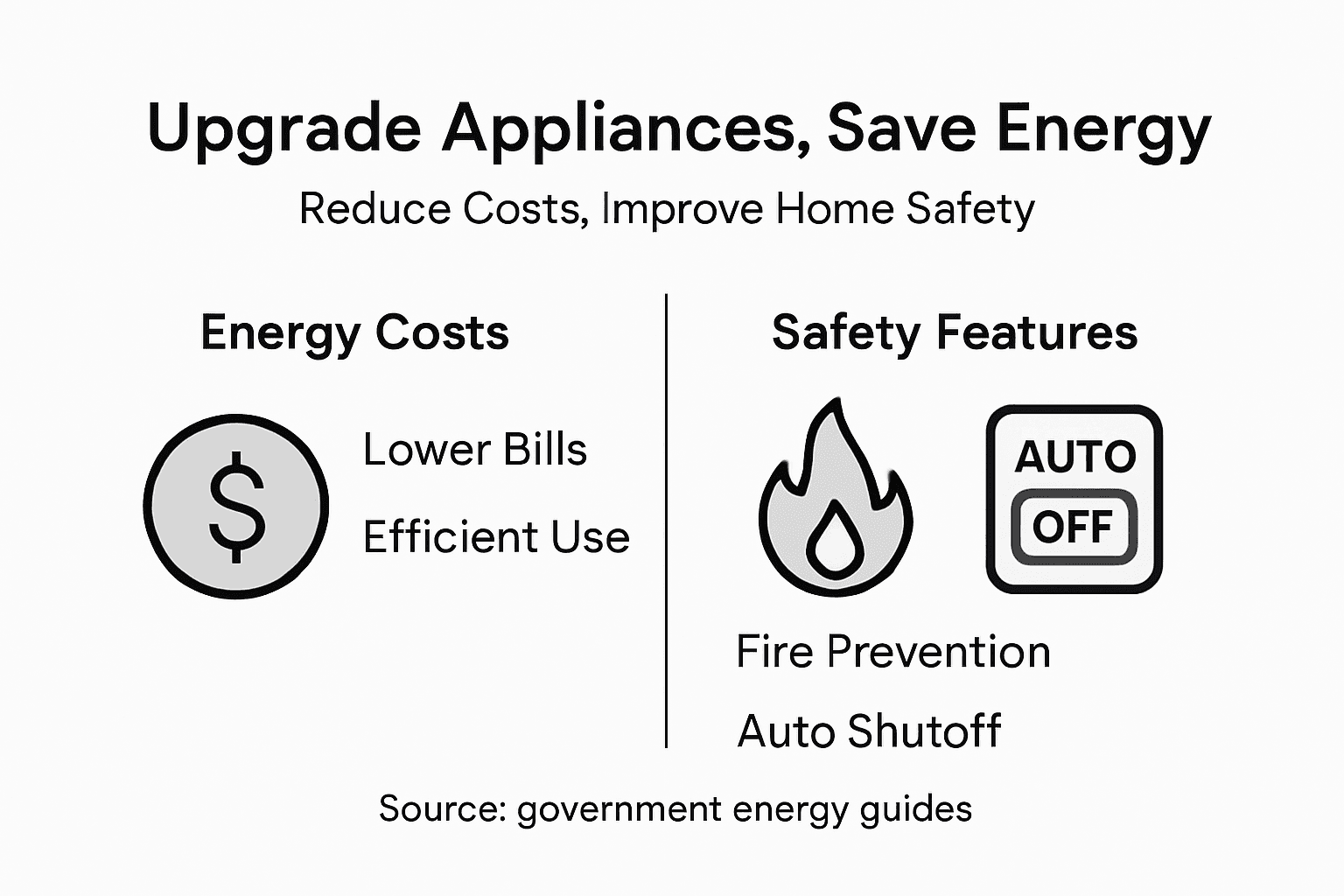
Safety Transformation. Energy-efficient appliance standards dramatically improve home safety by incorporating advanced protective technologies. Newer models feature sophisticated mechanisms that prevent electrical malfunctions, reduce fire risks, and minimize potential carbon monoxide exposure.
Compare the financial and safety improvements of upgrading vs. keeping old appliances:
| Factor | Old Appliances | Upgraded Appliances |
|---|---|---|
| Monthly Energy Cost | Higher | Lower |
| Maintenance Needs | Frequent repairs | Infrequent, minor servicing |
| Safety Features | Basic, outdated | Advanced, modern protections |
| Effect on Home Value | Neutral or negative | Positive, attracts buyers |
Homeowners can quantify their potential savings through:
- Calculating current appliance energy consumption
- Comparing operational costs of existing versus new models
- Evaluating long-term maintenance expenses
- Assessing potential insurance premium reductions
- Tracking cumulative energy savings over time
Pro tip: Request a professional energy audit to precisely calculate your potential financial and safety improvements before making significant appliance upgrade investments.
When to Repair Versus Replace Appliances
Appliance reliability research reveals critical decision-making factors for homeowners facing equipment malfunctions. Understanding when to repair or replace requires a strategic assessment of multiple financial and performance considerations that extend beyond simple cost comparisons.
Key decision criteria for repair versus replacement include:
- Age of Appliance: Units over 7-10 years often warrant replacement
- Repair Cost Threshold: Repairs exceeding 50% of new appliance price
- Frequency of Existing Repairs: Multiple recent breakdowns signal replacement
- Energy Efficiency: Older models consume significantly more electricity
- Performance Degradation: Consistent operational issues reduce reliability
Repair Evaluation Strategies. Common appliance problems typically involve components like control panels, compressors, and electronic systems. Professional technicians can provide precise assessments of whether repair or replacement represents the most cost-effective solution for specific equipment.
Homeowners should systematically evaluate:
- Current appliance’s remaining expected lifespan
- Total cumulative repair expenses to date
- Potential energy savings from newer models
- Technological improvements in recent equipment designs
- Manufacturer warranty considerations
Pro tip: Request a professional diagnostic assessment that provides a comprehensive cost-benefit analysis comparing repair expenses against replacement investment.
Upgrade Your Appliances for a Safer and More Energy-Efficient Home
If you are dealing with aging appliances that drive up your energy bills and raise safety concerns, it is time to take action. This article clearly shows the benefits of replacing older devices with modern, efficient models that save money and improve home safety. Whether your refrigerator, washer, dryer, or HVAC system is over ten years old or frequently in need of repair, upgrading is a smart choice that pays off in lower utility costs and peace of mind.
Don’t wait until costly breakdowns or hazardous conditions arise. Trust the licensed experts at Appliances Repair MD Tech to handle your appliance repair, installation, and HVAC upgrades across Orange County and Los Angeles County. Get immediate support or schedule your service online today to start enjoying the financial and safety advantages of newer, energy-efficient appliances. Visit https://appliancesrepairmdtech.com now and make your home safer and more efficient.
Learn more about our fast appliance repair services at Appliance Repair Services and how we can help you maintain an energy-smart household.
Frequently Asked Questions
What are the benefits of upgrading old appliances?
Upgrading old appliances can lead to lower energy costs, reduced utility bills, increased home safety, and improved efficiency. Modern appliances often use significantly less energy, which translates into financial savings over time.
How do I know if it’s time to replace my old appliances?
You should consider replacing your appliances if they are over 10 years old, require frequent repairs, have high energy consumption ratings, or if their performance has degraded. Generally, appliances that are more than 7-10 years old are strong candidates for replacement.
What types of appliances typically benefit most from being upgraded?
The appliances that generally benefit most from upgrades include refrigerators, washing machines, dryers, dishwashers, and HVAC systems. These units typically consume a significant amount of energy and will yield better efficiency with newer models.
How can new appliances improve home safety?
New appliances often include advanced safety features such as protective mechanisms that prevent electrical malfunctions, reduce fire hazards, and minimize risks of carbon monoxide exposure, thus enhancing household safety.