
Your AC coils freeze when the evaporator coil’s surface temperature drops below 32°F, and that almost always traces back to one of two root problems: not enough warm air moving across the coil, or refrigerant pressure that’s off. The single biggest culprit is restricted airflow, but a handful of other issues can trigger the same ice buildup.
The most common causes of a frozen AC coil are:
- A dirty or clogged air filter
- A dirty evaporator coil
- Blocked return vents or a weak blower motor
- Low refrigerant from a leak
- A faulty thermostat or metering device
- Running the AC when it’s too cold outside
If you spot ice anywhere on the unit, turn the thermostat to OFF immediately and switch the fan to ON. Running the compressor with ice on the coil risks sending liquid refrigerant back into it, which can cause expensive damage.
Key Takeaways
A frozen AC coil almost always comes from restricted airflow or low refrigerant pressure, and the fix always starts with shutting the compressor off and running the fan to thaw it safely.
| Point | Details |
|---|---|
| Airflow causes most freezes | Dirty filters, blocked vents, and dirty coils account for the majority of frozen coil cases. |
| Thaw before diagnosing | Turn the thermostat off, run the fan only, and never restart while ice remains on the coil. |
| Refrigerant issues need a pro | Low refrigerant or a faulty metering device requires licensed diagnostic tools, not a DIY recharge. |
| Watch for refreeze patterns | Ice returning within one cycle after a filter fix points to refrigerant or mechanical failure. |
| MDTECH handles the diagnostic work | Appliancesrepairmdtech’s licensed technicians test airflow, pressure, and controls to pinpoint the exact cause. |
What homeowners get wrong about a frozen coil
The mistake we see most often isn’t ignorance about causes. It’s impatience with the fix. Homeowners spot ice, chip it off with a butter knife or a hairdryer, and flip the AC back on within minutes because the house is getting warm. That’s backward. Ice on a coil means the system is already struggling, and forcing the compressor to run before it’s fully thawed is how a simple filter problem turns into a compressor replacement.
The second mistake is treating every frozen coil like a filter problem. A clogged filter causes most freezes, but not all of them, and the homeowners who assume it’s “always the filter” are the ones who end up calling a technician three weeks later after the coil ices right back up. The 30 to 60 minute post-restart check exists specifically to catch that difference before it becomes an expensive surprise.
Get an annual tune-up before summer, not after the first freeze. It’s cheaper every time.
— MDTECH
Get Your Coil Diagnosed the Right Way
A frozen coil that keeps coming back usually means one visit and a set of gauges will tell you more than another filter change ever could. Appliancesrepairmdtech’s licensed technicians in Orange and Los Angeles counties run the same pressure and airflow diagnostics outlined above, but with the tools to actually confirm a leak, test a metering device, or clear a coil that’s beyond a home cleaning.
Whether your coil froze because of a slow leak or a blower motor on its last leg, guessing costs more than diagnosing. Book a visit through our expert HVAC repair page and get a technician out before the next hot week puts your system back under strain.
Table of Contents
- What Causes an AC Coil to Freeze and How to Spot It
- What Causes AC Coils to Freeze: The Full List
- Why Refrigerant Problems Freeze the Coil
- How to Thaw a Frozen AC Coil Safely
- When to Call an HVAC Technician
- Preventing an AC Coil From Freezing Again
- What a Service Visit Looks Like
- Sources
What Causes an AC Coil to Freeze and How to Spot It
Confirming the freeze takes about two minutes, no tools required. Here’s the order technicians actually check things in:
- Look at the coil and refrigerant line. Visible frost or a thick layer of ice on the copper lines or the coil itself is the clearest sign.
- Feel the insulated suction line near the outdoor unit. It should feel cool and slightly damp with condensation. If it’s frosted or icy to the touch, that confirms freezing further into the system.
- Check airflow at the vents. Weak, warm, or barely-there airflow from your supply registers usually means air isn’t crossing the coil properly.
- Look for water pooling around the indoor unit or a stained ceiling below an attic air handler. That’s often meltwater from a coil that’s already started thawing on its own.
If your air handler sits in a tight attic space or crawl area, skip the physical inspection. You don’t need to see the ice firsthand. If your airflow is weak and your energy bill has spiked, treat it as frozen and move straight to the thawing steps below.
What Causes AC Coils to Freeze: The Full List
Most frozen coils come down to airflow, and it’s not close. Restricted airflow is the leading cause of evaporator coil freezing, and three separate problems can produce it.
A dirty or clogged filter is the single most common trigger. When the filter is packed with dust and pet hair, warm household air can’t reach the coil in sufficient volume. The coil, which needs that warm air to stay above freezing, gets colder and colder until moisture in the air starts icing on its surface. This is also the easiest fix in this entire article: pull the filter, hold it up to a light, and if you can’t see through it, replace it.
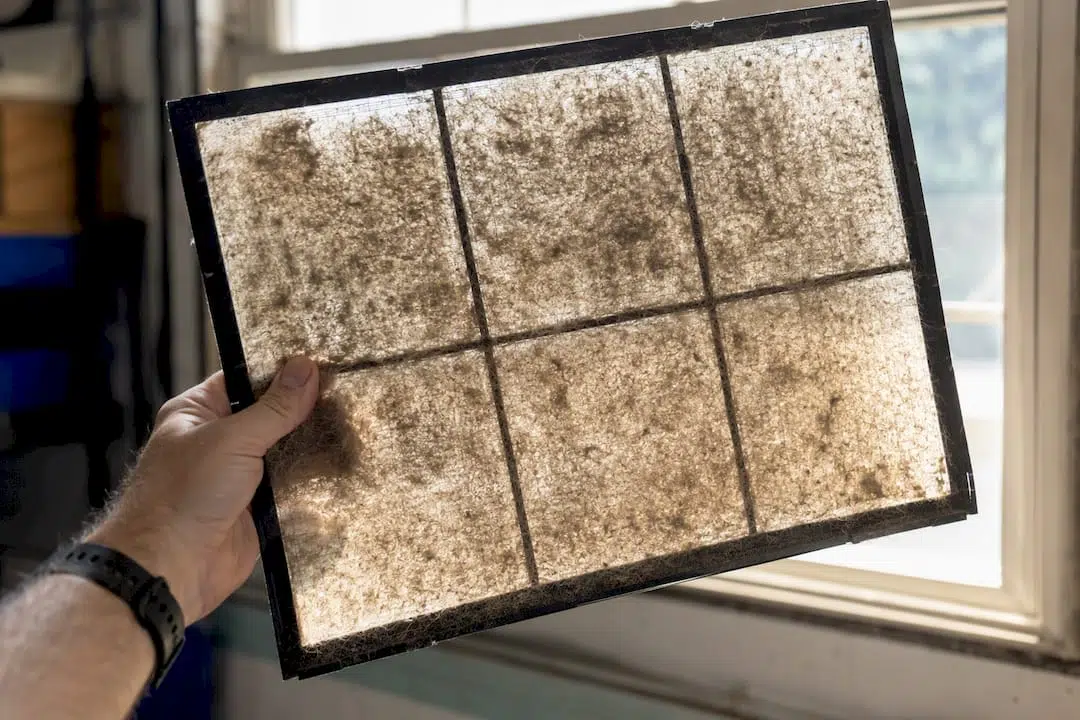
Blocked returns or closed supply registers cause the identical problem through a different door. If furniture is pushed against a return vent, or you’ve closed off registers in unused rooms to “save energy,” you’re choking the same airflow the filter would otherwise protect. Open every register in the house and pull furniture away from returns.
A dirty evaporator coil often shows up after months of filter neglect. Dust that gets past a worn filter eventually cakes onto the coil fins themselves, insulating them and reducing the air contact needed to keep temperatures stable. Cleaning the coil and staying on a filter schedule together stop the freeze cycle from repeating, whereas fixing only the filter without addressing an already-dirty coil, it tends to freeze again within a cycle or two. You can read more about coil function in our guide to evaporator coils.
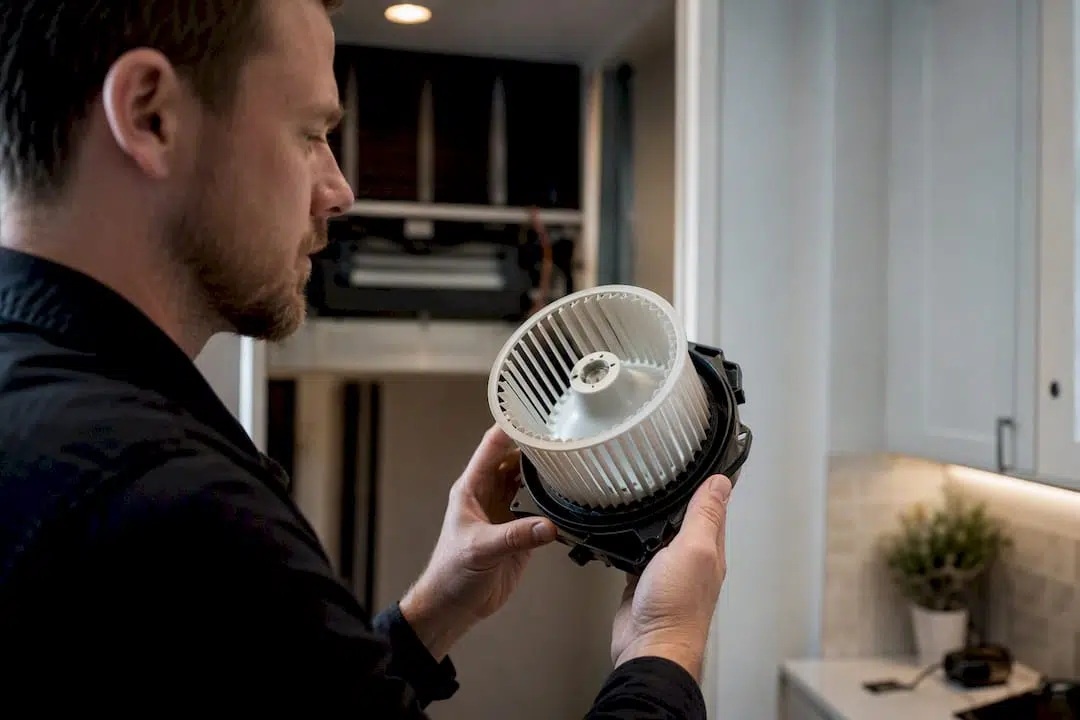
A weak or failing blower motor cuts airflow volume even with a clean filter and open vents. If the blower wheel is caked in dust or the motor itself is wearing out, it simply can’t push enough air across the coil. This one usually needs a technician, since diagnosing a motor problem means pulling the blower assembly.
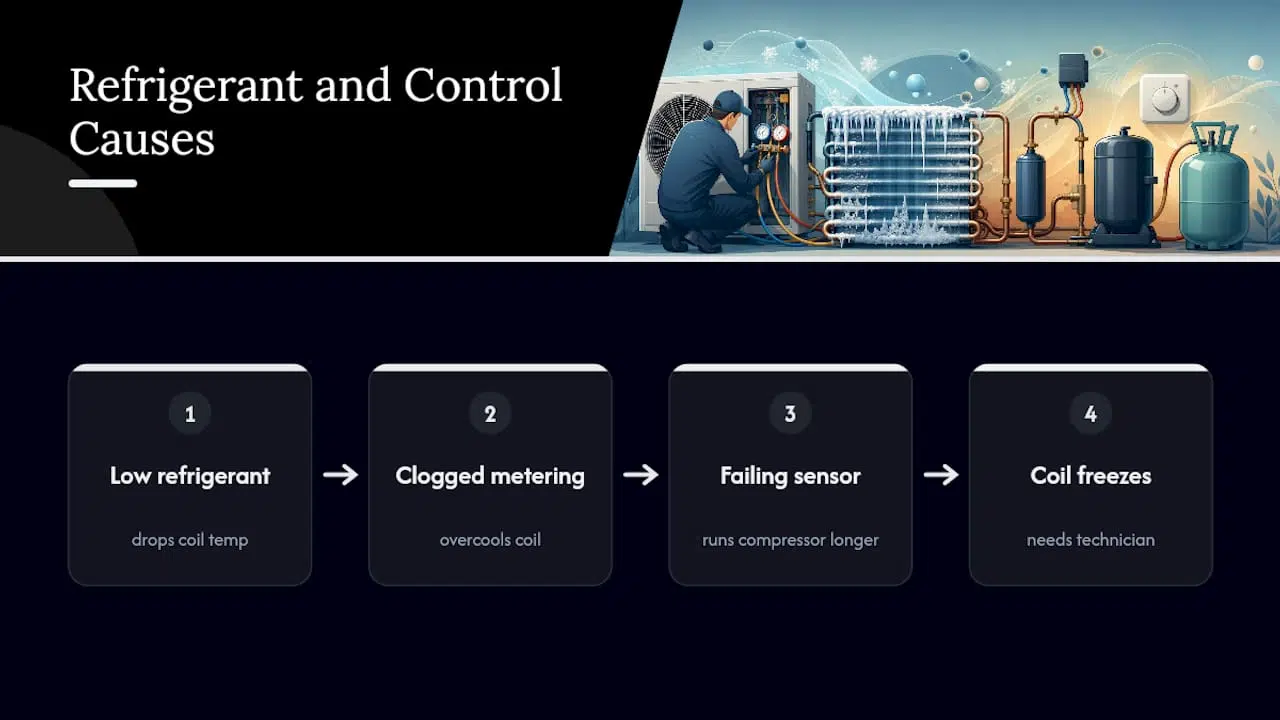
On the other side of the ledger sit the refrigerant and control issues: a refrigerant leak or low charge, a stuck or clogged metering device, and a failing thermostat sensor that keeps the compressor running longer than it should. All three lower the temperature at the coil surface, and none of them are homeowner repairs.
One more cause catches people off guard: running the AC when outdoor temperatures dip below roughly 60°F. Your system is engineered to operate within a specific outdoor temperature range, and running it on a cool spring evening or during a cold snap can drop system pressure enough to freeze the coil even though nothing is actually broken.
Pro Tip: If your coil freezes on a mild day when the AC barely needed to run, check the outdoor temperature before you assume something’s broken. A lot of “mystery” freezes happen on 55°F mornings when the thermostat is still set for summer.
Why Refrigerant Problems Freeze the Coil
Refrigerant issues freeze coils through basic pressure physics, not a dirt or blockage problem. When refrigerant runs low, suction pressure in the system drops, and that pulls the evaporator coil’s temperature down with it, often well below 32°F even with clean filters and open vents.
You can usually tell refrigerant is the culprit rather than airflow by the pattern: the coil refreezes within one cooling cycle even after you’ve replaced the filter and opened every vent. Hissing sounds near the indoor unit, an oily residue on refrigerant line connections, or frost that keeps returning are all signs pointing the same direction.
Low refrigerant almost always means a leak somewhere in the system. It doesn’t just run low on its own over time the way a car loses oil.
Metering devices like a thermostatic expansion valve or capillary tube can also clog or stick, starving or overfeeding the coil with refrigerant and producing the same ice. A licensed technician diagnoses these problems with manifold gauges to read system pressures, electronic leak detectors to find the leak, and, if needed, brazing equipment to repair the line before recharging under EPA Section 608 rules. Adding refrigerant without finding the leak first is a temporary patch that can damage the compressor down the line.
How to Thaw a Frozen AC Coil Safely
Once you’ve confirmed the freeze, work through these steps in order:
- Turn the thermostat to OFF. Not just a lower temperature. Shut the system down completely.
- Set the fan to ON (not AUTO). Running the blower without the compressor circulates room-temperature air across the coil and melts the ice gradually.
- Pull and check the filter now, and replace it if it’s dirty. There’s no reason to wait until the ice is gone.
- Protect the floor around the air handler. Lay towels or a shallow container under the unit, since a fully frozen coil can release a surprising amount of water as it melts.
- Give it time. Light frost can clear in about an hour; a solid block of ice can take up to four hours. Don’t rush it.
Resist the urge to chip at the ice or restart the compressor while any ice remains. A frozen coil that’s forced back into operation risks sending liquid refrigerant into the compressor, a condition called slugging that can wreck the compressor outright.
Once the ice is fully gone, check the condensate drain line and pan for standing water or clogs before you restart anything. When you do turn the system back on, watch it for 30 to 60 minutes. If cooling comes back and the suction line stays frost-free, the airflow fix worked. If frost starts creeping back before that window closes, you’re looking at a refrigerant or mechanical problem next.
When to Call an HVAC Technician
Some signals mean stop troubleshooting and call a professional instead of trying another filter change.
- The coil refreezes within one cooling cycle after you’ve replaced the filter and opened every vent
- Frost keeps forming on the outdoor suction line specifically, not just the indoor coil
- You hear hissing or bubbling sounds near the refrigerant lines
- You notice an oily residue at line connections, a classic leak indicator
- The system is more than 10 years old and has frozen more than once this season
A technician’s visit typically includes blower motor testing, electronic leak detection, a check of the metering device, and either a coil cleaning or a refrigerant repair depending on what’s found. Simple filter and vent problems cost nothing beyond a new filter, while a refrigerant leak repair or blower motor replacement runs considerably more, and the exact number depends on the leak’s location and your system’s refrigerant type. Our troubleshooting guide walks through the airflow checks you can safely run before making that call.
Preventing an AC Coil From Freezing Again
Most repeat freezes trace back to the same neglected habit: filter changes that happen too rarely.
- Replace a standard filter every 60 to 90 days, or every 30 days if you have pets or run a high MERV-rated filter that restricts airflow more
- Before cooling season starts, confirm every return and supply register is open and unobstructed
- Check that the suction line insulation isn’t torn or missing
- Clear the condensate drain line of algae or debris so it doesn’t back up and mask an early freeze
Pro Tip: A higher MERV rating traps more allergens but also restricts airflow more. If you’ve upgraded your filter and started seeing frost, that filter might be too restrictive for your system’s blower.
An annual professional inspection catches what a filter change can’t: cleaning the coils, confirming the refrigerant charge is correct, and testing the blower and controls before summer heat exposes a weak link. Our HVAC maintenance checklist covers the full seasonal routine, and cleaning condenser coils on the outdoor unit matters just as much as the indoor coil.
What a Service Visit Looks Like
MDTECH technicians are licensed and handle frozen coil diagnostics daily across Orange and Los Angeles counties. Before a visit, clear access to your air handler and outdoor unit. Technicians document pressure readings, airflow measurements, and coil condition so you know exactly what caused the freeze and what it takes to stop it recurring.
Sources
- Will Frozen AC Fix Itself? | Guide To Frozen AC Coils — Carrier
- Top 5 Causes of Frozen AC Coils and How to Fix Them — Trane
- AC evaporator coil frozen: How to spot a freeze and what to do next — HouseWise
- Cooling coil frost and ice — InspectAPedia