
If your refrigerator water dispenser is running slow, the cause is usually a clogged filter or low household water pressure. Start by running a timed-fill test: fill a cup for 6 to 8 ounces and count the seconds. If it takes longer than 8 to 10 seconds, pull the filter and test flow without it, and confirm the water shutoff valve is fully open.
TL;DR:
- If flow improves with the filter removed, replace or reseat it; avoid dispensing unfiltered water beyond a day or two because lead reduction is lost.
- Household pressure below about 40 PSI can weaken flow; with reverse osmosis, let the storage tank refill after heavy use before testing again.
- If the slowdown followed moving or reinstalling the refrigerator, inspect for pinched tubing first; replace damaged lines rather than trying a workaround.
- Call a technician if bypassing the filter and opening the valve do not restore flow, or if the inlet valve clicks repeatedly.
Table of Contents
- Common Causes of a Slow Refrigerator Water Dispenser
- Step-by-Step Troubleshooting: Tests and Fixes You Can Try
- Quick Verification: How to Know a Repair Professional Is Needed
- Technician Tips and Installer Practices That Prevent Repeat Calls
- What Actually Matters When Your Dispenser Slows Down
- When to Book a Repair Visit and How We Can Help
- FAQ
- Sources
Common Causes of a Slow Refrigerator Water Dispenser
Several issues can choke off flow to your dispenser, and matching your symptoms to the right one saves you time.
- Low household water pressure: manufacturers like GE generally recommend 40 to 120 PSI for proper dispenser function, and pressure below about 40 PSI is a frequent cause of weak flow.
- A clogged or aging water filter: a filter past its service life restricts flow even when supply pressure is fine.
- A kinked, pinched, or frozen supply line: moving the fridge away from the wall often reveals a crushed or frozen section of tubing.
- A reverse osmosis system pulling pressure down: Whirlpool notes that RO systems can reduce the pressure reaching your refrigerator, especially right after a large draw empties the storage tank.
- A partially closed shutoff or inline valve: even a quarter turn short of fully open noticeably restricts flow.
- A failing water inlet valve or trapped air: a valve that buzzes or chatters during dispensing, or air trapped in the internal reservoir, can both mimic a pressure problem.
Step-by-Step Troubleshooting: Tests and Fixes You Can Try
Work through these checks in order. Each one narrows down the cause before you spend money on parts you don’t need.
- Prep first. Locate your water shutoff valve, grab a measuring cup and a timer, and note your refrigerator’s model number in case you need a filter part number later.
- Run the timed-fill test. Press the dispenser lever, start your timer, and fill a cup to 6 to 8 ounces. A fill under 8 to 10 seconds is normal; anything slower points to restricted supply, according to GE’s dispenser guidance.
- Test with the filter removed. Whirlpool’s product help explains that if flow improves with the filter out, the filter is clogged or seated wrong and needs replacement. If you dispense without a filter for more than a day or two, remember that doing so removes the EPA-certified lead reduction the filter was providing, so get a certified replacement in place as soon as you can.
- Check the shutoff valve. Confirm it’s turned fully open; even a partially closed valve cuts flow well below normal.
- Inspect the supply line. Pull the refrigerator out slightly and look along the tubing for kinks, sharp bends, or a section that’s frozen stiff. A damaged or pinched line needs replacement rather than a workaround.
- Check for a reverse osmosis connection. If your home has an RO system feeding the fridge, let the RO storage tank fully refill after a heavy draw, and check the RO sediment filter. Whirlpool suggests bypassing the refrigerator’s own filter when an RO system is already filtering the water.
- Listen for valve chatter. Run the dispenser and listen to the inlet valve. Buzzing that comes and goes with pressure changes is often normal valve operation, but a valve that chatters constantly or clicks without producing steady flow usually needs testing or replacement.
- Purge trapped air. After any filter change, hold the dispenser lever for two to three minutes to clear air pockets from the internal reservoir before judging the flow rate.
- Re-run the timed-fill test. Confirm you’re back under the 8 to 10 second benchmark, and check ice production over the next day if your model shares the same water line.
Pro Tip: Write down your timed-fill results before and after each fix. If a technician visit becomes necessary, those numbers cut diagnostic time significantly.
Quick Verification: How to Know a Repair Professional Is Needed
Some problems respond to DIY checks; others need a technician’s tools and parts.
- No change after bypassing the filter and confirming the shutoff is open: this usually points to a plumbing or inlet valve issue beyond a home fix.
- Intermittent flow paired with clicking or buzzing from the valve: this pattern often signals a failing water inlet valve.
- Visible plumbing damage or a frozen line you can’t safely thaw: these need professional attention to avoid a leak or burst line.
When you call for service, a technician typically runs a pressure test at the supply line, inspects or replaces the inlet valve, repairs or replaces damaged water lines, and installs a pressure regulator if your home’s supply runs too high or too low. Have your refrigerator’s model number, your timed-fill results, whether an RO system is in the loop, and when the slowdown started ready to share, since that speeds up the diagnosis.
Technician Tips and Installer Practices That Prevent Repeat Calls
A few habits from installation best practice head off slow-flow problems before they start.
- Leave a service loop. Maytag’s installation guidance recommends leaving extra tubing coiled behind the fridge so it can be pulled out for cleaning or service without kinking the line.
- Rule out the valve versus the supply separately. Technicians isolate the cause by testing flow directly at the valve inlet before the filter, which shows whether the problem is pressure coming into the house or a part inside the fridge.
- Check for installation mistakes. The wrong filter type, a filter that isn’t fully seated, a sharp bend in the line, or an unsecured tube rubbing against the cabinet all reduce flow over time.
- Start with the basics on every slow-dispenser call. We check the shutoff valve position, the filter’s age and fit, and the supply line’s path before assuming a part has failed.
Pro Tip: If your dispenser slowed down shortly after an appliance was moved or reinstalled, check the supply line path first. A rubbed, pinched, or rerouted line is a far more common cause than a failed part.
What Actually Matters When Your Dispenser Slows Down
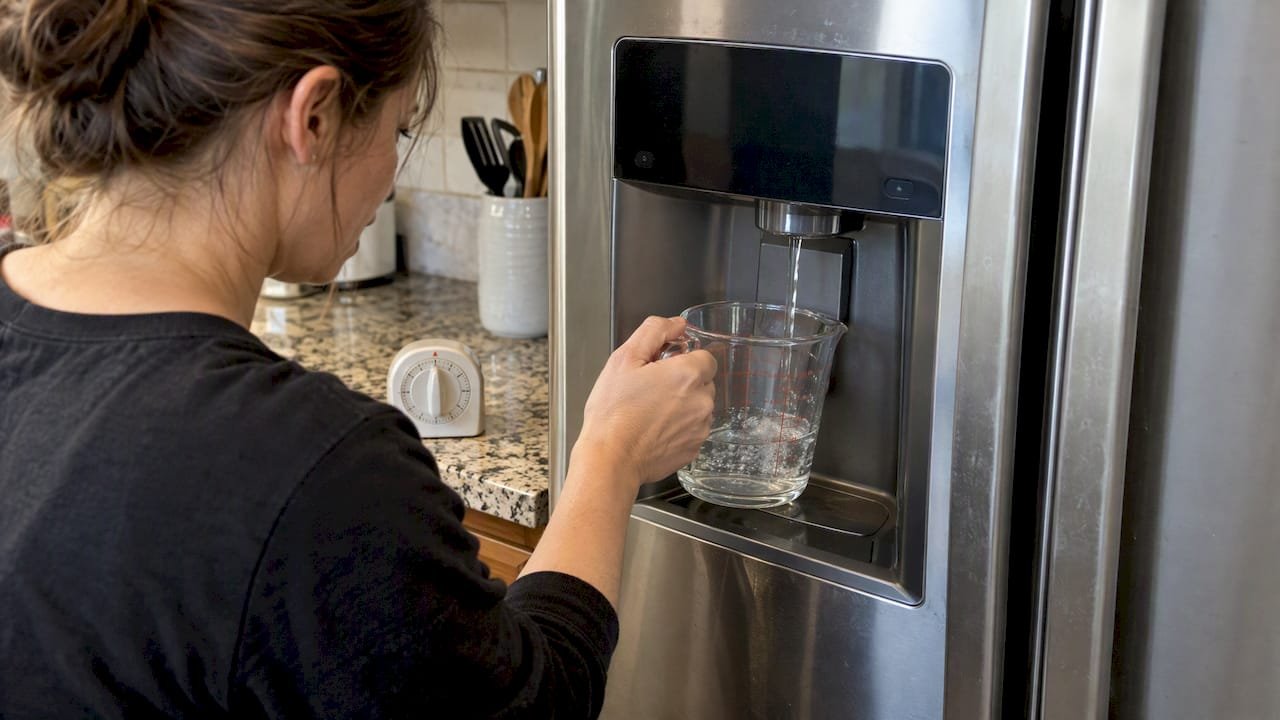
Most troubleshooting guides jump straight to replacing the filter, and that fixes the problem often enough that it’s become the default advice. But filters get blamed for supply pressure problems constantly, and the two require completely different fixes. The timed-fill test matters more than people give it credit for, because it’s the one check that tells you whether you’re dealing with a part inside the fridge or a pressure issue coming from your home’s plumbing or an RO system.
Our take: skip the habit of swapping the filter first and testing later. Run the timed-fill test before you buy anything. If flow stays slow with the filter removed, you’ve just saved yourself the cost of a filter that was never the problem. The reverse osmosis connection is also underrated as a cause. It gets mentioned as an afterthought in most guides, but it’s one of the more common reasons a previously fast dispenser suddenly slows down after months of normal use.
— MDTECH
When to Book a Repair Visit and How We Can Help
When bypassing the filter, confirming the shutoff valve, and checking for kinks or RO interference don’t restore normal flow, the issue is usually mechanical or tied to your home’s plumbing, and that’s where we come in. We handle appliance repair for refrigerators, including inlet valve replacement, water line repair, pressure testing, and on-site diagnostics for both pressure and valve problems.
To speed up your visit, have your refrigerator’s model number, your timed-fill test results, and whether an RO system is connected ready when you book. Our refrigeration services page covers what we check during a visit and how to schedule one for your home.
FAQ
Why is the water flowing slowly in my LG refrigerator?
Slow flow on an LG model usually comes down to the same causes as other brands: a clogged filter, low supply pressure, or a partially closed shutoff valve. LG’s support documentation also notes that buzzing during dispensing can be normal valve activation, though persistent buzzing paired with slow flow can signal a pressure or valve issue worth testing further.
What is the best reverse osmosis system for a refrigerator?
There’s no single system that fits every refrigerator, since the right choice depends on your home’s water pressure and tank capacity. Whatever system you use, Whirlpool recommends checking that the RO storage tank fully refills between draws and considering a bypass of the refrigerator’s own filter if the RO system already filters the water.
What could be causing my water supply to be very slow?
The most common causes are a clogged water filter, a partially closed shutoff valve, a kinked or frozen supply line, or low household pressure feeding the refrigerator. Running a timed fill of 6 to 8 ounces and comparing it against the 8 to 10 second benchmark used by manufacturers like GE helps pinpoint whether the issue is pressure related.
Why is my water dispenser making a buzzing sound?
A brief buzz when you press the dispenser lever is usually the inlet valve opening normally. Continuous or repeated buzzing, especially paired with slow or inconsistent flow, more often points to high incoming pressure or a valve nearing failure, and a technician can test the valve directly to confirm which it is.
How long should a water filter replacement take to fix slow flow?
If a clogged filter is the cause, flow typically returns to normal as soon as a correctly seated replacement filter is installed and the line is purged of air for two to three minutes. If flow is still slow after that, the cause is more likely supply pressure or a valve issue rather than the filter.
Sources
- Refrigerator – Buzzing Noise | GE Appliances
- Ensuring correct water pressure – Whirlpool
- Water Dispensing Slowly – Product Help | Whirlpool
- How to identify filters certified to reduce lead in drinking water – EPA (June 2024)