
Try clearing visible debris and give the drain a few firm plunges first. Stop there and call a plumber if water backs up in both sides of the sink, if you smell sewage, if other fixtures in the house are affected too, or if the clog comes right back after you clear it — especially if you need urgent sewage backup cleanup in Bartlett, IL. Those signs point past a simple blockage.
TL;DR:
- Most kitchen clogs are caused by grease buildup, which narrows pipes and can be prevented by proper disposal habits and cooling fats.
- Mechanical methods like plunging, removing the P-trap, and snaking are safer and more effective than chemical cleaners, especially when problems persist.
- Chemical drain cleaners pose risks to pipes and safety, and enzymatic options are gentler but work slower and require patience.
- Signs like water backing up in multiple fixtures or persistent odors indicate the need for professional plumbing help beyond DIY methods.
- Regularly flushing with cold water after disposal and avoiding fats and debris in the drain can prevent recurring clogs and extend pipe life.
Table of Contents
- What usually causes a clogged kitchen drain
- How to unclog a kitchen sink step by step
- When a clogged sink needs a professional plumber
- Preventing kitchen drain clogs before they start
- Why the escalation approach beats jumping straight to chemicals
- Getting help when a kitchen sink clog won’t quit
- FAQ
- Sources
What usually causes a clogged kitchen drain
Most kitchen clogs build up slowly rather than happening all at once. Fats, oils, and grease (often shortened to FOG) are a leading cause, and they do not disappear just because you rinsed them with hot water. According to San Diego’s public utilities guidance, residential drain pipes are typically only a few inches wide, so even a thin coating of grease narrows the passage fast.
Other common culprits sit closer to the surface:
- Food scraps, rice, and pasta that expand after they go down the drain
- Coffee grounds, which clump instead of washing away
- Small items like fruit stickers, bottle caps, or produce labels that slip past the strainer
- A clogged garbage disposal or a loose dishwasher drain connection
How the sink behaves tells you where the problem likely sits. A slow drain usually means a partial blockage close to the sink. Gurgling sounds often mean trapped air further down the line. If every drain in the house is slow or backing up together, the problem is probably past your sink entirely, closer to the main line.
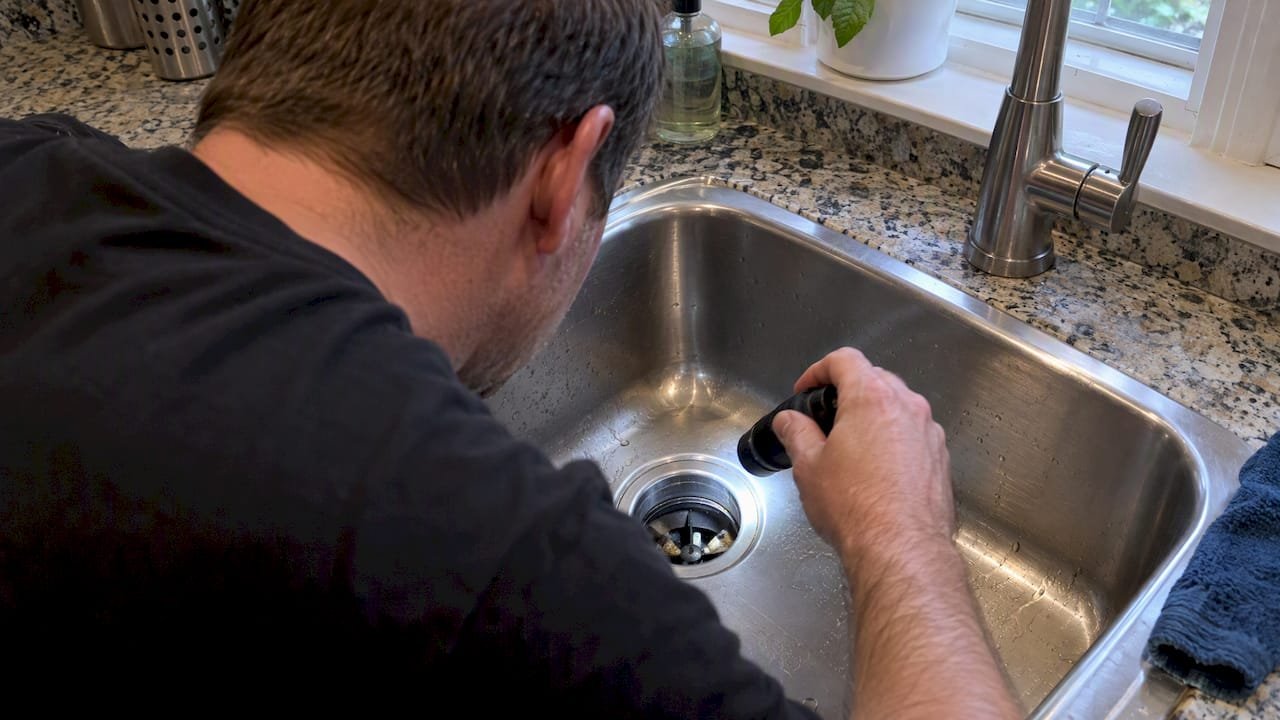
Before reaching for tools, pull the strainer and look inside the disposal with a flashlight. A visible obstruction there can save you the rest of this list.
How to unclog a kitchen sink step by step
Work through these steps in order and stop as soon as water drains freely.
- Clear visible debris from the drain opening and strainer, then run hot (not boiling) tap water for 30 seconds to see if the clog loosens on its own.
- Plunge the drain. Fill the sink with a couple of inches of water, seal the plunger cup fully over the drain opening, and give it several firm, even strokes. If you have a double sink, plug the other side completely so you do not just push air back and forth.
- Remove the P-trap if plunging fails. Place a bucket or pan underneath, loosen the slip nuts by hand or with pliers, and let the trap drain into the pan. Clear out any trapped debris, check the rubber washers for cracks, and reassemble in the same orientation you removed it.
- Use a hand auger if the trap was clear but the clog is further in. Feed the cable slowly into the pipe, and when you feel resistance, crank it with a gentle back-and-forth motion rather than forcing it straight through. Stop if you feel a hard, sharp catch. Pushing past that point risks scratching cast iron or puncturing PVC and PEX fittings.
- Try boiling water or a baking soda and vinegar flush for minor buildup. Pour some baking soda down the drain, follow with vinegar, let it fizz for several minutes, then flush with hot water. This loosens light organic buildup but will not break down hardened grease.
Pro Tip: Keep a bucket under the trap before you start loosening nuts, even if you think it is empty. Old water sitting in the P-trap always has to go somewhere.
Skip chemical drain cleaners if you can. Consumer Reports notes that caustic and oxidizing formulas can damage older pipes and create a hazard for anyone who has to open the trap afterward, including a plumber. Enzymatic cleaners are gentler and safer for pipes and septic systems, though they work slowly and often need to sit overnight. If a caustic cleaner does contact skin or eyes, MedlinePlus advises flushing the area with water for at least 15 minutes and calling Poison Control or seeking medical help right away if it was swallowed. For more on safer drain-clearing approaches, our guide to drain cleaning methods covers the tradeoffs in more depth, and the trap-cleaning technique is similar to what we describe in unclogging a washing machine drain.
When a clogged sink needs a professional plumber
Some signs mean it is time to stop troubleshooting and make a call:
- Both sides of a double sink back up at once, or other fixtures (tub, toilet) are affected too
- You smell sewage near the sink or elsewhere in the house, which can signal a venting or sewer-line problem
- The same clog keeps coming back within days or weeks of clearing it
- The P-trap is hard to reach or appears damaged or corroded
- You already used a chemical drain cleaner, which makes DIY snaking riskier
When a plumber arrives for a stubborn clog, expect a camera inspection to locate the actual blockage, a motorized auger or hydro-jetting for buildup a hand snake cannot reach, and a check of cleanout access points. In rare cases, a damaged section of sewer line needs repair. Have your tried steps ready to describe, along with any recent disposal or dishwasher issues. Our guide to common plumbing emergencies walks through other situations that call for a professional response.
Preventing kitchen drain clogs before they start
A few habits go a long way toward keeping your line clear.
- Let grease and cooking oil cool, then pour it into a sealed container for the trash instead of down the sink
- Use a mesh sink strainer every time and empty it into the trash or compost, not the disposal
- Keep coffee grounds, starchy pasta water, and wipes out of the drain entirely
- Run cold water during and after disposal use, and give it a break between loads rather than feeding it continuously
Pro Tip: Run a cold-water flush for about 20 seconds after every disposal use. Cold water keeps grease solid so it moves through instead of coating the pipe walls.
Seattle Public Utilities) points out that hot water only pushes grease further down the line before it cools and hardens there, so the habit of “flushing it with hot water” actually just relocates the problem. For septic systems, an occasional enzymatic cleaner helps break down residue between uses without the risks of caustic products.
Why the escalation approach beats jumping straight to chemicals
Plunging, then checking the trap, then snaking in that order catches most clogs with the least risk to your pipes, your skin, and your schedule. Reaching for a bottle of caustic cleaner first skips the diagnosis and can mask a problem that is actually downstream, past where any home remedy can reach. The sequence matters more than any single trick.
— MDTECH
Getting help when a kitchen sink clog won’t quit
When the plunger, trap cleaning, and auger have all come up short, or the clog keeps returning, it is worth bringing in a licensed plumber instead of repeating the same steps on a tighter and tighter budget of patience. We handle kitchen sink clogs, drain inspections, and related plumbing repairs for homes in the local area, with same-day booking available in many cases.
Before you call, have a few details ready:
- What you already tried (plunger, trap cleaning, snake, any cleaning products)
- Whether other fixtures are affected or you noticed any odor
- Any recent disposal, dishwasher, or appliance issues tied to the sink
Our kitchen appliance repair page covers sink-related service details, and you can also see our broader plumbing repair options if the issue turns out to be bigger than the drain itself. Booking takes a few minutes online, and a technician can usually provide an estimate of what to expect before arrival.
FAQ
What is the best way to unclog a kitchen sink?
Start with a plunger over a sealed drain with a few inches of water in the sink, which clears most simple clogs in a few tries. If that fails, remove and clean the P-trap, then follow with a hand auger if the blockage sits further down the line.
How do you unblock a badly blocked kitchen sink?
Work through the plunger, then the P-trap, then a hand auger in that order rather than skipping straight to a chemical cleaner. If the clog returns after all three steps, or if other fixtures start backing up too, the blockage is likely beyond what home tools can reach and calls for a professional plumber.
Do baking soda and vinegar actually work to unclog drains?
A baking soda and vinegar flush can loosen light organic residue and freshen a slow drain, but it is not strong enough to break down hardened grease buildup. For tougher or grease-based clogs, mechanical methods like plunging and snaking work better than any pour-in remedy.
Why is my kitchen sink clogged but pipes are clear?
Slow drainage with no visible blockage in the trap or pipe can point to a plumbing vent problem rather than a clog. Vents let air into the drain system, and a blocked vent can cause gurgling and slow draining that looks like a clog but needs a different fix.
Sources
- Reducing fats, oils and grease in your home or apartment – San Diego Public Utilities
- Poisoning from household products – MedlinePlus
- How to choose and use a drain cleaner – Consumer Reports