
An AC leaking water inside is almost always one of three things: a clogged condensate drain, a frozen evaporator coil, or a cracked drain pan. The first move, before anything else, is to shut off the unit at the thermostat, put down towels or a shallow pan to catch the drip, and protect the floor or ceiling below it. If you smell refrigerant or see exposed wiring in the water, skip the DIY steps and call a technician.
TL;DR:
- The most common cause of indoor AC water leaks is a clogged condensate drain line that homeowners can clear with a wet/dry vacuum and a wire.
- Frozen evaporator coils often result from dirty filters or restricted airflow, and should be thawed naturally before attempting any repair.
- Cracked or rusted drain pans, especially in systems over ten years old, tend to leak slowly and require replacement rather than patching.
- Professional diagnosis is critical to determine if issues stem from refrigerant leaks, improper installation, or electrical faults, which DIY attempts cannot safely address.
- Regular maintenance like cleaning the drain line annually and changing filters every one to three months can significantly reduce the risk of leaks and secondary mold growth.
Table of Contents
- What Causes an AC Water Leak Indoors?
- How Do I Check What’s Causing My AC Leak?
- What Can I Fix Myself, and What Should I Leave to a Pro?
- How Do I Stop This From Happening Again?
- What Should a Professional Repair Actually Look Like?
- Why the “Just Top It Off” Advice Keeps Failing Homeowners
- Book a Fast, Local Fix for an AC Leaking Water Inside
- Where This Guidance Comes From
- Sources
- FAQ
What Causes an AC Water Leak Indoors?
A clogged condensate drain line is the single most common reason for water dripping from an AC vent or pooling near an indoor unit. Algae, dust, hair, and general grime build up inside the drain channel over months, narrowing the path until water backs up and spills over the drain pan instead of flowing outside. This is also the cause most homeowners can clear themselves, often with nothing more than a wet/dry vacuum and a stiff wire.
A frozen evaporator coil is the second major culprit, and it usually starts with something as small as a dirty filter. Restricted airflow across the coil drops its surface temperature until condensation freezes solid instead of draining away. When the ice eventually melts, sometimes hours later, it dumps far more water than the drain pan or pump was built to handle. A frozen coil can also stem from low refrigerant charge, which is a job for a licensed technician, not a homeowner with a hair dryer.
A dirty or blocked air filter deserves its own mention because it sits upstream of almost every other failure on this list. Restricted airflow doesn’t just freeze the coil. It also slows down evaporation at the coil surface, which throws off the whole condensate cycle and increases the odds of overflow at the drain pan.
Damaged or rusted drain pans show up mostly in older systems, ten years or more, where sheet metal has corroded from years of standing moisture. A hairline crack in a pan won’t always show water right away. It’ll leak slowly, so a small puddle that keeps returning no matter how many times you wipe it up is a strong sign the pan itself has failed.
Condensate pump failure matters specifically for systems where the indoor unit can’t drain by gravity, like a basement furnace/AC combo or an attic unit draining below the roofline. The pump lifts water to a point where it can drain out, and when the float switch sticks or the motor burns out, water simply backs up at the pan.
A few less obvious causes round out the list:
- Improper installation, including a missing or incorrectly sized p-trap on the drain line, which lets air pressure fight against gravity drainage
- Wrong drain pitch, where the line was installed too flat to let water flow by gravity
- High indoor humidity, which increases the total condensate volume the system has to handle
- A fan set to “on” instead of “auto,” which keeps blowing air across a wet coil and re-evaporates moisture back into the house instead of letting it drain
Regularly swapping out air filters does more than prevent leaks. It can cut energy consumption by 5 to 15 percent because the system doesn’t have to fight restricted airflow to move the same amount of air.
How Do I Check What’s Causing My AC Leak?
Start by killing power to the unit, both at the thermostat and at the breaker, before you open any panel or touch anything near the coil. Water and electrical components are a bad combination, and a frozen coil can hide ice that’s still actively dripping onto live parts.
- Note exactly where the water shows up: under the air handler, dripping from a vent, staining the ceiling, or pooling near the outdoor condenser. The location narrows the cause fast.
- Open the access panel and look for ice on the evaporator coil or the suction line. If you see frost or ice buildup, that’s your answer. Leave the system off for a few hours to let it thaw before doing anything else.
- Find the condensate drain access point, usually a capped PVC pipe near the indoor unit, and check whether it’s flowing freely or backed up.
- Pull the air filter and hold it up to a light. If you can’t see light through it, it’s restricting airflow and needs to be replaced.
- If there’s a condensate pump, pour a cup of water into its reservoir and watch whether the float triggers the pump to run. No response means the pump has failed.
Professional diagnostics matter here because these symptoms interact more than most homeowners expect. A drain that looks clogged might actually be backing up because a p-trap was never installed correctly, and a coil that looks frozen might really be a low refrigerant charge in disguise.
Pro Tip: Snap a photo of the water stain or ice pattern before you clean anything up. If you end up calling a technician, that photo helps them narrow down the cause before they even open a panel.
Stop troubleshooting and call a professional if you smell a chemical or sweet odor near the unit, if ice keeps reforming within an hour of thawing, if you see scorch marks or sparking near the electrical connections, or if standing water has spread across more than a small area of flooring.
What Can I Fix Myself, and What Should I Leave to a Pro?
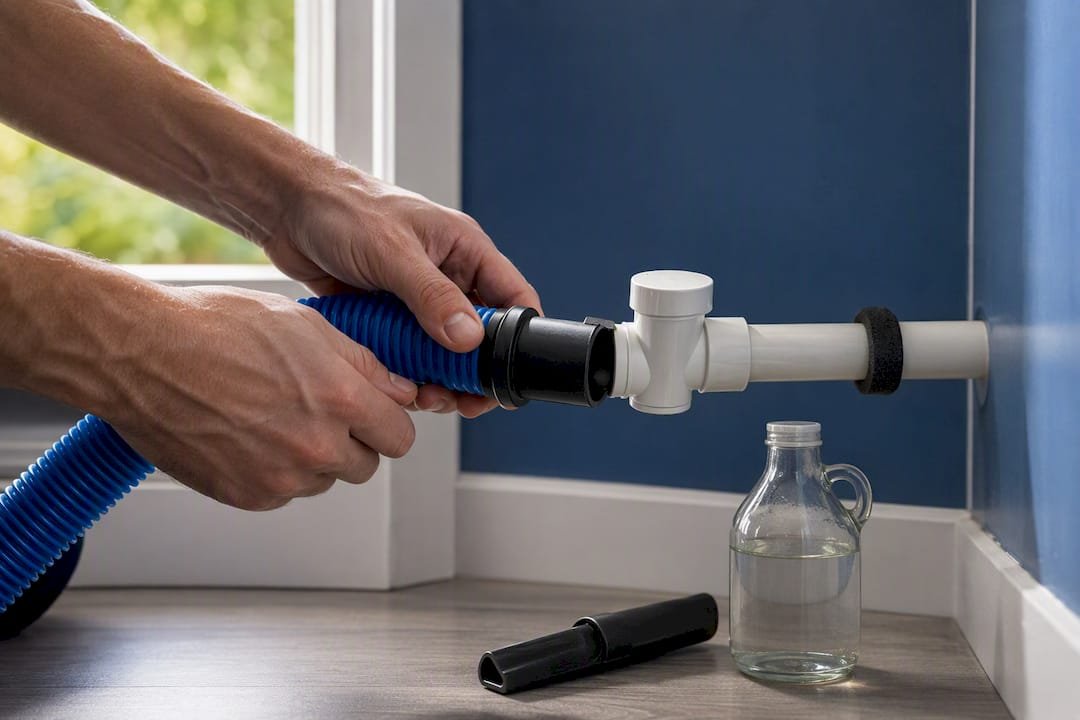
Clearing a clogged drain line is the most common fix homeowners can handle safely. Locate the cleanout access, usually a T-shaped or capped fitting near the indoor unit, and run a wet/dry vacuum on the outside end to pull the clog out rather than push it further in. A cup of distilled vinegar or a mild water and bleach solution flushed through the line afterward helps knock down algae growth. Skip the heavy chemical drain cleaners made for kitchen sinks. They can corrode the PVC fittings and rubber gaskets in an HVAC drain system.
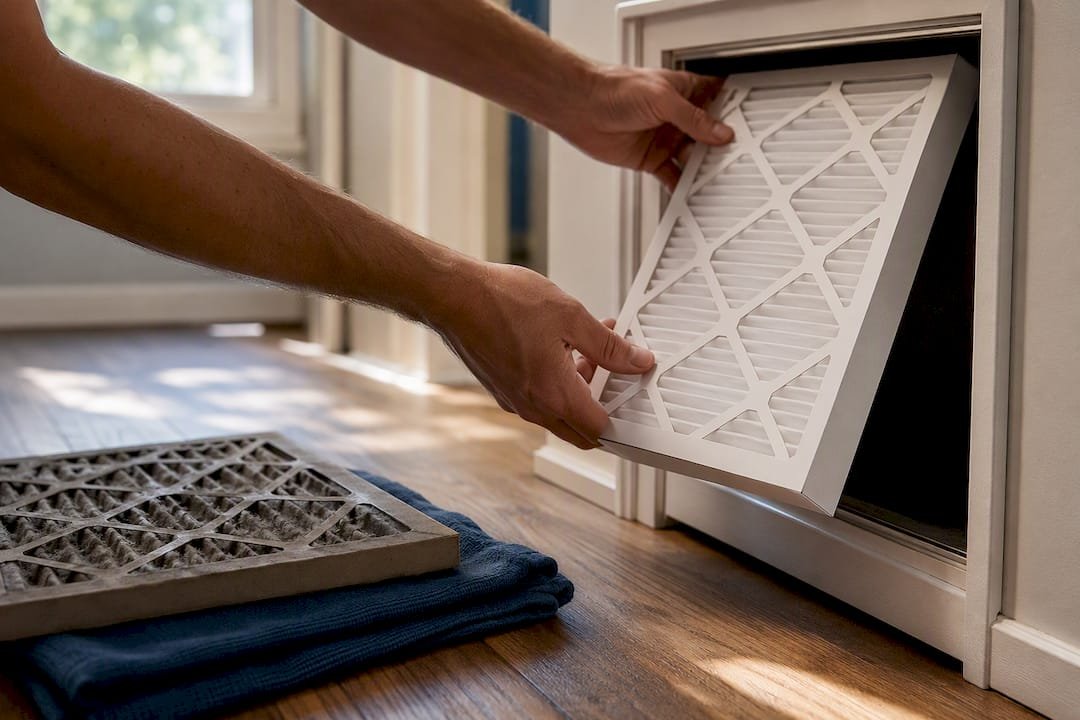
Replacing a dirty filter is the other easy win, and it frequently cures a frozen coil on its own within a day of restored airflow. If ice has formed, don’t force it off. Just shut the system down and let it melt naturally.
For standing water, a wet vacuum, box fans, and a rented or borrowed dehumidifier will dry most surfaces fast enough to matter. Materials dried within 24 to 48 hours generally avoid mold growth, while anything wet longer than that becomes a real risk. Cracked or badly rusted drain pans should be replaced outright rather than patched. Sealant on corroded metal buys a few weeks at best.
Here’s where homeowners need to stop:
- Never attempt to add, recover, or repair refrigerant lines yourself
- Don’t try to solder or replace refrigerant fittings without proper tools and training
- Leave electrical component testing to a licensed technician
- Call in mold remediation specialists if you find musty odors or visible growth that’s already spread past a small spot
Refrigerant work legally requires EPA Section 608 certification, and a technician should locate and repair a refrigerant leak rather than just topping off the charge, since a top-off only masks the problem until it leaks out again.
How Do I Stop This From Happening Again?
- Replace or clean the air filter every one to three months, more often if you have pets or run the system heavily in summer.
- Flush the condensate drain line at least once a year, ideally as part of a spring tune-up before peak cooling season.
- Book an annual professional visit and ask the technician to check coil condition, refrigerant pressure, drain flow, pump operation, the drain pan, and p-trap sizing.
- Set the thermostat fan to AUTO rather than ON, since continuous fan operation re-evaporates coil moisture back into the house and raises humidity.
- Keep indoor humidity in the 30 to 50 percent range with a basic hygrometer, and avoid running the AC at extremely low setpoints for days at a time.
Pro Tip: Take a dated photo of the drain line and pan every time you service the unit. Six months later, that comparison shot makes it obvious whether buildup is creeping back.
What Should a Professional Repair Actually Look Like?
A properly run diagnostic visit isolates the drain line, checks pump function under load, tests refrigerant pressures, and inspects airflow before any parts get replaced. Appliancesrepairmdtech’s licensed technicians follow that sequence on every HVAC repair call, whether the fix ends up being a pump swap, a new drain pan, or refrigerant leak location and repair rather than a temporary recharge. When booking, ask for EPA Section 608 certification and a written repair versus replace estimate before work begins, plus before and after photos for your records.
Why the “Just Top It Off” Advice Keeps Failing Homeowners
Most advice on AC leaks treats it like a single problem with a single fix. It isn’t. A drain clog, a frozen coil, and a failed pan all produce the same puddle on the floor, and the fastest path to a wrong fix is assuming you already know which one you’re looking at.
The habit worth breaking is the “top it off and hope” mentality around refrigerant. It treats a symptom instead of the leak causing it, and the water keeps coming back within weeks. The DOE’s own diagnostic guidance backs this up: symptoms interact, and skipping the systematic check almost guarantees a repeat visit.
What actually works is boring but effective: shut the power off first, look for the obvious stuff (ice, a backed up drain, a filter you can’t see through), and know your limit. Homeowners can clear a drain and swap a filter in ten minutes. Refrigerant, electrical faults, and pan replacement need a certified tech. Skipping that line between DIY and professional is where most water damage claims actually start.
— MDTECH
Book a Fast, Local Fix for an AC Leaking Water Inside
Leaking AC calls require prompt attention because standing water inside a home can turn into a mold problem within 24 to 48 hours if nobody handles it. That urgency is why leak calls often take priority over routine tune-ups.
Technicians handle the full range of causes for an AC leaking indoors, including clearing and repairing condensate lines, replacing failed condensate pumps, swapping out cracked or rusted drain pans, and locating and repairing refrigerant leaks with the proper certified handling rather than a quick top-off. Book online or by phone, and expect a straightforward first visit: an on-site inspection to pinpoint the actual cause, a written estimate before any repair starts, and a schedule aiming to restore cooling without a repeat leak. If you’re anywhere in Orange County or Los Angeles County and water is already pooling near your unit, get the appliance and HVAC repair team out before it turns into a bigger repair.
Where This Guidance Comes From
- EPA guidance on refrigerant handling and mold prevention
- DOE Building America AC diagnostics guide
- NC State Extension mold and moisture checklist
Sources
- A brief guide to mold, moisture, and your home (EPA)
- Measure Guideline: Air Conditioner Diagnostics, Maintenance, and Replacement (DOE / Building America)
FAQ
How do I stop my AC unit from leaking water inside?
Turn off the system, clear the condensate drain line with a wet/dry vacuum, and replace a dirty air filter if airflow looks restricted. If ice is present on the coil, let it thaw fully before restarting the unit, and call a technician if the leak returns within a day or two.
Can I still run my AC if it’s leaking water?
Running it while water is actively leaking risks more flooring or ceiling damage and can push a frozen coil into worse icing. Shut it off, contain the water, and get the drain or coil issue diagnosed before restarting.
Is an AC leak an emergency?
It’s not usually a life-safety emergency, but it becomes an urgent repair because wet materials left more than 24 to 48 hours risk mold growth. Treat it the way you’d treat a slow plumbing leak: fast enough to matter, not fast enough to panic.
Why is my air conditioner leaking water inside the room?
The water is condensate that normally drains outside through a line or pan, and something in that path has failed, most often a clog, a frozen coil dumping meltwater, or a cracked pan. A systematic check of drain, filter, and coil condition usually finds the exact point of failure.
What does Appliancesrepairmdtech charge to fix an AC leak?
Pricing depends on the cause, whether it’s a drain clear, pump replacement, or pan swap, so current rates are listed on the appliance repair services page rather than quoted as a flat number here. A technician provides a written estimate on-site before starting any repair.