
Most U.S. dryer repairs run $100 to $300, with a service call adding $50 to $90 on top. For the faults that show up most often, like a blown thermal fuse or worn belt, repair beats replacement outright. The math flips only when a motor or control board fails on a dryer already past the 10 year mark.
TL;DR:
- Most dryer repairs cost between $100 and $300, with higher prices for motor or control board failures in dryers over 10 years old.
- Repair costs vary significantly depending on location, urgency, fuel type, and whether OEM or aftermarket parts are used, influencing the final quote.
- Common issues like no heat or a drum that won’t spin usually involve affordable parts, but repairs can double in price if venting problems are also present.
- Labor costs often outweigh parts, with diagnostic fees and technician time raising the total, especially for complex repairs like replacing a motor or control board.
- Homeowners can often perform simple fixes such as cleaning vents or checking the breaker, but internal gas or high-voltage components require licensed professionals.
Table of Contents
- How Much Does Dryer Repair Cost on Average?
- What’s Actually Wrong With Your Dryer? (Symptom-to-Cost Guide)
- Why Does Labor Cost More Than the Parts Themselves?
- Should You Repair the Dryer or Just Replace It?
- What Can You Safely Fix Yourself Before Calling a Pro?
- What Should You Ask Before You Approve a Repair?
- What Sets a Reliable Dryer Repair Service Apart?
- The Repair Math Most Homeowners Get Wrong
- Book a Same-Day Dryer Repair Estimate
- Sources
How Much Does Dryer Repair Cost on Average?
The national average repair cost is moderate once you combine parts and labor, and most invoices fall within a broad cost range, according to HomeAdvisor’s cost data. Angi’s 2026 pricing research puts the full spread wider, from $10 for a minor fix up to $550 for a major component swap. That range isn’t padding. It reflects how differently a $12 lint switch and a $400 motor replacement can hit your wallet, even though both get filed under “dryer repair” on an invoice.
What pushes your specific quote up or down comes down to a handful of variables:
- Service or diagnostic fee: typically $50 to $90, though many shops apply that fee toward the repair if you approve the work on the spot.
- Location: urban and coastal metro areas often run 15% to 25% higher than rural markets, per Current Cost’s regional pricing breakdown, while low-density areas sometimes tack on travel fees instead.
- Urgency: same-day or after-hours calls carry a premium almost everywhere.
- Fuel type: gas dryers tend to cost $50 to $100 more to repair than electric models, since igniters and flame sensors require a technician qualified to work around gas lines.
If you’re staring down a Kenmore dryer not heating, the fix depends heavily on whether it’s electric or gas. A Kenmore electric dryer not heating usually points to a blown thermal fuse or a failed heating element, both mid-range repairs. A Kenmore gas dryer not heating more often traces back to the igniter or a gas valve solenoid, which pushes the bill toward that higher gas-repair range because of the specialized labor involved.
What’s Actually Wrong With Your Dryer? (Symptom-to-Cost Guide)
The noise or behavior your dryer is making tells you almost everything about what’s broken and roughly what it’ll cost to fix. Here’s how the most common complaints map to real repairs:
- No heat at all: Usually a blown thermal fuse ($75 to $150) or a failed heating element ($100 to $350). On gas units, check the igniter first, since it fails more often than the element itself.
- Drum won’t spin, but the motor hums: Almost always a snapped drive belt or worn rollers, typically $100 to $250 to replace.
- Loud squeaking or a noisy dryer drum: Usually caused by dry, worn rollers or glide bearings that need replacement. Dryer squeaking that gets louder over weeks is a rollers-and-bearings job, not something that fixes itself, and it’s still on the cheaper end of the repair spectrum.
- Dryer runs but shuts off randomly, or you smell something hot: This indicates serious issues like motor overheating or a failing control board, requiring professional attention.
- Sparks or a burning smell: Stop the dryer immediately and unplug it or shut off the gas. This is a safety issue, not a weekend project.
- Clothes take two cycles to dry, no obvious mechanical symptom: Nine times out of ten, this is vent restriction, not a broken part. Vent cleaning runs $75 to $150, and Angi’s data notes full vent repairs can reach $150 to $300 when ductwork needs replacing rather than just cleaning.
A few things widen these ranges. Stacked units and ventless dryers add labor time simply because of access. Aftermarket parts run cheaper than OEM, but a tech using off-brand components should say so upfront, since it affects both price and how long the part lasts. Neighborville’s cost analysis confirms the motor and control board consistently sit at the top of the price ladder, and for good reason: both require more diagnostic time to confirm before anyone orders the part.
Why Does Labor Cost More Than the Parts Themselves?
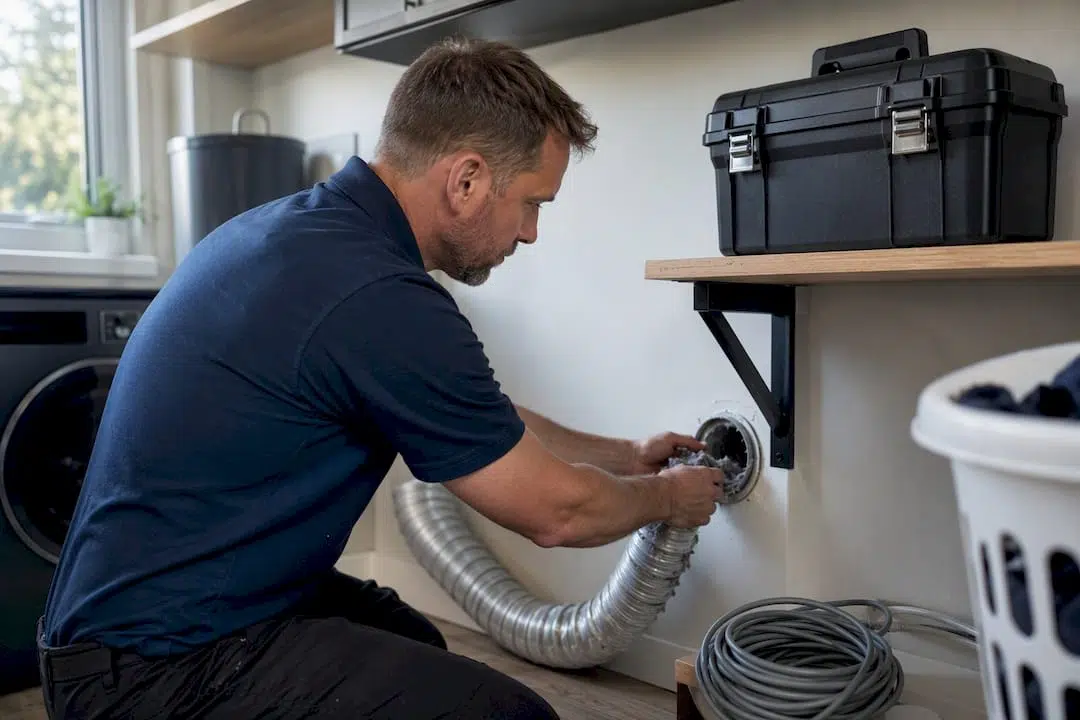
Labor is usually the bigger line item on your invoice, not the part.
Statistic to know: on a straightforward thermal fuse replacement, the part itself might cost $10 to $20, but by the time you add the diagnostic fee and 30 to 45 minutes of labor, the total lands closer to $75 to $150, almost entirely labor.
Representative part price ranges, before labor:
- Thermal fuse or thermostat: $10 to $30 (part only)
- Drive belt: $15 to $40
- Heating element: $40 to $100
- Drum rollers or glide bearings: $10 to $30 each
- Drive motor: $100 to $250
- Control board: $150 to $350
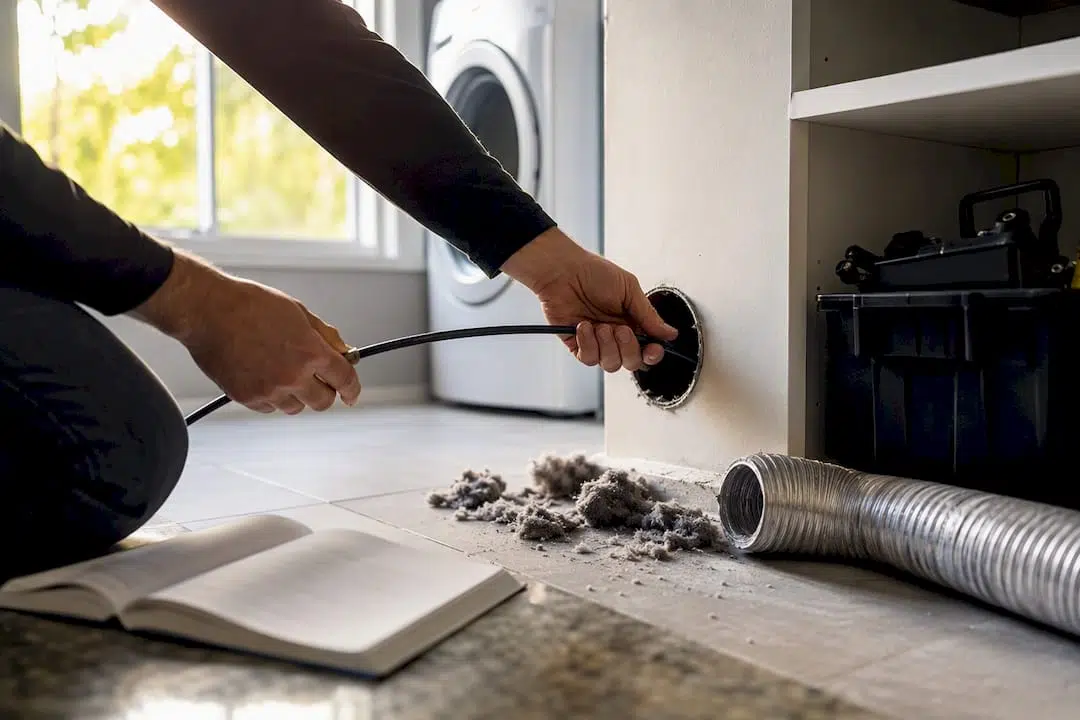
Vent and duct work sits in its own category. A basic cleaning runs $75 to $150, but if the technician finds crushed, disconnected, or undersized ducting behind the wall, replacing that section pushes the job toward $150 to $300. Skipping this step to save money is a mistake many homeowners make, since a restricted vent is one of the most common reasons a “fixed” thermal fuse blows again a few months later. Our routine dryer vent cleaning guide walks through why that connection matters more than most people assume.
Should You Repair the Dryer or Just Replace It?
The clearest framework here is the 50% rule: if a repair quote comes in at more than half the price of a comparable new dryer, replacement usually wins on value. New dryers typically run $500 to $1,200, so once a quote crosses roughly $300 to $500, it’s worth pausing before you approve the work, per Consumer Reports’ repair-or-replace guidance.
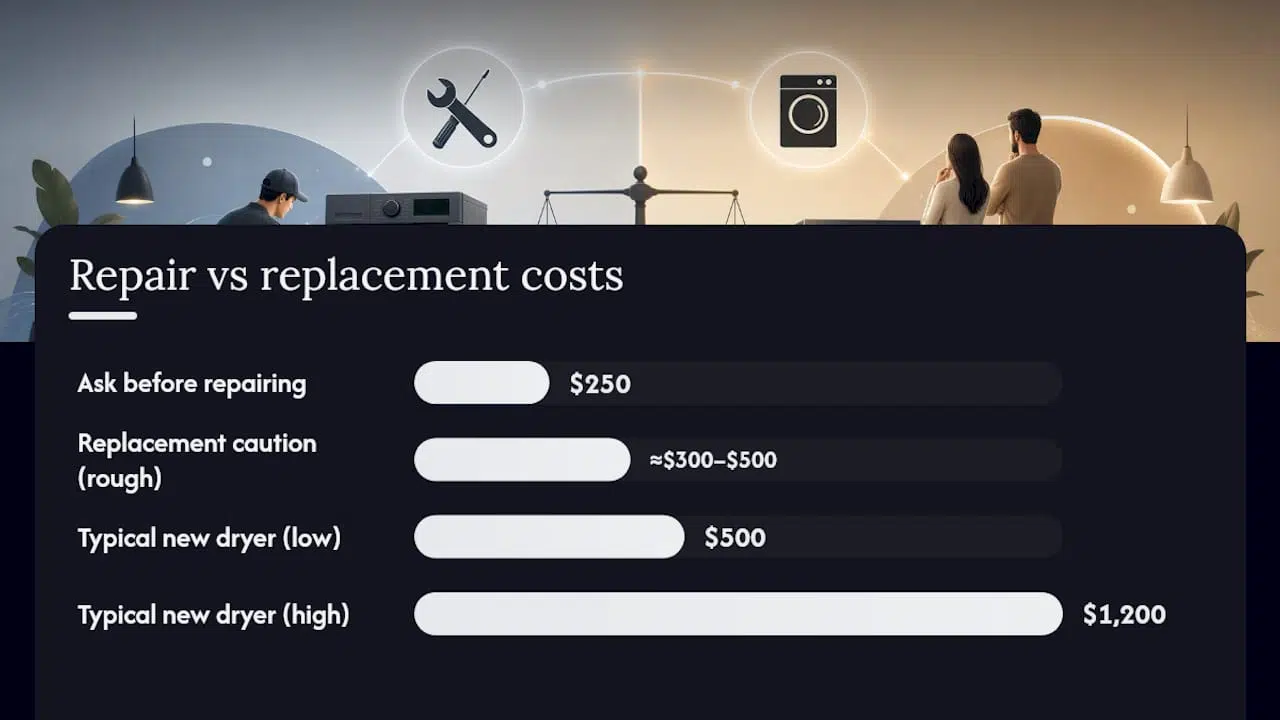
Age matters just as much as the dollar figure. Dryers typically last about a decade to a bit over ten years. A three-year-old unit with a $180 belt replacement is an easy repair call. A 12-year-old unit quoted $400 for a motor or control board is a much harder sell, since you’re spending most of a new dryer’s price to extend the life of an appliance already near the end of its expected run.
Three situations should push you toward replacement regardless of age:
- Visible sparking, scorch marks, or a persistent burning smell
- Repeated overheating even after the vent has been cleared and checked
- A compromised vent run that can’t be corrected without major wall or duct work
Pro Tip: Before you approve any repair over $250, ask the technician for the make and model’s average expected lifespan. A $300 quote on a machine with three good years left is a very different decision than the same quote on a five-year-old dryer.
What Can You Safely Fix Yourself Before Calling a Pro?
A surprising number of “broken dryer” calls turn out to be simple fixes you can check in ten minutes, and skipping this step means paying a diagnostic fee for something you could have caught yourself.
- Clean the lint trap and check the exterior vent flap for buildup or blockage. This alone resolves a good share of no-heat and long-cycle complaints.
- Check the breaker panel. Electric dryers use a 240 volt double-pole breaker; a tripped breaker mimics a dead motor.
- Inspect the outlet and cord for looseness or scorch marks if the dryer won’t power on at all.
- Reset accessible thermal switches only if your model has an external reset button. Don’t open the cabinet to chase this yourself.
What you should never touch: gas ignition components, gas valves, or any internal high-voltage wiring. These require licensed hands, and getting them wrong risks a gas leak or electrical fire, not just a voided warranty. Before paying for anything, check whether your dryer is still under manufacturer warranty or covered by a home warranty plan, since either can eliminate the cost entirely. When you do call a pro, ask directly whether they’re quoting OEM or aftermarket parts and what labor warranty comes with the repair. Our dryer troubleshooting guide covers the exact checks worth running before you pick up the phone, and general HVAC maintenance habits follow the same logic: catching small issues early avoids the expensive ones later.
What Should You Ask Before You Approve a Repair?
A good phone quote should answer five questions before a technician ever shows up: What’s the diagnostic fee, and does it apply toward the repair? Is pricing hourly or flat-rate? Are parts OEM or aftermarket, and is that reflected in the price? What warranty covers the labor? Will they check the vent as part of the visit, or only the appliance itself?
Watch for these red flags on a written estimate:
- Vague line items like “repair service” with no part or labor breakdown
- Pressure to replace the whole unit before any diagnostic has actually happened
- No willingness to confirm licensing or insurance, especially for gas dryer work
- A quote that changes significantly between the phone call and the in-person visit with no explanation
Same-day service typically costs more than scheduling a day or two out, so if your dryer isn’t a safety issue, booking a standard appointment window can save you real money. Once you accept a quote, get it in writing with the part numbers, labor cost, and any warranty terms spelled out. Our guide on diagnostic fees in appliance repair breaks down exactly what a fair fee structure looks like before you commit.
What Sets a Reliable Dryer Repair Service Apart?
Appliancesrepairmdtech runs licensed technicians across Orange County and Los Angeles County, with troubleshooting guides built from the same symptom patterns covered above, including deep experience with Sears and Kenmore units common in Southern California homes. The approach starts with the vent, not the fuse, because a fuse that blows again in three months means the real problem was airflow all along. Every quote gets documented in writing before work begins, so there are no surprise line items once the job is done.
The Repair Math Most Homeowners Get Wrong
The conventional advice to “always get three quotes” misses the bigger issue: most homeowners don’t know enough about their specific fault to judge whether any of those three quotes are reasonable. A $350 quote for a heating element sounds high in isolation, but it’s a fair price if the tech also traced and cleared a vent blockage that would have blown the new element within weeks anyway.
The 50% rule gets treated like gospel, but it works only when you’re comparing against the right replacement price. Pricing your 12-year-old economy dryer against a $1,200 premium model inflates the case for repair. Compare against a similarly basic new unit instead, and the math often points the other way once you’re past a $250 motor or control board quote.
What actually matters most isn’t the repair-versus-replace formula. It’s whether the diagnosis addressed the root cause. A cheap thermal fuse swap that ignores a restricted vent isn’t a $120 fix, it’s a $120 fix you’ll pay for twice. Ask about the vent before you ask about the price.
— MDTECH
Book a Same-Day Dryer Repair Estimate
Appliancesrepairmdtech gives you something a lot of solo handymen and big-box repair chains can’t: a licensed technician who diagnoses the vent and the appliance together, then hands you a written quote before touching a single screw.
Booking takes a couple of minutes online or a quick phone call, and most requests get either a same-day slot or a scheduled window within a day or two, depending on how urgent your situation is. The written estimate covers the diagnostic finding, part options with OEM versus aftermarket pricing spelled out, and a labor warranty on the completed work, so there’s nothing vague to question afterward. Appliancesrepairmdtech covers Orange County and Los Angeles County, and every gas dryer job follows strict safety protocols since that work should never be handled by anyone unlicensed. If your quote is already leaning toward a bigger repair, our repair versus replacement guide can help you weigh the decision before you commit. Request your written estimate through the dryer repair service page and get a technician on the schedule.
Sources
- Should you repair or replace your broken clothes dryer? | Consumer Reports
- How Much Does Dryer Repair Cost? 2026 Data | Angi
- How Much Do Dryer Repairs Cost? 2026 Data | HomeAdvisor
- Dryer repair cost (Neighborville)
- Dryer Repair Cost Guide: Typical Price Ranges – Current Cost