
Yes, you can convert a gas dryer to electric, but for nearly every homeowner the smarter move is buying a purpose-built electric dryer or hiring an electrician to install a proper 240V circuit. The conversion itself is rarely worth the money once you add up parts, labor, and permits.
Before you call anyone, do two things. First, check whether you already have a 240V outlet, specifically a NEMA 14-30 receptacle, near where the dryer sits. Second, book a professional electrical assessment if you don’t see one, since guessing here risks a fire hazard or a failed inspection.
- Look for a thick, round or block-shaped four-prong outlet, not a standard three-prong plug.
- Note your dryer’s model number before calling anyone. It affects parts availability and cost.
- Skip DIY wiring entirely. A dedicated 30-amp, 240-volt circuit with a double-pole breaker is a code-driven job, and PacLights notes electric dryers need this exact setup with no shortcuts.
Pro Tip: Photograph your electrical panel and the outlet where the dryer currently sits before you request quotes. Electricians can give you a far more accurate estimate over the phone when they can see what they’re working with.
Key Takeaways
Converting a gas dryer to electric is technically achievable but almost always costs more than simply buying a new electric dryer and installing a proper 240V circuit.
| Point | Details |
|---|---|
| Conversion is possible, rarely worth it | Rebuilding a gas dryer’s heat source usually costs more than buying a new electric unit outright. |
| Electrical specs are non-negotiable | You need a dedicated 240V, 30-amp circuit, 10 AWG wire, and a NEMA 14-30 outlet installed to code. |
| Panel capacity drives cost | A panel upgrade, when needed, often adds $800 to $2,500 or more to the total project. |
| Gas lines need professional capping | A licensed plumber should cap and pressure-test any former gas line before disconnection is final. |
| Get a professional assessment first | Appliancesrepairmdtech’s licensed technicians can evaluate your panel, outlet, and venting before you commit to any option. |
Table of Contents
- Why Converting a Gas Dryer to Electric Rarely Makes Sense
- What Electrical Work Does an Electric Dryer Actually Need?
- Step-by-Step: What a Gas-to-Electric Conversion Actually Involves
- Venting, Carbon Monoxide, and What Changes Once Gas Is Gone
- Which Parts of This Job Require a Licensed Pro?
- Replace, Rewire, or Stick With Gas? How to Decide
- Where These Numbers and Standards Come From
- Get a Straight Answer on Your Dryer Setup
- What Homeowners Usually Choose When the Quotes Come In
- Sources
Why Converting a Gas Dryer to Electric Rarely Makes Sense
Gas and electric dryers heat clothes in fundamentally different ways, and that difference runs deeper than the power cord. A gas dryer uses a burner assembly to ignite natural gas or propane, with a small igniter and gas valve doing the work. An electric dryer relies on a coiled heating element that needs serious voltage to get hot. You’re not swapping a part. You’re replacing the entire heat source and rebuilding the wiring path that feeds it.
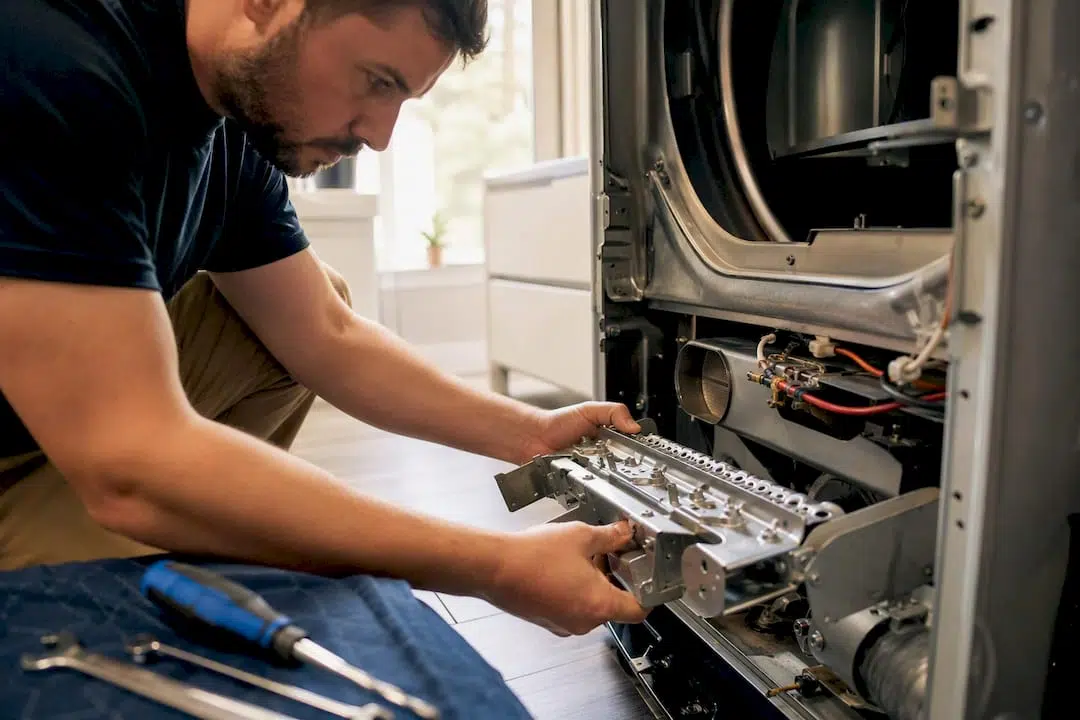
No major manufacturer sells an approved kit to convert a gas dryer into an electric one. Whirlpool, GE, and Samsung engineer each model around one fuel type from the cabinet design to the airflow path to the control board. Whirlpool’s own guidance treats gas and electric as two separate product lines, not two settings on the same machine. Attempt a conversion and you void any remaining warranty immediately, and most repair technicians won’t touch a home-modified unit afterward.
If there’s any scenario where conversion gets discussed seriously, it’s an older dryer with fully mechanical, non-electronic controls, no sensors, no digital board, just a timer knob and basic switches. Even then, you’re not modifying the existing machine. You’re gutting it and rebuilding it around a new heating element, which usually costs more in parts and labor than buying a new electric dryer outright.
- Gas dryers burn fuel for heat; electric dryers run current through resistance coils. These aren’t interchangeable heat sources.
- No manufacturer offers a certified gas-to-electric conversion kit for residential dryers.
- Attempting a conversion typically voids your warranty and can complicate insurance claims after any related incident.
- Only older mechanical-control dryers are even worth evaluating for conversion, and most technicians still recommend against it.
What Electrical Work Does an Electric Dryer Actually Need?
An electric dryer draws power on a completely different scale than your gas model ever did. Engineerskill: a gas dryer only needs 120 volts to run its motor and controls, while an electric dryer needs 240 volts to power the heating element itself. That’s not a minor upgrade. It’s a different circuit entirely.
Here’s what a code-compliant installation actually requires:
- A dedicated 240V, 30-amp circuit. This means its own double-pole breaker at the panel, not a shared or tapped line.
- 10 AWG wire, rated for the amperage and run length involved. Thinner gauge wire on this circuit is a fire risk, not a shortcut.
- A NEMA 14-30 outlet, the four-prong receptacle standard for modern electric dryers. Some older homes have three-prong 240V outlets, which don’t meet current code for new installations and can’t be reused for a new circuit.
- A grounded connection that meets your local electrical code, verified by inspection.
Your existing three-prong outlet or standard 120V wall outlet won’t power an electric dryer’s heating element, period. Trying to force it either won’t work or will damage the appliance.
The real wildcard is your electrical panel. If your panel is already near capacity, especially common in older homes with 100-amp service, adding a 30-amp dryer circuit might require a full panel upgrade before the electrician can even run the new line. That single step often adds more cost than the rest of the project combined, and it’s the detail most homeowners don’t see coming when they first call for a quote.
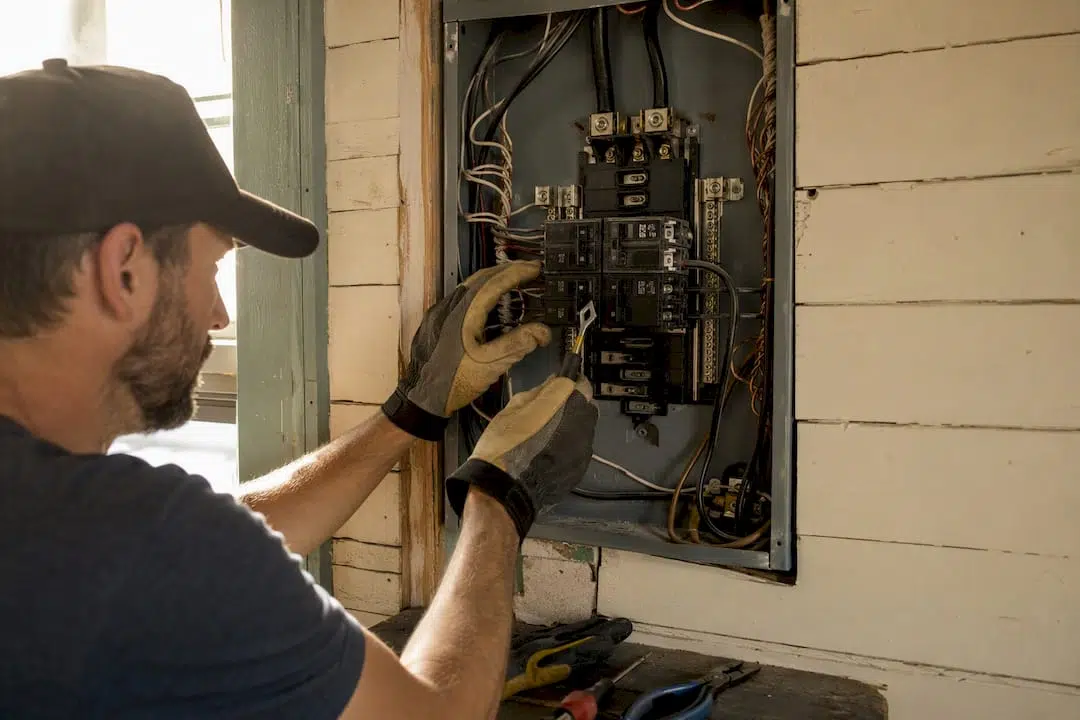
Most jurisdictions require a permit for any new 240V circuit, along with an inspection once the work is done. Skipping this isn’t just risky, it can also create problems later when you sell the house and a home inspector flags unpermitted electrical work.
Step-by-Step: What a Gas-to-Electric Conversion Actually Involves
If you decide to move forward anyway, here’s the realistic sequence a licensed team follows:
- Shut off power and gas supply, then have a licensed plumber cap the gas line safely and pressure-test it.
- Remove the gas burner assembly, igniter, and gas valve, or more realistically, plan to replace the dryer entirely rather than retrofit the shell.
- Run a new dedicated 240V circuit from the panel to the dryer location using 10 AWG wire.
- Install the NEMA 14-30 outlet and double-pole breaker.
- Test the circuit under load, then schedule your local inspection before closing up any walls.
Now the part that actually decides whether this is worth doing: the cost breakdown.
- Electrician labor and materials for the new circuit: roughly $300 to $1,200, depending on run length and local rates.
- Panel upgrade, if needed: $800 to $2,500 or more. This is the line item that breaks most conversion budgets.
- Appliance parts or a full replacement dryer: $400 to $1,200-plus, since retrofitting an old gas shell with electric components rarely saves money over buying new.
- Gas line capping by a licensed plumber: $75 to $300.
- Disposal or resale of the old gas dryer: usually minimal, sometimes a small credit if it’s still functional.
Add those up and you’re often looking at $1,500 to $4,000-plus for a conversion, before you’ve even accounted for permit fees. Angi’s consumer guidance is blunt about this: converting is technically possible, but replacing the dryer and installing a proper hookup is usually the smarter recommendation. A new mid-range electric dryer plus a straightforward circuit installation frequently lands cheaper than converting an old gas unit, and you get a full warranty on top of it.
Venting, Carbon Monoxide, and What Changes Once Gas Is Gone
Both gas and electric dryers need exterior venting to clear moisture and lint, and this doesn’t change when you switch fuel types. What does change is the combustion byproduct risk. A working gas dryer expels carbon monoxide along with normal exhaust, so if a gas line has ever been connected to your dryer, that connection needs to be properly capped, not just disconnected.
PNNL’s Building America Solution Center recommends rigid metal venting over flexible plastic ducting, kept as short and straight as possible, since long or crushed runs trap lint and slow airflow. That buildup is a leading cause of dryer-related house fires, so routine vent cleaning matters regardless of which fuel type you land on.
- Have a licensed plumber cap and pressure-test any former gas line rather than just shutting the valve.
- Use rigid or semi-rigid metal venting, not accordion-style plastic duct.
- Clean the vent path at least once a year, more often with heavy household use.
- Schedule an inspection after any modification involving gas or new electrical work.
Pro Tip: If your dryer vent run is longer than 25 feet or has more than a few bends, ask your technician about a booster fan. Long runs choke airflow even on a brand new electric dryer.
Which Parts of This Job Require a Licensed Pro?
Gas line work and new circuit installation aren’t places to save money with a weekend DIY attempt. Capping a gas line incorrectly can leak. Undersizing a wire gauge on a 30-amp circuit can start a fire behind your wall where you won’t see it happening. These are jobs for licensed electricians and plumbing technicians, full stop.
Tasks that specifically require a licensed professional:
- Capping and pressure-testing the gas line.
- Installing or modifying anything at the electrical panel, including a new breaker.
- Running new circuit wiring through walls or floors.
- Installing the NEMA 14-30 outlet and verifying grounding.
- Pulling the permit and scheduling the inspection.
When you’re comparing quotes, don’t just look at the bottom-line number. Ask each contractor for their license number, whether they’re pulling the permit themselves or expect you to, and whether the quote separates labor from materials. A vague lump-sum number with no breakdown is a red flag.
A trustworthy quote itemizes labor, materials, and permit fees separately, names the exact breaker and wire gauge being installed, and includes a written warranty on the completed work. If a contractor won’t put that in writing, get a second quote.
Appliancesrepairmdtech’s licensed technicians handle appliance safety evaluations across Orange County and Los Angeles County, and our team will tell you honestly when a panel upgrade or new dryer purchase beats a conversion attempt.
Replace, Rewire, or Stick With Gas? How to Decide
Your decision really comes down to how long you’re staying and what’s already in the wall. If you own the home and plan to stay for years with an existing gas hookup, keeping the gas dryer often makes financial sense, since gas dryers can run cheaper to operate over time in homes where gas is already piped in.
If you have no gas line and no 240V outlet, buying an electric dryer and paying an electrician to install a proper circuit is usually more cost-effective than any conversion attempt, especially once you factor in warranty coverage on the new unit.
- Staying long-term with gas already available: compare gas dryer operating costs against the expense of adding a circuit.
- No gas hookup and no 240V outlet: buy an electric dryer and budget for a new circuit if your panel has room.
- Renting short-term: avoid electrical work entirely. Use whatever hookup the unit already has, or ask your landlord before modifying anything.
Where These Numbers and Standards Come From
- PacLights confirms the exact 240V, 30-amp circuit and outlet specs required for electric dryers.
- PNNL’s Building America Solution Center backs the venting material and safety guidance.
- Whirlpool explains manufacturer-level differences between gas and electric models.
- Angi supports the cost-effectiveness comparison between conversion and replacement.
- Engineerskill clarifies the voltage difference driving this entire decision.
Get a Straight Answer on Your Dryer Setup
You’ve seen the real cost breakdown: panel checks, permit fees, gas-line capping, and the electrical work itself. Appliancesrepairmdtech skips the guesswork by sending a licensed electrician or appliance technician to look at your actual panel, outlet, and venting before quoting anything, so you’re not paying for a conversion that costs more than a new dryer would.
Our technicians will tell you plainly when replacement beats conversion, and we handle the gas-line capping, the new circuit, and the installation itself so nothing falls through the cracks between contractors. If your dryer situation needs a second opinion before you spend a dollar, book a service assessment and get a technician looking at your specific setup this week.
What Homeowners Usually Choose When the Quotes Come In
Most homeowners who call about a conversion end up buying a new electric dryer instead once they see the panel upgrade estimate. That single line item changes the math almost every time.
Our technicians’ advice before you request quotes: get your panel’s amperage checked first, since it decides whether this stays a simple job or becomes a bigger electrical project.
Sources
- Electrical outlets for dryers & lighting standards — PacLights
- Proper clothes dryer venting — PNNL Building America Solution Center
- Gas vs electric dryers — Whirlpool
- Can You Convert a Gas Dryer to Electric? — Angi
- Engineerskill