
TL;DR:
- Performing seasonal home maintenance helps protect your property’s value and reduces costly repairs.
- Homeowners should budget 1% to 2% of their home’s value annually for upkeep tasks.
Seasonal home maintenance is the systematic process of performing specific upkeep tasks each season to protect your home’s value, safety, and efficiency. Homeowners who follow a consistent seasonal property care routine should budget 1%–2% of their home’s value annually for upkeep. That means roughly $4,000–$8,000 per year for a $400,000 home. Skipping even two consecutive seasons of maintenance can trigger repair bills 5–10 times higher than what prevention costs. The three most expensive failures from neglect are water intrusion, HVAC breakdown, and roof deterioration.
1. What are the essential spring home maintenance tasks?
Spring is the best time to catch winter damage before it worsens. A focused spring checklist sets up your home for the heat ahead and prevents small problems from becoming expensive ones.
- Clean gutters and downspouts. Gutter cleaning in spring removes winter debris and directs water away from your foundation. Clogged gutters cause water to pool and seep into basements or crawl spaces.
- Inspect your roof. Look for cracked or missing shingles, damaged flashings, and any gaps around skylights. Catching these early costs far less than a full roof repair after water gets inside.
- Service your air conditioning system. Spring AC service typically costs $75–$200 and prevents midsummer breakdowns when technicians are fully booked.
- Test your sump pump. Pour a bucket of water into the sump pit to confirm the pump activates. Testing sump pumps before spring rains can prevent catastrophic basement flooding.
- Check window and door seals. Press your hand along frames on a windy day to feel for drafts. Caulk or weatherstripping repairs cost under $20 and cut energy bills noticeably.
Pro Tip: Book your AC tune-up in march or early april. Technicians fill their schedules fast once temperatures climb, and early booking often gets you a better rate.
DIY tasks like gutter cleaning and seal checks take under an hour each. Roof inspections and HVAC servicing are best left to licensed professionals. Mixing up which tasks you handle yourself and which you hand off keeps costs low without sacrificing safety.
2. Which summer tasks protect your home from heat and UV damage?
Summer maintenance focuses on keeping cooling systems running and preventing heat-related wear on your home’s exterior. The tasks below are straightforward but easy to skip when life gets busy.
- Replace HVAC air filters monthly. HVAC filters should be swapped every 1–3 months, and monthly if you have pets or allergies. A clogged filter forces the system to work harder, raising energy bills and shortening equipment life.
- Trim trees and shrubs. Overhanging branches scrape siding and can fall on your roof during summer storms. Keep branches at least 6 feet from the roofline.
- Inspect attic ventilation. Poor attic airflow traps heat and drives up cooling costs. Check that vents are clear of insulation and debris.
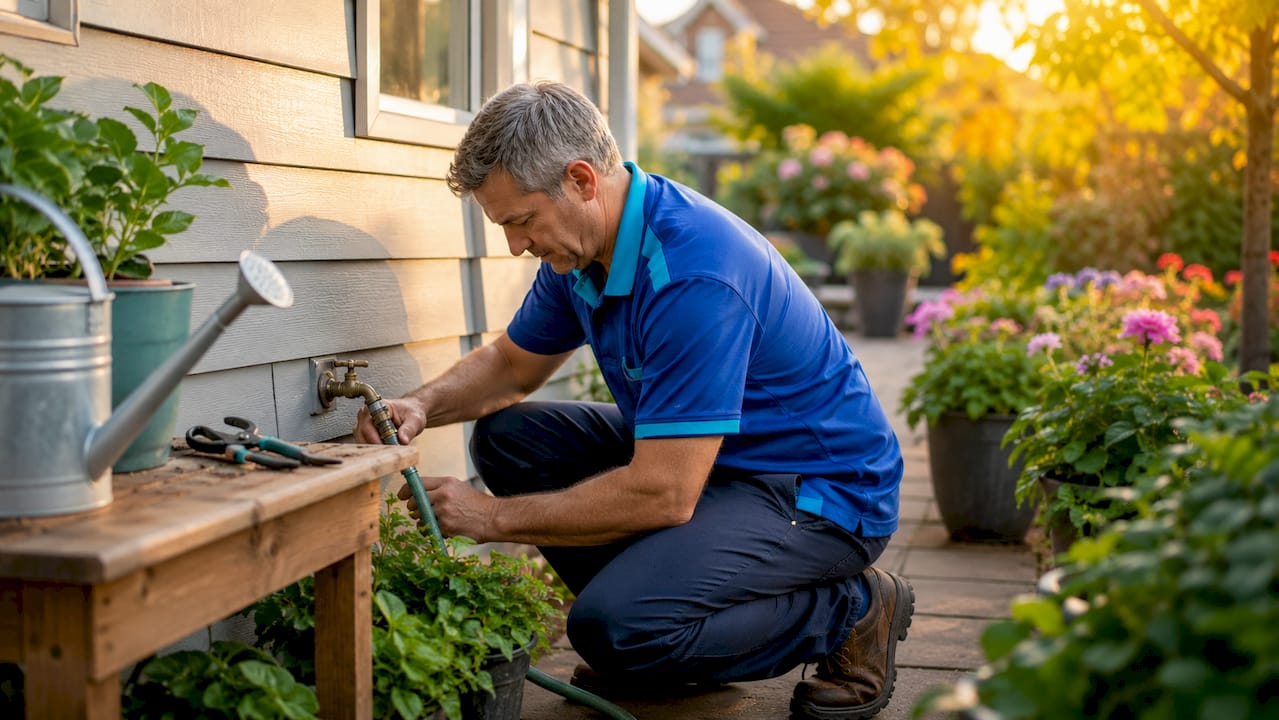
- Check irrigation and outdoor water systems. Look for broken sprinkler heads and leaking hose bibs. Reseal your driveway if you notice cracks, since water expands them further during freeze-thaw cycles.
- Clean the dryer vent. Lint buildup in dryer vents is a leading cause of house fires. Disconnect the vent hose and clear it fully at least once a year, ideally in summer when the task is comfortable to do outdoors.
- Inspect for pest activity. Walk the foundation perimeter and look for mud tubes (termites), ant trails, or gaps where rodents could enter. Catching an infestation early costs a fraction of what structural damage repair runs.
Pro Tip: Check your outdoor HVAC unit for debris buildup around the condenser coils every month in summer. A garden hose rinse takes five minutes and keeps efficiency high.
Proactive outdoor maintenance in summer prevents the most expensive mid-season repair calls. A system that fails in july or august means waiting days for a technician and paying emergency rates.
3. How can homeowners prepare for fall to ensure winter readiness?
Autumn home maintenance is the most time-sensitive season on the calendar. Tasks done in fall directly determine how safe and efficient your home runs through the coldest months.
- Schedule a furnace inspection. Book your furnace tune-up in september or early october, before heating demand peaks. Replace the filter at the same time. A clean, inspected furnace runs more reliably and uses less fuel.
- Clean gutters after leaf fall. Leaves clog gutters fast in october and november. Blocked gutters in winter cause ice dams, which force water under shingles and into your attic. Cleaning gutters twice yearly is one of the highest-return maintenance tasks you can do.
- Drain and winterize outdoor faucets and sprinkler systems. Water left in outdoor lines freezes, expands, and cracks pipes. Shut off the supply valve, then open the outdoor faucet to drain remaining water. For irrigation systems, blow out the lines with compressed air or hire a professional.
- Seal gaps around windows and doors. Cold air infiltration raises heating bills significantly. Use caulk for stationary gaps and weatherstripping for moving parts like door frames.
- Test smoke and carbon monoxide detectors. Replace batteries every fall, even if the detectors seem to work. Carbon monoxide risk rises in winter when furnaces and fireplaces run constantly.
- Inspect your chimney and fireplace. If you use a wood-burning fireplace, have a certified chimney sweep inspect and clean it before the first fire of the season. Creosote buildup is a direct fire hazard.
Timing matters more in fall than any other season. Scheduling major inspections 90 days in advance secures better contractor availability and avoids peak-season pricing.
4. What winter maintenance tasks prevent costly damage?
Winter upkeep is less about big projects and more about consistent monitoring. The goal is to catch problems before they become emergencies.
- Monitor attic insulation and check for ice dams. Ice dams form when heat escapes through the roof and melts snow, which refreezes at the eaves. Proper insulation stops heat loss at the source.
- Keep cabinet doors open near exterior pipes. On nights below freezing, open cabinet doors under sinks on exterior walls. Warm air circulation keeps pipes from freezing and bursting.
- Check for drafts around windows and doors. Run your hand along frames on cold days. Add rope caulk to problem areas as a temporary fix until spring repairs.
- Change HVAC filters regularly during peak use. Heating systems run hard in winter. Stick to a monthly filter change schedule to maintain air quality and system efficiency. A full HVAC maintenance checklist keeps this on track.
- Test backup generators. Run your generator under load for 30 minutes monthly. Fuel degrades, and a generator that fails during a winter outage is no help at all.
Avoid climbing on your roof or working near gas lines in winter. DIY is appropriate for low-risk tasks like filter changes, detector tests, and draft checks. Gas, electrical, and roof work belong to licensed professionals. Skipping winter tasks is how homeowners end up with burst pipes or a failed furnace on the coldest night of the year.
5. How to build a home maintenance schedule that actually sticks
A four-season framework with clearly defined tasks per season is the most reliable home maintenance schedule. Without a system, tasks get forgotten and deferred maintenance costs pile up fast.
Routine maintenance averages $3,200 per year, while deferred maintenance can reach $14,000 in emergency costs over five years. Staying on schedule is not just convenient. It is financially significant.
Monthly basics include HVAC filter changes, smoke detector tests, and a quick visual check for leaks under sinks and around appliances. These tasks take under 30 minutes combined and extend system lifespan measurably.
| Task category | Frequency | DIY or professional |
|---|---|---|
| HVAC filter replacement | Monthly | DIY |
| Gutter cleaning | Twice yearly (spring and fall) | DIY or professional |
| Furnace and AC tune-up | Annually (spring and fall) | Professional |
| Roof inspection | Annually | Professional |
| Smoke and CO detector test | Monthly | DIY |
| Chimney cleaning | Annually (before winter) | Professional |
Pro Tip: Use a free digital calendar or a home maintenance app to set recurring reminders for each task. A reminder on the first of every month for filter changes takes 30 seconds to set up and saves hundreds in repair costs.
Book major inspections, like HVAC and roof, at least 90 days before the season they serve. That window gives you time to compare quotes, schedule at your convenience, and avoid the premium pricing that comes with last-minute bookings. Homeowners who treat preventive home care as a fixed line item in their budget consistently spend less over time than those who react to problems.
Key takeaways
A consistent seasonal home maintenance schedule is the single most effective way to protect your home’s value and avoid emergency repair costs.
| Point | Details |
|---|---|
| Budget 1%–2% annually | Set aside $4,000–$8,000 per year for a $400,000 home to cover routine upkeep. |
| Book inspections 90 days early | Early scheduling secures better rates and contractor availability for HVAC and roof work. |
| DIY the simple tasks | Filter changes, detector tests, and gutter cleaning extend system life with minimal effort. |
| Fall is the most critical season | Furnace checks, gutter clearing, and pipe winterizing in fall prevent the costliest winter failures. |
| Deferred maintenance multiplies costs | Skipping two seasons can trigger repair bills 5–10 times higher than what prevention costs. |
What I’ve learned after years of watching homeowners skip the basics
Most homeowners treat maintenance as optional until something breaks. That mindset is expensive. The homeowners I see spending the least on repairs are not the ones with the newest homes. They are the ones with a calendar and a habit.
The biggest misconception I run into is that seasonal maintenance is only for older homes. A three-year-old house with a neglected HVAC system and clogged gutters will develop the same water and air quality problems as a 20-year-old home. Age matters less than consistency.
Timing is where most people go wrong. Winterizing pipes the day before a freeze is not the same as doing it in october. Fixing issues in mild weather is faster, cheaper, and produces better results than emergency repairs in extreme conditions. A plumber working in comfortable fall temperatures does a more thorough job than one rushing through a frozen crawl space in january.
My honest advice: stop thinking of maintenance as a chore and start treating it as the cheapest insurance policy you can buy. A $150 furnace tune-up in october is not a cost. It is protection against a $2,000 emergency call in december. That math is not complicated, but it requires the discipline to act before a problem appears.
— MDTECH
Professional support for your seasonal maintenance needs
Seasonal upkeep covers a lot of ground, and some tasks genuinely require a licensed technician. Appliancesrepairmdtech serves homeowners across Orange County and Los Angeles County with expert HVAC repair, appliance service, and plumbing support.
Whether your furnace needs a pre-winter inspection, your AC stopped cooling in july, or a seasonal check revealed an appliance issue, Appliancesrepairmdtech has licensed technicians ready to help. The team handles everything from HVAC repair and tune-ups to full appliance diagnostics, with online booking available for your convenience. For homeowners weighing whether to fix or replace an aging system, the repair vs. replacement guide on the Appliancesrepairmdtech site walks through the decision clearly. Book your service appointment before the season peaks and avoid the wait.
FAQ
How much should I budget for home maintenance each year?
Homeowners should budget 1%–2% of their home’s value annually for maintenance. For a $400,000 home, that is $4,000–$8,000 per year, which covers routine upkeep and reduces emergency repair costs by up to 45%.
What is the most important seasonal maintenance task?
Scheduling a furnace inspection in fall and an AC tune-up in spring are the two highest-impact tasks. Both prevent the most expensive emergency repair scenarios and extend equipment life significantly.
Can I do seasonal maintenance myself or do I need a professional?
DIY is appropriate for low-risk tasks like HVAC filter changes, gutter cleaning, and smoke detector tests. Gas lines, electrical systems, and roof inspections require a licensed professional for safety and code compliance.
When should I schedule HVAC service?
Schedule HVAC service at least 90 days before peak season. Spring AC service should be booked in february or march, and furnace inspections should be scheduled in august or september to secure availability and better pricing.
What happens if I skip seasonal maintenance?
Skipping two consecutive seasons of maintenance can result in repair bills 5–10 times higher than what prevention costs. The most common and costly failures from neglect are water intrusion, HVAC breakdown, and roof deterioration.