
TL;DR:
- Proper ventilation exchanges stale indoor air with fresh outdoor air to improve health and home durability. It requires mechanical systems like HRVs or ERVs in tight or humid homes to ensure effective air exchange, especially during high outdoor pollution or humidity. Regular maintenance and real-time CO₂ monitoring help optimize ventilation and prevent indoor pollutant buildup.
Proper ventilation is defined as the controlled exchange of stale indoor air with fresh outdoor air to remove pollutants, moisture, and odors from your living space. The role of proper ventilation goes far beyond comfort. Poor airflow lets carbon dioxide, volatile organic compounds (VOCs), allergens, and excess humidity build up to levels that affect your health, your sleep, and the structural integrity of your home. HVAC systems, heat recovery ventilators (HRVs), energy recovery ventilators (ERVs), and CO₂ monitors are the core tools that make modern ventilation work. Understanding how each one fits into your home is the first step toward genuinely clean indoor air.
What is the role of proper ventilation in indoor air quality?
Ventilation exchanges stale indoor air with fresh outdoor air to maintain indoor air quality and comfort. That single function drives every health and comfort benefit you get from a well-ventilated home. Without it, pollutants accumulate in a closed space with no exit.
The U.S. Department of Energy (DOE) distinguishes two main categories: spot ventilation, which targets specific rooms like kitchens and bathrooms, and whole-house ventilation, which runs continuously to maintain air quality throughout the entire home. Each serves a different purpose. Spot ventilation handles localized sources of moisture and odors. Whole-house systems protect indoor air quality across every room, including bedrooms where you spend roughly a third of your life.
The importance of ventilation also extends to your home’s structure. Trapped moisture accelerates mold growth, wood rot, and paint failure. Addressing airflow is not just a health decision. It is a home maintenance decision.
What are the main types of ventilation and how do they differ?
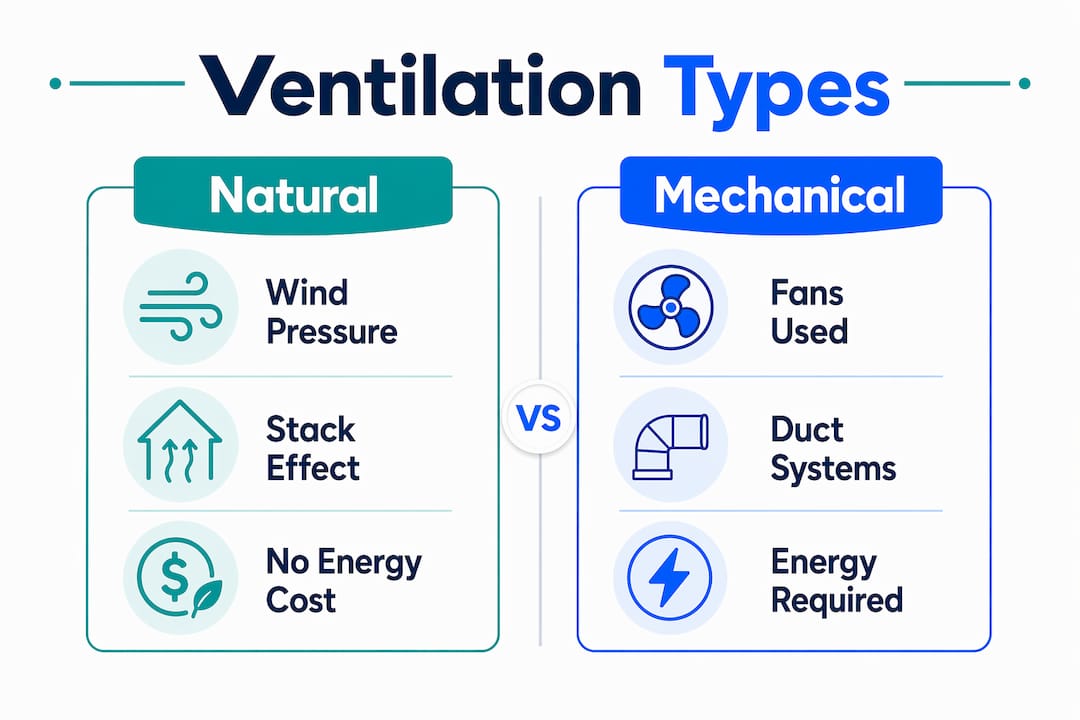
Ventilation falls into two broad categories: natural and mechanical. Each has a distinct mechanism, a set of ideal conditions, and real limitations you need to know before choosing one for your home.
Natural ventilation
Natural ventilation relies on wind pressure and the stack effect, which is the tendency of warm air to rise and escape through upper openings while cooler air enters below. It costs nothing to run and works well in dry, moderate climates where outdoor air is clean and temperatures are manageable. The DOE warns that natural ventilation may worsen mold risk in humid climates and is insufficient alone in many American regions. Opening windows in coastal Southern California on a dry October morning is effective. Doing the same in a humid August in Houston pulls in moisture that compounds your indoor air problem.
Mechanical ventilation
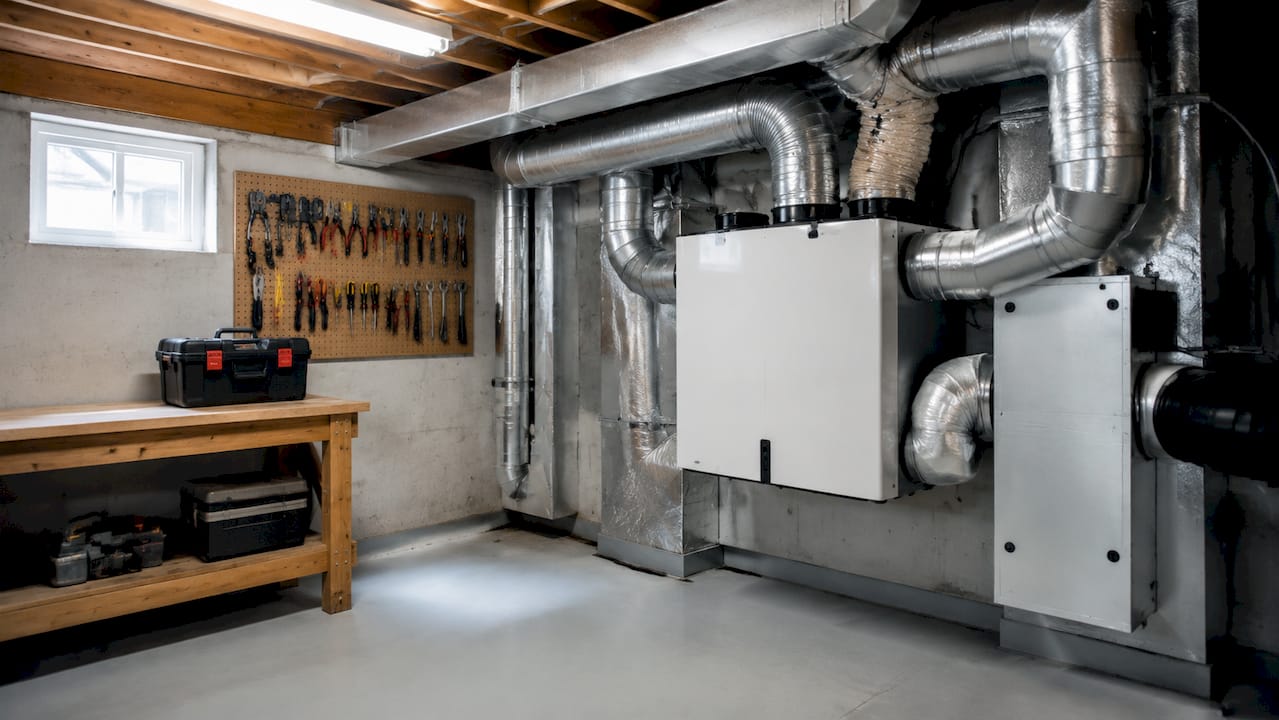
Mechanical ventilation uses fans and duct systems to move air deliberately. Spot ventilation covers exhaust fans in kitchens and bathrooms, the most common form in American homes. Whole-house systems like HRVs and ERVs go further. An HRV transfers heat from outgoing air to incoming fresh air, preserving warmth in winter. An ERV also transfers moisture, which helps maintain comfortable humidity levels year-round.
| Feature | Natural ventilation | Mechanical ventilation |
|---|---|---|
| Energy cost | None | Moderate (fan power) |
| Air filtering | None | Optional (with filters) |
| Climate suitability | Dry, moderate climates | All climates |
| Humidity control | Poor | Good (ERV) to excellent |
| Consistency | Wind-dependent | Continuous and reliable |
Pro Tip: Modern energy-efficient homes are built so airtight that natural ventilation alone cannot maintain safe air quality. If your home was built or renovated after 2010, a whole-house mechanical ventilator is likely necessary, not optional.
Why is proper ventilation critical for health and indoor air quality?
Effective ventilation improves alertness and reduces the spread of respiratory infections by removing polluted and virus-containing air. That finding applies directly to your home, not just schools or offices. A bedroom with a closed door and no airflow accumulates CO₂ overnight, which is why you wake up feeling groggy even after eight hours of sleep.
The benefits of proper airflow cover a wide range of indoor pollutants:
- CO₂: Builds up from breathing and causes fatigue and reduced concentration.
- VOCs: Released by paints, cleaning products, and furniture. Linked to headaches and long-term respiratory issues.
- Allergens: Dust mites, pet dander, and mold spores concentrate in still air.
- Moisture: Excess humidity above 60% creates conditions for mold and mildew growth.
- Odors: Cooking fumes, cleaning chemicals, and off-gassing from new materials linger without airflow.
One misconception deserves direct correction. Air-cleaning units reduce airborne contaminants but do not improve ventilation or reduce CO₂ levels. A HEPA air purifier from brands like Dyson or Coway filters particles already in the room. It does not bring in fresh air or remove CO₂. Air cleaners complement ventilation. They do not replace it.
How ventilation affects health also connects directly to humidity control. Ventilation and humidity control work together because removing moist air before it condenses on walls and ceilings prevents the mold growth that triggers asthma and allergic reactions.
Pro Tip: A CO₂ monitor like the Aranet4 or the Airthings Wave Mini gives you a real-time proxy for ventilation effectiveness. CO₂ levels above 1,000 ppm in a room signal that fresh air exchange is insufficient.
How do climate and home characteristics affect ventilation needs?
Climate is the single biggest variable in how you ventilate your home. What works in Irvine, California does not work in Miami, Florida. Getting this wrong costs you money and health.
In humid climates, ventilation alone may not control moisture effectively and should be combined with mechanical dehumidification. Bringing in outdoor air when outdoor humidity is already 80% adds moisture to your home rather than removing it. Homeowners in humid regions need a dehumidifier running alongside their ventilation system, or an ERV that manages moisture transfer at the point of air exchange.
Cold climates present a different challenge. Opening windows in winter to ventilate loses significant heat and raises energy bills. An HRV solves this by recovering up to 80% of the heat from outgoing air before it leaves the building. The incoming fresh air arrives pre-warmed, so you get the air quality benefit without the heating penalty.
Home construction matters just as much as geography. In homes with tight construction, mechanical whole-house ventilation is necessary to prevent buildup of indoor pollutants. Older homes with gaps around windows and doors get accidental ventilation through air leaks. Newer, well-insulated homes do not. If your home has been recently weatherized or upgraded with new windows, your natural infiltration rate dropped significantly. A licensed HVAC technician can measure your home’s air changes per hour (ACH) and recommend the right mechanical system.
Renters face a specific constraint: they often cannot install whole-house systems. The practical solution is maximizing spot ventilation, using bathroom and kitchen exhaust fans consistently, and placing a portable ERV or window ventilator in the bedroom. Even small, targeted improvements in air exchange make a measurable difference in CO₂ and humidity levels.
What are good ventilation practices to maximize benefits?
Good ventilation practices combine smart habits with properly maintained equipment. Neither alone is enough.
The EPA advises opening windows when outdoor pollution is low but avoiding ventilation when outdoor air quality is poor. The AirNow app from the EPA shows real-time Air Quality Index (AQI) data for your zip code. On days when the AQI exceeds 100, keep windows closed and rely on mechanical filtration instead.
Increasing ventilation during and after indoor cleaning reduces exposure to cleaning chemicals and resuspended particles. Run your kitchen exhaust fan during and for 15 minutes after cooking. Run the bathroom fan for at least 20 minutes after a shower to remove moisture before it condenses on walls.
| Do | Don’t |
|---|---|
| Run exhaust fans during and after cooking | Turn off exhaust fans immediately after use |
| Check AQI before opening windows | Open windows during high-pollution events |
| Clean exhaust fan grilles every 3 months | Ignore fan maintenance until failure |
| Use an ERV or HRV in tight homes | Rely solely on air purifiers for fresh air |
| Monitor CO₂ levels in bedrooms | Assume open floor plans ventilate themselves |
Maintenance is where most homeowners fall short. Clogged exhaust fan grilles reduce airflow by a significant margin without triggering any obvious warning sign. Clean grilles quarterly. Replace HVAC filters on the manufacturer’s schedule, typically every 60–90 days for standard 1-inch filters. Schedule a professional HVAC maintenance check annually to inspect ductwork, fan motors, and heat exchanger components.
Demand-controlled ventilation using CO₂ sensors can save 15%–60% energy without compromising air quality when designed properly. That range is wide because the savings depend on occupancy patterns and how well the system is calibrated. A well-tuned CO₂-based system ventilates more when the house is full and less when it is empty, cutting unnecessary energy use without ever letting air quality slip.
Key Takeaways
Proper ventilation requires a combination of mechanical systems, consistent maintenance, and climate-aware practices to protect health and maintain comfortable indoor air quality.
| Point | Details |
|---|---|
| Ventilation replaces air, not just filters it | Air purifiers reduce particles but cannot lower CO₂ or bring in fresh outdoor air. |
| Climate determines your ventilation strategy | Humid climates need dehumidification alongside ventilation; cold climates benefit from HRVs. |
| Tight homes need mechanical systems | Modern well-insulated homes lack natural infiltration and require whole-house ventilators. |
| CO₂ monitoring reveals hidden problems | Levels above 1,000 ppm signal insufficient air exchange before symptoms become obvious. |
| Maintenance keeps systems effective | Dirty fan grilles and clogged filters silently reduce airflow without triggering visible warnings. |
What I’ve learned from seeing ventilation problems up close
Most homeowners I talk to assume their home breathes on its own. They open a window occasionally, run the bathroom fan when they remember, and consider the job done. The reality is more complicated, and the consequences of getting it wrong show up slowly.
The most common mistake I see is treating air purifiers as a complete solution. A Dyson or Blueair unit in the living room does real work on particles and allergens. But it does nothing for CO₂, and it does nothing for the moisture building up in a bathroom with a broken exhaust fan. These are separate problems that need separate solutions.
The second mistake is ignoring the ventilation and appliance safety connection. Gas stoves, dryers, and water heaters all interact with your home’s air supply. A dryer with a clogged vent duct is not just a fire risk. It is also pushing humid air back into your living space. A gas range without adequate kitchen exhaust is releasing combustion byproducts directly into the air you breathe.
My honest recommendation: start with a CO₂ monitor in your bedroom and your main living area. Run it for a week. The data will tell you more about your home’s air quality than any visual inspection. Then address what the numbers reveal, whether that means fixing a broken exhaust fan, adding an ERV, or simply changing how you use the ventilation equipment you already have.
— MDTECH
Ventilation systems work best when the equipment behind them works too
A well-designed ventilation strategy only delivers results when the physical equipment is functioning correctly. A broken exhaust fan, a clogged dryer vent, or a failing HVAC blower motor quietly undermines everything else you do for your home’s air quality.

Appliancesrepairmdtech serves homeowners and renters across Orange County and Los Angeles County with professional HVAC repair, exhaust fan service, and appliance maintenance. Whether your HVAC system needs repair or you need a technician to assess why your kitchen ventilation is underperforming, the team at Appliancesrepairmdtech brings licensed expertise directly to your door. Book an appointment online and get your ventilation equipment back to full performance.
FAQ
What does proper ventilation actually do for your home?
Proper ventilation exchanges stale indoor air with fresh outdoor air, removing CO₂, VOCs, allergens, moisture, and odors. Without it, pollutants accumulate to levels that affect health, comfort, and home structure.
Can an air purifier replace ventilation?
No. Air-cleaning units reduce airborne contaminants but do not lower CO₂ or bring in fresh air. Air purifiers and ventilation serve different functions and both are needed.
How do I know if my home is poorly ventilated?
Ventilation problems first appear as stuffy air, persistent odors, and rising CO₂ levels. A CO₂ monitor is the most reliable way to detect inadequate air exchange before symptoms become obvious.
Why is ventilation necessary in energy-efficient homes?
Tight, well-insulated homes lack the natural air leaks that older homes rely on for passive air exchange. Mechanical whole-house ventilation is necessary in these buildings to prevent indoor pollutant buildup.
When should I avoid opening windows for ventilation?
The EPA recommends avoiding natural ventilation when outdoor air quality is poor. Check the AirNow AQI for your area before opening windows, especially during wildfire season or high-traffic periods in urban areas.