
TL;DR:
- Most common HVAC problems are caused by dirty filters, refrigerant leaks, and airflow obstructions. Homeowners can often troubleshoot by checking filters, thermostats, and circuit breakers before calling a technician. Regular maintenance and proper repair procedures help prevent costly failures and ensure system longevity.
Dirty air filters, refrigerant leaks, and blocked airflow cause the majority of common HVAC problems that leave homes too hot, too cold, or completely without heating or cooling. HVAC stands for heating, ventilation, and air conditioning. These systems are complex, but most failures trace back to a short list of identifiable root causes. Knowing what to look for saves you money, prevents unnecessary service calls, and keeps your system running through every season. Tools like a multimeter, a wet/dry vacuum, and a Honeywell thermostat diagnostic mode can help you triage problems before calling a technician.
1. What are the most common HVAC problems homeowners face?
The ten problems below cover the vast majority of heating and cooling failures reported by homeowners. Each one has clear symptoms, a likely cause, and a logical first response.
Dirty air filters
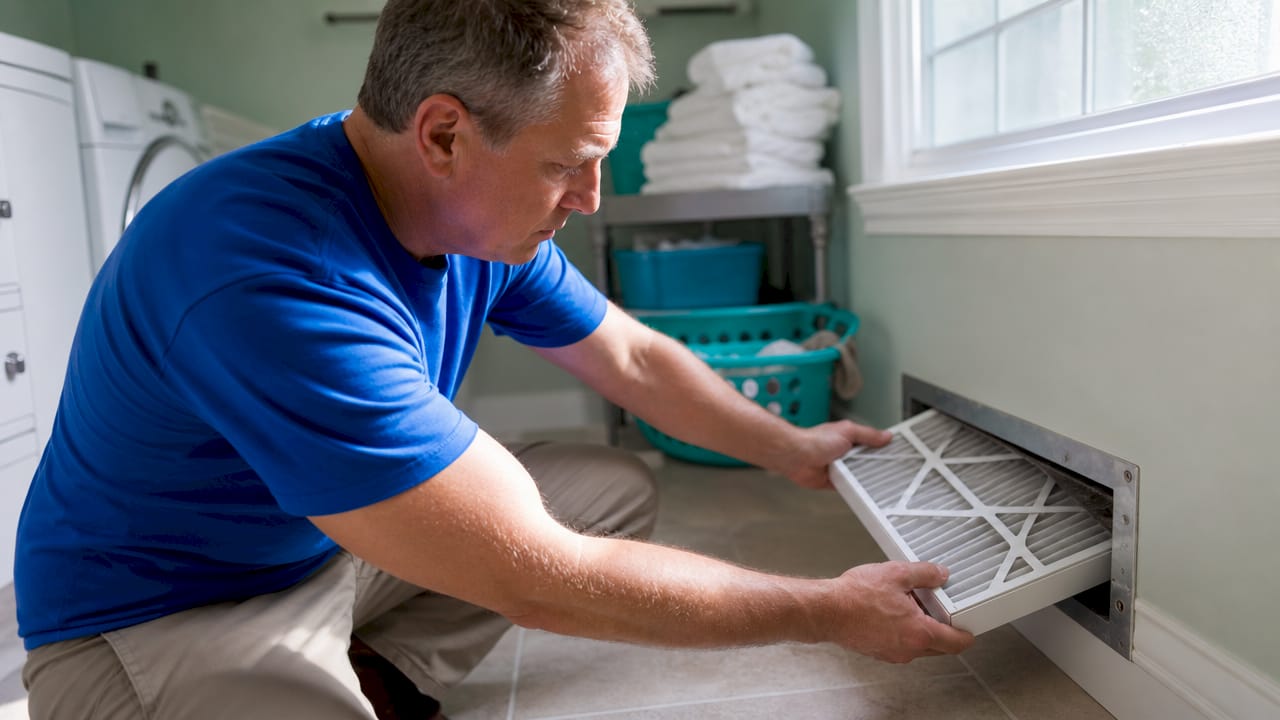
A clogged filter is the single most preventable HVAC failure. Airflow restrictions from dirty filters cause uneven temperatures, weak airflow, and insufficient heating or cooling. Replace 1-inch filters every 30–90 days. Thicker 4-inch media filters can last up to 12 months.
Clogged condensate drain lines
The condensate drain removes moisture pulled from indoor air. Algae and slime buildup clogs the line, overflows the drain pan, and can trigger an automatic shutdown. A wet/dry vacuum clears most clogs in minutes.
Dirty condenser coils
The outdoor condenser coil releases heat from your home. Dirty condenser coils reduce cooling efficiency by 10–15%. Cleaning them often restores full capacity. If cleaning does not fix the problem, a refrigerant leak is the likely next cause.
Low refrigerant charge
Low refrigerant is the most frequent cause of poor cooling performance. Refrigerant does not get “used up.” A low charge always means a leak somewhere in the system. A licensed technician must locate and repair the leak before recharging.
Electrical failures
Blown fuses, tripped breakers, and failed capacitors are among the most common air conditioning failures. Check your electrical panel first. A breaker that trips repeatedly after reset points to a deeper electrical fault that needs a professional.
Thermostat problems
A misconfigured or failing thermostat causes the system to run constantly, short cycle, or not respond at all. Check that the thermostat is set to the correct mode (heat or cool), the fan is set to “auto,” and the batteries are fresh. Honeywell and Ecobee thermostats both have diagnostic menus that display error codes.
Blower motor and fan issues
The blower motor pushes conditioned air through your ducts. A failing motor produces weak airflow, unusual humming, or no airflow at all. Distinguishing a blower issue from a compressor failure is straightforward: if the indoor unit hums but the outdoor compressor is silent, the fault is likely in the outdoor unit.
Frozen evaporator coils
Frozen evaporator coils result from restricted airflow or low refrigerant, causing the coil surface to drop below 32°F and ice over. The system shuts down or blows warm air. Turn the system off, let it thaw completely, then check the filter and vents before restarting.
Ignition and pilot light failures in gas furnaces
Hot surface ignitors cause roughly 45% of furnace “no heat” calls due to dirty or faulty flame sensors. The furnace attempts to start several times, then locks out. Cleaning the flame sensor with fine steel wool often resolves the issue. A cracked ignitor requires replacement.
Duct leaks and blockages
Leaky or blocked ducts cause uneven temperatures across rooms and force the system to work harder. Rooms that are always too hot or too cold despite a functioning unit are a strong indicator. Duct sealing with mastic or metal tape corrects most leaks without a full duct replacement.
Pro Tip: Before calling a technician, check the HVAC system repair checklist from Appliancesrepairmdtech. It walks you through the most common failure points in order of likelihood.
| Problem | Primary Cause | Homeowner Fix |
|---|---|---|
| Dirty air filter | Lack of regular replacement | Replace filter every 30–90 days |
| Clogged condensate drain | Algae and slime buildup | Clear with wet/dry vacuum |
| Dirty condenser coils | Outdoor debris accumulation | Rinse coils with garden hose |
| Low refrigerant | System leak | Call licensed technician |
| Frozen evaporator coils | Airflow restriction or low refrigerant | Thaw, check filter, restart |
2. How to troubleshoot and fix common HVAC issues safely at home
Three initial checks resolve 70% of AC not working calls: the air filter, the thermostat settings, and the circuit breaker. That statistic means most service calls are avoidable. Work through the steps below before scheduling a technician.
-
Check the air filter. Pull the filter and hold it up to light. If you cannot see light through it, replace it immediately. A blocked filter starves the system of airflow and causes multiple downstream failures.
-
Inspect the thermostat. Confirm the mode matches the season (cool in summer, heat in winter). Replace the batteries even if the display looks fine. Set the fan to “auto,” not “on.”
-
Reset the circuit breaker. Locate the HVAC breaker in your electrical panel and flip it fully off, then back on. Also check the disconnect switch near the outdoor unit. If the breaker trips again within an hour, stop and call a professional.
-
Clear the condensate drain line. Locate the PVC drain pipe near the indoor air handler. Attach a wet/dry vacuum to the end of the line and run it for 60 seconds. Flushing the line monthly with white vinegar prevents algae buildup and stops float switch trips before they start.
-
Clean the condenser coils. Turn off power to the outdoor unit at the disconnect. Rinse the coils gently with a garden hose from the inside out. Avoid pressure washers, which bend the fins.
-
Identify electrical versus mechanical faults. A system that hums but does not start often has a failed capacitor. A system that is completely silent after a breaker reset may have a blown fuse inside the air handler. Both require a technician.
Pro Tip: EPA Section 608 prohibits unlicensed handling of refrigerants. Gas line work carries the same legal and safety restrictions. If your diagnosis points to either, stop and call a licensed HVAC technician.
3. How do HVAC problems differ between cooling and heating seasons?
Heating and cooling problems manifest differently across seasons, and understanding that context sharpens your diagnosis. A system that fails in july is almost certainly an air conditioning failure. The same system failing in january points to the furnace or heat pump.
Summer cooling system malfunctions
- No cold air despite the system running: check refrigerant charge and condenser coils first.
- Water pooling near the indoor unit: clogged condensate drain line.
- System short cycling (turning on and off rapidly): dirty filter, low refrigerant, or an oversized unit.
- Compressor not starting: failed run capacitor, a common air conditioning failure after the first hot week of the season.
Winter heating problems
- No heat at all: check the ignitor, flame sensor, and gas supply valve.
- Furnace starts then shuts off quickly: dirty flame sensor triggering a safety lockout.
- Blower runs but no warm air: failed heat exchanger or gas supply issue. Both require immediate professional attention.
- Uneven heat across rooms: duct leaks or a failing blower motor.
| Season | Most Common Failure | First Check |
|---|---|---|
| Summer | Low refrigerant or dirty coils | Condenser coil condition |
| Winter | Ignition or flame sensor failure | Flame sensor and ignitor |
| Year-round | Dirty air filter | Filter condition |
Preventive maintenance differs by season. Spring is the right time to service the AC system before peak demand. Fall is the right time to inspect the furnace before the first cold snap.
4. What long-term maintenance practices reduce HVAC problems?
Scheduled maintenance is the most cost-effective way to avoid frequent heating problems and cooling system malfunctions. Most HVAC manufacturers recommend two professional tune-ups per year: one in spring for cooling, one in fall for heating.
- Replace air filters on a schedule. Use a filter replacement guide to match filter type and MERV rating to your system. Higher MERV ratings trap more particles but restrict airflow in systems not designed for them.
- Clean the outdoor condenser unit annually. Remove debris from around the unit and rinse the coils. Keep at least 2 feet of clearance on all sides. Detailed steps are covered in Appliancesrepairmdtech’s guide on cleaning condenser coils.
- Flush the condensate drain line monthly. Pour a cup of white vinegar into the drain access port near the air handler. This prevents the algae buildup that causes float switch trips and water damage.
- Schedule professional refrigerant checks. A technician measures system pressures against manufacturer specs and checks for leaks. This is not a DIY task. Understanding what refrigerant does in your HVAC system helps you ask the right questions during a service visit.
- Use a smart thermostat. Ecobee and Honeywell Home smart thermostats log runtime data and alert you to unusual patterns, such as the system running 30% longer than normal, which often signals a developing problem before it becomes a failure.
- Inspect ductwork every 3–5 years. Leaky ducts waste conditioned air and force the system to overwork. A duct blower test by a certified technician quantifies the loss.
Key takeaways
Most common HVAC problems trace back to dirty filters, refrigerant leaks, or blocked airflow, and a structured three-step check resolves the majority of failures before a technician is needed.
| Point | Details |
|---|---|
| Start with three basic checks | Filter, thermostat settings, and circuit breaker resolve most HVAC failures. |
| Condensate drain maintenance | Monthly vinegar flushes prevent clogs, float switch trips, and water damage. |
| Refrigerant and gas are off-limits | Federal EPA regulations require a licensed technician for refrigerant and gas work. |
| Seasonal maintenance prevents failures | Spring AC service and fall furnace inspection catch problems before peak demand. |
| Smart thermostats catch early faults | Runtime anomalies flagged by Ecobee or Honeywell Home alert you before a breakdown. |
What I’ve learned from years of HVAC calls
The most expensive HVAC repairs I see are the ones that started as a $15 air filter. A homeowner ignores the reduced airflow for a season, the evaporator coil freezes repeatedly, and eventually the compressor fails under the strain. Compressor replacement costs several times what a year of filter changes would have cost.
The second most common mistake is random part replacement. A homeowner buys a new thermostat, then a new capacitor, then calls us anyway. Following a structured diagnostic workflow that isolates the fault area first saves time and money every time. Blower humming with no outdoor activity is a different problem than a completely silent system. Those two symptoms point to different components.
My honest advice: learn the three basic checks, keep a maintenance schedule, and know exactly where your line is. Filters, drain lines, and thermostat settings are homeowner territory. Refrigerant, gas lines, and electrical components inside the cabinet are not. Respecting that boundary keeps you safe and keeps your warranty intact.
— MDTECH
Professional HVAC repair in Orange County and Los Angeles
When the basic checks do not resolve the problem, the fault is almost always in a component that requires licensed hands.
Appliancesrepairmdtech serves homeowners and renters across Orange County and Los Angeles County with licensed technicians who diagnose and repair the full range of HVAC failures, from refrigerant leaks to ignition system faults. Booking is available online, and technicians carry the parts most commonly needed for same-visit repairs. For urgent cooling or heating failures, expert HVAC repair in Irvine is available with fast scheduling. If you are weighing repair against replacement, the repair vs. replacement guide from Appliancesrepairmdtech gives you a clear framework for that decision.
FAQ
Why is my HVAC running but not cooling?
The most likely causes are a dirty air filter, low refrigerant charge, or dirty condenser coils. Check the filter first, then inspect the outdoor unit for debris or ice on the indoor coil.
How often should I replace my HVAC air filter?
Replace 1-inch filters every 30–90 days. Thicker 4-inch media filters typically last up to 12 months, depending on household dust levels and pet hair.
Can I recharge my own HVAC refrigerant?
No. EPA Section 608 requires a licensed technician to handle refrigerants. Attempting it yourself is both illegal and potentially dangerous.
What causes a furnace to start and then shut off quickly?
A dirty flame sensor is the most common cause. The sensor fails to detect the flame and triggers a safety lockout. Cleaning the sensor with fine steel wool often resolves it, but a cracked ignitor requires replacement.
How do I stop my AC from tripping the float switch?
The float switch trips because the condensate drain line is clogged. Clearing the line with a wet/dry vacuum and flushing it monthly with white vinegar prevents recurrence. Resetting the switch alone does not fix the underlying clog.