
TL;DR:
- Circuit breakers trip to prevent fire, damage, or electrocution by detecting unsafe electrical conditions.
- Most trips occur due to overloads, short circuits, or ground faults, each with distinct signs and timings.
A circuit breaker trips because it detects an unsafe electrical condition and cuts power to prevent fire, equipment damage, or electrocution. This protective response is the breaker doing exactly what it was designed to do. Understanding why circuit breakers trip puts you in control. You can diagnose the cause faster, respond safely, and know when to call a licensed electrician before a minor electrical issue becomes a serious hazard.
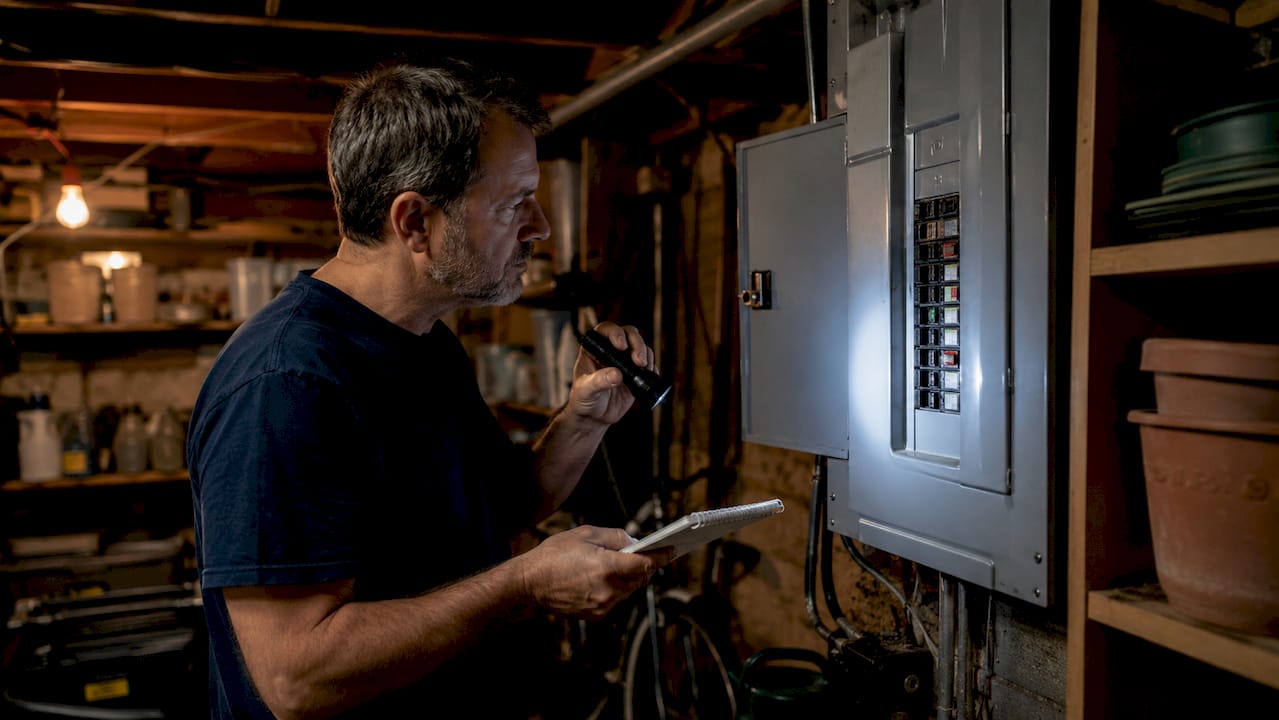
Why do circuit breakers trip? The three core causes
Circuit breakers trip due to three distinct conditions: electrical overload, short circuit, or ground fault. Each cause has its own signature, and recognizing the difference tells you how serious the problem is.
Overload: too much power on one circuit
An overload happens when you draw more electricity than a circuit can safely carry. A standard 15-amp breaker handles a maximum of 1,800 watts at 120 volts. Plug in a space heater, a hair dryer, and a laptop on the same circuit, and you can cross that limit fast. The breaker does not trip instantly. It waits a few seconds or minutes, giving the wiring a chance to cool, then cuts power when the heat becomes unsafe.
Common overload scenarios include:
- Running a microwave and toaster on the same kitchen circuit
- Plugging multiple power strips into one outlet in a home office
- Using a window air conditioner on a circuit shared with other appliances
- Running a clothes dryer on an undersized circuit
Pro Tip: If your breaker trips 15–20 minutes after you turn on a high-draw appliance, overload is almost certainly the cause. Redistribute those devices across different circuits before resetting.
Short circuit: instant and forceful
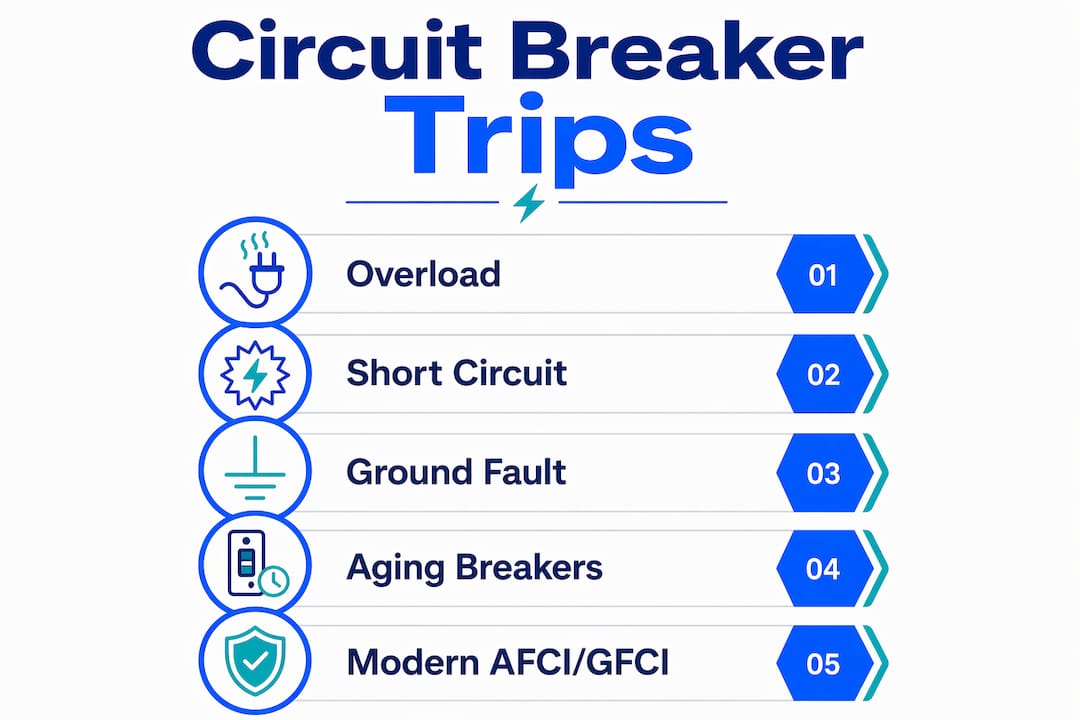
A short circuit occurs when a hot wire touches a neutral wire or a ground wire directly. The result is a sudden, massive surge of current with almost no resistance. The trip timing here is near-instantaneous. You flip on a switch or plug in a device, and the breaker trips within a fraction of a second. Short circuits are more dangerous than overloads because the current spike is extreme. Common causes include damaged appliance cords, loose wiring inside outlets, and faulty switches.
Ground fault: the wet-area risk
A ground fault happens when current leaks from a hot wire to a grounded surface, often a metal outlet box or a wet floor. Bathrooms, kitchens, garages, and outdoor outlets are the most common locations. Ground faults can cause electrocution, which is why the National Electrical Code requires GFCI (Ground Fault Circuit Interrupter) protection in these areas. Like short circuits, ground faults produce near-instantaneous trips rather than the delayed response you see with overloads.
How modern breakers differ from older equipment
Not all breakers behave the same way, and understanding the differences helps you make sense of trips that seem random or unexplained.
AFCI and GFCI breakers: higher sensitivity by design
Modern Arc Fault Circuit Interrupter (AFCI) breakers and GFCI breakers are far more sensitive than standard thermal-magnetic breakers. AFCI breakers detect the electrical signature of arcing faults, the kind caused by damaged wiring inside walls. GFCI breakers monitor for tiny current imbalances as small as 5 milliamps. That sensitivity is a feature, not a flaw. However, AFCI and GFCI breakers can produce false trips when connected to certain electronics, older appliances with noisy motors, or circuits wired with shared neutrals. If your AFCI breaker trips repeatedly with no obvious cause, the wiring configuration itself may be triggering it.
Aging breakers: when the protector becomes the problem
Breakers degrade over time, and after 10–15 years of regular use, a breaker can begin tripping at loads well below its rated capacity. The internal bimetal strip that senses heat loses calibration. Frequent trips and resets accelerate this wear. A breaker that trips at 10 amps on a 15-amp circuit is not protecting you accurately. It is giving you false readings and may also fail to trip when a real fault occurs.
Subtle issues that cause nuisance trips include:
- Loose terminal screws inside the panel creating localized overheating
- Corroded bus bar connections reducing conductivity
- Breakers that have been tripped and reset hundreds of times losing mechanical reliability
- Wiring that has shifted or loosened over years of thermal expansion
These issues require a licensed electrician to inspect and correct. You cannot diagnose loose panel connections from the outside.
How to safely troubleshoot a tripped circuit breaker
Circuit breaker troubleshooting follows a clear sequence. Work through these steps in order, and stop the moment you see warning signs.
- Identify the tripped breaker. Open your electrical panel and look for the breaker that has moved to the middle position or is clearly off. Most panels are labeled by room or circuit.
- Turn it fully off first. Before resetting, push the breaker firmly to the OFF position. Skipping this step is the most common DIY mistake. Safe reset technique requires a full OFF-then-ON motion, not just flipping it from the middle position.
- Unplug everything on that circuit. Before you reset, go to the affected room and unplug every device. This removes the load and helps you identify whether the trip was caused by a device or by the wiring itself.
- Reset the breaker and reconnect devices one at a time. Plug devices back in one by one, waiting 30 seconds between each. When the breaker trips again, the last device you plugged in is the likely culprit. Use the appliance troubleshooting checklist from Appliancesrepairmdtech to work through this process systematically.
- Watch the reset carefully. If the breaker trips again immediately after you reset it with nothing plugged in, you have a short circuit or ground fault in the wiring itself. Do not reset it again.
- Check for warning signs before touching anything. A burning smell, scorch marks around outlets or the panel, or a breaker that buzzes or feels hot are all signals to stop and call a professional immediately. Stop DIY troubleshooting the moment any of these signs appear.
Pro Tip: Label your electrical panel clearly after you identify which breaker controls which room. A labeled panel cuts troubleshooting time in half and helps electricians work faster when they arrive.
For a broader approach to diagnosing appliance faults that trigger breaker trips, Appliancesrepairmdtech has a detailed guide that walks through the full diagnostic process.
Why ignoring a tripped breaker is never the right call
The most dangerous misconception homeowners hold about circuit breaker tripping is that it is a nuisance. It is not. A tripped breaker is a warning that your electrical system detected a condition serious enough to cut power automatically.
“Breakers are protective signals, not nuisances. Misreading trips as annoyances risks serious damage or fire.” — Electricity Forum
Repeated resetting of a faulted breaker is a recognized fire hazard. Every time you reset without addressing the cause, you are forcing current through a circuit that the breaker already determined was unsafe. Wiring insulation degrades. Connections overheat. The risk of an electrical fire grows with each ignored trip.
Treating the symptom instead of the cause also masks escalating problems. A circuit that trips once a month may trip weekly six months later. By the time it trips daily, the underlying wiring damage may be extensive. Professional electricians stress that homeowners should address the root cause rather than simply resetting the breaker and moving on.
The breaker itself can also be part of the problem. An aging breaker that trips below its rated load is not protecting your home accurately. It may also fail to trip during a genuine fault, leaving your wiring exposed to sustained overcurrent. If your breaker is more than 15 years old and tripping frequently, replacement is worth discussing with a licensed electrician. The cost of a new breaker is a fraction of the cost of fire damage or rewiring.
Key takeaways
Circuit breakers trip to protect your home from overloads, short circuits, and ground faults. Identifying which cause is responsible determines whether you can fix it yourself or need a licensed electrician.
| Point | Details |
|---|---|
| Three causes of trips | Overloads, short circuits, and ground faults each produce distinct trip timing and symptoms. |
| Trip timing is a diagnostic clue | Delayed trips point to overload; near-instant trips indicate a short circuit or ground fault. |
| Modern breakers trip differently | AFCI and GFCI breakers are more sensitive and can produce false trips from electronics or wiring configurations. |
| Safe reset requires full OFF first | Push the breaker fully to OFF before flipping it ON to avoid incomplete resets. |
| Repeated resets are a fire hazard | Resetting without fixing the cause forces current through a circuit already flagged as unsafe. |
What I’ve learned from years of electrical troubleshooting calls
Homeowners who call us after a breaker trip usually fall into two groups. The first group reset the breaker five times before calling. The second group called after the first reset failed. The second group almost always has a simpler, cheaper fix.
The instinct to reset and hope is understandable. Electricity feels abstract. The breaker is a small switch, and flipping it back feels harmless. But every repeated reset on a faulted circuit is a gamble. I have seen wiring in walls that was visibly charred after a homeowner reset a tripping breaker a dozen times over two weeks. The breaker was doing its job. The homeowner was overriding it.
My honest advice: treat the first unexplained trip as a signal worth investigating, not ignoring. Unplug your devices, do the one-by-one reconnection test, and if the breaker trips with nothing plugged in, stop there. That is not a DIY situation. A disciplined diagnostic approach is the difference between a $150 service call and a $5,000 rewiring job.
I also want to push back on the idea that calling a professional is admitting defeat. Electrical panels are not the place to learn by trial and error. A licensed electrician can test a circuit in 20 minutes with the right tools and tell you exactly what is wrong. That peace of mind is worth every dollar.
— MDTECH
When to call Appliancesrepairmdtech for electrical and appliance issues
When a breaker keeps tripping after you have unplugged everything and done a proper reset, the problem is inside your walls or your appliances, and that requires a professional. Appliancesrepairmdtech serves homeowners across Orange County and Los Angeles County, California, with licensed technicians who diagnose electrical and appliance faults fast. Whether a faulty refrigerator, washer, or dryer is causing your circuit to overload, or you need expert guidance on Samsung appliance repair after a trip, the team at Appliancesrepairmdtech is ready to help. Book an appointment online and get a technician to your door before a tripping breaker becomes a bigger problem.
FAQ
What is circuit breaker tripping?
Circuit breaker tripping is the automatic shutoff of a circuit when the breaker detects unsafe electrical conditions such as overload, short circuit, or ground fault. The breaker cuts power to prevent fire or equipment damage.
Why does my circuit breaker keep tripping with nothing plugged in?
If a breaker trips immediately after reset with no devices connected, the fault is in the wiring itself, not in your appliances. This indicates a short circuit or ground fault inside the wall and requires a licensed electrician.
How do I reset a circuit breaker correctly?
Push the breaker firmly to the full OFF position first, then flip it to ON. Skipping the OFF step is the most common reset mistake and can leave the breaker in a partially tripped state.
How long do circuit breakers last before they need replacement?
Most circuit breakers last 30–40 years under normal conditions, but breakers that trip and reset frequently can degrade in as little as 10–15 years and may begin tripping below their rated load.
What are the signs of electrical overload in a home?
Signs of electrical overload include breakers that trip after running multiple appliances, flickering lights, warm outlets, and a burning smell near the panel or outlets. These are signals to reduce the load on that circuit and have the wiring inspected.