
TL;DR:
- The evaporator coil is an indoor heat exchanger that absorbs heat and moisture from home air to produce cooled, dehumidified air. Proper maintenance, including filter replacement and professional cleaning, is essential to prevent inefficiency and system failure. Most homeowners should seek professional service if their coil shows signs of freezing, dirt buildup, or refrigerant issues to ensure optimal AC performance.
An evaporator coil is the indoor heat exchanger in your air conditioning or heat pump system that absorbs heat and moisture from your home’s air to produce cooled, dehumidified air. Known in the HVAC industry as the “indoor coil,” it works as a pair with the outdoor condenser coil to complete the refrigeration cycle. Without a functioning evaporator coil, your AC system cannot cool your home, no matter how powerful the compressor. Understanding what this component does, how it works, and how to maintain it gives you a real advantage as a homeowner.
What is an evaporator coil and what does it do?
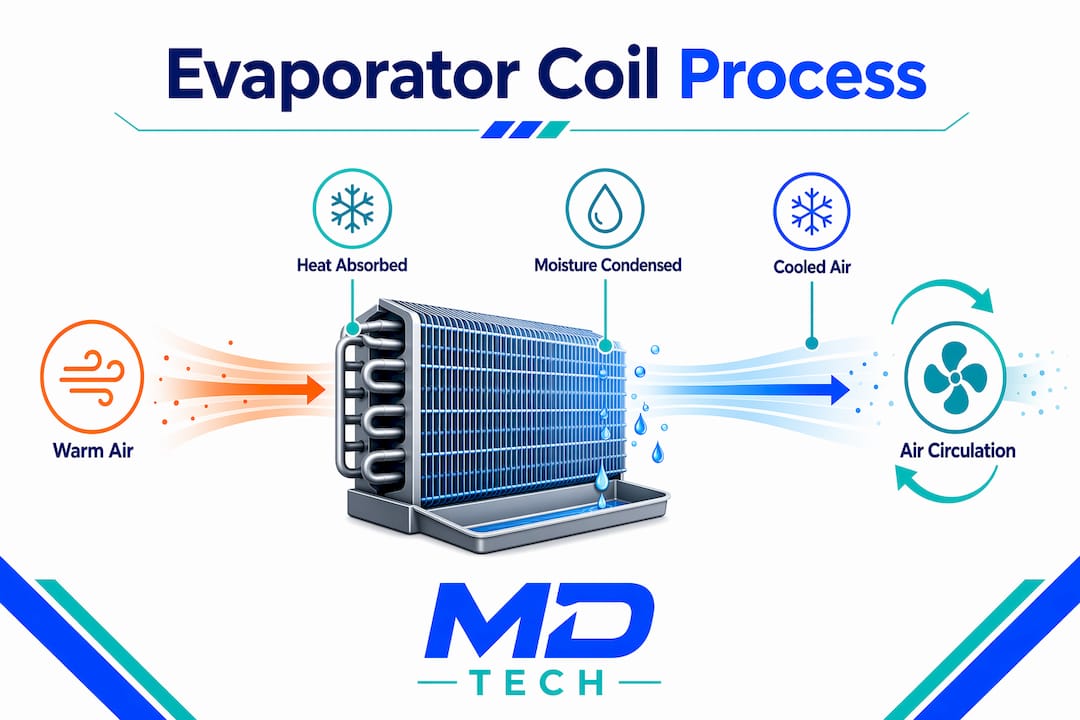
The evaporator coil is the indoor heat exchanger that absorbs heat from your home’s air and transfers it to the refrigerant flowing through its tubes. It sits inside your air handler or furnace cabinet, directly in the path of the airflow your blower fan produces. When warm air from your living space passes over the cold coil surface, heat moves from the air into the refrigerant, leaving cooler air behind to circulate back through your home.
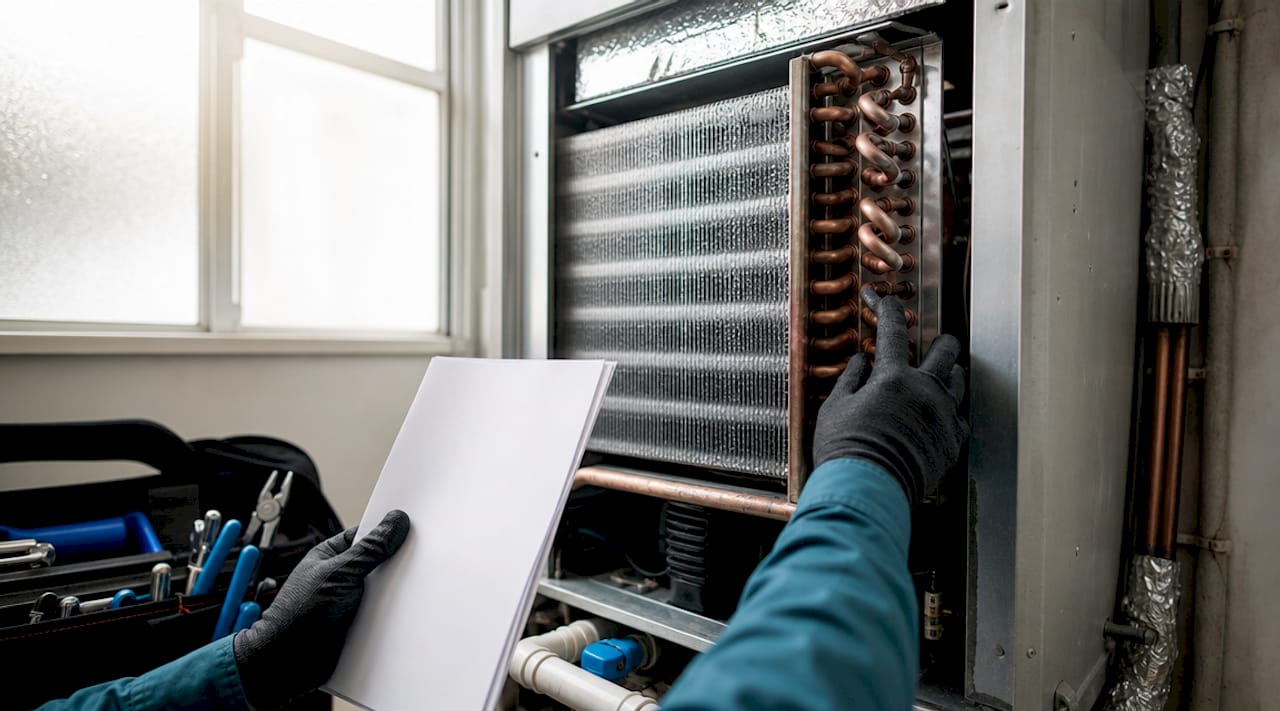
Dehumidification is a secondary but equally important function. As warm, humid air contacts the cold coil surface, moisture in the air condenses on the fins, just like water droplets form on a cold glass on a humid day. That condensed moisture drains away through a drain pan and condensate line, reducing indoor humidity in the process. This is why a properly working AC system makes your home feel comfortable even when outdoor humidity is high.
How does an evaporator coil work?
The cooling process follows a clear sequence tied to the refrigeration cycle. Here is how it works from start to finish:
- Warm air enters the air handler. Your blower fan pulls return air from your home through the air filter and pushes it across the evaporator coil surface.
- Refrigerant absorbs heat. Cold, low-pressure refrigerant inside the coil tubes absorbs heat from the passing air. As described by Daikin’s 2025 guide, the refrigerant evaporates as it absorbs this heat, changing from a liquid to a vapor state.
- Cooled air circulates indoors. The now-cooled air exits the air handler and flows through your supply ducts into each room.
- Refrigerant travels to the condenser. The heat-laden refrigerant vapor moves to the outdoor condenser coil, where it releases that heat outside and returns to a liquid state. This is the core difference in the evaporator coil vs condenser coil relationship: one absorbs heat indoors, the other releases it outdoors.
- Moisture drains away. Condensation collected on the coil fins drips into the drain pan below and exits through the condensate line, keeping indoor humidity in check.
The dehumidification process depends on the coil maintaining the right surface temperature relative to indoor humidity. If the coil gets too warm due to low refrigerant or poor airflow, moisture stops condensing effectively and your home feels sticky even with the AC running.
Pro Tip: If your home feels cool but humid, that is a signal the evaporator coil is not reaching the surface temperature needed to condense moisture. Check your air filter first before calling a technician.
What types of evaporator coils are used in homes?
Residential HVAC systems use a few standard coil designs, each suited to different air handler configurations and airflow patterns. The shape and material of the coil directly affect how efficiently it transfers heat.
| Coil type | Shape | Common placement | Best for |
|---|---|---|---|
| A-coil (inverted V) | Two angled panels forming an A shape | Above furnace or horizontal air handler | Most residential split systems |
| Flat panel coil | Single vertical or horizontal slab | Smaller air handlers, tight spaces | Compact or modular systems |
| N-coil (multi-plex) | Multiple panels in a staggered N shape | Larger residential or light commercial | High-capacity systems needing more surface area |
The A-coil is by far the most common design in American homes. Evaporator coils are typically arranged as an A-coil inside the air handler or furnace, built from metal tubes with aluminum fins attached to maximize the surface area available for heat transfer. More surface area means more contact between air and refrigerant, which means faster, more efficient cooling.
Most coil tubes are made from copper, which conducts heat well and resists corrosion under normal conditions. The fins attached to those tubes are almost always aluminum, which is lightweight and cost-effective. Some newer coils use all-aluminum construction to reduce the risk of formicary corrosion, a type of pitting damage that can develop on copper tubes in homes with certain airborne contaminants. Knowing your coil type helps when you are comparing repair vs. replacement costs or ordering parts.
Why evaporator coil maintenance matters
A dirty or damaged evaporator coil is one of the most common causes of poor AC performance in residential systems. Dirty or damaged coils reduce heat transfer efficiency, causing poor cooling, coil freezing, and potential water damage. The layer of dust, pet hair, and debris that builds up on coil fins acts as insulation, blocking the heat exchange that makes cooling possible.
Here are the most common signs your evaporator coil needs attention:
- Reduced cooling output. Rooms take longer to cool or never reach the set temperature, even with the system running continuously.
- Ice buildup on the coil or refrigerant lines. Airflow restriction is the most common cause of coil freezing, not coil failure itself. A clogged filter or blocked return vent starves the coil of warm air, dropping its surface temperature below freezing.
- Water leaking around the air handler. When ice melts or condensation overflows the drain pan, water damage to ceilings and walls can follow quickly.
- Rising energy bills without a change in usage. A coil working harder to transfer heat draws more power from the system.
- Higher indoor humidity. As noted earlier, a coil that cannot maintain proper surface temperature stops removing moisture from the air effectively.
Evaporator coil problems commonly show up as decreased cooling performance, rising energy bills, and uneven indoor temperatures across rooms. These symptoms often appear gradually, which is why many homeowners attribute them to general aging rather than a specific component.
Pro Tip: Change your air filter every 30 to 90 days depending on household dust levels and pet ownership. A clean filter is the single most effective thing you can do to protect your evaporator coil and extend system life.
For a broader look at HVAC maintenance practices that protect your whole system, the Appliancesrepairmdtech resource library covers California-specific considerations worth reviewing.
How to identify evaporator coil issues and troubleshoot them
Most homeowners can spot the early signs of coil trouble and take a few basic steps before calling a technician. Follow this sequence when your AC is underperforming:
- Check and replace the air filter. A clogged filter is the most frequent cause of coil freezing and reduced airflow. Replace it and run the system for 30 minutes to see if performance improves. Reduced airflow or poor filter condition can mimic coil failure symptoms but are often the real cause of system cooling issues.
- Inspect all supply and return vents. Make sure furniture, rugs, or curtains are not blocking vents. Restricted return airflow starves the coil just as a dirty filter does.
- Look for ice on the refrigerant lines or coil. If you see ice, turn the system to fan-only mode for two hours to let it thaw. Then replace the filter and restart. If ice returns, the problem goes beyond a dirty filter.
- Check the condensate drain line. A clogged drain line causes water to back up into the drain pan and overflow. You can flush it with a cup of distilled white vinegar poured into the access port near the air handler.
- Visually inspect the coil if accessible. Some air handlers have a panel you can remove to view the coil. Heavy dust buildup visible on the fins confirms the coil needs professional cleaning.
- Call a licensed technician for refrigerant issues or coil cleaning. Professional inspections evaluate not just the coil surface but also the condensate drain pan, surrounding assembly, and signs of corrosion. This level of assessment requires tools and training beyond DIY scope.
For guidance on when a repair makes more sense than a full replacement, the repair vs. replacement guide from Appliancesrepairmdtech walks through the decision clearly.
Key takeaways
The evaporator coil is the indoor component that makes air conditioning possible by absorbing heat and moisture from your home’s air through direct contact with cold refrigerant.
| Point | Details |
|---|---|
| Core function | The evaporator coil absorbs heat and moisture from indoor air to cool and dehumidify your home. |
| How it works | Warm air passes over cold refrigerant-filled tubes, transferring heat and condensing moisture onto the fins. |
| Common coil types | A-coils are the most common residential design, built from copper tubes with aluminum fins for heat transfer. |
| Top maintenance step | Replacing the air filter every 30 to 90 days prevents the airflow restriction that causes most coil problems. |
| When to call a pro | Ice buildup that returns after thawing, refrigerant issues, or heavy coil fouling require licensed technician service. |
What most homeowners get wrong about their AC system
Here is something I see constantly in the field: homeowners think their air conditioner creates cold air. It does not. The evaporator coil removes heat from the air already in your home. That distinction changes how you think about maintenance entirely. If the coil cannot absorb heat efficiently because it is coated in dust or starved of airflow, no amount of refrigerant or compressor power compensates for it.
The other misconception I run into regularly is treating coil maintenance as optional. Proper design and maintenance of the evaporator coil directly impacts system reliability, energy efficiency, and indoor air quality. In Southern California, where AC systems run hard through long summers, a neglected coil does not just reduce comfort. It shortens the life of the compressor, which is the most expensive component in the system.
The coil, the filter, and the refrigerant charge are interdependent. Fixing one while ignoring the others produces incomplete results. I have seen homeowners spend money on refrigerant recharges when the real problem was a dirty coil reducing heat absorption. The refrigerant was fine. The coil was not doing its job. A thorough inspection covers all three together, and that is the only way to get a reliable diagnosis.
— MDTECH
Get professional evaporator coil service in Orange County and LA
If your AC is underperforming and basic filter changes have not solved the problem, your evaporator coil likely needs professional attention. Appliancesrepairmdtech serves homeowners across Orange County and Los Angeles County with licensed HVAC technicians who diagnose and repair coil issues correctly the first time.
From coil cleaning and condensate drain service to full HVAC repair in Irvine and surrounding cities, the Appliancesrepairmdtech team handles the full scope of residential HVAC work. If you are weighing whether to repair or replace a failing coil, the appliance parts replacement guide provides clear guidance on making that call. Book an appointment online and get your system back to full performance before the next heat wave hits.
FAQ
What is an evaporator coil in simple terms?
An evaporator coil is the indoor part of your AC system that removes heat and humidity from your home’s air by passing it over cold refrigerant-filled tubes. The result is cooled, drier air circulated back through your home.
How long does an evaporator coil last?
AC evaporator coils typically last between 10 and 15 years with proper maintenance and regular cleaning. Systems that run with dirty filters or low refrigerant often see coil failure well before that range.
What is the difference between an evaporator coil and a condenser coil?
The evaporator coil sits indoors and absorbs heat from your home’s air. The condenser coil sits outdoors and releases that absorbed heat to the outside air. Both are required for the refrigeration cycle to function.
Why is my evaporator coil freezing up?
Coil freezing is most often caused by restricted airflow from a clogged air filter or blocked vents, not a failed coil. Turn the system to fan-only mode to thaw it, replace the filter, and restart. If ice returns, contact a licensed technician to check refrigerant levels and coil condition.
Can I clean my evaporator coil myself?
Light dust on an accessible coil can be removed with a soft brush or no-rinse coil cleaner spray available at hardware stores. Heavy fouling, corrosion, or coil damage requires a professional, since improper cleaning can bend fins or damage refrigerant lines.