
TL;DR:
- Following a structured HVAC repair checklist helps homeowners maintain system efficiency and prevent costly breakdowns through routine preventive care.
- It is essential to document every maintenance step and understand which tasks require a professional to ensure safety and compliance.
An HVAC system repair checklist is a structured guide that helps homeowners inspect, maintain, and troubleshoot their heating, ventilation, and air conditioning equipment for safe and efficient operation. The industry standard term for this process is preventive maintenance, and following it consistently is the single most effective way to avoid expensive breakdowns. A structured preventive maintenance program reduces emergency HVAC call-outs by 65% and extends equipment life by 30 to 40%. That means deferred maintenance costs four to eight times more in emergency repairs than the same work done on schedule. This guide gives you the exact steps, tools, and documentation practices to stay ahead of failures before they happen.
What your HVAC system repair checklist should include first
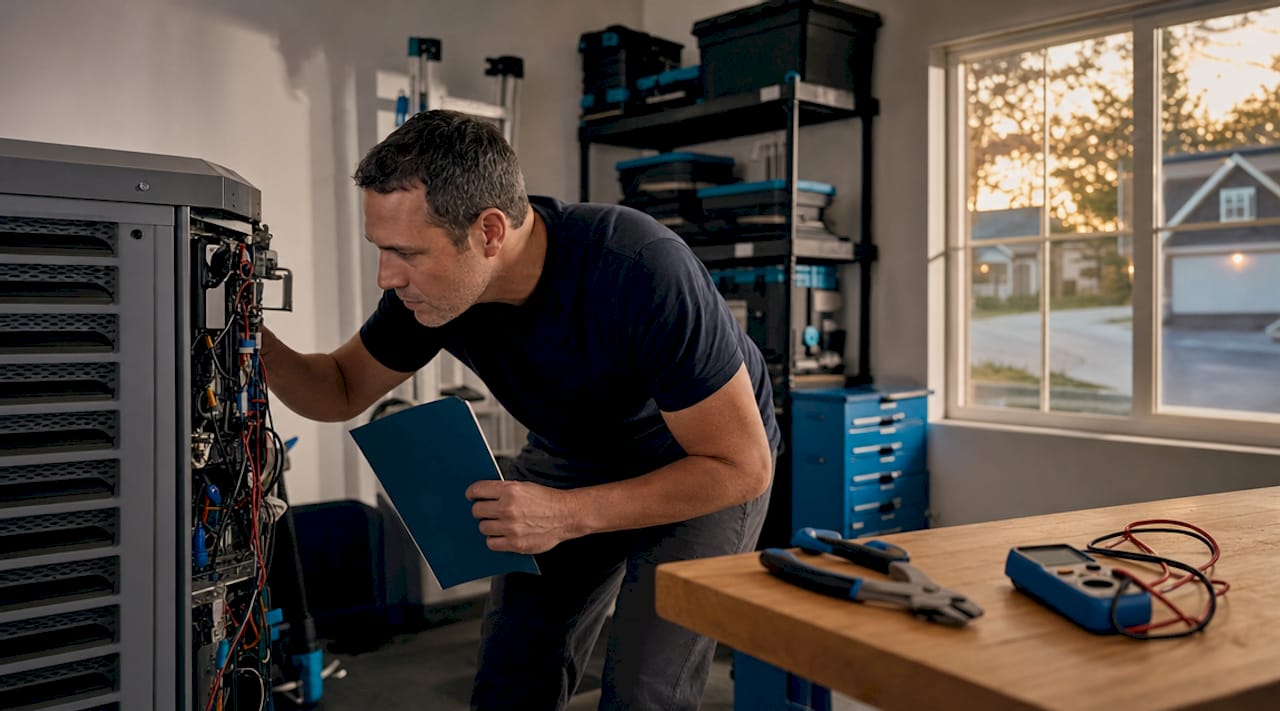
Before you touch any component, you need the right tools and a clear understanding of what you are working with. Effective HVAC repair requires isolating problem domains: electrical, refrigerant cycle, airflow, and controls. Each domain demands specific instruments and safety habits. Skipping this step is how homeowners turn a $150 filter replacement into a $1,200 service call.
Tools every homeowner should have on hand
The minimum toolkit for any HVAC maintenance checklist includes:
- Multimeter for testing voltage, continuity, and resistance across electrical components
- Manifold gauge set for reading refrigerant pressures (used by or with a licensed technician)
- Screwdriver set (Phillips and flathead, multiple sizes) for panel access
- Fin comb for straightening bent condenser and evaporator coil fins
- Shop vacuum for clearing condensate drain lines
- Non-contact voltage tester to confirm power is off before touching wiring
- Thermometer or thermal gun for measuring supply and return air temperature differentials
- Replacement air filters in the correct MERV rating for your system
Safety precautions before you start
Always shut off power at both the thermostat and the breaker panel before opening any access panel. Use lockout/tagout procedures if you have them. Verify the circuit is dead with a non-contact voltage tester, not just by flipping the switch. Wear insulated gloves and safety glasses when working near capacitors, which can hold a lethal charge even after power is cut. Keep your manufacturer’s manual nearby and log every task you perform with the date and your findings.
Pro Tip: Start a dedicated HVAC maintenance log, either a physical binder or a free app like HomeZada, and photograph every component before and after service. This record becomes invaluable when handing off to a technician or filing a warranty claim.
Step-by-step HVAC maintenance checklist for homeowners
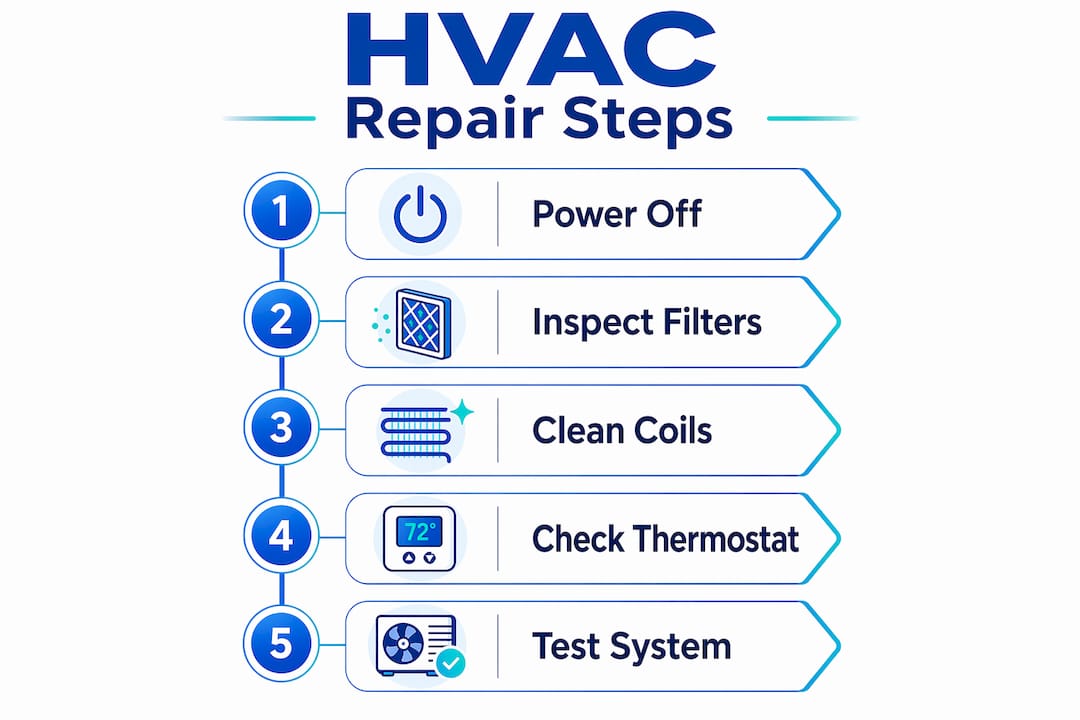
Work through this list in order. Each step builds on the previous one, and skipping ahead is how small problems become expensive ones.
-
Check thermostat settings and calibration. Confirm the thermostat is set to the correct mode (heat or cool) and that the temperature differential is accurate. Thermostat settings and power supply are the first checks in any HVAC troubleshooting guide because many reported failures trace back to incorrect mode selection or dead batteries.
-
Inspect and replace air filters. Pull the filter and hold it up to light. If you cannot see light through it, replace it immediately. Dirty filters or blocked vents can mimic refrigerant problems and cause system inefficiency or coil freezing. Most residential systems need a new filter every 30 to 90 days depending on occupancy and pets.
-
Clean condenser coils (outdoor unit). Turn off power to the outdoor unit at the disconnect box. Remove debris from around the unit, then rinse the coil fins gently with a garden hose from the inside out. Bent fins restrict airflow and reduce efficiency by measurable margins.
-
Inspect evaporator coils (indoor unit). Access the indoor air handler and visually check the evaporator coil for ice buildup, dirt accumulation, or corrosion. Ice on the coil almost always points to restricted airflow or low refrigerant, two problems with very different fixes.
-
Check refrigerant levels and inspect for leaks. Low refrigerant is not a maintenance item you top off. It signals a leak that must be found and repaired. Look for oily residue around fittings and line sets as a visual indicator. Refrigerant handling is federally regulated, so this step requires a licensed technician for anything beyond visual inspection.
-
Test electrical connections and components. With power off, tighten any loose wire connections at the air handler and outdoor unit. Use your multimeter to test capacitor charge if you are comfortable doing so. Weak or failed capacitors are one of the most common causes of compressor and fan motor failures in Southern California summers.
-
Clear the condensate drain line. Locate the PVC drain line from your indoor air handler and flush it with a cup of distilled white vinegar or use a wet/dry vacuum to pull blockages from the exterior end. A clogged drain causes water damage and triggers float switches that shut the system down.
-
Test system operation end to end. Restore power and run the system through a full cycle. Measure the temperature difference between supply and return air registers. A properly functioning central air system should produce a differential of 14 to 22 degrees Fahrenheit.
Pro Tip: Document every finding from this checklist with photos and notes before calling a technician. Documenting specific symptoms and attempted DIY fixes helps technicians diagnose issues faster and reduces high diagnostic fees.
Seasonal HVAC maintenance: heating vs. cooling focus
| Season | Primary Focus | Key Tasks |
|---|---|---|
| Spring (cooling prep) | Air conditioning system | Clean condenser coils, check refrigerant, replace filter, test thermostat |
| Fall (heating prep) | Furnace and heat pump | Inspect heat exchanger, test igniter, check gas connections, replace filter |
| Monthly (year-round) | Airflow and filters | Check filter condition, clear vents, inspect drain pan |
| Annual (both systems) | Full system inspection | Electrical connections, coil cleaning, refrigerant check, blower motor |
The gold standard for HVAC maintenance is twice-yearly service: a spring tune-up for cooling and a fall tune-up for heating. In high-use climates like Southern California, some components benefit from quarterly attention. Your furnace maintenance checklist for fall should mirror the spring cooling checklist in thoroughness.
When to DIY and when to call a professional
Homeowners can safely handle a defined set of HVAC tasks without professional help. Knowing where that line sits protects both your equipment and your safety.
Tasks you can do yourself:
- Replacing air filters
- Clearing debris from around the outdoor unit
- Resetting tripped breakers or replacing thermostat batteries
- Flushing the condensate drain line
- Cleaning accessible coil fins with a fin comb
- Checking and adjusting thermostat settings
Tasks that require a licensed HVAC technician:
- Refrigerant recharge or leak repair (EPA Section 608 certification required)
- Electrical repairs involving components above 50 volts
- Compressor diagnosis or replacement
- Heat exchanger inspection and repair (cracked exchangers release carbon monoxide)
- Gas line connections on furnaces
- Control board replacement and programming
Reactive troubleshooting often leads to costly misdiagnosed repairs ranging from $2,000 to $45,000 due to misidentifying root causes like dirty air filters. The most common example: a homeowner blames the thermostat for short cycling when a clogged filter is starving the system of airflow. Always check the filter before assuming anything else is broken.
When you do call a technician, give them a written list of symptoms: what sounds you hear, when the problem occurs, what you already checked, and any error codes displayed on the thermostat. This symptom documentation directly reduces diagnostic time and the fees that come with it. You can find a solid starting framework in this HVAC troubleshooting guide built specifically for homeowners.
How to document HVAC repairs and stay compliant
Maintenance records are not optional paperwork. They protect you legally, financially, and operationally.
- Log every service event with the date, technician name, work performed, and parts replaced. This log becomes your evidence if a warranty dispute arises.
- Record refrigerant types and quantities. The EPA requires refrigerant records to be kept for a minimum of three years. Failing to document refrigerant handling can lead to OSHA penalties up to $16,550 per serious infraction.
- Keep all service receipts and invoices in a dedicated folder, physical or digital. These documents support home resale value and insurance claims.
- Photograph issues before and after repair. A photo of a corroded capacitor or a cracked drain pan gives a technician context before they arrive and confirms the repair was completed correctly.
- Use digital tools for reminders. Apps like Centriq or HomeZada send filter replacement reminders and store appliance manuals, making it easier to stay on a preventive maintenance schedule without relying on memory.
Pro Tip: Photograph your system’s model and serial number tags and store them in your phone’s photos. When ordering parts or scheduling service, you will have the exact specifications ready without crawling into the utility closet.
Key takeaways
A complete HVAC system repair checklist reduces emergency repairs, extends equipment life, and protects homeowners from costly misdiagnoses by combining preventive maintenance, accurate documentation, and clear boundaries between DIY tasks and licensed technician work.
| Point | Details |
|---|---|
| Start with airflow | Check and replace filters before diagnosing any other HVAC symptom. |
| Follow a twice-yearly schedule | Spring cooling prep and fall heating prep cover the majority of preventive needs. |
| Document every service event | Records protect warranties, support resale value, and reduce technician diagnostic time. |
| Know the DIY boundary | Refrigerant, electrical above 50V, and gas connections require a licensed technician. |
| Log symptoms before calling | Written symptom records with error codes and timing reduce diagnostic fees significantly. |
What I have learned from years of HVAC service calls in Orange County
The most expensive HVAC repairs I see at Appliancesrepairmdtech are almost never caused by equipment failure. They are caused by neglect compounded by reactive troubleshooting. A homeowner waits until the system stops cooling in July, then calls for emergency service. The technician finds a filter that has not been changed in eight months, a condenser coil packed with cottonwood debris, and a capacitor that has been running weak for two seasons. Any one of those issues costs under $50 to address proactively. Together, after a compressor failure, they cost $3,000 or more.
The second pattern I see constantly is homeowners replacing thermostats when the real problem is a clogged filter causing the system to short cycle. That misdiagnosis costs time, money, and often voids the warranty on the new thermostat. The checklist approach I have outlined here forces you to eliminate simple causes first, which is exactly how a trained technician thinks.
My honest recommendation: schedule annual HVAC service with a licensed technician and handle the monthly and quarterly tasks yourself using this checklist. That combination gives you the best of both worlds. You stay informed about your system’s condition, and a professional catches what you cannot. In a climate like Southern California, where air conditioning runs hard from April through October, that partnership pays for itself in the first season.
— MDTECH
Get expert HVAC service in Orange County from Appliancesrepairmdtech
If your checklist turns up a problem you cannot resolve safely, or if you want a certified technician to run a full seasonal inspection, Appliancesrepairmdtech serves homeowners across Irvine, Orange County, and Los Angeles County with fast diagnostics and licensed repair work.
Our technicians handle everything from refrigerant leak detection and compressor diagnosis to full system tune-ups and emergency repairs. We carry parts for major brands and offer same-week appointments for non-emergency maintenance. Booking takes two minutes online. If your system is showing any of the symptoms covered in this guide, do not wait for a full breakdown. Schedule your HVAC repair inspection today and get a clear diagnosis from a technician who knows Orange County systems.
FAQ
What does an HVAC system repair checklist cover?
An HVAC system repair checklist covers thermostat calibration, air filter inspection, coil cleaning, refrigerant level checks, electrical connection testing, and condensate drain clearing. It also includes symptom documentation and seasonal maintenance tasks for both heating and cooling components.
How often should homeowners perform HVAC maintenance?
The standard is twice yearly: a spring tune-up focused on the cooling system and a fall tune-up focused on heating. Filters should be checked monthly, and high-use systems in warm climates like Southern California may need quarterly coil and drain inspections.
Can a dirty air filter cause my AC to stop cooling?
Yes. A clogged filter restricts airflow so severely that it can freeze the evaporator coil and trigger a system shutdown. Always replace the filter before diagnosing any other cooling problem, since airflow issues frequently mimic refrigerant failures.
When is HVAC repair a job for a licensed technician only?
Any work involving refrigerant handling, electrical components above 50 volts, gas line connections, or heat exchanger inspection requires a licensed HVAC technician. Attempting these repairs without certification creates safety risks and can void your equipment warranty.
Why does documentation matter for HVAC maintenance?
Accurate maintenance records protect your warranty, support home resale value, and are legally required for refrigerant handling under EPA regulations. Poor documentation can also result in OSHA penalties up to $16,550 per serious infraction for commercial properties.