
TL;DR:
- Regular furnace maintenance involves replacing filters, inspecting vents, and testing safety devices to improve efficiency and safety. Professionals should be consulted annually for critical checks like heat exchanger inspection and combustion safety testing to prevent dangerous leaks. Scheduling maintenance in early fall ensures timely repairs, preserves warranties, and reduces emergency costs during winter.
A furnace maintenance checklist is a step-by-step process of inspecting, cleaning, and testing your furnace to maximize efficiency, safety, and reliability. Skipping this process costs you more than comfort. Clogged filters alone can raise heating costs by 15%, and a cracked heat exchanger can silently flood your home with carbon monoxide. This guide draws a clear line between what you can handle yourself and what requires a licensed HVAC technician, so you get the full benefit of routine heating system upkeep without taking unnecessary risks.
1. Your furnace maintenance checklist: DIY tasks you can do safely
A well-structured furnace maintenance checklist separates homeowner tasks from professional ones, and the DIY side is longer than most people expect. These tasks require no special tools, take under two hours total, and directly protect your furnace from the most common failure points.
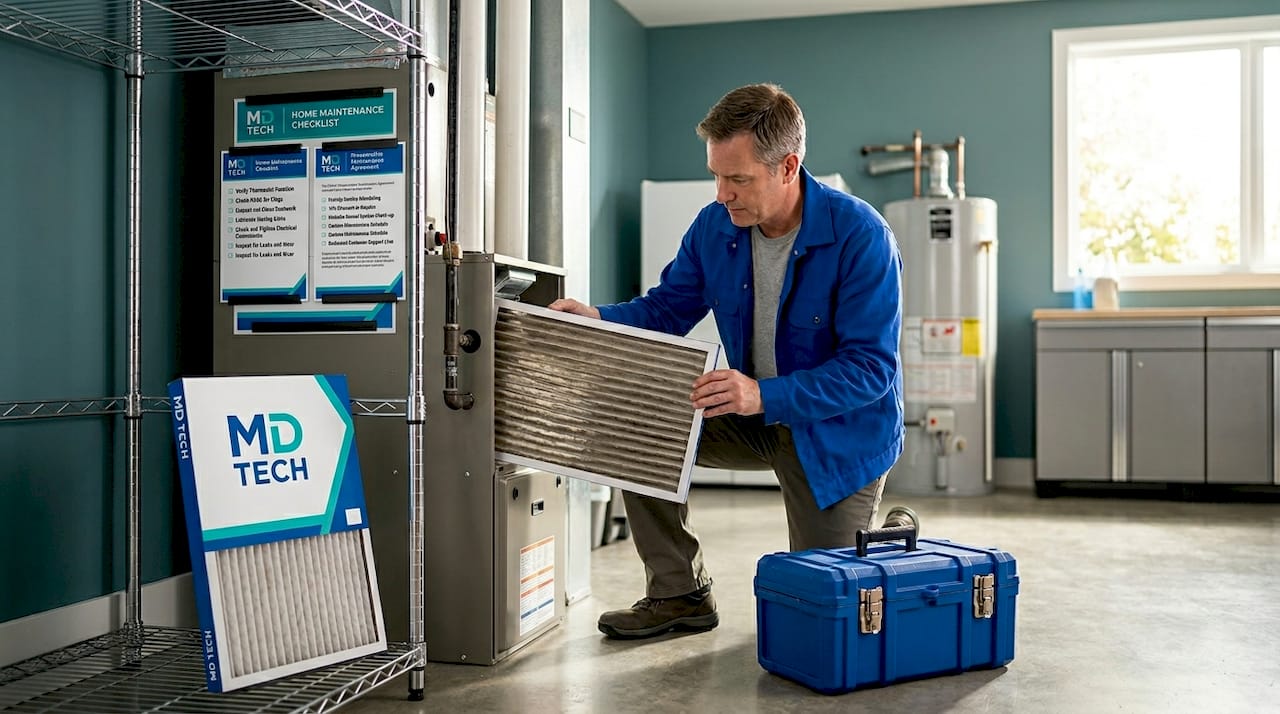
Replace or clean the air filter every 30 to 90 days. The U.S. Department of Energy recommends this interval, adjusting shorter for homes with pets, allergies, or heavy dust. A clogged filter forces the blower to work harder, which strains the motor and raises your energy bill. Write the replacement date on the filter frame with a marker so you never guess when it was last changed.
Pro Tip: Set a recurring phone reminder on the first of each month to check the filter. A 30-second visual check prevents the most common cause of furnace inefficiency.
Inspect and clear vents and registers throughout the house. Blocked supply or return vents create pressure imbalances that cause the furnace to overheat and cycle off prematurely. Walk every room and confirm furniture, rugs, and curtains are not covering registers. This takes five minutes and costs nothing.
Test your thermostat and replace batteries annually. A thermostat with weak batteries sends inconsistent signals to the furnace, which looks like a mechanical problem but costs nothing to fix. Verify the thermostat switches correctly between heating and cooling modes, and confirm the temperature reading matches a separate thermometer.
Clean the flame sensor with fine steel wool. The flame sensor is a small metal rod that confirms the burner has ignited. A thin layer of oxidation builds up over time and causes the furnace to shut down mid-cycle. Gently rubbing the rod with fine steel wool takes under five minutes and prevents ignition failures that would otherwise require a service call.
Vacuum the furnace exterior and blower compartment. Dust buildup on the blower assembly reduces airflow and overheats the motor. Use a shop vacuum with a brush attachment to clean accessible surfaces inside the furnace cabinet. Do this once per heating season.
Test carbon monoxide detectors monthly. CO detectors must be tested monthly and replaced every 5 to 7 years. Carbon monoxide is colorless and odorless, so the detector is your only warning. Place one on every floor of your home, including near the furnace room.
Keep the area around the furnace clear. Store nothing flammable within three feet of the unit. Cardboard boxes, paint cans, and cleaning supplies are common culprits in furnace rooms. Clear space also makes visual inspections faster and safer.
2. Professional furnace inspection tasks you should never skip
DIY maintenance covers the surface, but several critical furnace components require licensed technicians with specialized equipment. Skipping these checks does not just reduce efficiency. It creates genuine safety hazards.
Heat exchanger inspection. A cracked heat exchanger is the most dangerous furnace problem a homeowner can face. Combustion gases, including carbon monoxide, leak directly into your living space through the cracks. Visual inspection is not sufficient. Detecting heat exchanger cracks requires combustion analyzers and borescope cameras that only professionals carry.
Combustion safety and gas pressure testing. A technician measures gas pressure at the manifold and confirms the burner flame burns the correct color and shape. Improper gas pressure causes incomplete combustion, which wastes fuel and produces excess carbon monoxide. This test requires a manometer and combustion analyzer.
Electrical connections and controls testing. Loose or corroded electrical connections cause intermittent failures that are nearly impossible to diagnose without a multimeter. A technician checks voltage at the control board, tests the capacitor on the blower motor, and confirms safety switches operate correctly.
Deep cleaning of burners and inducer motor. Burner ports clog with rust and debris over time, producing uneven flames that stress the heat exchanger. The inducer motor pulls combustion gases out of the heat exchanger and into the flue. A dirty inducer motor runs hot and fails early. Both components need professional cleaning annually.
Venting and exhaust pathway inspection. Blocked or corroded flue pipes trap combustion gases inside the home. A technician checks the entire exhaust path from the furnace to the exterior termination point, looking for corrosion, disconnected joints, and bird nests.
Pro Tip: Schedule your professional tune-up in September or October. Technician availability is high, pricing is standard, and you avoid the risk of a breakdown on the coldest night of the year.
3. The ideal maintenance schedule throughout the year
Timing your furnace care checklist correctly prevents cold-weather emergencies and spreads the workload across the calendar. Annual professional maintenance in early fall is the single most effective scheduling decision a homeowner can make.
| Frequency | Task | Who performs it |
|---|---|---|
| Monthly (heating season) | Filter check, vent clearing, CO detector test | Homeowner |
| Annually (early fall) | Full DIY cleaning plus professional tune-up | Both |
| End of heating season | Final filter swap, clean furnace area | Homeowner |
| Every 3 to 5 years | Professional duct cleaning and evaluation | Professional |
| Every 15 to 20 years | Furnace age assessment and replacement planning | Professional |
Homes with pets or allergy sufferers should check filters every 30 days rather than 90. Pet dander and fine particles clog filters faster than typical household dust. Leaky or disconnected ducts waste 20 to 30% of heated air, so duct inspection belongs on your multi-year schedule even if the furnace itself runs well.
The end-of-season check in March or April is often skipped, but it matters. Replacing the filter before the furnace sits idle for summer prevents dust from settling into a dirty filter and hardening. A clean system in spring starts the next heating season in better condition.
4. How maintenance findings affect repair versus replacement decisions
A seasonal furnace checklist does more than prevent breakdowns. It gives you early warning on problems that determine whether you repair or replace the unit. Catching issues early changes the math significantly.
Common problems found during maintenance:
- Dirty or clogged burners that produce uneven or yellow flames
- Clogged filters that trigger high-limit switch shutdowns
- Cracked heat exchangers that require immediate replacement
- Blower motors with failing capacitors that cause weak airflow
- Corroded flame sensors that cause repeated ignition lockouts
What the findings mean for your budget:
A professional cleaning and tune-up runs $150 to $300 and catches most of these problems before they escalate. Ignition repairs typically fall in the $100 to $200 range. A blower motor replacement costs $300 to $600. A cracked heat exchanger on a furnace older than 15 years almost always justifies full replacement rather than repair, since the heat exchanger cost alone can exceed $1,000.
Regular maintenance also preserves your furnace warranty. Most manufacturers, including Carrier and Lennox, require documented annual inspections to keep the warranty valid. A single skipped year can void coverage on a part that costs hundreds to replace.
Pro Tip: Keep a maintenance log with dates, filter brands, and any issues noted. When you call a technician, this record helps them diagnose problems faster and gives you documentation if a warranty claim arises.
Airflow and combustion safety are tightly coupled. A dirty filter restricts airflow, which raises heat exchanger temperatures, which accelerates cracking. The entire failure chain starts with a $10 filter that was not replaced on schedule.
Key takeaways
A complete furnace maintenance checklist combines monthly DIY filter and vent checks with annual professional inspections of combustion components, heat exchangers, and electrical systems.
| Point | Details |
|---|---|
| Replace filters every 30 to 90 days | Clogged filters raise heating costs by 15% and stress the blower motor. |
| Schedule professional service in early fall | September or October bookings avoid winter bottlenecks and emergency pricing. |
| Never skip heat exchanger inspection | Cracks require professional combustion analysis and pose direct CO risks. |
| Test CO detectors monthly | Replace units every 5 to 7 years regardless of whether they appear functional. |
| Document every maintenance visit | Warranty claims and repair diagnoses both depend on a clear service history. |
What I’ve learned after years of furnace calls in Southern California
Most homeowners I talk to fall into one of two camps. Either they do everything themselves and skip the professional inspection, or they call a technician once and assume that covers everything for years. Both approaches leave money and safety on the table.
The DIY tasks on this list are genuinely worth doing. Replacing a filter takes three minutes and prevents the most common cause of furnace inefficiency. Testing a CO detector takes ten seconds and could save a life. These are not optional extras. They are the baseline.
But the professional inspection is not optional either, and this is where I push back on the “I’ll just watch a YouTube video” mindset. A combustion analyzer reading an improper air-to-fuel ratio is not something you replicate with a flashlight and good intentions. Neither is a borescope camera finding a hairline crack in a heat exchanger. Carbon monoxide is undetectable by smell, and the consequences of missing that crack are severe.
The September scheduling advice is not just about availability. It is about giving yourself time to act on what the technician finds. If they discover a failing blower motor in October, you have weeks to get it replaced before the first cold snap. If you call in December, you are making decisions under pressure and often paying emergency rates.
The annual HVAC inspection is one of the highest-return maintenance investments a homeowner makes. The cost is predictable. The alternative is not.
— MDTECH
Keep your furnace running right with Appliancesrepairmdtech
Appliancesrepairmdtech serves homeowners across Orange County and Los Angeles County with licensed HVAC technicians who handle everything on the professional side of your furnace care checklist. From combustion safety testing and heat exchanger inspection to blower motor repairs and full annual tune-ups, the team brings the right tools and certifications to every job. Flexible scheduling makes it easy to book your fall inspection before the heating season starts. For urgent repairs or planned maintenance, schedule HVAC service with Appliancesrepairmdtech and get a technician who shows up prepared, not guessing.
FAQ
How often should I replace my furnace filter?
Replace your furnace filter every 30 to 90 days. Homes with pets or allergy sufferers should replace filters closer to the 30-day mark to maintain airflow and prevent efficiency loss.
What does a professional furnace tune-up include?
A professional tune-up covers heat exchanger inspection, combustion and gas pressure testing, electrical connections checks, burner cleaning, and exhaust pathway inspection. These tasks require specialized tools that homeowners do not have access to.
When is the best time to schedule furnace maintenance?
Early fall, specifically September or October, is the best time to schedule professional furnace maintenance. Technician availability is higher and you avoid emergency pricing during peak winter demand.
Can a dirty filter cause my furnace to stop working?
Yes. A severely clogged filter triggers the high-limit safety switch, which shuts the furnace down to prevent overheating. Replacing the filter is the first step in any furnace troubleshooting guide when the unit stops cycling normally.
How do I know if my furnace needs repair or replacement?
Furnaces older than 15 years with a cracked heat exchanger or failing major components typically cost more to repair than replace. For units under 10 years old, repairs in the $100 to $400 range are usually cost-effective when caught through regular maintenance.