
TL;DR:
- Heat recovery systems capture thermal energy from outgoing air to improve indoor air quality and reduce energy bills. They come in HRV and ERV types, suited to different climates, with efficiency rates of 70-80 percent. Proper installation and maintenance are essential to maximize benefits and prevent over-ventilation.
Most homeowners spend thousands on heating and cooling every year without realizing a large portion of that energy simply walks out the door. When you ventilate your home, warm air escapes, and cold air rushes in. That trade-off feels unavoidable, but it does not have to be so costly. Understanding what is heat recovery changes that calculation entirely. Heat recovery technology captures the thermal energy from outgoing air before it escapes, using it to precondition incoming fresh air. The result is better air quality, lower energy bills, and a home that stays comfortable with far less effort from your HVAC system.
Table of Contents
- Key takeaways
- What is heat recovery and how does it work
- Types of heat recovery systems and how to choose
- Benefits of heat recovery for your home
- Installation, maintenance, and common pitfalls
- My take on heat recovery as a home priority
- Ready to upgrade your home’s HVAC performance?
- FAQ
Key takeaways
| Point | Details |
|---|---|
| Heat recovery captures waste heat | Systems reclaim thermal energy from outgoing air before it leaves the building. |
| HRVs and ERVs serve different climates | HRVs work best in cold climates; ERVs manage both heat and humidity for mixed climates. |
| Efficiency rates reach 70 to 80 percent | Most residential systems recover 70-80% of heat from indoor air before it exits. |
| Annual energy savings can hit 30 percent | Proper installation can reduce HVAC-related energy costs significantly with a short payback period. |
| Maintenance goes beyond filter changes | Frost protection and airflow balancing are just as critical as swapping filters regularly. |
What is heat recovery and how does it work
At its core, heat recovery is the process of capturing thermal energy that would otherwise be wasted and reusing it within the same system. Think of it like this: your home works hard to heat air to a comfortable 70 degrees. When that air gets exhausted outside to bring in fresh air, you lose all that heating investment. A heat recovery system intercepts that outgoing air, pulls out its thermal energy, and transfers it to the incoming cold air, all without the two air streams ever touching.
The device at the center of this process is the heat exchanger. Heat exchangers use a plate design that keeps exhaust air and fresh air in separate channels while allowing heat to pass between them. The result is that your fresh outdoor air arrives pre-warmed in winter or pre-cooled in summer, depending on the season, before your furnace or air conditioner even touches it.
There are two types of heat worth understanding here:
- Sensible heat refers to the temperature of the air itself. A Heat Recovery Ventilator (HRV) transfers sensible heat only, meaning it warms or cools incoming air without affecting its moisture level.
- Latent heat involves the moisture content in air. An Energy Recovery Ventilator (ERV) transfers both sensible heat and latent heat, which means it also manages indoor humidity levels.
Beyond air-based systems, heat recovery applies to water as well. Drain water heat recovery units capture warmth from shower wastewater and use it to preheat cold water entering your water heater. It is one of the most underutilized applications in residential settings.
Pro Tip: If your home was built or renovated to be airtight for energy efficiency, a heat recovery ventilator is not optional. Heat recovery ventilation in airtight homes prevents moisture buildup and keeps indoor air from becoming stale.
Types of heat recovery systems and how to choose
Understanding the differences between available systems will save you from buying the wrong technology for your climate and home layout.
HRVs vs. ERVs
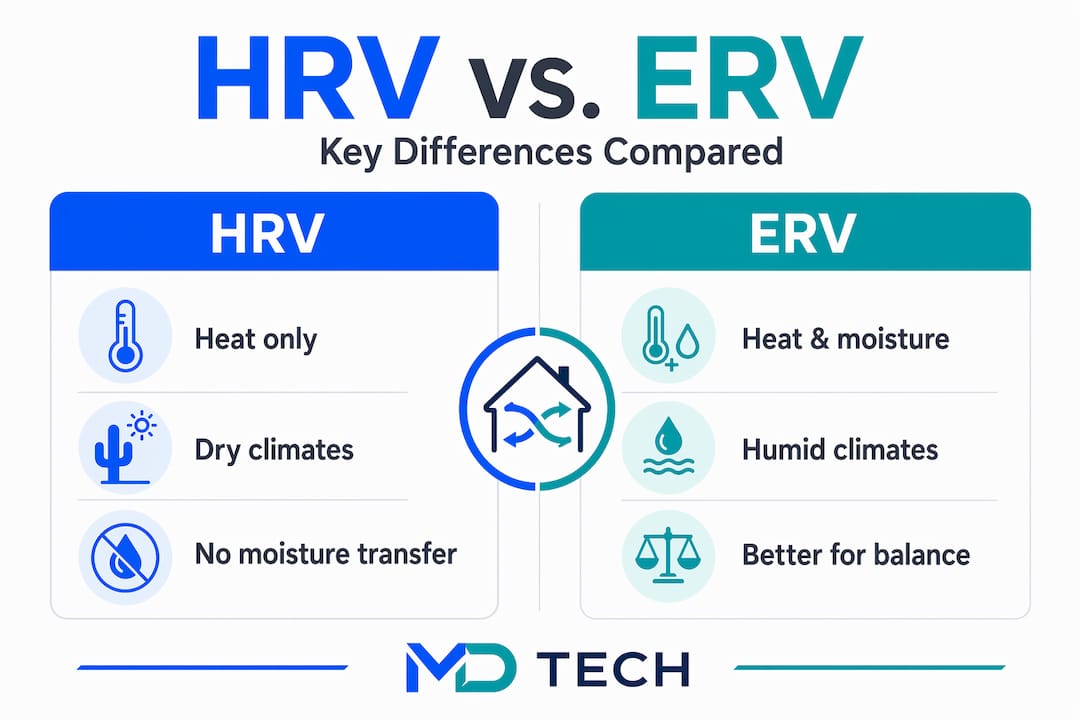
An HRV is the right choice for homes in cold, dry climates. It transfers heat from outgoing air to incoming air but does not try to balance humidity. In places like northern California mountain regions or the colder parts of the country, interior air in winter tends to be dry enough that adding humidity transfer would only create problems.
An ERV, on the other hand, also transfers both heat and moisture. In mixed or humid climates, this is a genuine advantage. Southern California homeowners dealing with ocean humidity or seasonal moisture swings benefit from an ERV because it helps keep indoor relative humidity in the 30 to 50 percent range year-round. That range matters for comfort, respiratory health, and even protecting wood furniture and floors.
Choosing between the two depends heavily on your climate’s humidity profile, a factor many homeowners completely overlook when shopping for systems.
Other heat recovery technologies
Beyond HRVs and ERVs, here are additional systems worth knowing about:
- Drain water heat recovery units: Installed on your main drain pipe, they capture heat from shower and sink water, reducing the load on your water heater.
- Heat recovery chillers: These convert waste heat from cooling processes into usable heating energy. Heat recovery chillers serve buildings with simultaneous heating and cooling demands, making them relevant for larger residential complexes or high-end smart homes.
- Heat pump water heaters: These pull warmth from surrounding air to heat water, which is a form of heat recovery applied to domestic hot water systems.
Comparison of major residential systems
| System type | Heat transfer | Moisture transfer | Best climate | Primary benefit |
|---|---|---|---|---|
| HRV | Yes | No | Cold, dry | Lowers heating costs |
| ERV | Yes | Yes | Mixed, humid | Humidity control plus savings |
| Drain water HRV | Yes | No | Any | Reduces water heating costs |
| Heat pump water heater | Yes | No | Any | Efficient hot water production |
Pro Tip: When comparing products, watch whether manufacturers list Sensible Recovery Efficiency (SRE) or Total Recovery Efficiency (TRE). SRE and TRE measure different things, and companies sometimes use them interchangeably to make their numbers look better. Always ask specifically which metric you are comparing.
Benefits of heat recovery for your home
The advantages of installing a heat recovery system go well beyond energy savings, though those alone can justify the investment.
-
Lower energy bills. HVAC systems consume about 39% of a building’s energy, making them the single largest energy expense in most homes. Implementing heat recovery can reduce annual energy costs by around 30%, with a typical payback period of just 3 to 5 years. For a homeowner spending $2,400 per year on heating and cooling, that translates to roughly $720 in annual savings.
-
Better indoor air quality. Tightly sealed homes trap pollutants, allergens, and excess moisture. A heat recovery ventilation system brings in a constant stream of fresh air without sacrificing thermal efficiency. You get proper ventilation and lower energy use at the same time.
-
More consistent comfort. One of the most overlooked benefits is the elimination of cold drafts near windows and doors. When incoming air is pre-conditioned before reaching your living space, your home maintains more even temperatures throughout.
-
Reduced carbon footprint. Less energy used for heating and cooling means a direct reduction in household emissions. For homeowners in California focused on sustainability, integrating eco-friendly HVAC strategies like heat recovery is one of the most impactful steps you can take.
-
Humidity management. If you use an ERV, the system actively moderates your indoor humidity. This protects your home structure, reduces mold risk, and makes a measurable difference in respiratory comfort during dry winters or humid summers.
Heat recovery is essentially finding and reusing energy your home already generates but would normally lose. It converts what would be waste into free usable energy, which is a concept that sounds simple but has real financial and environmental weight.
Installation, maintenance, and common pitfalls
Getting heat recovery right is not just about picking a system. It requires honest assessment of your home and a commitment to regular upkeep.
What installation actually requires
- A professional load calculation to determine the correct ventilation rate for your home’s size, occupancy, and airtightness level
- Duct connections to fresh air intake and exhaust points, ideally on opposite sides of the building to prevent short-circuiting
- Correct placement of the unit where it can handle frost conditions if you are in a colder climate
- Integration with your existing HVAC components for optimal performance and control
Ongoing maintenance needs
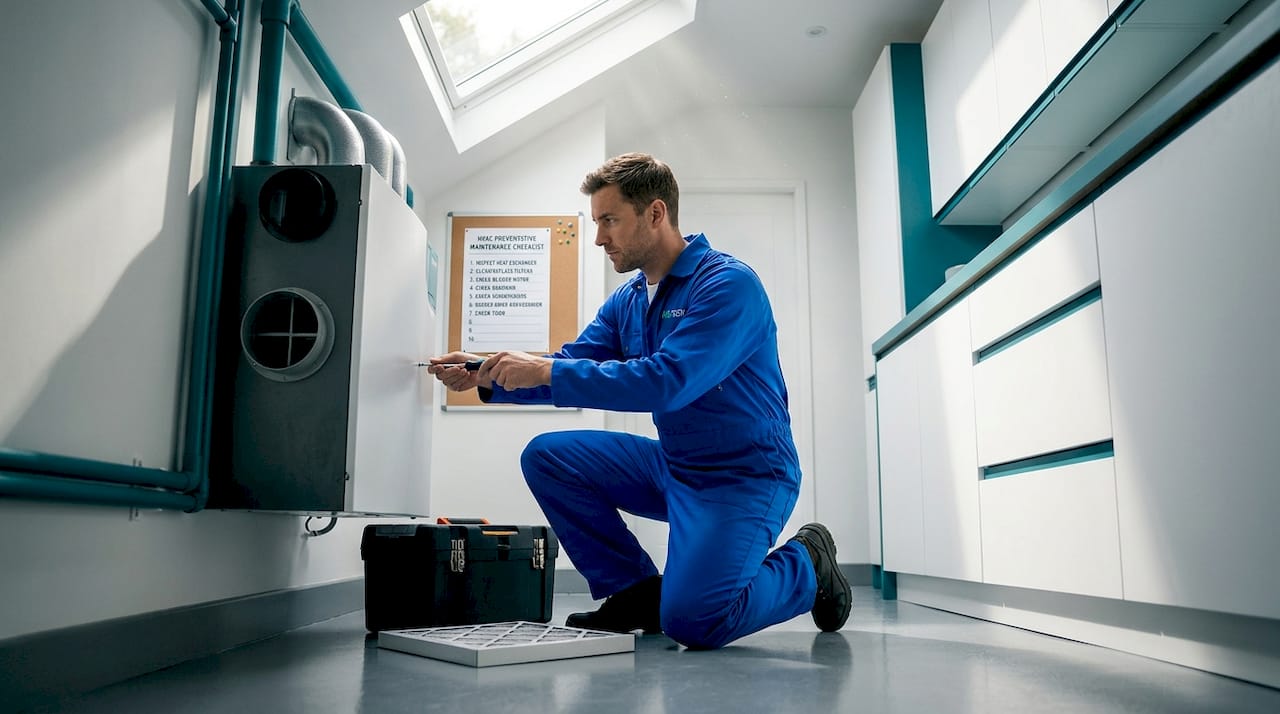
Heat recovery systems require more attention than a standard filter swap every few months. Frost protection and airflow balancing are critical for reliable performance, especially in cold regions. In climates with freezing temperatures, the heat exchanger core can freeze if the system lacks an integrated defrost cycle. That failure mode stops the unit from working at all.
Regular maintenance tasks include cleaning or replacing air filters every 1 to 3 months, inspecting the heat exchanger core annually for dust buildup or damage, and checking that airflow rates remain balanced between intake and exhaust.
The over-ventilation trap
This is the mistake most homeowners never see coming. Over-ventilating in mild climates causes the fan’s electricity consumption to surpass the energy savings from heat recovery. If your system runs at a higher ventilation rate than your home actually needs, you end up spending more energy than you save. Sizing matters enormously, and a professional assessment is worth every dollar before you buy.
Pro Tip: Have a certified HVAC technician measure your home’s actual air exchange rate before selecting a system. Many homes in Southern California are not as airtight as homeowners assume, which directly affects which system type and size makes sense.
My take on heat recovery as a home priority
I have worked with homeowners across Orange County and Los Angeles who consistently overlook heat recovery when thinking about energy upgrades. They invest in new insulation, smart thermostats, and solar panels. They rarely think about the air they are exhausting every single day.
What I have found is that heat recovery sits in a blind spot. It is not as visible as a solar panel on a roof or as immediately satisfying as a new smart thermostat. But from a pure return-on-investment standpoint, it frequently outperforms both in homes that ventilate regularly, which is every home that follows health guidelines.
The conversation I have with homeowners most often is about climate fit. Here in Southern California, I lean toward ERVs in coastal areas where humidity management matters, and simpler HRVs for drier inland properties. Getting that choice wrong means the system fights against your climate instead of working with it.
One more thing people underestimate: the role of HVAC in home comfort is not just about temperature. It is about consistency, air quality, and how the whole system breathes together. Heat recovery is the part of that equation most homeowners leave on the table.
— MDTECH
Ready to upgrade your home’s HVAC performance?
If you are ready to stop losing money through your ventilation system, Appliancesrepairmdtech is here to help. Our licensed HVAC technicians serve Orange County and Los Angeles County with heat recovery system assessments, professional installation, and ongoing maintenance.
Whether you need a new HRV or ERV installed, an existing system serviced, or simply an honest evaluation of what makes sense for your home, our team has the experience to give you real answers without overselling. Visit our HVAC repair services page to book your appointment, or call us directly to speak with a technician who understands both the technology and your local climate.
FAQ
What is a heat recovery system in simple terms?
A heat recovery system captures thermal energy from air or water that would otherwise be lost and transfers it to incoming fresh air or cold water. The process uses a heat exchanger to move heat between two streams without mixing them.
How much energy does heat recovery actually save?
Most residential systems recover 70 to 80 percent of heat from outgoing air, and homeowners typically see annual energy cost reductions of around 30% on their HVAC bills with a 3 to 5 year payback period.
What is the difference between an HRV and an ERV?
An HRV transfers heat only, making it ideal for cold and dry climates. An ERV transfers both heat and moisture, which suits mixed or humid climates where humidity control is as important as temperature management.
Do heat recovery systems require a lot of maintenance?
They require more than just filter swaps. You should clean filters every 1 to 3 months, inspect the heat exchanger core annually, and make sure your system has frost protection if you live in a region with freezing winters.
Is heat recovery worth it for homes in Southern California?
Yes, particularly for homes built or renovated with airtight construction. In Southern California’s coastal areas, an ERV handles both the mild heating demands and seasonal humidity shifts, supporting both energy savings and year-round comfort.