
TL;DR:
- Cleaning condenser coils is crucial for maintaining HVAC efficiency, reducing energy costs, and preventing costly system failures. Neglecting to remove debris can cause longer compressor runtimes, increased mechanical stress, and early equipment breakdowns, especially in coastal or polluted environments. Routine inspections and professional cleanings tailored to local conditions help prolong system lifespan and optimize home comfort.
Your air conditioner feels cold, so everything must be fine — right? That’s one of the most expensive assumptions a homeowner in Orange County or Los Angeles County can make. Even when your system is blowing cool air, dirty condenser coils may be quietly running up your energy bill, straining your compressor, and shortening the life of a system that costs thousands to replace. As reduced heat transfer forces your system to work harder and longer, the financial damage adds up season after season. This guide breaks down why condenser coil cleaning is one of the most impactful — and most overlooked — maintenance tasks you can do for your home comfort system.
Table of Contents
- How condenser coils work in your HVAC system
- The real costs of dirty condenser coils
- How and when to clean condenser coils safely
- How often do you really need to clean? Local factors and expert nuance
- A smarter way: Why coil cleaning pays off more than most realize
- Time for a deep clean? Local HVAC pros can help
- Frequently asked questions
Key Takeaways
| Point | Details |
|---|---|
| Efficiency quickly drops | Coils packed with dirt and debris sap up to 20% or more efficiency from your cooling system. |
| Higher utility bills | A dirty coil makes your AC run longer, raising your energy costs each month. |
| Faster wear, costly failures | Ignored coils overwork compressors, leading to more repairs and even early system replacement. |
| Proper cleaning boosts performance | Safe, methodical cleaning restores like-new efficiency and cooler indoor air. |
| Customize cleaning schedule | Don’t default to a rigid calendar—inspect and clean coils based on local debris and system needs. |
How condenser coils work in your HVAC system
With the risks of dirty coils in mind, let’s break down what condenser coils actually do and why their condition matters so much to your everyday comfort.
The condenser coil is a network of refrigerant-filled tubes surrounded by thin aluminum fins, and it sits inside the outdoor unit of your central air conditioning system. When your system runs, it pulls heat from inside your home and carries it — via refrigerant — to that outdoor unit. The condenser coil’s entire job is to dump that heat into the outside air so the refrigerant can cycle back inside and absorb more heat. It’s a continuous loop, and the coil is at the heart of it.
Here’s why cleanliness matters so much: the coil can only release heat if air flows freely across those aluminum fins. When dust, pollen, cottonwood fluff, grass clippings, or smog residue coat the fins, they act like a blanket over a radiator. The heat can’t escape. Understanding HVAC system basics helps clarify how tightly all these components are connected — a problem at the outdoor unit ripples through the whole system.
What a fouled condenser coil actually does to your system:
- Forces the compressor to run longer cycles to achieve the same indoor temperature
- Raises refrigerant pressure and temperature inside the system, creating mechanical stress
- Reduces the overall cooling capacity delivered to your home
- Drives up electricity consumption, often without any visible sign of a problem
- Creates conditions where smaller issues can cascade into major failures
“Contaminants act like an insulator, reducing heat dissipation and leading to reduced performance, increased energy consumption, and potential premature failure.”
The scary part is that none of this is obvious from inside the house. Your thermostat might still show the set temperature was reached, just 20 minutes later and at twice the energy cost. That’s the silent damage that makes condenser coil fouling so easy to ignore until something expensive breaks.
The real costs of dirty condenser coils
Now that you know how condenser coils function, let’s see what happens when they’re ignored — and what that neglect really costs you over months and years.
The most immediate hit is your utility bill. When a coil can’t release heat efficiently, the compressor compensates by running longer. Longer runtime equals more electricity. Homeowners who haven’t cleaned their coils in a couple of seasons are often surprised when a single professional cleaning drops their monthly cooling costs noticeably. It’s not magic — it’s physics. Dirty coils reduce cooling capacity and increase operating costs because fouling blocks the heat rejection your system depends on. Cleaning reverses that directly.
| Condition | Cooling efficiency | Average runtime per cycle | Compressor stress |
|---|---|---|---|
| Clean condenser coil | Optimal | Normal (8-12 min) | Low |
| Lightly fouled coil | Reduced 10-15% | Moderately extended | Moderate |
| Heavily fouled coil | Reduced 20-30%+ | Significantly extended | High |
| Cleaned after neglect | Mostly restored | Returns near normal | Greatly reduced |
Practical consequences you’ll notice at home:
- Rooms that used to cool quickly now take much longer on hot days
- The outdoor unit runs almost constantly during afternoon heat spikes
- Your electricity bill climbs even though your usage habits haven’t changed
- The system short-cycles or struggles to hold temperature on days above 90°F
Pro Tip: If your outdoor unit seems to run all afternoon without shutting off, check the condenser coil before calling for a refrigerant recharge. Low refrigerant is often blamed, but a dirty coil causes identical symptoms and costs far less to fix.
The compressor is the most expensive single component in your AC system, often $800 to $2,500 or more to replace. Dirty coils force it to operate at elevated temperatures and pressures it wasn’t designed to sustain long-term. That’s how a $150 cleaning appointment prevents a $2,000 repair. Investing in boosting HVAC efficiency through routine coil maintenance is one of the highest-return maintenance decisions you can make. Proper outdoor unit maintenance as a whole extends equipment life and keeps efficiency where it belongs.
Stat to remember: A well-maintained condenser coil can restore more than 20% of lost system efficiency compared to a fouled coil running under similar outdoor temperatures.
How and when to clean condenser coils safely
Understanding the costs and risks, you might wonder how to actually tackle coil cleaning — and when it’s safest to let a pro handle the job.
There are things a careful homeowner can do safely, and there are situations where DIY cleaning creates more risk than it prevents. Knowing the line between those two is valuable.
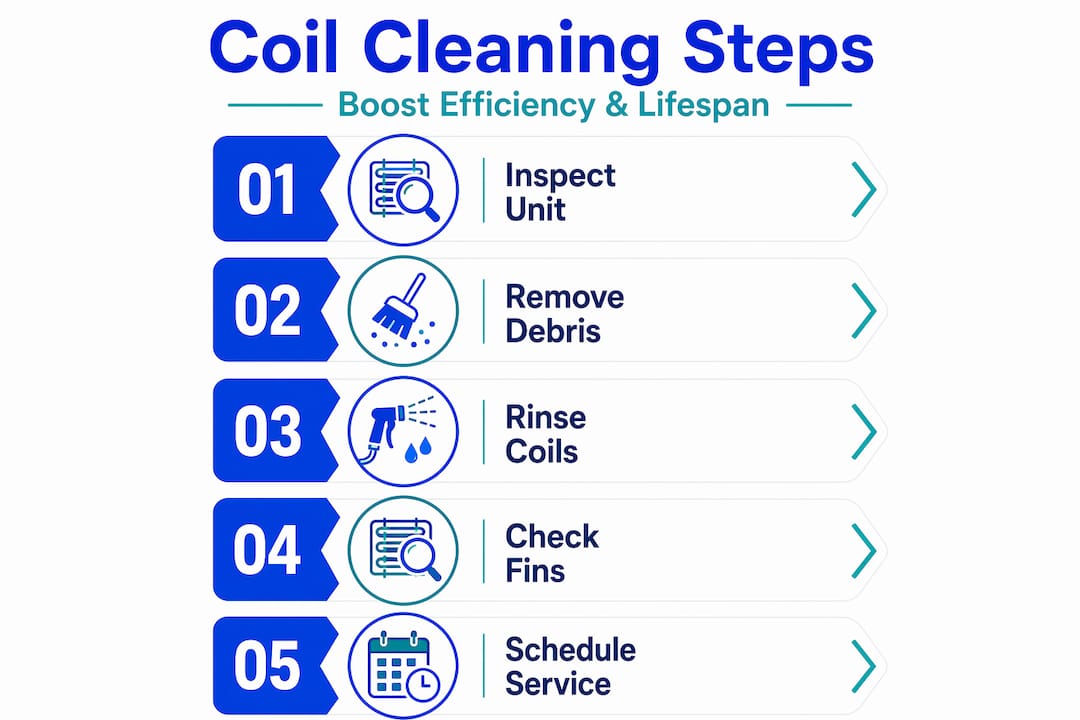
Basic DIY coil cleaning steps:
- Shut off power completely. Turn off the disconnect box next to the outdoor unit and flip the breaker inside. Never work around the unit with power on.
- Remove large debris by hand. Clear leaves, sticks, cottonwood, and grass clippings from around and inside the unit carefully.
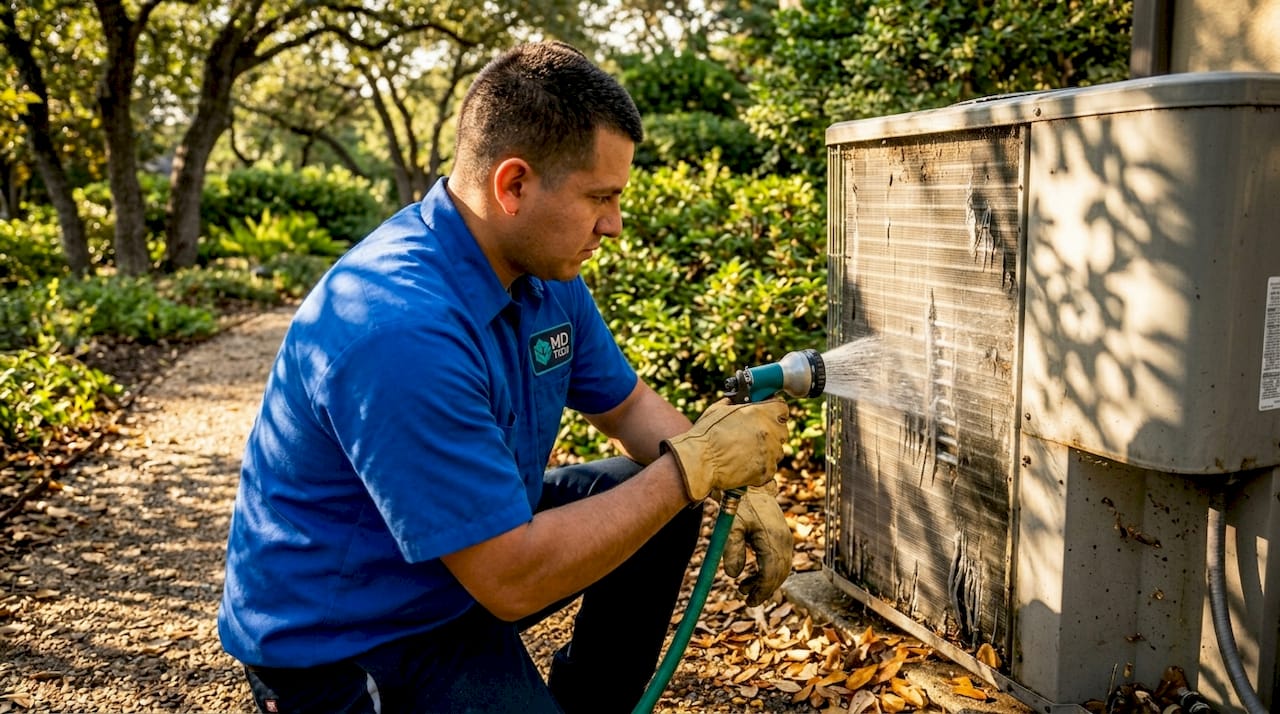
- Rinse with a garden hose. Use a gentle stream from the inside out to push debris outward through the fins. Do not aim directly at electrical components.
- Let it dry before restoring power. Give the unit 15-20 minutes before turning the system back on.
- Inspect the fins. If they are bent or matted with baked-on grime, you’ve reached the limit of safe DIY cleaning.
Good external coils cleaning advice emphasizes that a gentle rinse is appropriate for light fouling, but that heavy or oily buildup requires coil cleaning solutions and professional equipment. Following step-by-step maintenance tips for appliances in general reinforces one key principle: knowing your limits protects both you and your equipment.
When to call a professional instead:
| Situation | DIY appropriate? | Reason |
|---|---|---|
| Light dust and leaf debris | Yes | Garden hose handles it safely |
| Heavy baked-on grime or oil | No | Requires professional-grade coil cleaner |
| Bent or matted aluminum fins | No | Fin comb and careful technique needed |
| Unit near salt air (coastal LA/OC) | No | Corrosion risk needs expert assessment |
| System near heavy tree canopy | Seasonal pro service | Fouling rate is too high for annual-only care |
Pro Tip: Never use a pressure washer set above 1,200 PSI on aluminum fins. The fins bend permanently at high pressure, restricting airflow in a way that cannot be fixed with cleaning. A bent fin is a permanent efficiency loss.
HVAC coil cleaning methods used by professionals are matched to the type of fouling and the specific coil material to avoid damage. For commercial properties in Orange County and Los Angeles County, HVAC condenser coil maintenance cadences align with ASHRAE 180, a widely respected standard for commercial building HVAC inspection and maintenance. Residential homeowners should follow their manufacturer’s documentation combined with local code requirements. Knowing when to call a pro is not a sign of defeat — it’s a sign of experience.
How often do you really need to clean? Local factors and expert nuance
Even the best cleaning guidance leaves one question open: how often should you actually do it? The answer depends on your system and your local environment — not a generic calendar.
Some homeowners clean their condenser coils every spring as a ritual. Others wait until something seems wrong. Both extremes can cost you money. The smart approach is inspection-driven maintenance: you look at the coil’s actual condition and let that determine the action, rather than cleaning on autopilot or avoiding it entirely.
A Reddit HVAC community discussion makes a fair point that rigidly cleaning every year regardless of condition isn’t always necessary, but it’s typically resolved by using manufacturer guidance plus condition-based triggers. Fouling rate varies dramatically by site, which is exactly why local context matters.
Practical triggers that mean it’s time to inspect and likely clean:
- Visible debris coating the fins when you look at the outdoor unit
- Cooling performance feels weaker than usual for the outdoor temperature
- Your electricity bill has climbed without a change in usage habits
- The outdoor unit runs nearly constantly during afternoon heat
- You haven’t inspected the unit in more than 12 months
For Orange County and LA homeowners specifically: Coastal air carries salt and fine particulates that accelerate coil fouling compared to inland areas. Areas near hillsides or canyons deal with heavy pollen and organic debris loads. Smog and particulate pollution in the LA basin creates a sticky film on coil surfaces that plain water won’t remove easily.
Annual HVAC inspections are one of the most reliable ways to catch coil fouling before it costs you money. A technician can measure system performance, not just look at the surface, and give you a data-driven recommendation for how often your specific setup needs attention.
Pro Tip: If your unit sits under a tree that drops blossoms or seeds, plan for two inspections per year — once before summer cooling season and once after the major bloom or drop. One annual cleaning is rarely enough in those conditions.
A smarter way: Why coil cleaning pays off more than most realize
The usual advice on condenser coil cleaning tends to land in one of two camps: “rinse it every spring and you’re good” or “just call a tech whenever something breaks.” Both miss the real opportunity.
Generic one-size-fits-all advice wastes money or, worse, causes damage. Homeowners who blast their coils with a powerful pressure washer because they read a quick tip online often bend the aluminum fins permanently — creating a restriction in airflow that is worse than the fouling they started with. Aggressive cleaning methods on aluminum fins require careful technique and the right equipment to avoid that outcome. DIY enthusiasm without the right knowledge is one of the most common causes of preventable HVAC damage we see in Southern California.
What actually works is treating coil cleanliness as a performance measurement, not just a to-do list item. Track your system’s behavior: How long does it run on a 95°F day? Has that changed over the past two summers? Is your electric bill creeping up even though your habits haven’t changed? These are performance indicators. When they shift, it’s time to inspect. When the inspection shows fouling, it’s time to clean.
For property managers overseeing multiple units across Orange County or Los Angeles County, this becomes even more powerful. Tracking symptoms like higher run time, reduced cooling, and higher energy across units lets you spot which properties need attention first. It turns reactive repairs into a manageable, prioritized maintenance schedule that saves money portfolio-wide.
The hidden value of professional coil cleaning is also underappreciated. A skilled technician doesn’t just clean — they inspect refrigerant levels, check electrical connections, test capacitor health, and spot early signs of compressor stress. One thorough service visit can catch three or four small issues before any of them become expensive ones. Professional HVAC service pays for itself in avoided repairs more often than most homeowners realize.
Smart coil care is one of the most underused levers for lowering operating costs, avoiding emergency breakdowns, and extending equipment life past the standard 10-12 year mark. It doesn’t require more spending — it requires spending at the right times for the right reasons.
Time for a deep clean? Local HVAC pros can help
When light rinsing isn’t cutting it anymore, or when you want the assurance of a thorough inspection before peak summer heat in Orange County or Los Angeles County, professional service is the right call.

Our team at Appliances Repair MD Tech handles scheduled HVAC repair in Orange County and surrounding cities, with licensed technicians who know the local conditions that make coil fouling worse here than in other regions. Whether you need a one-time deep cleaning or want to set up a regular HVAC tune-up schedule, we bring the tools and expertise to do the job safely and correctly. Learn more about the role of HVAC maintenance and why consistent care is the most cost-effective strategy for keeping your system running at its best through every season.
Frequently asked questions
What happens if condenser coils aren’t cleaned regularly?
Dirty coils force your HVAC system to run longer, use more energy, and risk early failure of parts like the compressor — fouling accelerates compressor stress and mechanical wear that shortens system life considerably.
Do professional cleanings really make a difference?
Yes — a thorough professional cleaning restores lost efficiency, improves cooling output, and prevents costly repairs. Coil cleaning restores efficiency in ways that a quick garden hose rinse often cannot, especially with heavy or baked-on fouling.
How often should I schedule coil cleaning in Orange County or LA?
Follow manufacturer specs and inspect based on local conditions — residential maintenance guidelines recommend at least annual inspections, with cleaning scheduled based on actual coil condition and local debris and pollution levels.
Is it safe to pressure wash condenser coils?
Pressure washing must be done carefully — exceeding 1,200 PSI on aluminum fins risks permanently bending them, which restricts airflow and causes lasting efficiency loss that no amount of cleaning can reverse.