
TL;DR:
- Certified eco-friendly plumbing fixtures in Southern California can cut water use by up to 50% while maintaining performance levels. Upgrading these fixtures, including toilets, showerheads, and faucets, results in significant annual water savings and better resilience against drought and rising rates. Proper installation, local code compliance, and professional guidance are essential for maximizing benefits and ensuring sustainable home plumbing systems.
Most Southern California homeowners picture weak shower pressure and complicated installations when they hear “eco-friendly plumbing.” That assumption is costing them money every single month. Certified eco-friendly plumbing fixtures deliver the same comfort you expect, sometimes better, while cutting water use by 20% to 50% compared to older models. With California’s ongoing drought conditions and rising water rates in Orange County and Los Angeles County, the case for upgrading has never been stronger. This article walks you through exactly what eco-friendly plumbing means, which upgrades offer the best return, and how to move forward without the guesswork.
Table of Contents
- Understanding eco-friendly plumbing
- Certified fixtures and how they save water
- Advanced eco-friendly plumbing: Closed-loop and water recycling strategies
- Practical steps for Southern California homeowners
- A fresh perspective: Eco-friendly plumbing done right
- Connect with trusted plumbing and appliance repair professionals
- Frequently asked questions
Key Takeaways
| Point | Details |
|---|---|
| Certified fixtures save water | EPA WaterSense-certified plumbing significantly cuts water use with no sacrifice to performance. |
| Upgrades can be simple | Swapping faucets, showerheads, and toilets for certified models has immediate, measurable impact. |
| Advanced recycling boosts savings | Greywater and rainwater systems can reduce household water use up to 45 percent when properly installed. |
| California codes matter | Local code compliance and operational controls are essential for legal and effective water reuse. |
| Regular checks ensure efficiency | Routine inspections and maintenance are crucial to sustaining eco-friendly plumbing benefits. |
Understanding eco-friendly plumbing
Eco-friendly plumbing is not a marketing slogan. Eco-friendly plumbing generally means plumbing systems, fixtures, and controls designed to use less water and often less energy while maintaining acceptable performance and, where applicable, reducing wastewater and chemical impacts. That definition comes directly from the Environmental Protection Agency, and it sets a measurable, practical standard rather than a vague promise.
The most reliable way to identify a genuinely efficient fixture is the EPA WaterSense label. This certification requires that a product use at least 20% less water than conventional models while delivering equal or better performance. That last part matters. Certified products go through third-party testing to confirm they actually work, not just that they use less water on paper.
WaterSense-certified products must use at least 20% less water than conventional models while meeting strict performance criteria set by the EPA.
Here is a quick comparison of standard versus WaterSense-certified fixtures across the most common home plumbing points:
| Fixture | Standard water use | WaterSense certified | Water reduction |
|---|---|---|---|
| Bathroom sink faucet | 2.2 gallons per minute (GPM) | 1.5 GPM | 32% less |
| Showerhead | 2.5 GPM | 2.0 GPM or less | 20%+ less |
| Toilet (per flush) | 3.5 to 7 gallons | 1.28 gallons | Up to 63% less |
These numbers are not theoretical. Every flush and every minute of running water in your home adds up across a family of four over a full year.
The most common eco-friendly plumbing features you can add to a Southern California home include:
- Low-flow toilets that meet or exceed the WaterSense standard of 1.28 gallons per flush
- Certified showerheads that deliver full pressure at 2.0 GPM or below
- Aerators on faucets that mix air into the water stream so pressure feels strong while flow volume drops
- Smart flow controls that allow automatic shutoff or usage tracking
- Pressure-reducing valves that protect pipes and reduce unnecessary water volume
For homeowners curious about how these systems connect to broader home automation, our smart home plumbing guide explains how modern controls can take efficiency even further.
Certified fixtures and how they save water
Numbers make the case better than anything else. Upgrading fixtures to certified low-flow models, especially those labeled WaterSense, reduces daily indoor water use in measurable, significant ways. Let’s look at what that actually means for a typical household.
| Fixture upgraded | Old model (annual use) | WaterSense model (annual use) | Gallons saved per year |
|---|---|---|---|
| Bathroom faucet | 3,000 gallons | 2,300 gallons | 700 gallons |
| Showerhead (4 showers/day) | 14,600 gallons | 11,680 gallons | 2,920 gallons |
| Toilet (avg. 5 flushes/day per person) | 12,775 gallons | 2,336 gallons | 10,000+ gallons |
Those toilet savings are dramatic because older toilets used 3.5 to 7 gallons per flush. Replacing just one old toilet in your home with a current 1.28-gallon model saves thousands of gallons every year without changing your routine at all.
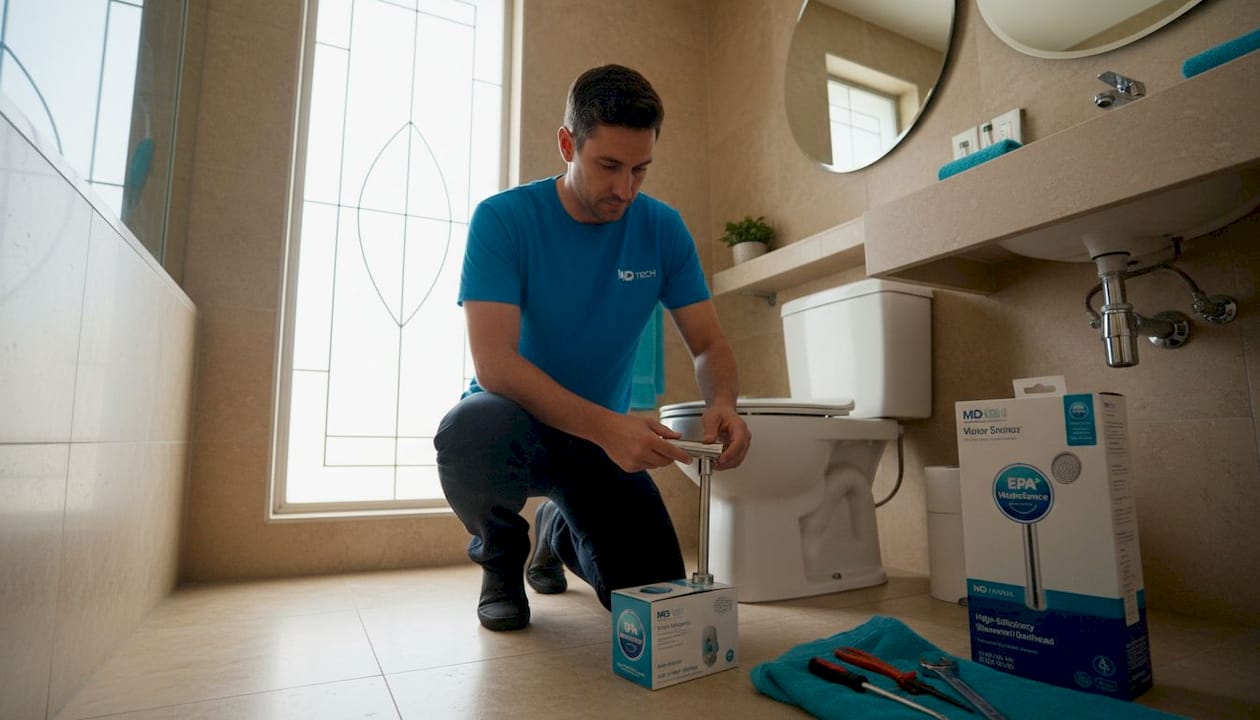
Key stat: Switching to a WaterSense faucet saves 700 gallons per year. A certified showerhead saves roughly 4 gallons per shower compared to a standard model.
Here is how to identify and upgrade to certified fixtures in your home:
- Check current fixture labels and flow rates. Look for GPM ratings stamped on faucet aerators or showerhead packaging. Anything above 2.0 GPM on a showerhead or 1.5 GPM on a faucet is a candidate for replacement.
- Look for the WaterSense label specifically. Generic “low-flow” claims without certification do not guarantee performance. The blue WaterSense label confirms independent testing.
- Prioritize fixtures based on use frequency. Toilets and showerheads in daily-use bathrooms deliver the fastest return on investment.
- Consult with a licensed plumber before replacing toilets. Older homes may have drain lines sized for higher-volume toilets. A plumber can confirm compatibility and recommend the right model. Our toilet repair tips page covers common issues to watch for during upgrades.
- Estimate your annual savings before purchasing. Use the EPA’s online savings calculator to project your household’s reduction in both gallons and dollars.
Pro Tip: Always prioritize the EPA WaterSense label over generic “low-flow” or “eco” claims. Any manufacturer can print those words on a box. The WaterSense certification requires third-party testing and sets a performance floor, not just a volume limit.
For appliances that connect to your plumbing, such as washing machines and dishwashers, proper water hose installation plays a supporting role in preventing leaks that quietly waste hundreds of gallons over time.
Advanced eco-friendly plumbing: Closed-loop and water recycling strategies
Fixture upgrades are the logical first step, but Southern California homes can go considerably further. Closed-loop water strategies such as water recycling and reuse treat greywater so it can be used for non-potable purposes, which reduces the volume of potable (drinkable) water drawn from the municipal supply. This approach addresses a different layer of efficiency than simple fixture swaps.
Greywater and rainwater systems recycle water from showers, sinks, and laundry for non-potable uses such as garden irrigation or toilet flushing, reducing reliance on municipal supply water.
The main categories of water reuse systems available to homeowners include:
- Greywater systems: These capture water from bathroom sinks, showers, and laundry machines. That water is filtered and redirected to landscape irrigation or toilet flushing. It does not include water from toilets or kitchen sinks, which is considered blackwater and requires full sewage treatment.
- Rainwater harvesting: Southern California gets limited annual rainfall, but even modest collection during winter storms can offset irrigation demand significantly. Above-ground collection tanks or underground cisterns store rainwater for outdoor use.
- Closed-loop water recycling units: Compact systems like on-site water recyclers treat greywater through multiple filtration stages, making it safe for toilet flushing and some laundry uses. These systems are gaining popularity in water-restricted regions.
Water recycling solutions can reduce household water use by 25% to 45% depending on the system size, household habits, and how the recycled water is applied. That reduction directly lowers your monthly water bill and reduces your home’s demand on shared municipal infrastructure.
For greywater basics in California, the process involves more than just installing a pipe redirect. California’s state code requires specific controls to prevent contaminated runoff, protect neighboring properties, and ensure the greywater never contacts edible plants or surfaces where people walk barefoot.
Pro Tip: In California, code compliance and runoff prevention matter just as much as water savings. Seasonal controls, proper irrigation methods, and backflow protection are required, not optional. A poorly installed greywater system can result in fines or mandatory removal.
If you are ready to explore whether your current plumbing infrastructure supports a reuse system, start with a professional assessment. Our repair plumbing advice and plumbing repair guide cover what a thorough plumbing inspection looks like and why it matters before adding any new system.
Practical steps for Southern California homeowners
Southern California’s climate creates a specific set of challenges and opportunities for eco-friendly plumbing. Drought conditions are recurring. Water rates in many Orange County and Los Angeles County cities have increased steadily. And local building codes, while supportive of water conservation in principle, include compliance requirements that can trip up homeowners who try to self-install advanced systems.
Here is a clear path forward:
- Audit your existing fixtures. Walk through every bathroom, the kitchen, and your laundry connections. Note the age, brand, and visible GPM ratings on each fixture. Older homes in areas like Anaheim, Pasadena, or Long Beach often still have pre-1994 toilets using 3.5 gallons per flush or more.
- Research WaterSense-certified products for your specific needs. The EPA maintains a searchable database of certified fixtures. Cross-reference your preferred brands against that list before purchasing.
- Seek professional guidance before upgrading toilets, greywater systems, or rainwater collection. Local codes vary by city and county. A licensed plumber familiar with Orange County and Los Angeles County regulations saves you time, money, and potential permit issues.
- Schedule regular plumbing inspections to maintain efficiency. A slow drip from a faucet wastes up to 3,000 gallons per year on its own. Understanding plumbing check importance helps you catch small problems before they become expensive ones.
- Pair plumbing upgrades with HVAC efficiency improvements. Water heating accounts for a significant portion of home energy use. Eco-friendly HVAC tips explain how combining system upgrades amplifies your overall savings.
Common pitfalls to avoid:
- Ignoring local permit requirements for greywater or rainwater systems. Some cities require inspections before system activation.
- Focusing only on water savings calculations without verifying code compliance first. Code compliance and seasonal controls should lead your decision making on reuse systems, not just the promise of lower bills.
- Skipping maintenance after installation. Even certified fixtures develop mineral buildup, especially in Southern California where hard water is common. Annual cleaning of aerators and showerhead screens keeps performance at its rated level.
- Buying uncertified “eco” products based on marketing language alone. Without the WaterSense label, there is no performance guarantee.
The local climate shapes everything here. Southern California’s combination of hard water, drought cycles, and warm temperatures means your plumbing works differently than it would in the Pacific Northwest or the Midwest. Upgrades that work beautifully in Seattle may need additional filtration or seasonal adjustments in Irvine or Torrance.
A fresh perspective: Eco-friendly plumbing done right
Here is what rarely gets said directly: most homeowners approach eco-friendly plumbing as a cost-cutting exercise, and they make worse decisions because of it. They buy the cheapest low-flow showerhead at a hardware store, experience reduced pressure, and conclude that eco-friendly plumbing is a trade-off. It isn’t. The trade-off only happens when you skip the certification step.
We have seen this pattern repeatedly in Southern California homes. A homeowner installs an uncertified low-flow fixture, hates the result, removes it, and tells their neighbors eco-friendly plumbing does not work. Meanwhile, a certified WaterSense showerhead down the street delivers noticeably strong pressure at 1.8 GPM, saves that household over 2,000 gallons per year, and requires zero adjustment to daily habits.
The other misconception worth addressing directly: eco-friendly upgrades are only for new construction or major renovations. That is simply not true. Replacing a faucet aerator takes about five minutes and costs under $10. That small change saves hundreds of gallons per year. Certified toilets can be installed in a few hours by a licensed plumber without touching walls, floors, or any other fixture.
The real value of eco-friendly plumbing for Southern California homeowners is resilience. Water rates go up. Drought restrictions tighten. Homes with efficient fixtures and properly installed reuse systems are simply better prepared for those realities. They maintain comfort and function when restrictions hit because they are already operating well below usage thresholds.
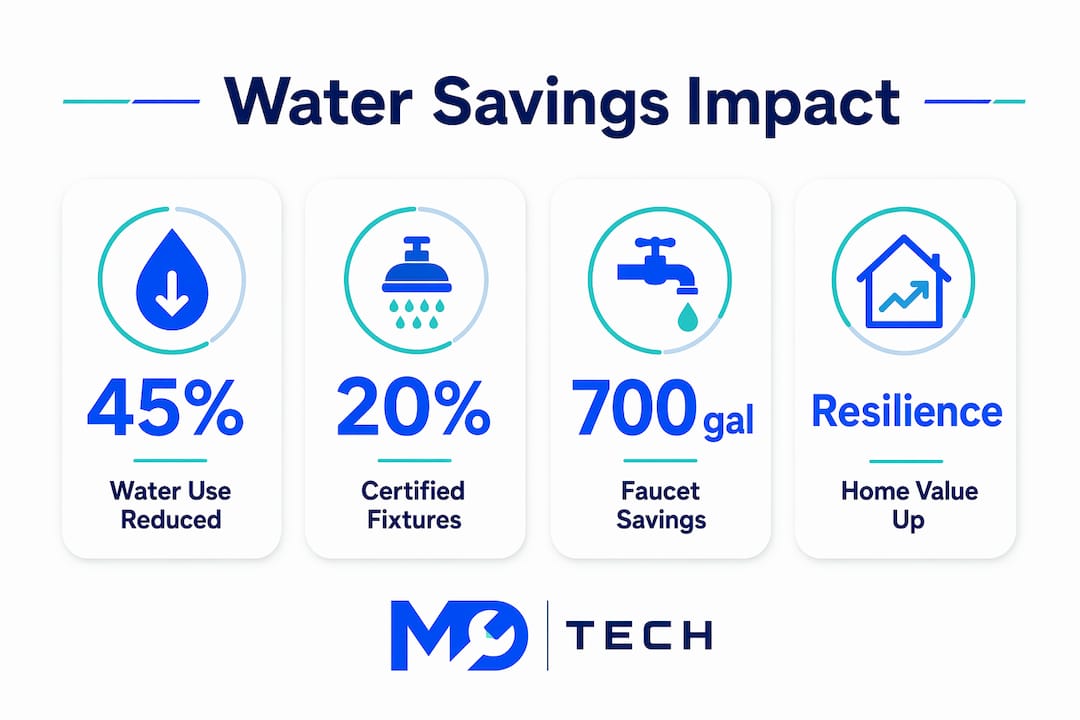
Investing in water heater efficiency alongside fixture upgrades compounds the benefit further, since water heaters account for roughly 18% of a home’s total energy consumption.
The mindset shift that matters most: stop thinking of eco-friendly plumbing as sacrifice and start thinking of it as future-proofing. The homes in Orange County and Los Angeles County that will handle the next decade of water challenges most comfortably are the ones being upgraded thoughtfully, right now.
Connect with trusted plumbing and appliance repair professionals
Making eco-friendly upgrades is straightforward when you have the right support. MDTECH’s licensed technicians serve homeowners across Orange County and Los Angeles County, helping with fixture upgrades, plumbing audits, and everything from simple aerator replacements to full-system assessments. If you are not sure where your home stands, a professional review identifies your biggest opportunities without the guesswork.
Whether you need plumbing pipe repair services to address leaks before they undo your efficiency gains, or plumbing repair solutions to bring older systems up to current standards, our team is ready to help. We also support regular plumbing checks to keep certified fixtures performing at their rated efficiency year after year. Book your appointment online and take the first practical step toward a more sustainable, lower-cost home.
Frequently asked questions
What does EPA WaterSense certification guarantee?
WaterSense guarantees a plumbing product uses at least 20% less water than standard models while meeting independent performance standards equal to or better than conventional fixtures.
How much water can a family save with WaterSense upgrades?
A typical family can save hundreds to thousands of gallons per year. Switching faucets alone saves roughly 700 gallons annually, and certified showerheads cut about 4 gallons per shower compared to standard models.
Is greywater reuse legal in California homes?
Yes, greywater reuse is legal in California, but homeowners must meet code compliance requirements including runoff controls, approved irrigation methods, and backflow prevention before operating any reuse system.
Do eco-friendly plumbing systems require more maintenance?
Certified systems do not inherently require more maintenance than standard ones, but annual checks of aerators, showerhead screens, and valve seals are essential to keep performance and efficiency at their rated levels.