
TL;DR:
- Multi-zone HVAC divides a home into separate temperature-controlled zones for tailored comfort.
- It reduces energy bills and hot spots by conditioning only occupied or sun-exposed areas.
- Proper installation and ongoing maintenance are essential for maximizing efficiency and home comfort.
What Is Multi-Zone HVAC? A Homeowner’s Guide to Smart Comfort
If you’ve ever walked from your cool living room into a sweltering upstairs bedroom and wondered why your HVAC system can’t just fix that, you’re not alone. Most homes in Orange County and Los Angeles County deal with frustrating hot and cold spots, especially during those long Southern California summers. A multi-zone HVAC system is ideal for multi-story homes, properties with varied sun exposure, or spaces with irregular occupancy, reducing both discomfort and energy bills. This guide breaks down exactly what multi-zone HVAC is, how it works, what it costs, and whether it makes sense for your property.
Table of Contents
- What is a multi-zone HVAC system?
- How does multi-zone HVAC work?
- Benefits of multi-zone HVAC for Southern California homes
- Is multi-zone HVAC right for your property?
- The real secret to home comfort: It’s not just the HVAC
- Next steps: Professional HVAC help for OC and LA homeowners
- Frequently asked questions
Key Takeaways
| Point | Details |
|---|---|
| Targeted comfort | Multi-zone HVAC systems let you control each area’s temperature for more even comfort. |
| Energy savings | Zoning can lower energy bills by only conditioning spaces you use most. |
| Ideal for large or irregular homes | Homes with multiple stories or inconsistent use gain most from multi-zone systems. |
| Professional assessment matters | Expert advice ensures you match the right solution to your property’s needs. |
What is a multi-zone HVAC system?
A standard HVAC system treats your entire home as one space. It runs until the thermostat in one location, usually a hallway, reads the target temperature, and then it shuts off. The problem? That hallway might be perfectly comfortable while your west-facing home office is 10 degrees hotter. Your single thermostat has no way to know that, and it doesn’t care.
A multi-zone HVAC system solves this by dividing your home into separate areas, each with its own temperature control. Think of it like having individual climate controls in different rooms, similar to how different cabins on an airplane can have different airflow settings. You decide what each zone feels like, and the system responds accordingly.
Here are the core components that make it all work:
- Zones: Defined areas of your home, such as bedrooms, a home office, the ground floor, or the garage, each treated as a separate climate environment.
- Zone thermostats: Each zone gets its own thermostat, either a traditional programmable unit or a smart device that you can control from your phone.
- Motorized dampers: These are valves installed inside your ductwork that open and close to direct airflow to specific zones. When a zone reaches its target temperature, its damper closes and conditioned air is redirected elsewhere.
- Zone control panel: A central controller that reads signals from all thermostats and tells each damper what to do. Some modern panels integrate with apps and voice assistants.
- Bypass damper: A pressure relief component that prevents excess air pressure when several zones close simultaneously.
Multi-zone HVAC allows homes with different cooling and heating needs across various rooms or floors to be controlled independently. This is a major shift from single-zone systems. In a single-zone setup, all rooms get the same treatment at the same time, which wastes energy and rarely satisfies everyone in the household.
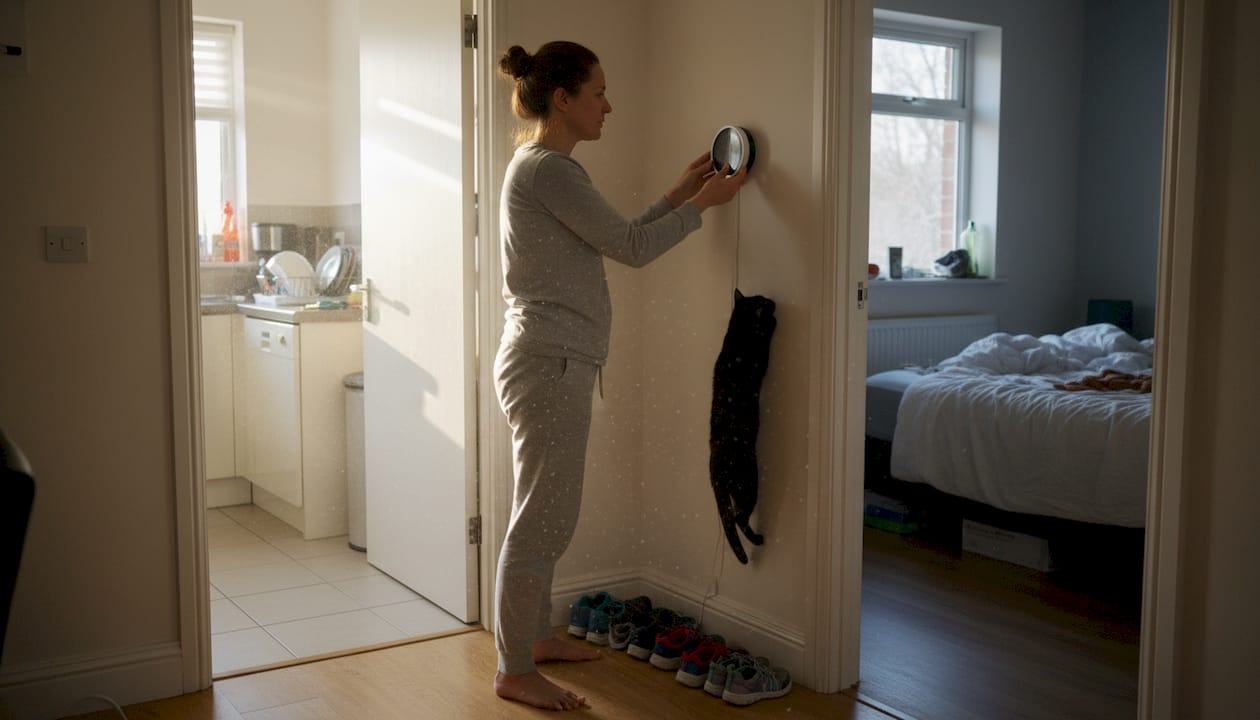
The biggest advantages of how zoning systems improve comfort are easy to see once you experience the difference. Rooms that are rarely used no longer get cooled or heated unnecessarily. People with different temperature preferences, a common issue in households with kids, elderly parents, or remote workers, can each find their ideal setting without fighting over one thermostat.
For property managers in LA and OC, this technology also means better tenant satisfaction and lower utility disputes, since usage and comfort can be tracked and managed by zone.
How does multi-zone HVAC work?
With the basics covered, let’s walk through exactly how multi-zone HVAC operates within your home and what makes it practical for Southern California properties.
The process starts with a professional assessment. A licensed HVAC technician evaluates your home’s layout, square footage, insulation quality, and sun exposure to determine the most logical zone boundaries. A two-story home in Anaheim, for example, might be split into a ground floor zone and an upper floor zone, with the master suite as a third zone because it faces west and catches intense afternoon sun.
Here’s a step-by-step look at how a typical multi-zone installation and operation works:
- Zone mapping: The technician identifies how many zones your home needs based on usage patterns, room sizes, and exposure to sunlight or shade.
- Damper installation: Motorized dampers are fitted into the existing ductwork at key branch points, one for each zone.
- Thermostat placement: Individual thermostats are installed in each zone, ideally on interior walls away from direct sunlight or drafts to ensure accurate readings.
- Control panel wiring: All thermostats connect to a central zone control board, which acts as the system’s brain.
- Testing and calibration: The technician runs the system through a full cycle to confirm each zone responds correctly and that pressure is balanced throughout.
Multi-zone systems are great for homes with varied sun exposure, multiple stories, or inconsistent occupancy, especially in regions like Orange County and Los Angeles. A good real-world example is a Pasadena two-story home where the upstairs is empty all day but the downstairs home office is occupied from 8 a.m. to 6 p.m. Without zoning, the system would cycle on and off trying to satisfy one thermostat for the whole house. With zoning, only the office zone stays active during work hours, cutting energy waste significantly.
Smart thermostats make this even more powerful. Devices like Google Nest or Ecobee allow you to set custom schedules per zone, get usage reports, and make remote adjustments from your phone. If you’re choosing comfort in California with a multi-zone system, pairing it with smart controls is the single biggest upgrade you can make to your daily comfort.
For eco-friendly HVAC results, set each zone to slightly higher cooling setpoints when unoccupied. Even a 3 to 4 degree shift per empty zone can add up to noticeable savings on your monthly bill.
Pro Tip: Don’t rely on the system to do all the work. Close blinds in west-facing rooms during afternoon peak sun hours. Combining physical shading with zone controls reduces how hard the system has to work and keeps temperatures more stable throughout the day.
Benefits of multi-zone HVAC for Southern California homes
Understanding the mechanics leads directly to the real-world benefits, especially in our local context, of upgrading to multi-zone HVAC.
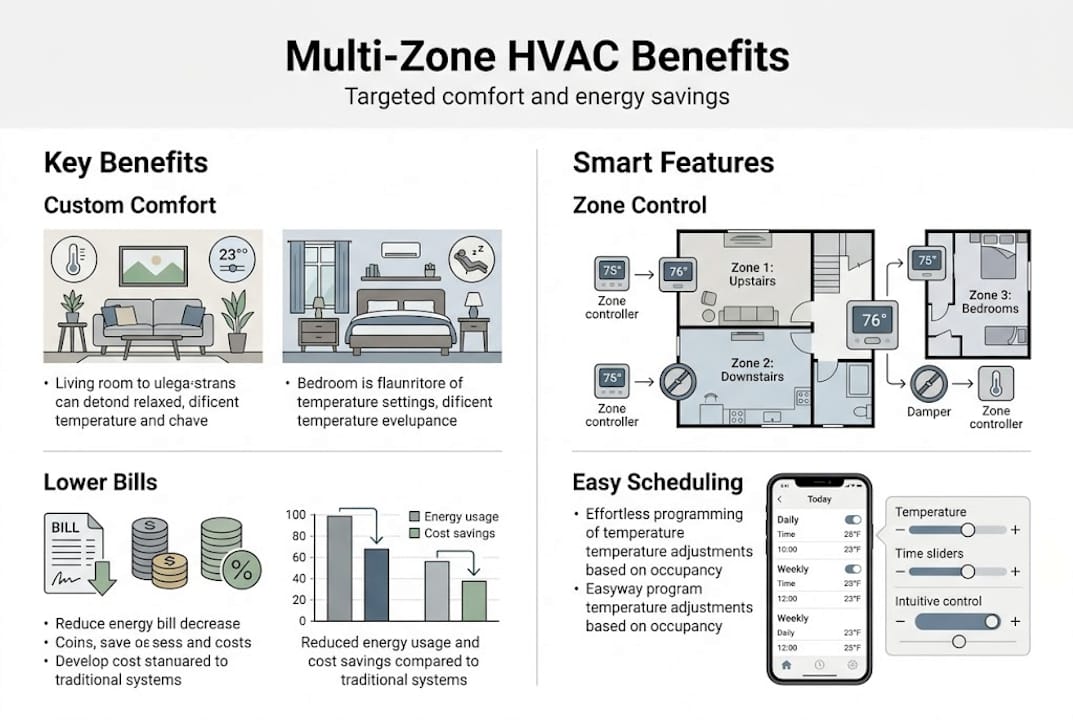
Southern California homes have a unique challenge: an almost year-round cooling demand combined with properties that range from compact condos to sprawling ranch houses. Multi-zone HVAC addresses both the climate and the architecture.
Multi-zone systems can reduce hot and cold spots and lower energy bills in OC and LA’s cooling-heavy climate. Here’s a breakdown of the key benefits:
- Targeted cooling and heating: Only condition the spaces you’re actually using. A guest bedroom that sits empty five days a week doesn’t need to stay at 72 degrees around the clock.
- Lower utility costs: Systems that cut energy use by up to 30% are well documented in zoned setups, especially compared to full-house single-zone cycling.
- Extended equipment life: When zones close off and the system doesn’t need to condition the entire home, the compressor and air handler run shorter cycles. Shorter cycles mean less mechanical wear over time.
- Personalized comfort: Every family member or tenant can set their preferred temperature without affecting others.
- Property value boost: Modern zoning systems are an attractive selling point for buyers in Orange County and Los Angeles County.
Here’s a comparison of what homeowners typically see when switching from single-zone to multi-zone:
| Feature | Single-zone system | Multi-zone system |
|---|---|---|
| Temperature control | One setting for all rooms | Individual settings per zone |
| Energy waste | High in empty rooms | Minimal, only conditions active zones |
| Monthly cooling cost | Higher baseline | 20 to 30% lower on average |
| Comfort level | Uneven, common hot spots | Consistent across all zones |
| Equipment wear | Full-load cycling | Reduced cycling, longer lifespan |
“Multi-zone HVAC isn’t just a comfort upgrade. In Southern California’s cooling-dominant climate, it’s a practical tool for controlling the single biggest line item on your monthly utility bill.”
For property managers overseeing multi-unit buildings or large rental homes in cities like Long Beach, Irvine, or Pasadena, zoning also reduces tenant complaints related to temperature. That translates directly to better retention and fewer maintenance calls.
Is multi-zone HVAC right for your property?
If you’re considering an upgrade, it’s crucial to know whether multi-zone HVAC fits your specific needs and property setup.
Multi-zone HVAC is particularly well suited for homes with inconsistent space usage, varying sun exposures, or multi-level layouts in the LA and OC region. But not every property is an identical candidate.
Here’s a quick checklist to help you assess if zoning makes sense for you:
- Your home is two stories or larger than 2,000 square feet
- You have rooms with very different sun exposure (north-facing vs. south-facing, or shaded vs. open)
- Certain rooms sit empty for long stretches of the day
- You frequently argue with family members or tenants about the thermostat setting
- Your current energy bills feel out of proportion to the comfort you’re getting
- You work from home and need precise control over a specific room
If three or more of those apply, a multi-zone system is very likely a good investment for your property.
As for costs, a professionally installed multi-zone HVAC system for a typical OC or LA home runs between $2,500 and $6,000 depending on the number of zones, existing ductwork condition, and the type of thermostats installed. Homes without existing ductwork may find that a ductless mini-split system is more cost-effective, since each unit installs independently without any duct modification.
Here’s how the three main options compare:
| System type | Best for | Upfront cost | Duct requirement |
|---|---|---|---|
| Single-zone HVAC | Small, open-plan homes | Lowest | Yes |
| Multi-zone HVAC | Multi-story, large, or variable-use homes | Moderate to high | Yes |
| Ductless mini-split | Older homes, additions, rentals | Moderate | No |
Consult a thermostat guide before purchasing your zone thermostats. Compatibility between your thermostat, damper system, and control board matters more than most homeowners realize, and choosing the wrong model can limit your system’s capabilities significantly.
Pro Tip: Always hire a licensed HVAC contractor for multi-zone installation. Improper damper placement or a misconfigured control board can cause pressure imbalances that damage your entire system within months. The upfront cost of professional installation almost always saves money compared to fixing a DIY mistake.
The real secret to home comfort: It’s not just the HVAC
Here’s something that most installation guides won’t tell you: technology alone won’t fix your comfort problems. We’ve seen homeowners in Torrance and Newport Beach spend thousands on multi-zone systems, only to still complain about hot bedrooms in August because nobody changed the habits that created the problem in the first place.
Zoning is a foundation, not a finish line. Regular HVAC maintenance matters just as much as the equipment itself. A zoned system with clogged filters, leaky ducts, or poorly calibrated thermostats will underperform every time. The most common mistake we see is homeowners investing in zoning and then skipping the annual tune-ups that keep the system dialed in.
The real combination that delivers year-round comfort is this: smart zoning plus consistent maintenance plus occupant habits like shading windows, avoiding heat-generating appliances during peak hours, and using fans to assist airflow. When those three elements work together, the results are genuinely impressive. Your HVAC system runs less, wears out slower, and your home stays comfortable without you thinking about it.
Next steps: Professional HVAC help for OC and LA homeowners
Ready to tackle uneven temperatures and boost efficiency? Here’s how you can get personalized, professional support for your climate control goals.
Our team of local HVAC repair experts serves homeowners and property managers across Orange County and Los Angeles County. Whether you need a full assessment for a new multi-zone installation or want to improve an existing system’s performance, we can help. Scheduling professional HVAC tune-ups before any major system change ensures you’re starting from a strong baseline. Don’t guess at zone configurations or thermostat compatibility. Let a licensed technician walk through your property, evaluate your current setup, and recommend the most efficient solution for your specific home and budget.
Frequently asked questions
Does multi-zone HVAC really lower energy bills in Southern California?
Yes, multi-zone HVAC reduces hot and cold spots and lowers bills by letting you control temperatures in specific rooms or zones rather than conditioning the entire house constantly.
Can multi-zone HVAC be installed in any house?
Most homes can be retrofitted, but ease and cost depend on layout. Multi-zone HVAC works best for large, multi-story, or variable-use homes where different rooms have clearly different needs.
Is multi-zone HVAC difficult to maintain?
Maintenance is similar to standard HVAC, but thermostats and dampers should be checked regularly. Consistent maintenance routines keep multi-zone systems performing at their best.
What’s the difference between multi-zone HVAC and ductless mini-split systems?
Multi-zone HVAC uses existing ducts divided into controlled zones, while ductless mini-splits handle individual rooms with wall-mounted units that require no ductwork at all.