
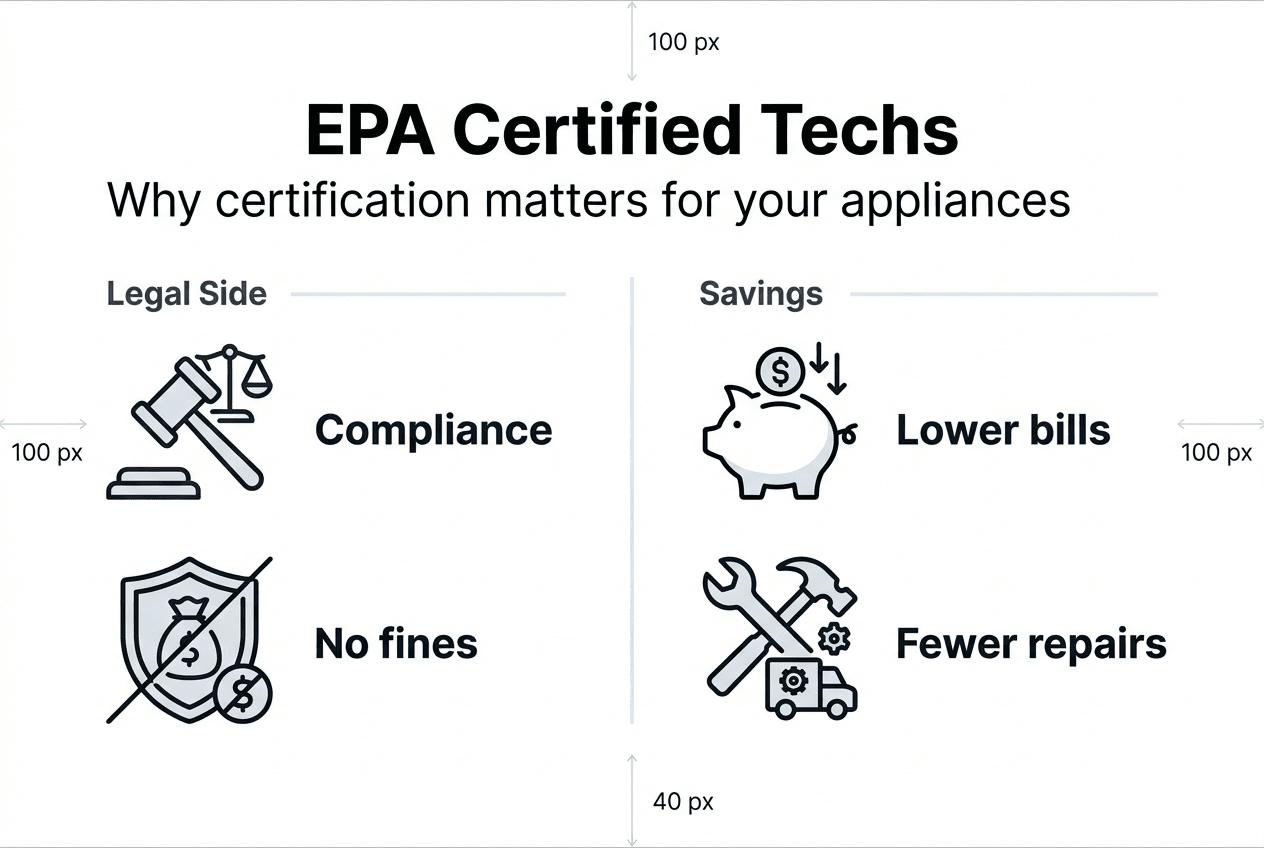
Hiring an uncertified technician to service your refrigerator or HVAC system might save a few dollars upfront, but violations can result in fines up to $44,539 per day. Many homeowners don’t realize that only EPA certified professionals can legally handle refrigerant systems. This guide reveals why EPA certification isn’t optional red tape but your protection against financial risk, environmental harm, and equipment failure in Orange and Los Angeles Counties.
Table of Contents
- What Is EPA 608 Certification And Why It Matters
- Legal Consequences And Financial Risks Of Hiring Uncertified Technicians
- How Certified Technicians Save You Money And Protect Your Property
- Choosing The Right EPA Certified Technician In Orange And Los Angeles Counties
- Trusted EPA Certified Technician Services In Orange And Los Angeles Counties
Key takeaways
| Point | Details |
|---|---|
| Legal requirement | EPA 608 certification is federally mandated for anyone handling refrigerants in appliances and HVAC systems. |
| Financial protection | Certified technicians prevent fines and ensure repairs that save energy costs over time. |
| Environmental safety | Proper refrigerant handling by certified pros protects the ozone layer and reduces global warming impact. |
| Certification types | Type I, II, III, and Universal certifications dictate which systems technicians can legally service. |
| Risk mitigation | Hiring certified professionals eliminates liability for homeowners and property managers. |
What is EPA 608 certification and why it matters
The EPA 608 certification is a federal requirement mandating technicians to handle refrigerants legally. This certification isn’t a suggestion or industry best practice. It’s the law under the Clean Air Act, Section 608, which governs how refrigerants must be recovered, recycled, and disposed of to prevent environmental damage.
Four certification types exist, each covering different equipment:
- Type I: Small appliances containing less than 5 pounds of refrigerant (window ACs, household refrigerators)
- Type II: High-pressure appliances (residential and commercial air conditioning, heat pumps)
- Type III: Low-pressure appliances (commercial chillers)
- Universal: All of the above, the most comprehensive certification
Refrigerants like R-22 and newer alternatives contain chemicals that contribute to ozone depletion and global warming when released improperly. Certified technicians learn proper recovery techniques, leak detection methods, and safe disposal practices that uncertified workers simply don’t know.
When you hire someone to fix your refrigerator or air conditioner, you’re trusting them with substances regulated as strictly as hazardous materials. A certified technician understands how to minimize refrigerant loss during repairs, preventing environmental harm while keeping your system running efficiently. Understanding technician certification helps you make informed hiring decisions.
Pro Tip: Always ask to see a technician’s EPA 608 certification card before they begin work. Legitimate professionals carry their credentials and will gladly show them.
Legal consequences and financial risks of hiring uncertified technicians
The EPA takes refrigerant violations seriously. Fines reach $44,539 per day per violation, and repeat offenders face even steeper penalties. These aren’t theoretical consequences. The EPA actively investigates complaints and conducts inspections.
Here’s what you risk when hiring uncertified technicians:
- Civil penalties starting at tens of thousands of dollars per incident
- Criminal prosecution for knowing violations, including potential jail time
- Equipment confiscation if illegal venting or refrigerant handling is discovered
- Personal liability as the property owner or manager who hired the uncertified worker
- Costly remediation requirements to fix environmental damage
Property managers face additional exposure. If you oversee multiple units and hire uncertified contractors, violations can exceed $100,000 and include equipment confiscation. Your insurance may not cover EPA fines, leaving you personally responsible.
“The financial impact of EPA violations extends beyond fines. Legal fees, lost rental income during equipment replacement, and reputational damage can devastate property management businesses.”
Consider a common scenario: an uncertified handyman vents refrigerant while replacing a compressor. A neighbor reports the chemical smell. The EPA investigates and finds illegal discharge. You face fines, the handyman disappears, and you’re left paying for proper disposal and new equipment. Following a certified appliance repair guide and hiring licensed technicians eliminates these risks entirely.
The California Air Resources Board adds state-level enforcement, creating dual liability in Orange and Los Angeles Counties. Don’t gamble with your finances or legal standing.
How certified technicians save you money and protect your property
Certified professionals deliver value that far exceeds their service fees. Their training translates directly into cost savings and system longevity you won’t get from uncertified workers.
Here’s how certified technicians conduct leak detection and repair:
- Use electronic leak detectors and UV dyes to pinpoint exact leak locations
- Recover existing refrigerant properly before opening the system
- Repair the leak using appropriate techniques and materials
- Evacuate the system to remove moisture and contaminants
- Recharge with the precise refrigerant amount specified by the manufacturer
- Test for proper operation and verify no new leaks exist
Certified technicians identify leaks quickly, preventing refrigerant loss that increases your electric bill. A system low on refrigerant runs continuously, trying to reach the set temperature but never quite making it. Your compressor works overtime, consuming excess electricity while delivering inadequate cooling.
Proper refrigerant charging matters enormously. Just 10% undercharge can reduce efficiency by 20%. Certified pros can improve system efficiency by up to 20% through correct charging and tune-ups. That efficiency gain shows up monthly on your utility bills.
| Repair scenario | Uncertified technician cost | Certified technician cost | Long-term outcome |
|---|---|---|---|
| Refrigerator leak | $150 upfront, vents refrigerant | $300 with proper recovery | Certified: system lasts 5+ more years |
| AC recharge | $100, incorrect charge amount | $250, precise manufacturer specs | Certified: 15-20% lower energy bills |
| Compressor failure | $400, no leak detection | $600, finds and fixes root cause | Certified: prevents repeat failures |
The repair vs replacement decision becomes clearer when certified technicians accurately diagnose problems. They can tell you whether a $300 repair will give you three more years or if replacement makes more financial sense. Quality HVAC repair services from certified professionals protect your investment.
Pro Tip: Schedule annual maintenance visits with certified technicians to catch small leaks before they become expensive problems. Preventive care extends appliance lifespan significantly.
Choosing the right EPA certified technician in Orange and Los Angeles Counties
Not all certification claims are legitimate. Some contractors exaggerate credentials or let certifications lapse. Verify EPA 608 certification before hiring to ensure legal compliance and genuine expertise.
Verification steps:
- Ask for the technician’s EPA certification card number
- Check the certification type matches your equipment needs
- Confirm the certification is current (no expiration date, but ask when they last took refresher training)
- Request proof of liability insurance that covers refrigerant work
- Look for additional credentials like NATE certification or manufacturer-specific training
Understanding certification types helps you hire appropriately. If you need central air conditioning service, the technician needs Type II or Universal certification. A Type I certification alone isn’t sufficient for that equipment. Universal certification allows servicing all refrigerant types, making it ideal for versatile service providers handling diverse residential and commercial equipment.
Ethics and professionalism matter as much as certification. A certified technician who cuts corners still poses risks. Look for service providers with strong local reputations and transparent business practices.
Key questions to ask before hiring:
- What type of EPA 608 certification do you hold?
- How long have you been certified and working in this field?
- Do you carry refrigerant recovery equipment to every job?
- What is your process for leak detection and system testing?
- Can you provide references from similar jobs in my area?
- Do you guarantee your work and for how long?
Local service providers familiar with Orange and Los Angeles County building codes and climate conditions deliver better results. They understand which refrigerants are being phased out and can advise on future-proofing your systems. Knowing why to choose licensed technicians and understanding technicians’ safety role helps you evaluate service providers effectively.
Beware of unusually low quotes. Proper refrigerant recovery and charging takes time and specialized equipment. Rock-bottom prices often signal shortcuts that will cost you more later through repeat repairs, efficiency loss, or legal problems.
Trusted EPA certified technician services in Orange and Los Angeles Counties
When your appliances or HVAC systems need professional attention, MDTECH Appliance Repair brings EPA 608 certified expertise directly to your Orange or Los Angeles County property. Our technicians hold Universal certification, meaning we can legally and safely service everything from your kitchen refrigerator to your central air conditioning system.
We invest in ongoing training because refrigerant regulations and equipment technology constantly evolve. This commitment to staying current protects you from compliance issues while ensuring we use the most efficient repair techniques available. Every service call includes proper refrigerant handling, thorough leak detection, and precise system charging that maximizes your equipment’s performance and lifespan.
Our HVAC repair services and certified technician expertise mean you never have to worry about EPA violations or substandard repairs. We also specialize in Samsung appliances and other major brands, combining manufacturer knowledge with federal compliance.
Pro Tip: Schedule seasonal HVAC maintenance before summer and winter peaks to avoid breakdowns during extreme weather when service calls surge.
“MDTECH’s certified technicians fixed our restaurant’s walk-in cooler properly the first time. Previous contractors just kept adding refrigerant without finding the leak. MDTECH saved us hundreds in wasted refrigerant and prevented a potential EPA violation.” – Maria T., Los Angeles County
FAQ
Can I legally hire a non-certified technician for refrigerant work?
No, federal law prohibits anyone without EPA 608 certification from handling refrigerants in appliances or HVAC systems. You and the technician both face potential fines if caught. There are no exceptions for small repairs or residential work.
How often should I have refrigerant systems checked by certified pros?
Schedule professional inspections annually for residential systems, twice yearly for commercial equipment. Certified technicians can detect small leaks early, preventing costly refrigerant loss and system damage. Regular maintenance also extends equipment lifespan significantly.
What does EPA 608 universal certification cover?
Universal certification combines Type I, II, and III, allowing technicians to service all appliance and HVAC systems regardless of refrigerant amount or pressure. This comprehensive credential indicates the highest level of training and versatility. It’s the gold standard for residential and commercial service providers.
What are the risks of refrigerant leaks if not repaired promptly?
Refrigerant leaks reduce cooling efficiency, increase energy costs by 20% or more, and can cause compressor failure requiring expensive replacement. Environmental damage from leaked refrigerants contributes to ozone depletion and climate change. Prompt certified repair prevents these cascading problems.
How to verify if a technician’s certification is current and valid?
Ask to see the technician’s EPA 608 certification card, which should display their name, certification type, and issuing organization. While certifications don’t expire, verify they’ve completed recent refresher training. Check that their business license and insurance are current, confirming they maintain professional standards.