
Refrigeration is at the heart of every American kitchen, yet over 13 billion tons of food are wasted globally each year due to inefficient cold storage. For homeowners in Orange and Los Angeles Counties, keeping appliances running smoothly means lower energy bills and fresher food. Understanding what home refrigeration truly involves helps families protect their health, reduce expenses, and choose reliable repair services that extend appliance life.
Table of Contents
- What Home Refrigeration Really Means
- Types of Household Refrigeration Systems
- How Refrigeration Preserves Food and Health
- Energy Efficiency and Longevity of Refrigerators
- Risks of Faulty or Poorly Maintained Units
Key Takeaways
| Point | Details |
|---|---|
| Home Refrigeration Is Essential | It plays a crucial role in food preservation, protection against spoilage, and improving household health. |
| Choose the Right Refrigerator | Select a model that fits your kitchen space and meets your family’s storage needs for optimal use. |
| Regular Maintenance Is Key | Routine checks and cleaning can enhance energy efficiency and prolong appliance life. |
| Be Aware of Malfunctions | Recognizing early warning signs of refrigerator failure can prevent serious health risks and costly repairs. |
What Home Refrigeration Really Means
Home refrigeration represents far more than a simple kitchen appliance – it’s a sophisticated technological system designed to preserve our food, protect our health, and transform how we store perishable goods. Electric household refrigeration fundamentally reshaped American lifestyles by enabling safe, long-term food storage directly in our homes.
The core principle of refrigeration involves a remarkable heat transfer process. Rather than “creating cold,” refrigerators actually move heat from inside the appliance to the external environment. Home refrigeration works through a complex system involving critical components like expansion valves, evaporator coils, compressors, and condensers. This intricate mechanism systematically absorbs internal heat and releases it outside, maintaining consistently low temperatures that prevent bacterial growth and food spoilage.
Modern refrigeration has dramatically expanded our culinary possibilities. By maintaining temperatures between 32-40 degrees Fahrenheit, refrigerators dramatically slow microbial activity, extending food freshness from hours to days or even weeks. This technological marvel allows families to store diverse ingredients, reduce food waste, and maintain nutritional quality – transforming how we shop, cook, and consume food.
Pro tip: Optimize your refrigerator’s efficiency by keeping the temperature consistently between 37-40 degrees Fahrenheit and avoiding overpacking, which restricts proper air circulation and cooling performance.
Types of Household Refrigeration Systems
Refrigeration systems have evolved significantly, offering homeowners diverse options to meet their specific cooling and food preservation needs. Four primary refrigeration technologies exist in modern households, each with unique operational mechanisms and distinct advantages.
The most prevalent type is mechanical-compression refrigeration, which functions through a complex cycle involving refrigerant compression and expansion. This system uses a compressor to move heat from inside the refrigerator to the external environment, maintaining consistent low temperatures. Alternative technologies include absorption systems that utilize heat for cooling, thermoelectric systems operating through electric currents, and evaporative cooling methods that leverage water’s natural cooling properties.
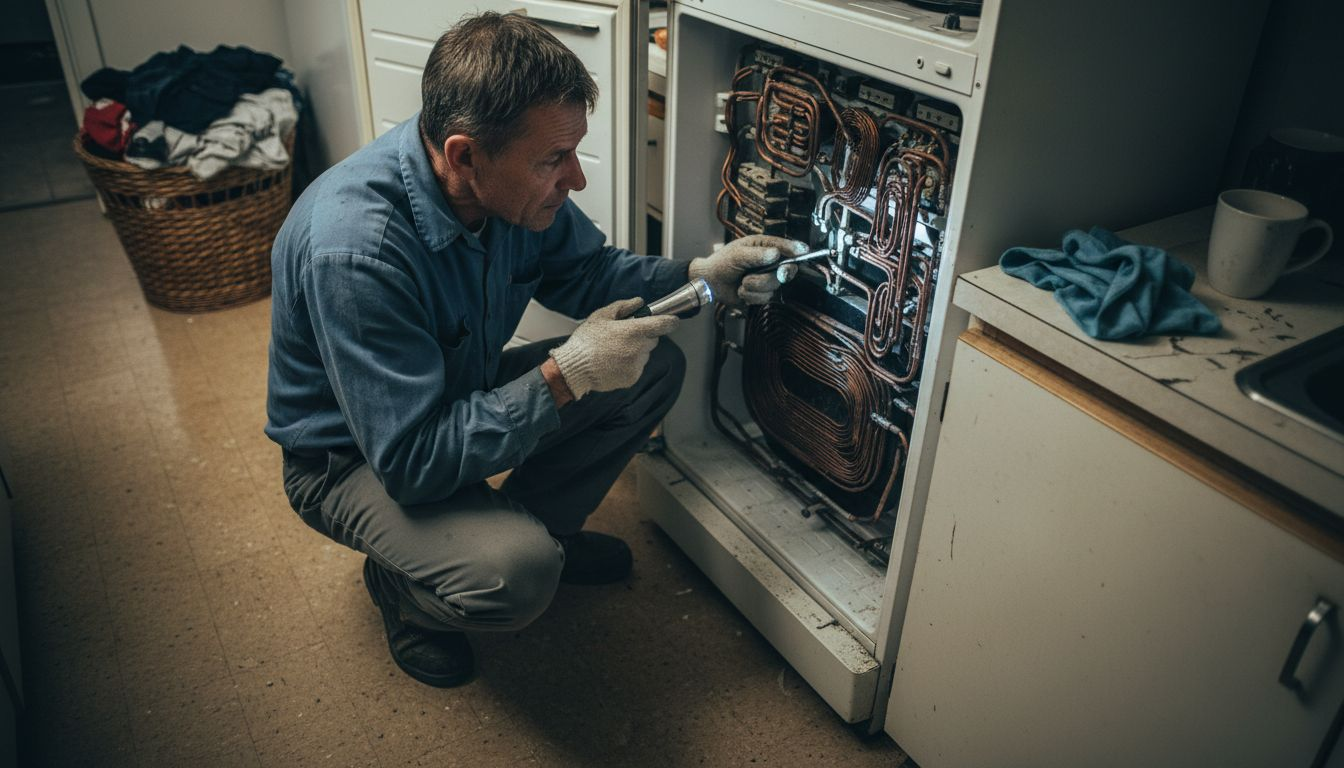
Here’s a comparison of common household refrigeration technologies and their operational characteristics:
| Technology Type | How It Works | Typical Use Case | Energy Efficiency |
|---|---|---|---|
| Mechanical Compression | Compresses and expands refrigerant | Standard refrigerators | High |
| Absorption | Uses heat source for cooling | RVs, off-grid homes | Moderate |
| Thermoelectric | Uses electric current, no compressor | Small coolers, mini-fridges | Moderate |
| Evaporative Cooling | Relies on water evaporation | Outdoor/portable coolers | Low |
Household refrigerators are also categorized by their physical configuration, offering consumers multiple design choices. Common configurations include top-freezer models, bottom-freezer designs, side-by-side units, and built-in refrigerators. Each configuration serves different spatial requirements and user preferences, allowing families to select appliances that seamlessly integrate with their kitchen layout and storage needs.
Pro tip: When selecting a refrigerator, measure your available kitchen space precisely and consider your household’s food storage volume to choose the most appropriate configuration and size.
How Refrigeration Preserves Food and Health
Refrigeration technologies represent a critical defense mechanism against food spoilage and potential health risks, transforming how we store and consume perishable goods. By dramatically slowing microbial growth, refrigeration creates an inhospitable environment for bacteria, molds, and yeasts that typically cause food contamination and rapid deterioration.
The science behind food preservation involves precise temperature management. When food is kept consistently below 40 degrees Fahrenheit, bacterial reproduction nearly stops, extending food’s safe consumption window from hours to several days or weeks. This temperature-controlled environment prevents dangerous pathogens from multiplying, significantly reducing the risk of foodborne illnesses that could otherwise cause serious health complications.
Improved refrigeration systems play a crucial role in global food security beyond individual household protection. By maintaining consistent cold chains from production through consumption, these technologies not only preserve nutritional quality but also minimize food waste. This comprehensive approach supports environmental sustainability by reducing greenhouse gas emissions associated with discarded food products and ensuring more efficient use of agricultural resources.
Pro tip: Regularly check your refrigerator’s temperature with an independent thermometer to ensure it consistently stays between 35-38 degrees Fahrenheit, the optimal range for food safety and preservation.
Energy Efficiency and Longevity of Refrigerators
Energy efficiency in refrigerators has become a critical consideration for homeowners seeking to reduce utility costs and minimize environmental impact. Modern refrigeration technologies have dramatically transformed how appliances consume electricity, incorporating advanced design features that optimize performance while consuming less energy compared to older models.
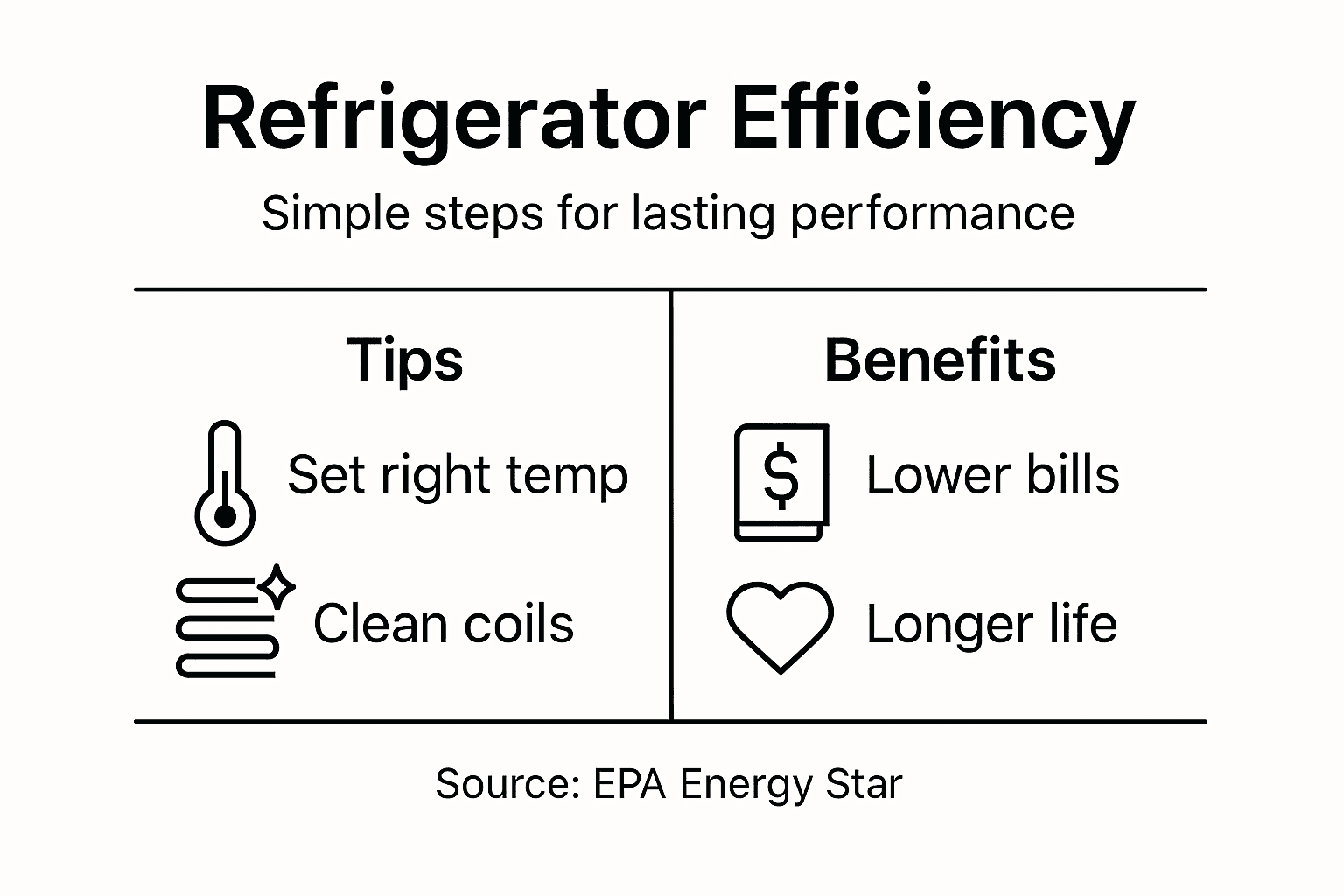
Technological innovations have significantly extended refrigerator longevity and performance. The average modern refrigerator now lasts approximately 17 years, a substantial improvement over previous generations. Key advancements include better insulation materials, more efficient compressor designs, and sophisticated refrigerant technologies that reduce energy consumption without compromising cooling capabilities. Energy conservation strategies now play a crucial role in appliance design, helping households manage both operational costs and environmental footprint.
Consumers can maximize refrigerator efficiency through strategic maintenance and thoughtful usage practices. This includes maintaining consistent internal temperatures, ensuring proper door seals, avoiding overcrowding, and periodically cleaning condenser coils. These seemingly minor interventions can significantly reduce energy consumption, potentially saving hundreds of dollars in electricity costs over the appliance’s lifetime and extending its operational lifespan.
Pro tip: Clean your refrigerator’s condenser coils every six months and maintain a consistent internal temperature to optimize energy efficiency and extend your appliance’s operational life.
Below is a summary of refrigerator maintenance practices and their impacts:
| Maintenance Task | Result | Impact on Longevity |
|---|---|---|
| Clean condenser coils | Improves heat exchange | Extends lifespan |
| Check door seals | Prevents energy loss | Boosts efficiency |
| Monitor temperature | Ensures safe food storage | Reduces risk of spoilage |
| Schedule annual service | Identifies hidden issues | Prevents major breakdowns |
Risks of Faulty or Poorly Maintained Units
Poorly maintained refrigeration units pose significant risks that extend far beyond simple appliance malfunction. When refrigerators fail to operate correctly, they create dangerous scenarios that compromise both food safety and household health, potentially exposing families to serious health hazards and unexpected financial burdens.
The most immediate threat involves food spoilage and potential foodborne illnesses. Refrigeration system failures can cause temperature fluctuations that accelerate bacterial growth, rendering stored foods unsafe for consumption. These temperature inconsistencies create ideal breeding grounds for dangerous microorganisms like salmonella and E. coli, which can rapidly multiply when refrigeration standards are not maintained, putting entire households at risk of severe gastrointestinal complications.
Beyond food safety, malfunctioning refrigerators generate substantial environmental and financial consequences. Inefficient units consume significantly more electricity, driving up energy bills and increasing carbon footprints. Refrigerant leaks can release harmful chemicals into the atmosphere, contributing to environmental degradation. Components like worn door seals, dirty condenser coils, and malfunctioning thermostats can dramatically reduce a refrigerator’s performance, leading to increased energy consumption and potential complete system failure.
Pro tip: Schedule professional refrigerator maintenance annually and learn to recognize early warning signs like unusual noises, inconsistent cooling, or excessive condensation to prevent costly repairs and potential health risks.
Keep Your Home Refrigeration Running Smoothly to Protect Your Food and Health
Proper home refrigeration is essential for safeguarding your family’s health by preventing food spoilage and costly illnesses. The article highlights the importance of consistently maintaining optimal temperatures and timely upkeep to avoid temperature fluctuations that encourage harmful bacterial growth. If your refrigerator shows signs of inconsistent cooling or unusual noises, these are not issues to delay addressing.
Quick and reliable refrigerator repair services in Orange County and Los Angeles County are just a click away to help you avoid these risks. Our team of licensed technicians understands the critical role that your refrigeration system plays in food preservation and energy efficiency. From compressor repairs to door seal replacements, we offer comprehensive solutions tailored to extend your appliance’s lifespan and maintain safe, consistent cooling.
Protect your household and reduce the risk of foodborne illness by scheduling prompt appliance service today. Visit Appliance Repair MD Tech to book your appointment online or learn more about our expert refrigerator repair and maintenance services. Do not wait until a small issue turns into an expensive emergency. Act now to ensure your refrigerator continues to operate safely and efficiently.
Frequently Asked Questions
What is the primary function of a home refrigerator?
The primary function of a home refrigerator is to maintain low temperatures that slow down microbial activity, preserving food freshness and preventing spoilage.
How does refrigeration contribute to food safety?
Refrigeration creates a cold environment that inhibits bacterial growth, significantly reducing the risk of foodborne illnesses and ensuring safe consumption of perishable goods.
What are the different types of refrigeration systems used in households?
Common household refrigeration systems include mechanical-compression refrigeration, absorption systems, thermoelectric systems, and evaporative cooling methods, each with unique operational characteristics.
How can I optimize the energy efficiency of my refrigerator?
To optimize energy efficiency, maintain consistent internal temperatures, avoid overpacking, clean the condenser coils regularly, and check door seals to prevent energy loss.