
TL;DR:
- Electrical arcing occurs when electricity jumps across gaps, generating high heat that can ignite fires. It often happens silently inside walls due to damaged wiring, posing a significant residential fire risk each year. Installing AFCI breakers and scheduling regular inspections effectively prevent such dangerous arc faults.
Electrical arcing is defined as electricity jumping across a gap between two conductors, producing an intensely hot plasma channel capable of melting metal and igniting fires. This is not a rare event in older homes. Arc faults cause over 30,000 home fires annually in the U.S., making them one of the leading causes of residential fire damage. If you have heard crackling near an outlet or noticed a burning smell near your electrical panel, you may already be dealing with this hazard. Understanding electrical arcing, its causes, and how to stop it is the fastest way to protect your home.
What is electrical arcing and why does it happen?
Electrical arcing occurs when current leaves its intended path and jumps through the air or across a damaged surface to reach another conductor. The industry term for this event is an arc fault. Unlike a short circuit, which trips a breaker almost instantly, an arc fault can burn slowly and silently inside your walls for minutes or hours before any visible sign appears.
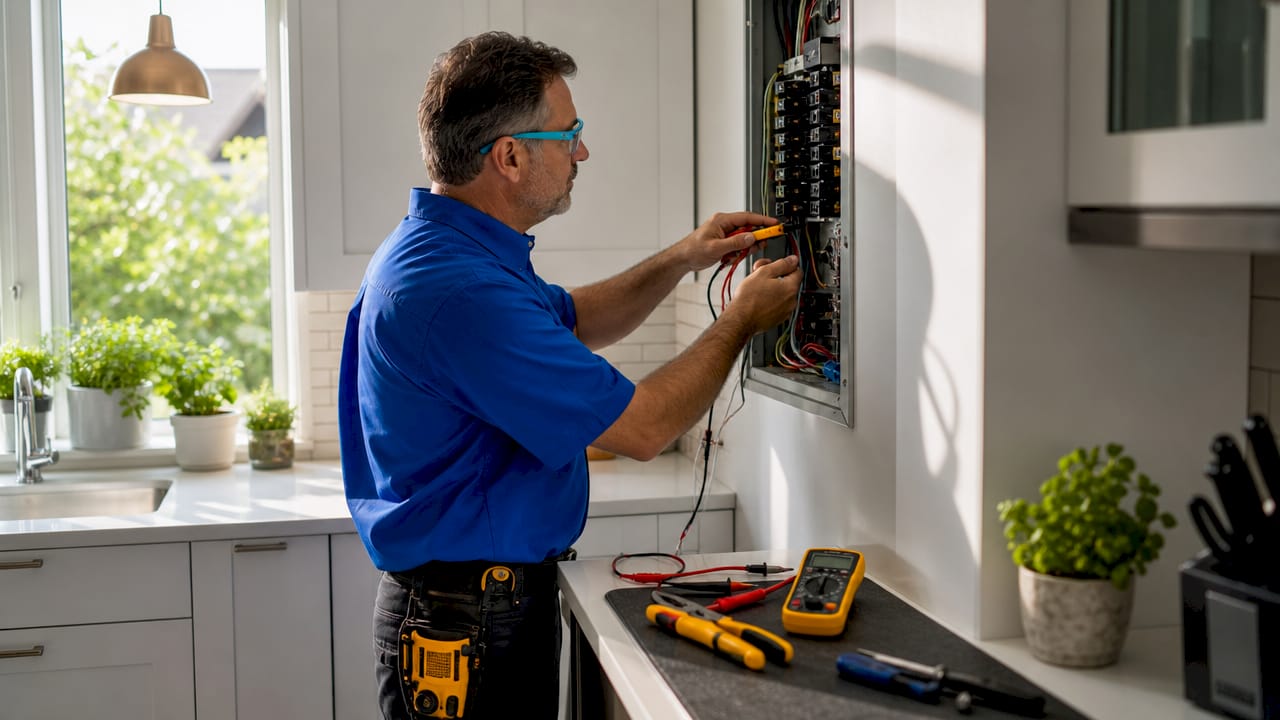
The physics behind it are straightforward. Arcing produces sustained discharge with lower voltage but far higher current than a standard glow discharge. That combination generates extreme heat at the point of the arc. Temperatures at the arc point can exceed those needed to ignite wood framing, insulation, or nearby combustibles inside a wall cavity.
Surface contaminants and microscopic defects in wire insulation concentrate electric fields, which is what triggers the initial breakdown. This means even a wire that looks fine from the outside can be arcing internally. That is the detail most homeowners miss entirely.
What causes electrical arcing in residential settings?
The causes of electrical arcing in homes fall into a few clear categories. Recognizing them helps you know where to look and what to tell a licensed electrician.
- Loose or damaged wiring connections. A wire that has worked itself loose from a terminal creates a gap. Current jumps that gap repeatedly, generating heat each time.
- Aging or cracked insulation. Insulation becomes brittle over decades. Once it cracks, two conductors can contact each other intermittently, producing arcs.
- Corroded outlets and panel components. Corrosion inside outlets, wire nuts, or panel busbars creates resistance and irregular contact surfaces that trigger arcing.
- Overloaded circuits. Running too many high-draw appliances on one circuit stresses wiring and connections, accelerating insulation breakdown.
- Physical damage to wiring. Nails driven through walls during renovations, or wires pinched behind drywall, create damage points where arcing begins.
- Vibration and thermal expansion. Repeated heating and cooling cycles cause connections to loosen gradually, especially in older homes with aluminum wiring.
Pro Tip: Inspect the outlets and switches in rooms that have had recent renovation work. Nail punctures and staple damage to wiring are among the most common hidden causes of arc faults in homes built before 1990.
Arcing differs from a simple overload or short circuit in one critical way. An overload trips a breaker because current exceeds the rated limit. A short circuit does the same. But an arc fault can occur at normal current levels, which means a standard breaker will not respond to it at all. That is why arc faults are so dangerous and why they require a different type of protection. You can learn more about how breakers respond to different electrical faults to understand where standard protection falls short.
What are the warning signs and dangers of electrical arcing?
The warning signs of arc faults are specific and worth memorizing. Catching them early is the difference between a service call and a house fire.
- Crackling, buzzing, or popping sounds near outlets, switches, or your electrical panel. These sounds demand immediate professional attention and should never be dismissed as normal.
- Visible sparks or brief flashes when plugging in or unplugging a device. Occasional small sparks are normal, but repeated or large sparks are not.
- Burning plastic or electrical odors near any outlet, switch, or appliance. This smell means insulation or wiring is already being damaged by heat.
- Discolored or warm outlet covers. Heat from arcing behind the wall transfers to the cover plate.
- Intermittent appliance malfunctions with no obvious cause. Buzzing sounds, burning smells, and appliance failures together are a strong indicator of active arcing.
Treat crackling sounds or burning smells near electrical outlets as emergencies, not minor annoyances. Calling a licensed electrician the same day you notice these signs is the correct response. Waiting even a few days increases the risk of fire significantly.
The effects of electrical arcing go beyond fire risk. Arcing destroys wiring insulation progressively, meaning each arc event makes the next one more likely and more severe. Appliances connected to affected circuits can suffer internal damage from voltage irregularities. Arcing in damaged wiring or panels often precedes breaker trips or visible damage, which means the hazard is active long before you see any external sign.
The fire risk is the most serious consequence. Arc faults cause over 30,000 residential fires per year in the U.S. That figure makes arc faults a more common fire cause than many homeowners realize. A fire that starts inside a wall cavity can burn for several minutes before breaking through to a visible surface, giving it time to spread significantly before detection.
How to prevent electrical arcing at home safely
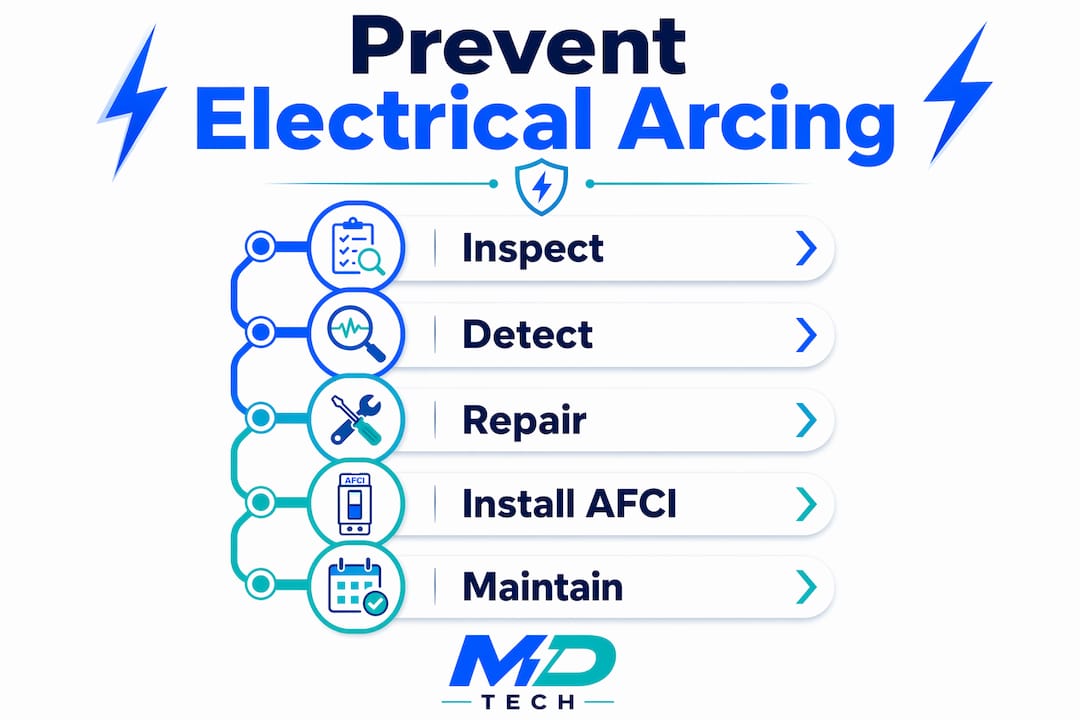
Prevention comes down to three things: the right equipment, regular inspection, and professional repairs. None of these are optional if you want reliable protection.
- Install AFCI breakers. Arc Fault Circuit Interrupter breakers detect the specific electrical signature of an arc fault and shut off power before a fire starts. AFCI breakers significantly reduce the risk of arc faults causing fires. The National Electrical Code now requires AFCI protection in most rooms of new construction.
- Retrofit older panels. Older standard breakers do not detect arc faults, making AFCI retrofits the primary safety upgrade for homes built before the early 2000s. This is not a cosmetic upgrade. It is a fire safety necessity.
- Schedule annual electrical inspections. A licensed electrician can identify loose connections, damaged insulation, and corroded components before they cause arcing. The value of routine inspections for preventing electrical hazards is well established.
- Avoid DIY electrical repairs for suspected arcing. Professional licensed electricians following NEC standards are required for safe arcing repairs. The risks of incorrect wiring far outweigh any cost savings from a DIY fix.
- Replace damaged outlets and switches promptly. Worn or cracked outlets are a common arcing point. Replacing them is inexpensive and eliminates a known risk.
Pro Tip: Schedule a full electrical inspection every three to five years if your home is older than 25 years. Homes with aluminum wiring, knob-and-tube wiring, or a panel older than 30 years should be inspected more frequently.
AFCI installation cost overview
| Protection level | Estimated cost |
|---|---|
| Single AFCI breaker replacement | $100–$200 |
| Whole-home AFCI installation | $500–$1,500 |
| Annual electrical inspection | Varies by region |
Whole-home AFCI installation costs between $500 and $1,500 depending on panel size. That cost is modest compared to the average cost of fire damage repair or the loss of a home. Treating AFCI installation as an optional upgrade is a mistake most homeowners only make once.
How does electrical arcing compare to short circuits and overloads?
These three terms describe different electrical faults, and confusing them leads to underestimating arc fault risks.
| Fault type | Cause | Breaker response | Fire risk |
|---|---|---|---|
| Overload | Too much current on one circuit | Standard breaker trips | Low if breaker works |
| Short circuit | Direct contact between conductors | Standard breaker trips fast | Moderate |
| Arc fault | Current jumps a gap at normal levels | Standard breaker may not respond | High |
A short circuit and an overload both produce current spikes that standard circuit breakers are designed to detect. An arc fault is different because it can occur at current levels well within the breaker’s normal operating range. The breaker sees nothing unusual and stays on. The arc continues burning.
Invisible arcing often occurs inside wire nuts or corroded busbars, causing progressive damage that homeowners cannot see or smell until it is advanced. This is the defining danger of arc faults compared to other electrical faults. A short circuit announces itself immediately. An arc fault can work silently for weeks.
AFCI breakers solve this problem by detecting the specific waveform pattern that arc faults produce. Standard breakers respond only to current magnitude. AFCI breakers respond to current pattern. That distinction is why hiring licensed technicians for electrical upgrades matters. Installing an AFCI breaker incorrectly eliminates the protection it is designed to provide.
Key Takeaways
Electrical arcing is the single most underestimated fire hazard in residential homes, and AFCI breakers combined with professional inspection are the two most effective defenses against it.
| Point | Details |
|---|---|
| Arc faults cause major fires | Over 30,000 U.S. home fires per year are attributed to arc faults. |
| Standard breakers miss arc faults | Older circuit breakers do not detect arcing; AFCI breakers are required for real protection. |
| Warning signs are specific | Crackling sounds, burning smells, and warm outlets all signal active arcing. |
| AFCI retrofits are affordable | Whole-home AFCI installation costs $500–$1,500, far less than fire damage repair. |
| DIY repairs are unsafe | Licensed electricians following NEC standards are required for any arcing-related repair. |
What I have learned from years of electrical repair calls
The homeowners who call us after a fire almost always say the same thing: they noticed a smell or a sound weeks earlier and assumed it would go away. It never goes away on its own. Arcing is a progressive failure. Each arc event damages insulation further, making the next arc more likely and more intense.
The detail that surprises most people is where arcing actually happens. It is rarely at the outlet you can see. It is inside the wire nut buried in a junction box, or along a corroded busbar inside the panel. Invisible arcing inside wire nuts or corroded busbars causes damage that no visual inspection from the outside will catch. You need someone with the right tools and training to find it.
My honest recommendation is this: if your home is more than 20 years old and has never had an AFCI upgrade, schedule that inspection before you need it. The cost of prevention is a fraction of the cost of recovery. Treating electrical safety as a maintenance item rather than an emergency response is the mindset that keeps homes safe.
— MDTECH
Electrical safety services from Appliancesrepairmdtech
Appliancesrepairmdtech serves homeowners across Orange County and Los Angeles County with licensed technicians who handle appliance repair, electrical safety checks, and home system upgrades. If your appliances are behaving erratically, tripping breakers, or showing signs of electrical damage, the problem may trace back to arc faults in your home wiring.
Appliancesrepairmdtech technicians are experienced in identifying electrical faults that affect appliances, from refrigerators and washers to ovens and dryers. If you suspect arcing is damaging your appliances, a professional assessment is the right first step. Check out appliance repair and safety services or review the appliance safety checklist to see where your home may need attention. Booking an appointment online takes minutes, and same-day availability is offered across most service areas.
FAQ
What is electrical arcing in simple terms?
Electrical arcing is when electricity jumps across a gap between two conductors instead of following its intended path. It produces intense heat and sparks, and it is a leading cause of residential fires.
Can electrical arcing happen without tripping a breaker?
Yes. Standard circuit breakers do not detect arc faults because arcing can occur at normal current levels. Only AFCI breakers are designed to detect and stop arc faults before they cause fires.
What does electrical arcing sound like?
Arcing typically produces a crackling, buzzing, or popping sound near outlets, switches, or the electrical panel. These sounds are serious warning signs that require immediate professional inspection.
How much does it cost to fix electrical arcing?
Replacing a single AFCI breaker costs $100–$200. A full whole-home AFCI installation runs $500–$1,500 depending on panel size. The cost of not fixing it is far higher if a fire results.
Is it safe to stay home if I suspect electrical arcing?
If you smell burning, hear crackling near outlets, or see sparks, contact a licensed electrician immediately. In cases of visible fire or strong burning odors, evacuate and call 911 before calling an electrician.