
Every homeowner in Orange and Los Angeles County knows how quickly a faulty appliance can turn from nuisance into hazard. Protecting your home goes beyond fixing what is broken—it means trusting someone with proven skills to maintain appliance safety and reliability. Choosing a qualified technician is not simply about urgency or convenience, but about safeguarding against fires, electrical shocks, and gas leaks. This guide helps you understand the importance of safety-focused repairs and technician credentials so your family stays secure in every situation.
Table of Contents
- Defining Appliance Safety And Technician Roles
- Types Of Technicians And Required Qualifications
- Safety Practices During Repairs And Installations
- Common Appliance Hazards And Risk Prevention
- Homeowner Responsibilities And Choosing Trusted Technicians
Key Takeaways
| Point | Details |
|---|---|
| Importance of Appliance Safety | Appliance safety prevents serious hazards like fires, electrical shocks, and gas leaks. Ensuring proper maintenance and repairs is essential to protect your home and family. |
| Role of Qualified Technicians | Technicians ensure appliances operate safely by diagnosing issues, using the right tools, and adhering to safety protocols. Hiring qualified professionals prevents potential dangers. |
| Homeowner Responsibilities | Homeowners should verify technician credentials, conduct regular maintenance, and promptly report any appliance issues. Informed decisions directly impact safety. |
| Recognizing Warning Signs | Homeowners must monitor appliances for signs of danger, such as unusual noises or odors, which require immediate professional attention to avoid emergencies. |
Defining Appliance Safety and Technician Roles
Appliance safety isn’t just about your equipment running smoothly—it’s about protecting your home and family from serious hazards. When a refrigerator develops an electrical fault or a dryer vent becomes blocked, the risks escalate quickly from inconvenience to dangerous.
Appliance safety encompasses the safe operation, maintenance, and repair of household equipment like refrigerators, washers, dryers, ovens, and dishwashers. It also includes HVAC systems and gas appliances. Safety means preventing fires, electrical shocks, gas leaks, and other hazards that can harm residents.
Technicians who handle appliance repairs play a specialized role in maintaining this safety. They’re not just fixing problems—they’re ensuring your equipment operates without creating risks to you or your home.
What Appliance Safety Really Means
Appliance safety involves several critical areas:
- Electrical safety: Proper grounding, voltage control, and preventing shock hazards
- Gas safety: Detecting leaks, ensuring proper combustion, and preventing carbon monoxide exposure
- Fire prevention: Maintaining proper ventilation, clearing blockages, and monitoring heat levels
- Mechanical safety: Ensuring moving parts function correctly and wear components don’t fail
- Chemical safety: Proper handling of refrigerants and cleaning agents during repairs
In your Orange or Los Angeles County home, an improperly repaired appliance could create immediate danger. That’s why hiring qualified technicians matters tremendously.
The Technician’s Core Responsibilities
Qualified appliance technicians follow workplace safety standards that protect both the technician and your household. Their roles extend far beyond simply replacing a part or fixing a malfunction.
A technician’s core responsibilities include:
- Diagnosing problems safely without creating new hazards
- Using proper tools and safety equipment during repairs
- Following manufacturer specifications for each brand and model
- Testing equipment after repairs to ensure safe operation
- Identifying potential safety issues beyond the immediate problem
Qualified technicians aren’t cost-cutting—they’re investment in preventing fires, electrical failures, and emergency repairs that cost far more.
Safety Training and Compliance
Occupational Safety and Health professionals, including appliance technicians, engage in risk assessment and health oversight during equipment handling. This means legitimate technicians receive ongoing training in hazard recognition and prevention.
Licensed technicians in California must understand:
- Local building codes and safety regulations
- Brand-specific repair protocols and safety features
- Electrical and gas safety requirements
- Proper disposal of hazardous materials
- Personal protective equipment (PPE) requirements
When you contact a repair service in Orange or Los Angeles County, you’re trusting them to bring this expertise into your home. A technician without proper training might complete a repair that temporarily works but leaves dangerous conditions unaddressed.
Why Local Expertise Matters
Orange and Los Angeles County have specific building codes and safety requirements that technicians must follow. A qualified local technician understands these regulations and applies them to every job.
They also understand the climate and conditions specific to your area—coastal humidity, seasonal temperature swings, and electrical demands that affect how appliances perform and what safety concerns matter most.
Pro tip: When calling for repairs, ask the technician about their licensing, years of experience with your specific appliance brand, and what safety inspection they’ll perform during the repair—their answers reveal their professionalism.
Types of Technicians and Required Qualifications
Not all appliance technicians are created equal. The person who shows up to fix your refrigerator might have vastly different training and credentials than someone servicing your HVAC system. Understanding these differences helps you hire the right professional for the job.
Appliance repair involves multiple specialist types, each with specific training requirements and certifications. In Orange and Los Angeles County, knowing what qualifications matter ensures you get qualified help for your urgent repairs.
HVAC and Refrigeration Specialists
Heating, air conditioning, and refrigeration mechanics represent a major category of appliance technicians. These specialists work on HVAC systems, refrigerators, and cooling equipment in residential and commercial settings.
These technicians typically require:
- Postsecondary nondegree training or apprenticeship programs
- Extensive on-the-job training lasting months to years
- State licensing or certification for refrigerant handling
- Ongoing continuing education to maintain credentials
If you need HVAC repair or refrigerator service in your home, this is the specialist you want. They understand complex electrical systems, refrigerant safety, and ventilation requirements specific to your equipment.
Appliance Repair Technicians
General appliance technicians handle washers, dryers, ovens, dishwashers, and other kitchen equipment. Their training focuses on electrical systems, mechanical components, and manufacturer-specific repair procedures.
Qualifications typically include:
- Technical school certification or apprenticeship completion
- Training in electrical safety and mechanical repair
- Manufacturer certifications for specific brands
- Years of hands-on repair experience
The best appliance technicians hold multiple certifications showing expertise across different brands and equipment types.
Occupational Safety and Health Technicians
Safety technicians conduct inspections and testing to ensure appliances meet safety compliance standards. They may work for repair companies or independently to verify that repairs were completed correctly.
These professionals typically need:
Here’s a quick comparison of technician types and their main qualifications:
| Technician Type | Sample Certifications | Key Areas of Expertise |
|---|---|---|
| HVAC/Refrigeration Specialist | EPA 608, State HVAC License | Refrigerant safety, complex systems |
| Appliance Repair Technician | NASTeC, Manufacturer Certs | Electrical/mechanical repairs |
| Occupational Safety Technician | OSHA 30, ASSP Certs | Compliance audits, risk prevention |
- Associate degree or on-the-job training in occupational safety
- Certifications from recognized safety organizations
- Strong communication and problem-solving skills
- Knowledge of local building codes and safety regulations
What to Look for in Qualifications
When hiring a technician in Orange or Los Angeles County, verify:
- Valid California state licensing for the type of work
- Specific certifications for your appliance brand
- Insurance coverage protecting your home
- Years of experience with your specific equipment type
- Customer reviews confirming reliability and professionalism
A technician who can’t clearly explain their qualifications raises a red flag. Legitimate professionals take pride in their credentials because they directly affect your safety.
Pro tip: Ask the technician which certifications they hold and request to see proof—legitimate professionals carry documentation and won’t hesitate to share their credentials.
Safety Practices During Repairs and Installations
Safety practices separate legitimate technicians from cowboys cutting corners. When someone opens your dryer or works on your HVAC system, dozens of hidden hazards exist. Proper procedures protect both the technician and your home.
Professional technicians follow standardized safety protocols during every repair and installation. These aren’t suggestions—they’re requirements that prevent fires, electrical shocks, and injuries.
Personal Protective Equipment and Safety Gear
Qualified technicians use specialized safety equipment tailored to the job. This gear protects them from electrical hazards, sharp edges, and dangerous materials.
Standard protective equipment includes:
- Safety glasses or face shields for eye protection
- Work gloves rated for electrical or mechanical hazards
- Steel-toed boots protecting feet from dropped tools or equipment
- Hard hats when working in spaces with overhead hazards
- Respiratory protection when handling refrigerants or dust
When a technician arrives at your home without proper safety gear, that’s a red flag. They’re not just risking themselves—they’re putting your home at risk.
Electrical Safety During Repairs
Electrical safety standards include lockout and tagout procedures that prevent dangerous shocks. These procedures ensure power is completely disconnected before work begins.
Proper electrical safety involves:
- Disconnecting power to the appliance completely
- Using a voltage tester to confirm power is off
- Locking out electrical switches so power can’t be restored accidentally
- Using certified tools that won’t conduct electricity
- Testing all work with proper equipment before restoring power
Skipping these steps causes serious injuries. Orange and Los Angeles County homes depend on technicians who follow electrical safety every single time.
Safety Training and Hazard Recognition
OSHA requires employers to ensure safety training for technicians, including hazard recognition and prevention procedures. This training makes technicians aware of dangers before they cause problems.
Trained technicians recognize:
- Electrical hazards and potential shock points
- Gas leak indicators and ventilation requirements
- Fire risks from faulty wiring or blockages
- Chemical hazards from refrigerants and cleaning agents
- Mechanical dangers from moving parts or pressure
A technician who rushes through a job without checking for hazards is skipping the safety training that protects you.
Installation Safety Standards
New appliance installations require as much care as repairs. Improper installation creates long-term safety issues that develop over months or years.
Safe installations ensure:
- Proper grounding and electrical connections
- Correct ventilation for gas appliances
- Secure mounting and anchoring
- Appropriate clearances from combustible materials
- Thorough testing before the technician leaves
When technicians cut corners on installation, your home becomes a liability waiting to happen. Quality work upfront prevents expensive emergency repairs later.
What You Should Observe
Watch for these safety indicators when a technician works in your home:
- They explain what they’re doing and why safety matters
- They disconnect power and use testing equipment
- They never rush through critical steps
- They clean up and test everything before finishing
- They provide documentation of what was done
Pro tip: During a repair, ask the technician to explain the safety steps they’re taking—their willingness to discuss safety shows professionalism, and their explanations help you understand the work.
Common Appliance Hazards and Risk Prevention
Appliances silently create dangers in your Orange or Los Angeles County home. A faulty refrigerator doesn’t just stop cooling—it can start a fire. A dryer with a clogged vent becomes an inferno waiting to happen. Understanding these hazards helps you recognize when professional help is critical.
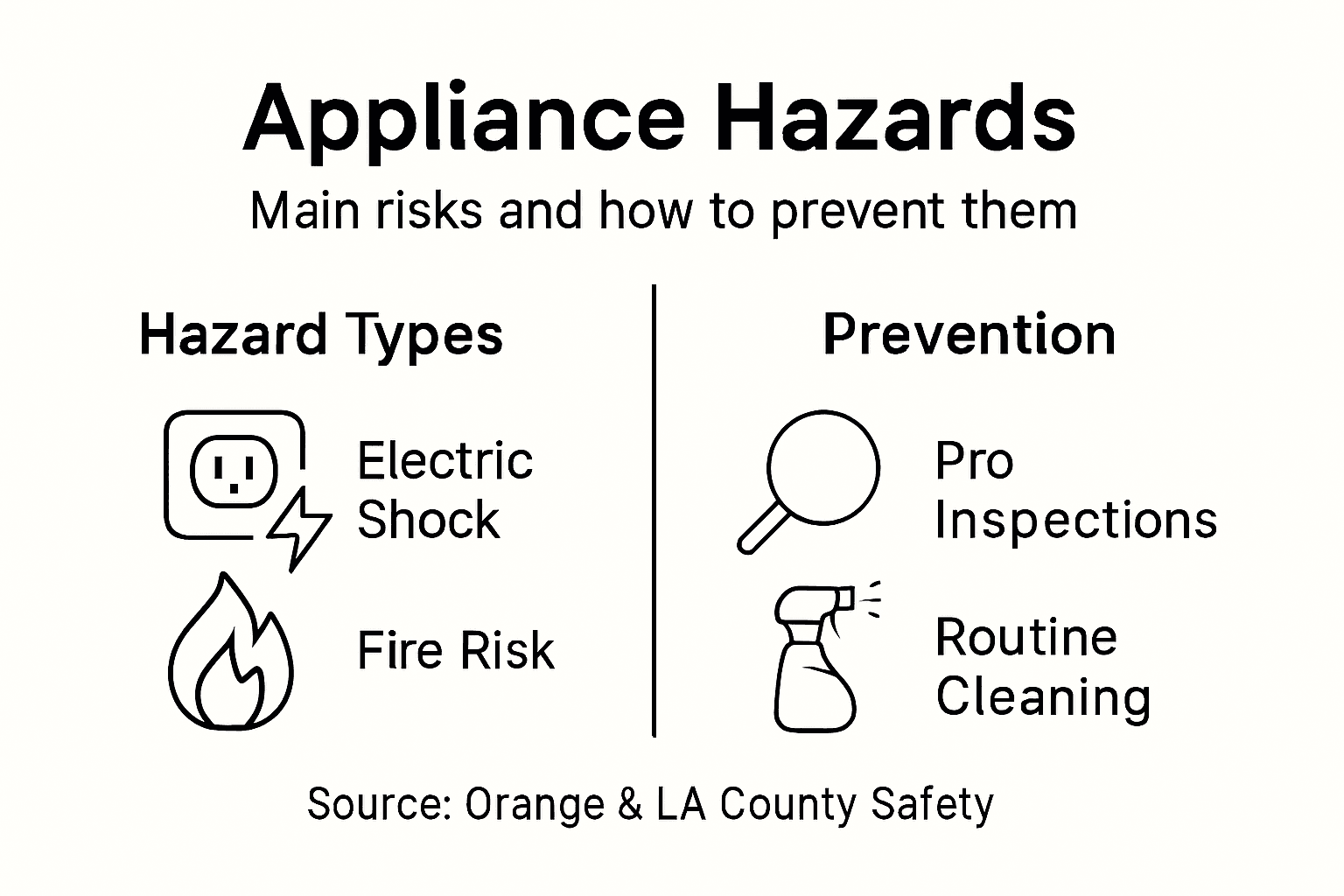
Every appliance carries multiple risk types. Knowing what to watch for empowers you to catch problems before they become emergencies.
Electrical Hazards and Shock Risks
Electrical shock represents one of the most immediate dangers in appliance repair. Improper handling of electrical appliances can lead to serious hazards like electrocution and burns, which is why strict safety standards exist.
Electrical hazards develop from:
- Damaged power cords with exposed wires
- Faulty grounding in older installations
- Water exposure near electrical components
- Improper wiring or loose connections
- Using non-certified parts or tools during repairs
You might notice tingling sensations when touching your refrigerator, or sparks when plugging in your dryer. These are serious warnings requiring immediate professional attention. Never attempt electrical repairs yourself.
Fire Hazards and Prevention
Fires from appliances spread fast and destroy homes. Dryers cause thousands of house fires annually in California because lint accumulates in vents, creating combustible blockages.
Common fire sources include:
- Clogged dryer vents restricting airflow
- Faulty heating elements in ovens or stoves
- Damaged insulation around electrical components
- Lint buildup in refrigerator coils
- Grease accumulation in range hoods
Regular maintenance prevents most fire hazards. Technicians inspect these areas during service calls and clean blockages before they become dangerous.
Mechanical and Gas Hazards
Common hazards associated with appliance repair include electrical shock, fire, and mechanical injuries, with risk prevention requiring proper training and hazard identification. Gas appliances add another layer of risk through potential leaks.
Mechanical dangers involve:
- Sharp edges on metal components
- Heavy equipment that can crush hands or feet
- Rotating parts that catch clothing or hair
- Pressurized systems that explode if improperly handled
Gas hazards include:
- Natural gas or propane leaks creating explosion risks
- Carbon monoxide buildup from faulty ventilation
- Improper gas line connections
- Pilot light failures in ovens or water heaters
A gas leak isn’t always obvious—professional technicians use specialized equipment to detect invisible hazards in your appliances.
Chemical and Refrigerant Hazards
Refrigerants used in air conditioning and refrigeration systems are hazardous chemicals. Improper handling causes skin burns, eye damage, and respiratory problems.
Chemical safety requires:
- Certified handling of refrigerants during repairs
- Proper disposal of hazardous materials
- Ventilation when chemicals release fumes
- Protective equipment rated for chemical exposure
What You Can Monitor at Home
Watch for these warning signs requiring immediate professional attention:
- Burning smells or smoke from appliances
- Visible sparks or electrical arcing
- Gas odor near your stove or water heater
- Unusual vibrations or noises
- Water pooling near appliances
- Appliances that feel hot to touch unexpectedly
Pro tip: If you notice any warning sign like burning smells or gas odors, unplug the appliance immediately and call a professional—don’t wait to see if it gets worse.
Below is a summary of major appliance hazards and the professional response needed:
| Hazard Type | Example Warning Sign | Why a Technician Is Needed |
|---|---|---|
| Electrical | Tingling, sparks, smoke | Proper diagnostics, safe repairs |
| Fire | Burning odor, hot areas | Locating source, cleaning/blockage fix |
| Gas/Chemical | Gas smell, dizziness | Leak detection, system shut-off |
| Mechanical | Loud noise, jamming | Safe disassembly, injury prevention |
Homeowner Responsibilities and Choosing Trusted Technicians
You’re not just hiring someone to fix your appliance—you’re inviting them into your home and trusting them with your family’s safety. This responsibility falls on both shoulders: the technician’s expertise and your judgment in choosing that person.
Homeowners in Orange and Los Angeles County have critical responsibilities in ensuring appliance safety. The decisions you make when hiring directly impact whether your home stays safe or becomes vulnerable to hazards.
Your Role in Appliance Safety
Appliance safety isn’t entirely the technician’s job. You share responsibility by making informed choices and maintaining equipment properly between service calls.
Your responsibilities include:
- Researching and vetting technicians before hiring
- Asking about certifications and credentials
- Scheduling regular maintenance, not just emergency repairs
- Reporting problems immediately rather than waiting
- Keeping records of all service work completed
- Following manufacturer maintenance recommendations
Homeowners who ignore warning signs or skip maintenance create conditions where problems escalate into emergencies. Professional technicians can fix many issues, but prevention starts with you.
Verifying Credentials and Certifications
Homeowners should ensure technicians are properly certified and qualified, verifying credentials to understand the critical role they play in maintaining safe appliances. This verification step protects your home and ensures compliance with safety regulations.
Before hiring, verify:
- Valid California state licensing for the work type
- Current certifications from recognized organizations
- Insurance coverage protecting your home
- Background check or references from past customers
- Specific certifications for your appliance brand
Legitimate technicians won’t hesitate to provide this information. If someone refuses to discuss their credentials, that’s your answer—look elsewhere.
Finding Certified Professionals
Certified appliance technicians have demonstrated expertise through accredited testing, assuring higher standards of safety and quality in service. Choosing certified professionals prevents appliance-related accidents and ensures proper maintenance.
When searching for a technician, prioritize:
- Certifications from industry organizations
- Years of experience with your specific appliance type
- Positive customer reviews mentioning safety and professionalism
- Local reputation in Orange or Los Angeles County
- Warranty or guarantee on completed work
Cheap repairs from uncertified technicians often cost more in the long run through repeat failures and dangerous shortcuts.
Red Flags When Hiring
Some warning signs indicate you should keep looking:
- Technician arrives without proper safety equipment
- No clear explanation of the problem or solution
- Refuses to provide written estimates or warranties
- Pressure to authorize work immediately
- No insurance or licensing documentation
- Unusually low prices compared to competitors
- Unwilling to discuss safety procedures
Trusting your instincts matters. If something feels off about a technician’s professionalism or communication, trust that feeling.
Building a Relationship With Your Technician
Once you find a qualified technician, maintain that relationship. Consistent technicians understand your appliances and can catch emerging problems before they become dangerous.
After service work:
- Ask questions about what was done and why
- Request documentation of all repairs
- Understand maintenance recommendations going forward
- Schedule regular inspections for high-risk appliances
- Keep records for warranty and insurance purposes
Pro tip: Save contact information for your trusted technician and call them directly for future work rather than constantly searching for new service providers—consistency builds expertise about your specific appliances.
Protect Your Home with Trusted Local Appliance Technicians
Your home’s safety depends on skilled technicians who understand the critical role of appliance safety discussed in this article. Faulty repairs and overlooked hazards can quickly turn minor malfunctions into major dangers like fires or gas leaks. With licensed professionals serving Orange County and Los Angeles County, Appliances Repair MD Tech connects you with experts trained to follow strict safety protocols and deliver reliable repairs for refrigerators, dryers, ovens, and more.
Don’t wait until a small problem becomes an emergency. Visit Appliances Repair MD Tech now to book your appointment online with certified technicians who emphasize safety and quality on every job. Protect your family by choosing local professionals committed to compliance, thorough inspections, and clear communication about your appliance’s condition. Act today and experience service built on trust and expert care.
Frequently Asked Questions
What are the primary responsibilities of appliance technicians regarding safety?
Appliance technicians are responsible for diagnosing problems safely, using proper tools and safety equipment, following manufacturer specifications, testing equipment post-repair, and identifying potential safety issues beyond the immediate problem.
How can I ensure that the technician I hire is qualified for appliance repairs?
To ensure a technician is qualified, verify their state licensing, specific certifications for your appliance brand, insurance coverage, years of experience with similar equipment, and check customer reviews for reliability and professionalism.
What are common appliance hazards that technicians look for during repairs?
Common hazards include electrical risks like damaged cords, fire hazards from clogged vents, gas leaks from faulty connections, mechanical dangers from moving parts, and chemical exposure from refrigerants or cleaning products.
Why is it important for technicians to follow safety standards during repairs?
Following safety standards is crucial to prevent accidents such as electrical shocks, fires, and gas leaks. Qualified technicians utilize standardized protocols to protect both themselves and your home during repairs.
Recommended
- Broan repair In Irvine Orange CA
- Refrigerator Ice Machine Repair: Your Comprehensive Guide – MDTECH APPLIANCE REPAIR
- Hood Installation & Repair: Expert Fixes for Home Essentials
- Plumbing Drain Repair – Orange County, California – MDTECH APPLIANCE REPAIR
- Role of Locksmith in Accessibility: Complete Guide – A To Z Locksmith Inc