
Setting your oven to 350°F only to discover burnt edges and raw centers can turn any dinner in Orange or Los Angeles County into a guessing game. Cooking inconsistencies often trace back to hidden temperature inaccuracies, not your technique. Proper calibration ensures temperature measurement accuracy by aligning your oven’s display with the real heat inside, protecting your meals and your confidence in every bake. Learn how regular calibration transforms your kitchen with reliable, predictable results.
Table of Contents
- What Oven Calibration Really Means
- Types of Oven Inaccuracy and Causes
- How Calibration Impacts Cooking Results
- Steps and Frequency for Proper Calibration
- Common Oven Calibration Mistakes to Avoid
Key Takeaways
| Point | Details |
|---|---|
| Importance of Calibration | Ensuring your oven’s temperature matches the actual heat is crucial for successful cooking and baking. |
| Periodic Checks Recommended | Regular calibration checks (every 12-24 months) are necessary to maintain accuracy over time. |
| Professional Calibration Benefits | Hiring a technician ensures accurate adjustments, improving both cooking consistency and food safety. |
| Common Inaccuracies | Home ovens often have significant temperature inaccuracies, leading to inconsistent cooking results and food safety risks. |
What Oven Calibration Really Means
Oven calibration sounds technical, but here’s what it really comes down to: making sure your oven’s temperature display matches the actual heat inside. When you set your oven to 350°F, you need the interior to actually reach 350°F, not 330°F or 375°F. That difference matters more than most homeowners realize. Without proper calibration, your recipes fail, cookies burn while centers stay doughy, and you waste ingredients trying to figure out why nothing cooks the way it should.
Calibration distinguishes between two completely different things that people often confuse. Precision means your oven heats to the same temperature repeatedly, whether that temperature is right or wrong. Accuracy means your oven heats to the correct temperature you’ve selected. You can have a super precise oven that’s still wildly inaccurate. That’s the trap. Calibration ensures temperature measurement accuracy by comparing and adjusting your oven against known standards. In practical terms, this means checking what your oven actually does versus what it claims to do, then making corrections.
The technical side involves establishing accurate temperature outputs and maintaining traceability to standards. What this means for your Orange County kitchen is straightforward: calibration corrects errors in your oven’s temperature sensor or heating elements. The process typically involves testing your oven’s actual temperature at multiple settings and noting any discrepancies. Most professional technicians use calibrated thermometers to measure the real interior temperature while your oven reports its own reading. When they find a gap, they adjust the oven’s thermostat or sensor so future readings match reality.
Here’s why this matters beyond just baking better cookies:
- Food safety — Roasted meats and poultry require specific internal temperatures to prevent foodborne illness
- Equipment longevity — Ovens that heat unevenly or to incorrect temperatures degrade faster
- Economic impact — Ruined meals and wasted ingredients add up quickly in a household
- Cooking consistency — Your favorite recipes work reliably when temperatures are accurate
- Confidence in the kitchen — You stop second-guessing whether your oven or your technique is the problem
The beauty of calibration is that it’s not a one-time fix and forget situation. Accurate calibration is both a food safety and economic concern, and many homeowners should plan for periodic checks. Ovens used frequently or those that have taken a hit need recalibration more often. Think of it like tire rotation for your car, not an emergency repair.
When technicians calibrate ovens here in Orange and Los Angeles Counties, they’re not just twisting random knobs. They’re making precise adjustments based on measurement data. The goal is achieving accuracy within ±2°F, which means if you set 350°F, your oven actually reaches somewhere between 348°F and 352°F. That level of precision sounds small until you’re trying to achieve that perfect golden-brown finish on your Thanksgiving turkey or get croissants to proof at exactly the right temperature.
Proper calibration prevents safety risks, equipment damage, and wasted ingredients from temperature readings that are off by just 25 or 30 degrees.
Pro tip: If your oven hasn’t been professionally calibrated and you’ve noticed cooking inconsistencies over the past year, call a licensed technician to check it—don’t waste another batch of meals guessing whether the problem is your oven or your skills.
Types of Oven Inaccuracy and Causes
Your oven’s temperature reading and actual interior heat are not always the same thing. Most home ovens exhibit significant temperature inaccuracies, often ranging from ±25 to 50°F off the mark. That’s not a small variance. If you set your oven to 375°F, the actual temperature inside could swing anywhere from 325°F to 425°F. That difference explains why your roasted vegetables turn to charcoal on one rack while barely softening on another.
Understanding what causes these gaps helps you know whether your oven needs professional calibration or if something else is happening. The culprits fall into several categories that directly impact your cooking results.
Manufacturing Tolerances and Component Wear
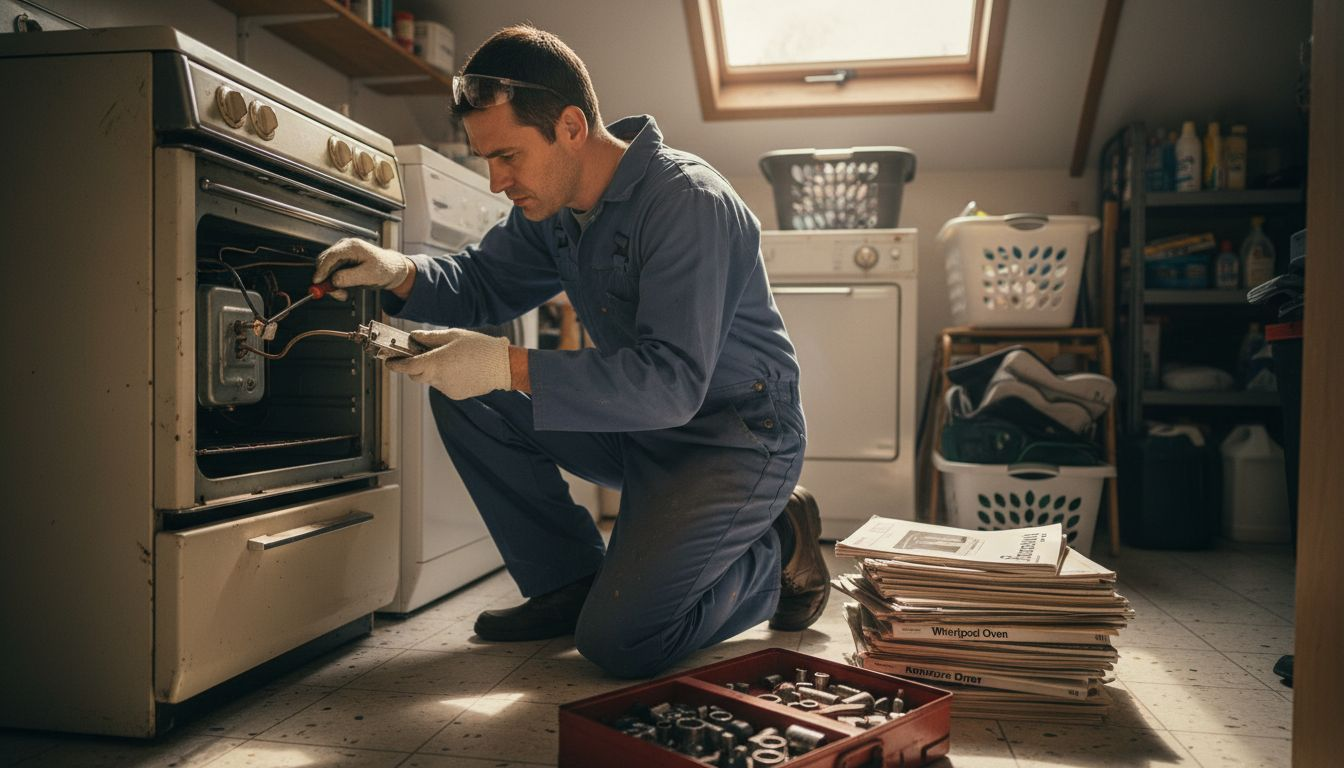
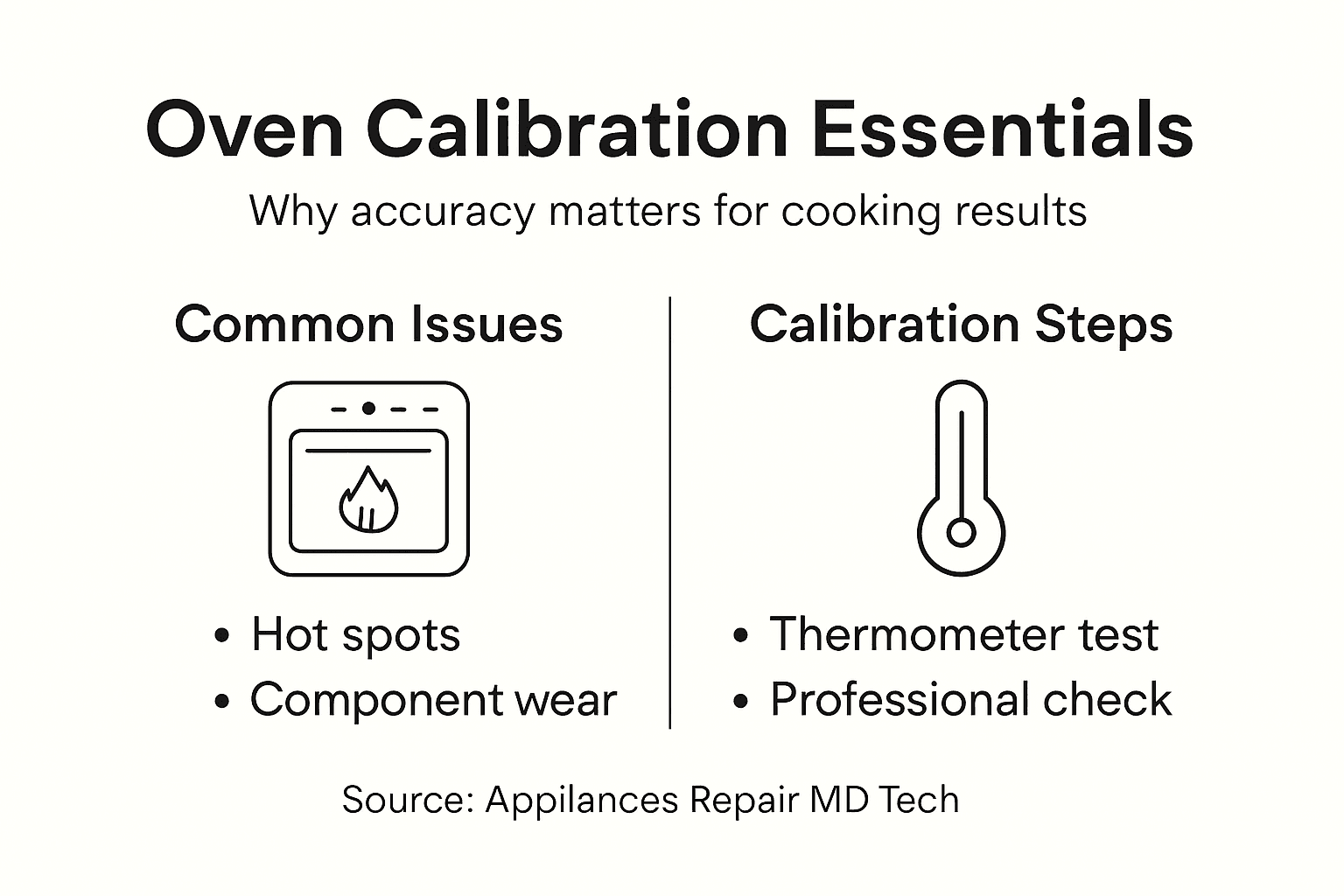
When your oven left the factory, it came with certain temperature tolerances built into its design. Manufacturers balance cost with accuracy, and that balance doesn’t always favor precision. Over time, the components that control temperature degrade. Your oven’s thermostat, heating elements, and temperature sensor all wear out gradually. A thermostat that was accurate five years ago may be drifting now. Heating elements lose efficiency as they age, requiring more electrical power to reach the same temperatures. These are not sudden failures, but slow degradation that sneaks up on homeowners.
Uneven Heat Distribution and Hot Spots
Ovens rarely heat evenly from top to bottom or front to back. Most home ovens exhibit hot spots and cold areas within the oven cavity that contribute to uneven cooking temperatures. This happens because air circulation inside your oven isn’t uniform. Heat rises, so the top rack naturally runs hotter than the bottom. The back of your oven, closer to the heating element, reaches higher temperatures than the front. Professional bakers work around this by rotating pans and using multiple racks strategically. Home cooks often don’t realize this is happening, assuming their recipe or technique is the problem.
Convection ovens attempt to solve this by circulating air with a fan, but even they develop problem spots over time as the fan ages or ductwork accumulates dust.
Sensor Placement and Environmental Factors
Your oven’s temperature sensor sits in one specific location inside the cavity. If that sensor is positioned near a heating element, it reads higher temperatures. If it’s in a cooler corner, it reads lower. The sensor also responds slowly to temperature changes, so rapid fluctuations in your kitchen environment affect its readings. Opening the oven door repeatedly lets heat escape, which the sensor registers, causing the heating element to fire up again and overshoot the target temperature. Humidity levels in your kitchen influence how heat transfers inside the oven, especially in convection models where air circulation matters more.
Oven humidity influences baking outcomes and affects thermal performance and heat transfer. High humidity from cooking nearby or weather conditions impacts how efficiently your oven distributes heat.
Calibration Drift Over Time
Even if your oven was perfectly calibrated when you bought it, calibration drifts over time due to wear and external factors. The longer you own an oven, the more likely its accuracy has shifted. Heavy use accelerates this drift. Ovens in busy kitchens degrade faster than lightly used ones. Damage also triggers drift, whether from a power surge, a dropped baking sheet, or physical impact during moving.
Here’s what typically goes wrong:
To help clarify common oven temperature inaccuracies, here’s an overview:
| Inaccuracy Type | Likely Cause | Typical Effect | Recommended Action |
|---|---|---|---|
| Manufacturing Tolerance | Original component limitations | Off by ±25°F from set temp | Professional calibration or adjustment |
| Component Wear | Sensor/element aging | Gradual temp drift over years | Schedule technician every 12–24 months |
| Hot Spots | Uneven heat distribution | Uneven cooking, charred/burned areas | Rotate pans, calibrate oven, check convection fan |
| Environmental Changes | Humidity, altitude impacts | Recipe inconsistency, slow cooking | Use external thermometer, calibrate as needed |
- Thermostat malfunction — The dial or digital display loses calibration
- Heating element degradation — Elements don’t reach their rated temperature
- Sensor failure — The temperature probe reads inaccurately or erratically
- Insulation breakdown — Heat escapes more easily, requiring longer preheat times
- Fan wear (convection ovens) — Air circulation becomes less effective
Temperature inaccuracies ranging from 25 to 50°F are common in home ovens, making calibration essential for consistent cooking results.
Pro tip: If you notice cooking times increasing, foods burning unevenly, or recipes that used to work now failing, your oven is likely experiencing calibration drift—this is the perfect time to call a licensed technician rather than keep adjusting recipes.
How Calibration Impacts Cooking Results
A properly calibrated oven transforms your kitchen from a place of culinary surprises to a predictable, reliable cooking space. When your oven temperature is accurate, your recipes work consistently. When it’s off by 25 or 30 degrees, everything falls apart. The impact shows up in ways both subtle and obvious, affecting everything from texture to food safety to the money you spend replacing failed meals.
Think about the last time a recipe disappointed you. Your cookies spread too thin and burnt at the edges. Your roasted chicken looked golden but tasted dry inside. Your bread didn’t rise properly. In many cases, an uncalibrated oven was the culprit, not your technique or ingredient quality. Accurate calibration directly affects food safety and quality by ensuring internal temperatures reach safe levels and preventing undercooking or overcooking.
The Real Difference in Your Daily Cooking
An accurate oven means your baked goods cook evenly and predictably. Cookies bake to the exact degree of crispness you want. Pastries develop the right structure without burning. Roasted vegetables caramelize properly instead of either steaming or charring. Meats reach their target doneness without requiring constant monitoring or guesswork.
Here’s what a calibrated oven delivers:
- Consistent results — Your favorite recipe works the same way every time you make it
- Time savings — You stop opening the oven door repeatedly to check if food is done
- Better texture — Cookies, cakes, and breads develop proper structure and browning
- Accurate doneness — Roasted meats and poultry cook to the right internal temperature safely
- Less food waste — Fewer ruined batches mean fewer ingredients wasted
- Kitchen confidence — You trust your oven instead of second-guessing every recipe
These benefits matter daily in Orange and Los Angeles County kitchens where homeowners juggle busy schedules and want reliable results.
Food Safety Implications
Beyond taste and texture, calibration affects whether your food is actually safe to eat. Poultry must reach 165°F internally to eliminate harmful bacteria. Ground meats need 160°F. Pork reaches safety at 145°F. These temperatures aren’t suggestions. An oven that reads 350°F but actually runs at 325°F won’t properly pasteurize these proteins, even if you follow the recipe timing exactly.
Improper calibration can lead to inaccurate temperature readings, resulting in unsafe food or compromised texture and flavor. This risk applies to casseroles, baked egg dishes, and any recipe relying on oven heat to reach safe internal temperatures. You can’t tell by looking whether chicken or ground beef is safely cooked. The oven must do its job accurately.
Systematic Errors and Measurement Consistency
When your oven lacks proper calibration, every meal becomes subject to systematic errors in temperature measurement. Think of systematic error as your oven’s personal bias. If it always runs 30 degrees hot, that’s consistent in one direction. But your oven’s behavior may be erratic, hitting different temperatures on different days or fluctuating wildly during cooking. Proper calibration reduces systematic errors and ensures consistent results.
Consistency matters as much as accuracy. An oven that is consistently 25 degrees hot is easier to work with than one that fluctuates wildly. Professional bakers compensate for known oven quirks, adjusting recipes accordingly. Home cooks don’t have that luxury. They need an oven that behaves predictably.
Long-Term Kitchen Economics
Calibration affects your wallet more than you might realize. Every failed batch of cookies, ruined roast, or dried-out casserole represents wasted groceries. Over a year, those small failures add up. A family that cooks regularly might waste $200 to $500 annually on failed recipes due to temperature inaccuracies. Professional calibration costs $100 to $200 typically, making it a worthwhile investment that pays for itself within months.
When your oven is calibrated accurately, cooking becomes predictable, safe, and economical—eliminating the guesswork that wastes time, ingredients, and money.
Pro tip: If you’ve been compensating for cooking problems by adjusting recipes or increasing cooking times, stop—schedule a professional calibration first to see whether your oven is the problem rather than continuing to adjust recipes that might already be correct.
Steps and Frequency for Proper Calibration
Proper oven calibration isn’t complicated, but it does require precision and the right tools. You have two realistic options: do it yourself with basic testing methods or call a professional technician. Most homeowners benefit from professional calibration, especially for ovens they use regularly. That said, understanding how the process works helps you decide what’s right for your situation and recognize when your oven needs attention.
DIY Calibration Methods
If you want to test your oven’s accuracy yourself, you’ll need an oven-safe thermometer designed for accurate temperature measurement. Don’t rely on the built-in dial or digital display. Those are what you’re testing. Place your calibrated thermometer in the center of the oven cavity and preheat to 350°F. Wait 15 minutes for the temperature to stabilize, then check the thermometer reading. If it matches your oven’s display within a few degrees, your oven is reasonably accurate. If the difference exceeds 10 or 15 degrees, your oven needs professional adjustment.
Proper calibration involves standardized procedures such as ice-point and boiling-point methods. The ice-point method uses a bowl of crushed ice mixed with water to create a 32°F reference point. The boiling-point method uses boiling water to create a 212°F reference point. These methods work for standalone thermometers but aren’t practical for most home ovens. That’s why professional technicians exist.
Here’s what a basic DIY test requires:
Here’s a quick comparison of oven calibration methods:
| Calibration Method | Tools Needed | Accuracy Potential | Best For |
|---|---|---|---|
| DIY (Home Testing) | Oven-safe thermometer | Moderate (±10–15°F) | Simple checks and identifying issues |
| Professional Service | Calibrated equipment, technician expertise | High (±2°F) | Reliable adjustment and long-term accuracy |
| Manual Adjustment | Oven’s built-in calibration feature | Moderate (if available) | Older ovens or models with calibration screw |
| Digital Adjustment | Electronic offset controls | High (if used correctly) | Newer digital ovens with offset settings |
- An accurate oven thermometer (not your oven’s built-in display)
- Patience for proper preheating and stabilization
- Multiple temperature tests across different settings
- Documentation of results to track patterns over time
- Acceptance that this only identifies problems, not fixes them
Professional Calibration Process
When you call a licensed technician from Appliances Repair MD Tech or a similar local service, they bring calibrated equipment and expertise. The technician places professional-grade thermometers in multiple locations inside your oven cavity, noting the temperatures at different rack levels and positions. They test your oven at various temperature settings like 250°F, 350°F, and 450°F. They measure how long your oven takes to reach temperature and whether it overshoots or undershoots. This data reveals exactly how your oven behaves.
If adjustments are needed, they access your oven’s thermostat or sensor, typically located behind the control panel or in the oven cavity. They make precise mechanical or electronic adjustments to correct the error. The entire process typically takes 30 minutes to an hour. They test again afterward to confirm the corrections worked. This is why professional calibration costs money, but it delivers reliability that DIY testing cannot.
How Often Should You Calibrate
Frequency depends on several factors. Calibration intervals depend on instrument stability, usage, and criticality of measurements. A heavily used kitchen oven should be checked annually or every 18 months. Ovens used occasionally can go 2 to 3 years between calibrations. High-end ovens with digital controls may hold accuracy longer than basic models. Environmental conditions matter, too. Kitchens with high humidity or extreme temperature swings may experience faster calibration drift.
You should also recalibrate immediately after:
- Dropping the oven or accidentally striking it hard
- Having repairs performed on the heating elements, thermostat, or temperature sensor
- Noticing obvious cooking changes or inconsistencies
- Moving the oven to a new location
- Extended storage periods of several months or longer
Think of calibration like dental checkups. Small problems caught early prevent expensive damage later. An oven that’s drifting by 10 degrees annually becomes a 50-degree problem within five years. That’s when ruined meals become routine rather than occasional disappointments.
Tracking Your Calibration Schedule
Create a simple record of when you last calibrated your oven. Note the date, the technician who performed the work, any adjustments made, and the results. This history helps you see patterns and plan future maintenance. If your oven consistently drifts 15 degrees every 18 months, you know to schedule calibration on that timeline. If it holds accuracy for three years, you can space appointments further apart.
Regular calibration prevents the slow drift that turns a reliable oven into an unpredictable cooking disappointment.
Pro tip: Schedule your oven calibration during slow cooking seasons, like early summer or late fall, so any downtime doesn’t coincide with holiday gatherings or meal-prep seasons when you rely on your oven most.
Common Oven Calibration Mistakes to Avoid
Most homeowners don’t deliberately sabotage their oven calibration efforts, but common mistakes happen anyway. These errors undermine the entire point of checking your oven’s accuracy in the first place. Knowing what not to do saves you time, money, and frustration. It also prevents you from getting false readings that give you confidence in an oven that’s actually performing poorly.
The biggest mistake is assuming your oven is fine without ever testing it. Years pass. Your oven drifts further and further off. By the time you finally check, the problem is so severe that you’ve wasted hundreds of dollars on failed recipes. Don’t let that happen. The second most common mistake is testing your oven incorrectly, which gives you unreliable data that can’t be trusted.
Improper Testing and Placement Errors
Thermometer placement matters more than most people realize. If you place your oven thermometer touching the oven wall, heating element, or rack, you get false readings. The thermometer needs to sit in the middle of the oven cavity, away from all surfaces. Even then, temperature varies by location. The top rack runs hotter than the bottom. The back corner differs from the front center. Common mistakes include improper placement of the thermometer during checks, not accounting for altitude, and neglecting recalibration after drops or damage.
Another placement error happens when you test your oven immediately after preheating. The temperature hasn’t stabilized yet. Your oven likely overshoots its target during the initial heat-up phase, then settles lower. Wait 15 to 20 minutes after the preheat beep before checking the actual temperature. This gives the heating elements time to cycle and the internal temperature to reach equilibrium.
Thermometer-specific placement mistakes include:
- Inserting the stem too shallowly, not reaching the actual air temperature
- Allowing the stem to touch the oven cavity walls or bottom
- Not fully submerging the thermometer in ice water during calibration checks
- Checking temperature while the oven door is still open
- Testing at only one oven setting instead of multiple temperatures
Neglecting Frequent Verification and Post-Damage Checks
You test your oven once, find it’s accurate, then never check again for five years. That’s a recipe for disaster. Ovens drift slowly and unpredictably. An oven that’s accurate today can be 30 degrees off six months later due to wear, environmental changes, or subtle component degradation. Common mistakes include failing to calibrate frequently and neglecting recalibration after dropping or damaging the instrument.
Even worse is ignoring obvious signs that your oven has drifted. If you drop your oven or accidentally slam it, the impact can shift internal components. The thermostat may misalign. The temperature sensor may shift position. Heavy vibrations from slamming cabinet doors or moving appliances nearby can also affect accuracy. After any jarring incident, test your oven. Don’t assume it’s still working fine.
The same goes for repairs. If a technician replaces your heating element, oven seal, or any internal component, your oven’s calibration may have changed. Request a calibration check after significant repairs. Don’t just assume everything is fine.
Using Unverified Methods and Ignoring Manufacturer Instructions
Some homeowners attempt to calibrate their ovens without proper guidance. They try boiling water tests without accounting for altitude, which throws off their reference point. Errors arise from improperly performed calibration, such as not using enough ice water or immersing the thermometer stem incorrectly. They read vague online advice instead of consulting their oven’s manual or calling a professional.
Your oven’s manual contains specific information about whether calibration adjustments are even possible. Some ovens have a calibration adjustment screw or nut. Others have digital controls that allow offset adjustments. Many ovens can’t be user-adjusted at all. Attempting to adjust a non-adjustable oven wastes your time and may damage components. That’s when you stop guessing and call a licensed technician.
Avoid these common method mistakes:
- Relying on oven thermometers that haven’t been verified themselves
- Boiling water at sea level calibration points when you live at high altitude
- Assuming your kitchen thermometer is accurate without independent verification
- Ignoring your oven’s manual instructions about calibration
- Mixing different calibration methods without understanding how they differ
Infrequent Calibration and Failing to Document Results
Most homeowners never calibrate their ovens at all. Those who do often wait years between checks. It is critical to frequently verify accuracy, especially after drops or exposure to sudden temperature shifts to avoid misinformation causing cooking errors or food safety hazards.
Without documentation, you can’t track patterns. You don’t know if your oven drifts gradually or suddenly. You can’t predict when the next calibration is needed. A simple notebook entry or digital note takes seconds but provides valuable information. Record the date, temperature tested, your oven’s reading, the actual temperature, and any observations about how your oven behaved.
Frequent calibration verification prevents the slow, unnoticed drift that transforms a reliable oven into a source of cooking failures and food safety risks.
Pro tip: Never attempt to adjust your oven’s calibration yourself unless your manual explicitly describes how to do it—when in doubt, call a professional technician who can make precise adjustments and verify them afterward, saving you money and frustration long term.
Ensure Your Oven Performs Perfectly with Expert Calibration Services
If you have noticed inconsistencies in your oven’s temperature or cooking results, it may be time for professional calibration. This article highlights how even small temperature inaccuracies can lead to ruined meals, safety risks, and wasted money. Avoid the frustration of cooking failures caused by calibration drift or sensor wear by trusting licensed technicians who understand precise oven adjustments and testing methods.
Get reliable and accurate oven performance back today through the trusted appliance repair experts at Appliances Repair MD Tech. Serving Orange County and Los Angeles County, they provide specialized oven calibration and repair services that restore your cooking confidence and keep your meals safe. Don’t wait for another ruined batch or unsafe meal — book a professional calibration visit now. Learn more about their comprehensive appliance repair services and schedule your appointment online for fast, local support.
Frequently Asked Questions
Why is it important to calibrate my oven regularly?
Calibration is crucial because it ensures the temperature reading displayed on your oven matches the actual heat inside. Proper calibration helps prevent cooking inconsistencies, maintains food safety, and reduces ingredient waste, making your cooking experience more reliable.
How often should I have my oven calibrated?
It is recommended to calibrate your oven every 12 to 24 months, particularly if you notice cooking inconsistencies. Ovens that see heavy use or have been damaged may require calibration more frequently.
What are the signs that my oven needs calibration?
Signs include inconsistent cooking results, such as unevenly baked goods, burnt edges on cookies, or longer cooking times than usual. If you notice these issues, it may be time to check your oven’s calibration.
Can I calibrate my oven myself, or should I hire a professional?
While some basic DIY methods can help identify temperature inaccuracies, hiring a professional is recommended for precise calibration adjustments. Professionals use calibrated thermometers and have the expertise to ensure your oven operates accurately.