
Few things are more frustrating for Southern California homeowners than reaching for ice on a hot day in Orange County or Los Angeles County only to find an empty bin or smelly, misshapen cubes. As refrigerators now rely on intricate systems to deliver ice at the push of a button, even the smallest malfunction can disrupt daily routines. Understanding the complexity of modern ice makers empowers you to spot issues fast and get the local expertise needed for prompt repair.
Table of Contents
- Ice Maker Malfunction Explained For Homeowners
- Types Of Ice Maker Failures And Symptoms
- Common Causes Of Malfunction In California Homes
- Impact, Risks, And Repair Costs For Homeowners
- Troubleshooting Steps And Professional Solutions
Key Takeaways
| Point | Details |
|---|---|
| Understand Your Ice Maker’s Components | Familiarize yourself with the critical parts of your ice maker to effectively diagnose and address common issues. |
| Water Quality Matters | Regularly clean the water filter and inspect the water supply to prevent mineral buildup and improve ice quality. |
| Monitor Temperature and Maintenance | Maintain consistent refrigerator temperatures and schedule professional maintenance twice a year to ensure optimal performance. |
| Act Early on Warning Signs | Promptly address any unusual noises, leaking water, or inconsistent ice production to prevent costly damage and repairs. |
Ice maker malfunction explained for homeowners
Ice makers have become an essential feature in modern refrigerators, providing convenience with just a push of a button. However, these integrated appliances can encounter complex operational challenges that frustrate homeowners. Consumer Reports highlights that nearly all contemporary refrigerators include ice makers, but their intricate design makes repairs increasingly difficult.
Understanding how an ice maker functions can help diagnose potential issues. The basic mechanism involves several critical components:
- Water inlet valve that supplies liquid to ice molds
- Freezing compartment where water transforms into cubes
- Heating element that helps release frozen cubes
- Ejection mechanism that deposits ice into storage bin
Common malfunctions often stem from these core components failing or experiencing disruption. Some frequent problems include:
- Ice cubes with unusual taste or odor
- Reduced ice production
- Incomplete ice cube formation
- Mechanical failures in cube release mechanism
Water quality plays a significant role in ice maker performance. Mineral deposits, hard water, and impurities can cause blockages and reduce efficiency. Consumer Reports recommends regular cleaning of the ice bin and surrounding components to maintain optimal functionality.
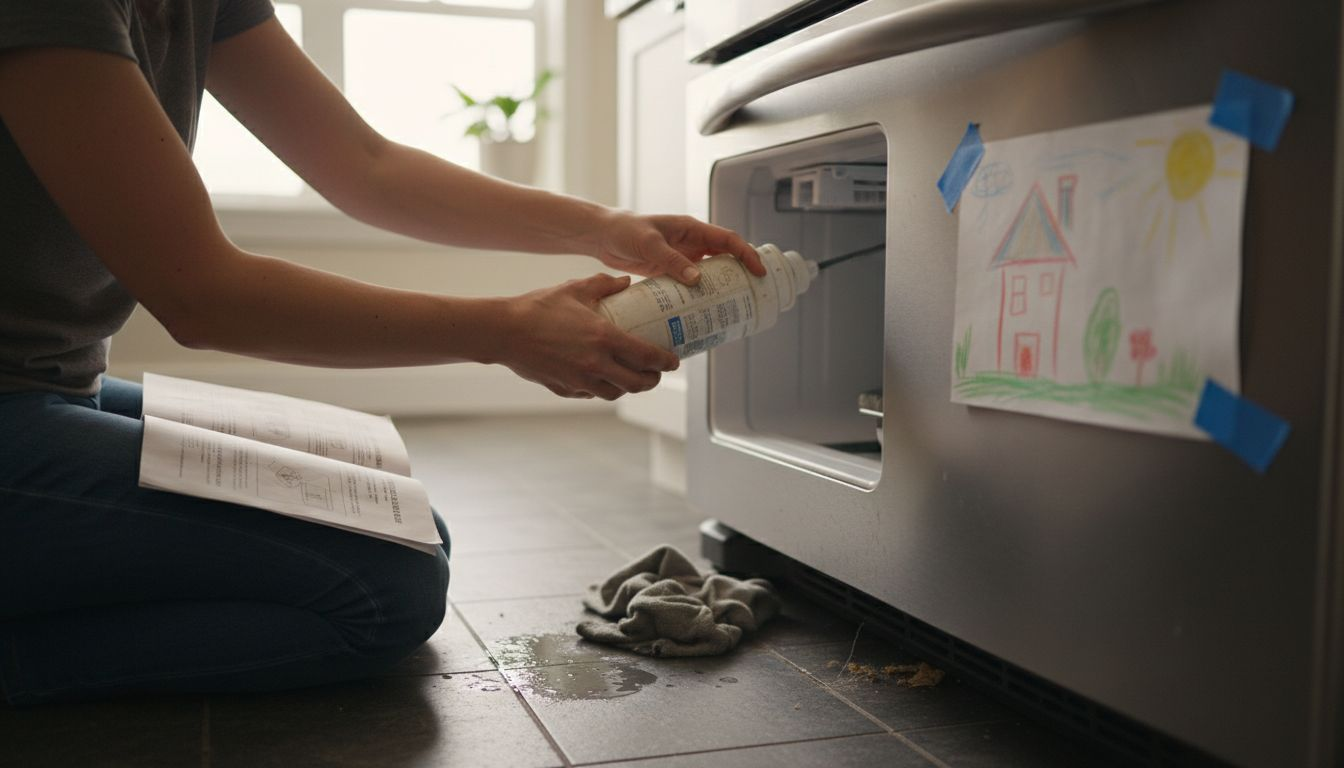
Temperature regulation is another critical factor. Ice makers require precise freezing conditions to operate correctly. Fluctuations in refrigerator temperature can disrupt the ice-making process, leading to incomplete or malformed cubes.
Pro tip: Clean your refrigerator’s water filter every six months and inspect the ice maker quarterly to prevent potential malfunctions.
Types of ice maker failures and symptoms
Ice maker failures can manifest in numerous ways, disrupting the convenient ice production homeowners rely on daily. Consumer Reports identifies several critical failure types that impact refrigerator performance and ice generation capabilities.
The primary categories of ice maker malfunctions include:
- No ice production: Complete stoppage of ice cube generation
- Partial ice formation: Incomplete or malformed ice cubes
- Water leakage: Uncontrolled water flow around ice maker
- Control panel dysfunction: Electronic component failures
Mechanical symptoms often reveal underlying issues with the ice maker’s core components. Food and Agriculture Organization research suggests these mechanical failures can stem from complex freezing mechanism disruptions:
- Frost accumulation blocking ice ejection
- Inefficient freezing time
- Mechanical obstruction in cube release system
- Temperature regulation problems
Water system complications frequently trigger ice maker malfunctions. Critical failure points include:
Here’s a comparison of typical ice maker issues and the best initial response:
| Ice Maker Issue | Visible Sign | Suggested Homeowner Action |
|---|---|---|
| No ice production | Empty ice bin | Check power/water connection |
| Malformed ice cubes | Misshapen or stuck cubes | Inspect freezer temperature |
| Water leaking | Pooling near refrigerator | Examine for clogged drain or valve |
| Odd taste or odor | Unpleasant ice flavor/smell | Replace water filter, clean system |
- Clogged water inlet valve
- Mineral deposit buildup
- Damaged water filters
- Inconsistent water pressure
Warning signs like unusual noises, irregular ice cube shapes, and water pooling underneath the refrigerator should never be ignored.
Electrical components also play a significant role in ice maker performance. Thermistors, control board circuits, and motor mechanisms can fail, causing widespread operational problems.
Pro tip: Document any unusual ice maker symptoms with photos and specific details to help technicians diagnose issues more accurately during repair visits.
Common causes of malfunction in California homes
Ice maker malfunctions in California homes often stem from unique regional challenges that impact appliance performance. Consumer Reports reveals that local water quality and environmental conditions significantly contribute to refrigerator ice maker issues.
Key regional factors affecting ice maker performance include:
- Hard water prevalence in Southern California municipalities
- High mineral content in local water supplies
- Extreme temperature fluctuations
- Increased dust and debris exposure
Water quality problems represent a primary malfunction source. California’s diverse water systems introduce multiple complications:
- Calcium and magnesium buildup in water lines
- Mineral deposit accumulation in inlet valves
- Potential microbial contamination
- Inconsistent water pressure
Class action lawsuit data highlights specific mechanical issues prevalent in California homes, including:
- Water leaks under crisper trays
- Freezing and jamming of mechanical components
- Unusual fan noises
- Over-freezing in ice storage areas
Warning: California’s unique environmental conditions can accelerate ice maker component deterioration.
Environmental stressors play a significant role in ice maker performance. Factors like coastal humidity, desert heat, and urban pollution can compromise refrigerator functionality and accelerate wear on sensitive components.
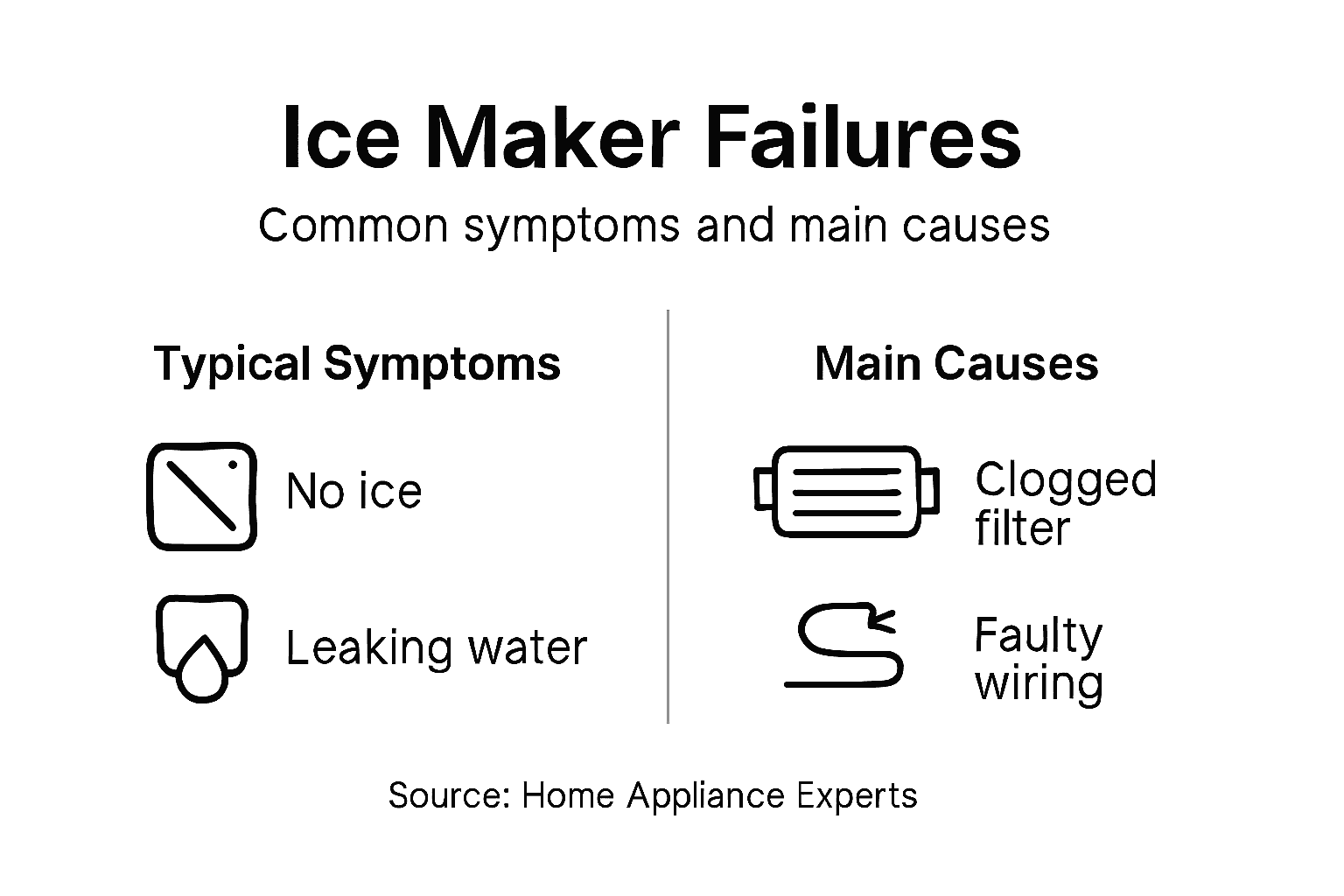
The following table outlines regional factors unique to California and how they impact ice maker reliability:
| California-Specific Factor | Typical Problem Caused | Why This Increases Risk |
|---|---|---|
| Hard water and minerals | Mineral buildup in valves | Reduces water flow, clogs lines |
| Extreme temperature shifts | Component stress and failure | Affects freezing consistency |
| Dust and debris exposure | Fan inefficiency, blockages | Leads to faster wear |
Pro tip: Schedule professional maintenance twice annually to mitigate region-specific ice maker challenges and prevent costly long-term damage.
Impact, risks, and repair costs for homeowners
Ice maker malfunctions can quickly escalate from minor inconveniences to significant financial burdens for California homeowners. Consumer Reports highlights the complex financial implications of refrigerator ice maker failures.
Potential financial impacts include:
- Emergency repair costs ranging from $200-$600
- Potential water damage restoration expenses
- Energy efficiency reduction
- Potential total refrigerator replacement
Property damage risks represent a critical concern for homeowners. Unaddressed ice maker issues can lead to extensive complications:
- Water leakage damaging kitchen flooring
- Moisture-related structural damage
- Potential mold growth in hidden areas
- Electrical system complications
Class action lawsuit evidence demonstrates the potential long-term consequences of persistent ice maker problems:
- Repeated temporary repair attempts
- Significant out-of-pocket expenses
- Emotional stress from ongoing appliance issues
Warning: Ignoring early warning signs can transform a $300 repair into a $3,000 comprehensive damage restoration project.
Repair complexity adds another layer of financial risk. Modern refrigerators often require specialized technicians, with integrated ice maker units demanding complete replacement rather than simple repairs.
Pro tip: Maintain comprehensive home insurance documentation and photograph any water damage immediately to support potential repair claims.
Troubleshooting steps and professional solutions
Ice maker troubleshooting requires a systematic approach to diagnose and resolve complex refrigerator issues. Appliantology experts recommend a structured methodology for identifying and addressing potential malfunctions.
Initial home diagnostic steps include:
- Check water supply line connection
- Verify power connections to ice maker
- Inspect water inlet valve for blockages
- Test ice maker motor functionality
- Examine frost buildup in freezer compartment
Professional diagnostic protocols involve more advanced technical assessment:
- Voltage testing of electrical components
- Thermal fuse inspection
- Solenoid valve performance evaluation
- Comprehensive wiring harness examination
Technical repair guides suggest several critical troubleshooting techniques for persistent issues:
- Manually cycling ice maker motor gears
- Conducting forced defrost cycles
- Checking for obstructions in water fill tubes
- Testing individual electrical components
Warning: Improper troubleshooting can void manufacturer warranties and cause additional damage.
Advanced troubleshooting requires specialized tools and technical expertise. Homeowners should recognize when professional intervention becomes necessary, particularly with complex modern refrigeration systems.
Pro tip: Document all troubleshooting attempts and take clear photographs of any visible issues to provide comprehensive information to repair technicians.
Keep Your Home Comfortable with Expert Ice Maker Repair Service
Ice maker malfunctions can disrupt your daily routine and lead to unexpected costs like water damage and energy inefficiency. If you notice issues such as reduced ice production, unusual ice taste, or water leaks around your refrigerator, these are signs that your ice maker needs professional attention. At Appliances Repair MD Tech, we specialize in diagnosing and fixing complex ice maker problems using skilled technicians familiar with the challenges California homes face including hard water buildup and temperature fluctuations.
Don’t wait for costly repairs or property damage to escalate. Schedule a prompt service with our trusted team to restore your refrigerator’s ice maker to optimal performance today. Experience fast, reliable local repair in Orange County and Los Angeles County tailored to keep your home running smoothly. Visit Appliances Repair MD Tech now to book your appointment and regain your home comfort.
Frequently Asked Questions
What are common symptoms of an ice maker malfunction?
Common symptoms include no ice production, malformed ice cubes, water leakage, and electronic control panel issues.
How can water quality affect my ice maker’s performance?
Water quality can impact ice maker performance due to mineral buildup, which may cause clogs and reduce efficiency.
What initial troubleshooting steps can I take for a malfunctioning ice maker?
Check the water supply line connection, verify power connections, inspect the water inlet valve for blockages, and test the ice maker motor functionality.
When should I seek professional help for my ice maker?
You should seek professional help if troubleshooting fails, if there are electrical component issues, or if you notice signs of water damage due to the malfunction.
Recommended
- Kitchen Faucet Repair – Orange County, California – MDTECH APPLIANCE REPAIR
- Hood Installation & Repair: Expert Fixes for Home Essentials
- Plumbing Drain Repair – Orange County, California – MDTECH APPLIANCE REPAIR
- Understanding Why Pipes Burst: Causes And Effects – Legacy Plumbing & Drain – Emergency Plumbers Of Sacramento