
Most American homeowners are surprised to learn that dirty dryer vents cause around 15,000 house fires each year in the United States, putting families and property at serious risk. If you live in Orange or Los Angeles Counties, concerns about fire hazards are real, but so is the desire to save energy and protect your investment. By understanding the importance of routine dryer vent cleaning, you gain practical tools to keep your home safer and your appliances running at their best.
Table of Contents
- What Is Dryer Vent Cleaning And Why It’s Needed
- Common Dryer Vent Issues And Misconceptions
- Fire Hazards Linked To Dirty Dryer Vents
- Energy Efficiency And Appliance Longevity
- Signs, Costs, And Frequency Of Cleaning
- Professional Vs. DIY Dryer Vent Maintenance
Key Takeaways
| Point | Details |
|---|---|
| Importance of Dryer Vent Cleaning | Regular dryer vent cleaning helps prevent fire hazards, improves appliance efficiency, lowers energy costs, and extends dryer lifespan. |
| Common Misconceptions | Cleaning only the lint trap is not enough because lint can build up deep inside the vent system and create dangerous blockages. |
| Professional vs. DIY Maintenance | DIY maintenance helps with routine care, but professional cleaning ensures hidden lint and debris are completely removed. |
| Monitoring Dryer Performance | Longer drying cycles, overheating, and burning smells often indicate the need for immediate dryer vent cleaning. |
What Is Dryer Vent Cleaning and Why It’s Needed
Dryer vent cleaning is a critical home maintenance task that prevents potential fire hazards and helps your appliance operate more efficiently. This service involves removing lint, dust, and trapped debris from the vent duct that connects your dryer to the outside of your home. According to the National Association of Home Builders, poor dryer maintenance contributes to approximately 15,000 house fires annually in the United States.
The cleaning process focuses on restoring proper airflow throughout the entire dryer exhaust system. When lint accumulates inside the vent, airflow becomes restricted. Restricted airflow forces the dryer to work harder and generate more heat. Excess heat increases energy consumption, shortens appliance lifespan, and creates serious fire risks inside homes throughout Orange County and Los Angeles County.
Many homeowners underestimate how quickly lint can collect inside vent systems. Cleaning the lint trap after each load helps, but lint still travels beyond the filter and settles inside the ductwork over time. Consumer Reports recommends scheduling professional dryer vent cleaning annually while continuing regular lint screen maintenance between service appointments.
Why Routine Cleaning Matters
Routine dryer vent cleaning protects your home and improves appliance performance in several important ways:
- Reduces fire risks caused by highly flammable lint buildup
- Improves airflow so clothes dry faster and more evenly
- Lowers energy bills by reducing unnecessary dryer strain
- Extends appliance lifespan by minimizing overheating and wear
- Prevents moisture problems that may contribute to mold growth
Professional technicians use specialized tools to inspect and clean the full vent system, including hard-to-reach sections hidden behind walls or ceilings. This level of cleaning ensures the entire exhaust pathway remains safe and efficient for long-term use.
Pro Tip: If your dryer suddenly takes longer to dry clothes or feels unusually hot during operation, schedule a vent inspection immediately before the issue becomes a larger safety hazard.
Common Dryer Vent Issues and Misconceptions
Homeowners often overlook important dryer vent maintenance tasks, which can lead to dangerous conditions and reduced appliance efficiency. The National Fire Protection Association highlights that many people mistakenly assume cleaning the lint trap alone is enough to keep the dryer safe. In reality, lint can build up deep inside the vent system where it remains hidden until airflow becomes severely restricted.
One of the most common issues involves improper vent materials. Flexible plastic or foil ducts are prone to crushing and kinking, trapping lint inside the system. Rigid metal ductwork provides much better airflow and significantly reduces fire risks. Another frequent problem occurs when dryer vents terminate in attics, garages, or crawl spaces instead of outdoors. Poor vent placement traps moisture indoors and can contribute to mold growth and structural damage.
Common Problems Homeowners Face
Several warning signs indicate dryer vent problems may already be developing:
- Clothes take multiple cycles to dry completely
- The laundry room becomes excessively hot during operation
- A burning smell appears while the dryer runs
- Lint accumulates around the outside vent opening
- The dryer shuts off unexpectedly due to overheating
Small problems can escalate quickly when left unaddressed. Even partial blockages reduce dryer efficiency and increase stress on internal components. Homeowners throughout Orange County and Los Angeles County often discover these issues only after energy bills rise or appliance performance declines noticeably.
Here’s a summary of common dryer vent issues and their consequences:
| Issue Type | Typical Cause | Potential Consequence | Prevention Strategy |
|---|---|---|---|
| Duct kinks or crushing | Flexible foil or plastic ducts | Reduced airflow and overheating | Use rigid metal ducting |
| Improper vent termination | Venting into attic or crawl space | Moisture buildup and mold | Vent directly outdoors |
| Infrequent cleaning | Neglected maintenance | Lint buildup and fire hazard | Schedule annual cleaning |
| Exterior vent blockage | Debris or poor maintenance | Dryer overheating and failure | Perform weekly inspections |
Pro Tip: Check your outdoor dryer vent weekly to ensure the flap opens properly and airflow remains strong during dryer operation.
Fire Hazards Linked to Dirty Dryer Vents
The National Fire Protection Association reports that dryer vents clogged with lint create one of the most preventable fire hazards found in American homes. Lint is highly combustible, and when it accumulates inside a restricted vent system, excessive heat can ignite it quickly.
The danger develops when blocked airflow traps heat inside the dryer and vent line. As temperatures rise, the dryer operates under greater stress while lint continues to collect around hot internal components. Thousands of dryer fires occur each year because homeowners are unaware of the buildup hidden inside their vent systems.
How Dryer Vent Fires Start
Several factors combine to create dangerous conditions inside dirty dryer vents:
- Lint accumulation acts as fuel for fires
- Restricted airflow causes dangerous overheating
- Extended drying cycles generate additional heat
- Mechanical strain increases wear on electrical components
- Neglected maintenance allows conditions to worsen over time
Dryer fires can spread rapidly through walls and ceilings once flames reach the vent ductwork. Homes in Orange County and Los Angeles County face especially serious risks during dry weather conditions when fires spread more aggressively.
Routine inspections and professional vent cleaning dramatically reduce these hazards while helping your dryer operate safely year-round.
Pro Tip: Install a smoke detector near your laundry area and test it monthly to provide an added layer of protection against dryer-related fires.
Energy Efficiency and Appliance Longevity
The International Energy Agency highlights that maintaining clean dryer vents is essential for improving household energy efficiency. When vents remain clear and unobstructed, dryers complete cycles faster and consume less electricity. Better airflow allows the appliance to operate at peak performance without excessive heat buildup or mechanical strain.
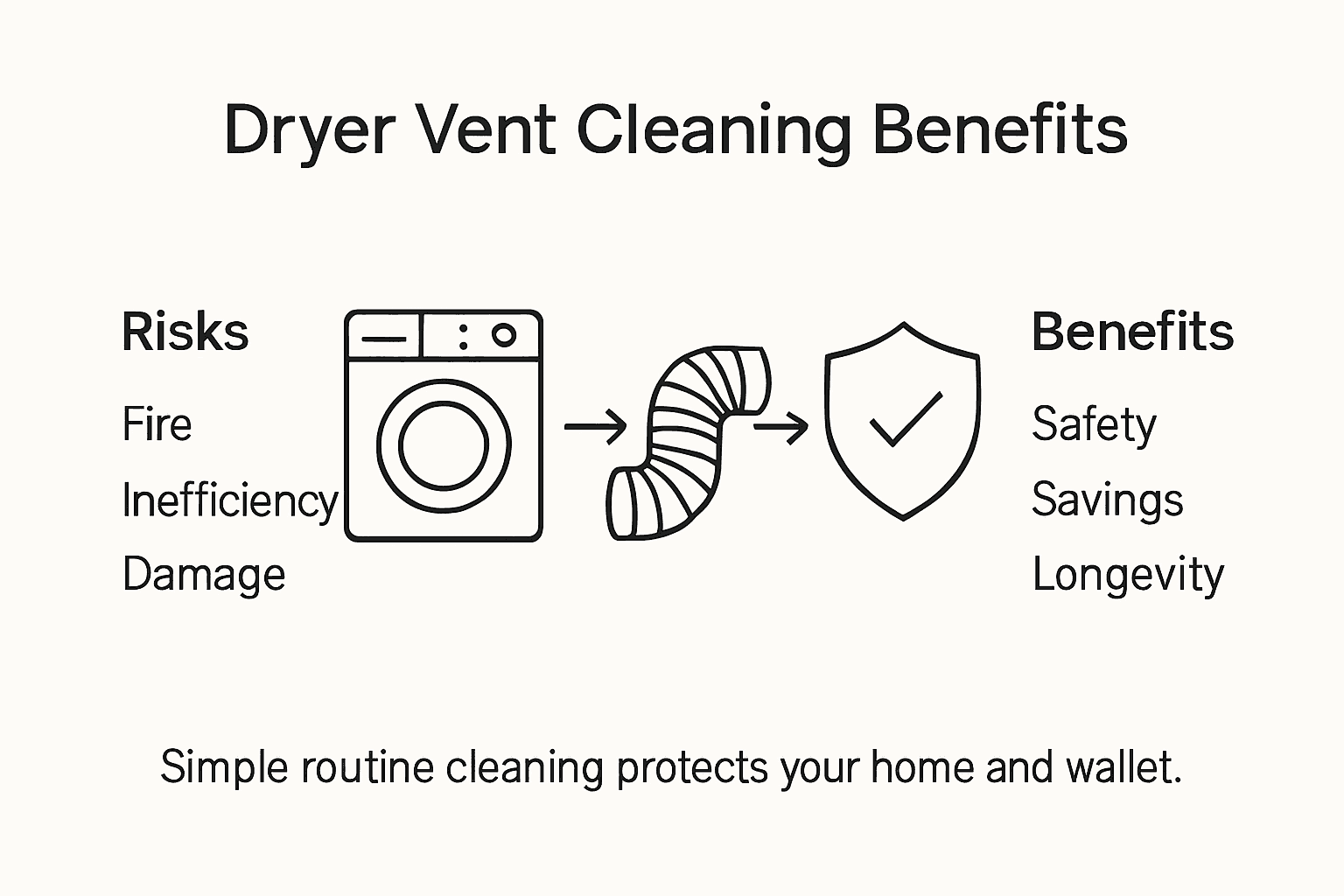
Blocked vents force dryers to run longer than necessary. Longer cycles increase electricity usage and place additional stress on internal components such as heating elements, motors, and thermostats. Over time, this strain accelerates wear and shortens the appliance’s lifespan.
Financial Benefits of Clean Vents
Routine dryer vent cleaning offers several long-term financial benefits:
- Lower monthly utility bills
- Faster drying cycles
- Reduced repair costs
- Fewer unexpected breakdowns
- Longer appliance lifespan
Energy efficiency research shows that properly maintained dryers can reduce energy consumption by up to 30 percent. This improvement becomes especially valuable for large households running multiple dryer loads each week.
Protecting Your Appliance Investment
Dryers represent a major household appliance investment. Protecting that investment requires consistent maintenance and prompt attention to airflow problems. Professional vent cleaning minimizes overheating and helps critical components last longer under normal operating conditions.
Homeowners who maintain clean vents often experience several additional years of reliable appliance performance before replacement becomes necessary.
Pro Tip: Track your drying times periodically. If cycles begin taking noticeably longer, your vent system may already be partially blocked.
Signs, Costs, and Frequency of Cleaning
The National Association of Home Builders warns that recognizing early warning signs can help homeowners prevent costly repairs and dangerous fire risks. One of the clearest indicators is longer drying times. If clothes remain damp after a normal cycle, restricted airflow may already be affecting the vent system.
Other warning signs include excessive heat around the dryer, burning odors during operation, visible lint accumulation near the outdoor vent, or repeated overheating shutdowns. These symptoms should never be ignored because they often indicate significant internal lint buildup.
Typical Cleaning Costs
Professional dryer vent cleaning generally costs between $100 and $200 depending on factors such as:
- Vent length and accessibility
- Number of bends in the ductwork
- Severity of lint buildup
- Type of dryer vent system
- Location of the exterior vent
Compared to the cost of appliance replacement or fire damage restoration, routine vent cleaning remains a relatively small investment with major safety benefits.
Recommended Cleaning Frequency
Most homes benefit from annual professional cleaning, but some households may require more frequent service. Factors affecting cleaning frequency include:
- Large family households
- Frequent laundry loads
- Long or complex vent systems
- Pet hair accumulation
- Older dryers with weaker airflow
Homes with heavy dryer usage may benefit from cleaning every six months instead of annually.
Pro Tip: Keep a maintenance calendar for your dryer vent cleaning appointments so annual service does not get overlooked.
Professional vs. DIY Dryer Vent Maintenance
The National Association of Home Builders explains that homeowners can perform basic dryer maintenance, but professional cleaning provides a far more comprehensive level of inspection and debris removal. Professionals use specialized tools including rotary brushes, inspection cameras, and industrial vacuums capable of reaching deep inside vent systems.
DIY maintenance still plays an important role in reducing lint buildup between professional visits. Homeowners should clean the lint filter after every load and inspect the exterior vent opening regularly. However, surface cleaning alone cannot remove hidden lint trapped inside long or curved duct systems.
Benefits of Professional Cleaning
Professional dryer vent services provide several important advantages:
- Complete lint and debris removal
- Inspection of hidden vent sections
- Detection of damaged or unsafe ductwork
- Improved airflow testing
- Identification of fire hazards and code violations
Professionals can also identify issues homeowners may not notice, such as disconnected ducts, crushed vent lines, or improper installation materials.
Comparing DIY and Professional Maintenance
| Maintenance Type | Tools Required | Level of Thoroughness | Common Limitations |
|---|---|---|---|
| Professional Cleaning | High-powered vacuums, cameras | Deep cleaning and full inspection | Higher cost and scheduling required |
| DIY Maintenance | Brushes and household vacuum | Basic surface cleaning | Cannot reach hidden blockages |
Combining routine homeowner maintenance with scheduled professional cleaning creates the safest and most effective long-term strategy for dryer vent care.
Pro Tip: Take photos of your vent system before and after professional cleaning so you can visually compare the amount of debris removed.
Keep Your Home Safe and Dryer Running Efficiently with Expert Vent Cleaning
Routine dryer vent cleaning is more than a simple maintenance task. It is one of the most effective ways to protect your home from preventable fires, reduce energy waste, and extend the lifespan of your dryer. If your dryer takes longer to dry clothes, produces unusual heat, or creates burning odors, these warning signs should never be ignored.

Appliances Repair MD Tech provides trusted dryer vent cleaning and appliance maintenance services throughout Orange County and Los Angeles County. Their licensed technicians use professional-grade tools to remove hidden lint buildup, inspect vent systems thoroughly, and improve dryer performance safely and efficiently.
Whether you need routine maintenance or urgent dryer vent service, their experienced team delivers fast, dependable solutions designed to protect your home and lower long-term operating costs. Schedule your appointment today and keep your dryer operating safely and efficiently year-round.
Frequently Asked Questions
What is dryer vent cleaning and why is it important?
Dryer vent cleaning removes lint and debris from the vent system connecting your dryer to the outdoors. It is important because it reduces fire hazards, improves energy efficiency, lowers utility costs, and extends appliance lifespan.
How often should I have my dryer vents cleaned?
Most homes should schedule professional dryer vent cleaning at least once per year. Homes with larger families or heavy dryer usage may benefit from cleaning every six months.
What are the signs that my dryer vent needs cleaning?
Common warning signs include longer drying times, excessive heat from the dryer, burning smells during operation, lint around the vent opening, and repeated overheating shutdowns.
Can I clean my dryer vent myself or should I hire a professional?
Basic maintenance like cleaning the lint trap and inspecting the exterior vent can be done at home. However, professional cleaning is recommended because technicians can remove hidden lint buildup deep inside the vent system using specialized equipment.