
Most american households depend on a variety of appliances every day, yet many people are surprised to learn that over 60 percent struggle to describe basic repair terms when issues arise. Clear understanding of appliance repair terminology makes all the difference whether you are explaining a problem to a technician or tackling simple fixes yourself. By breaking down the language professionals use, this guide helps you feel confident dealing with everything from refrigerators to ovens, setting a strong foundation for smart appliance care.
Table of Contents
- Defining Appliance Repair Terminology Basics
- Common Appliance Parts and Repair Terms
- Types of Appliance Services and Diagnoses
- Industry-Specific Jargon and Safety Language
- Critical Misunderstandings and DIY Risks
Key Takeaways
| Point | Details |
|---|---|
| Understanding Terminology | Familiarity with appliance repair terms enhances communication about maintenance and troubleshooting. |
| Importance of Safety | Knowledge of safety protocols is essential for both technicians and homeowners to prevent accidents during repairs. |
| Role of Professionals | Recognizing the value of professional technicians can prevent costly mistakes and ensure proper diagnosis and repair. |
| Risks of DIY Repairs | DIY repairs can lead to safety hazards and void warranties if not conducted by a qualified professional. |
Defining Appliance Repair Terminology Basics
Understanding appliance repair terminology is crucial for homeowners and technicians alike. As Penn Foster outlines in their professional appliance repair curriculum, knowing the fundamental language helps communicate effectively about household equipment maintenance and troubleshooting.
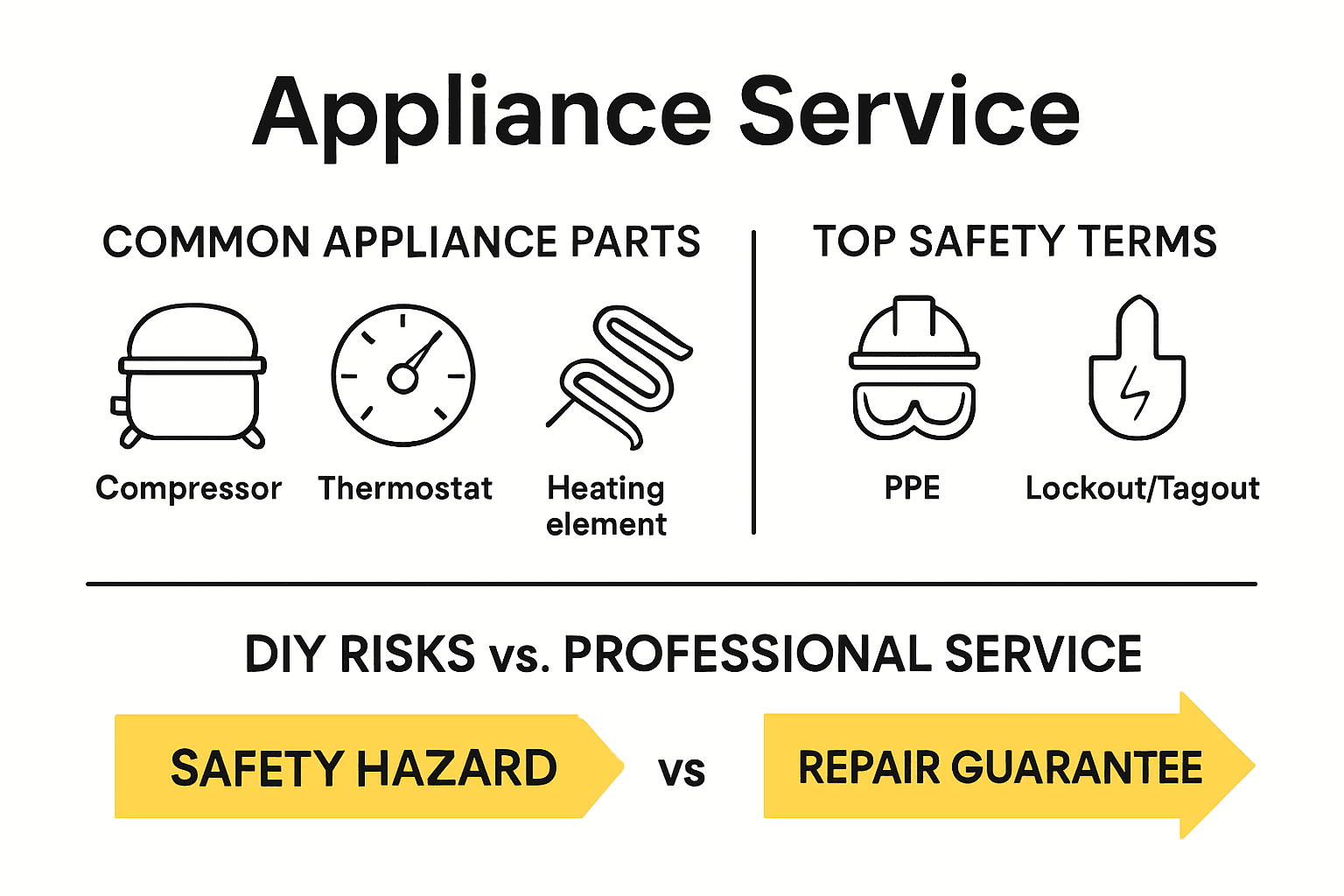
At its core, appliance repair terminology encompasses several key categories. Technical components describe specific machine parts like compressors, thermostats, heating elements, and circuit boards. Diagnostic terms include phrases such as electrical load, voltage regulation, and resistance testing. Functional descriptors explain how appliances operate, like cooling cycles, spin mechanisms, and heating zones. When a technician mentions terms like “capacitor failure” or “thermal overload,” they are precisely identifying specific mechanical or electrical issues.
Georgetown University’s Environmental Health & Safety guidelines emphasize that understanding these technical terms isn’t just about mechanical knowledge—it’s also about ensuring safe and effective appliance maintenance. Some fundamental terminology every homeowner should know includes:
- Compressor: The heart of refrigeration systems that circulates refrigerant
- Voltage: Electrical pressure measuring potential energy in an electrical system
- Amperage: Measurement of electrical current flowing through an appliance
- Thermal cut-off: Safety device preventing overheating in electrical appliances
- Seal integrity: Condition of gaskets and seals preventing air or liquid leakage
By familiarizing yourself with these foundational terms, you can communicate more effectively with repair technicians and better understand your home appliances’ complex inner workings. Knowledge transforms mysterious mechanical systems into comprehensible machines, empowering homeowners to make informed decisions about maintenance and repairs.
For more specialized insights about specific appliance repairs in Orange County, check out our Broan repair guide.
Common Appliance Parts and Repair Terms
CDC’s National Institute for Occupational Safety and Health provides comprehensive guidance on understanding the intricate world of appliance components and repair terminology. Professional technicians and homeowners alike must familiarize themselves with key mechanical and electrical terms to effectively diagnose and address household equipment issues.
Electrical Components form the backbone of most modern appliances. These critical parts include:
- Capacitors: Energy storage devices that regulate electrical current
- Relays: Electrical switches that control circuit connections
Mechanical Components represent the physical moving parts that enable appliance functionality. According to educational research on appliance repair, these essential elements include:
- Compressors: Pump mechanisms that circulate refrigerant in cooling systems
- Thermostats: Temperature regulation devices
- Heating Elements: Electrical components that generate heat in ovens and dryers
Understanding refrigeration systems requires knowledge of specific technical terminology. Refrigerant Types vary widely, with each designed for specific temperature ranges and cooling requirements. Technicians must precisely match refrigerant types to specific appliance models and manufacturer specifications.
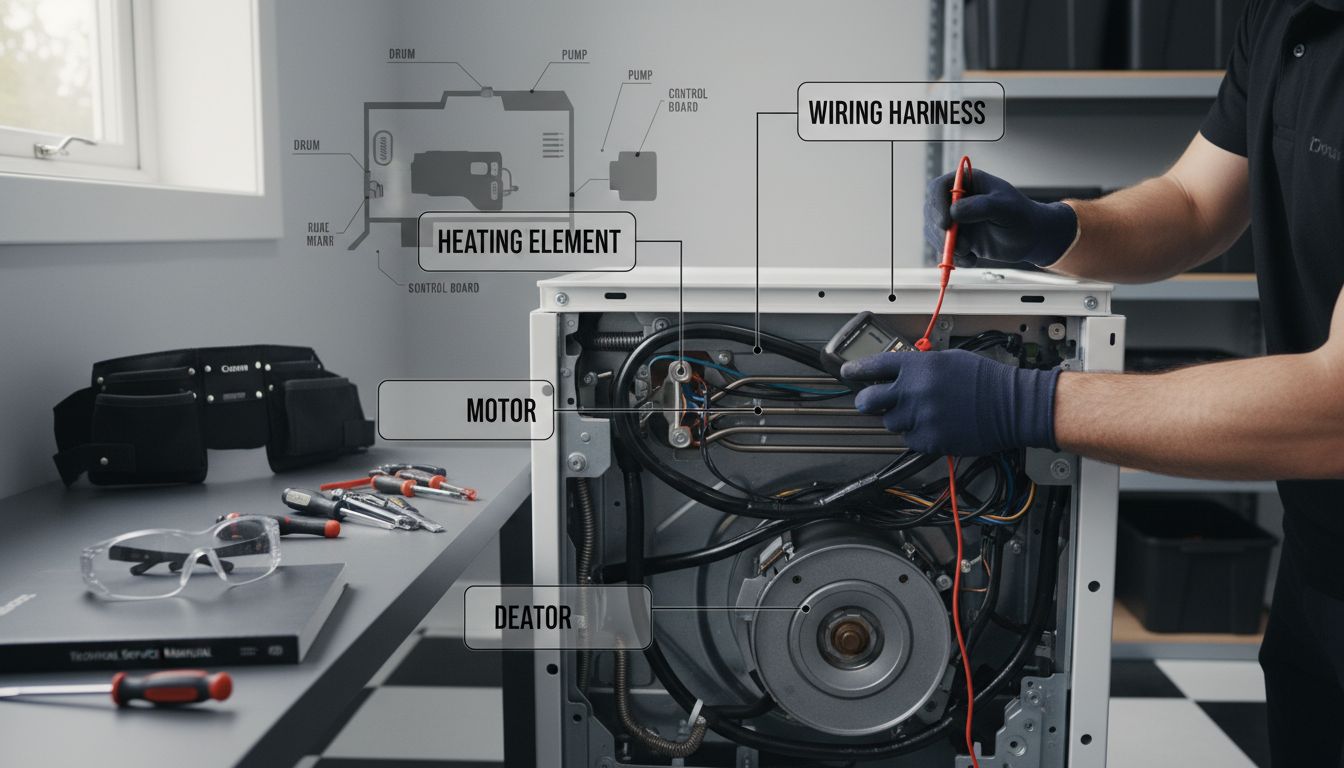
For specialized appliance repair insights in Orange County, explore our Tujunga appliance repair guide to learn more about local repair techniques and professional diagnostic approaches.
Types of Appliance Services and Diagnoses
Penn Foster’s professional training program highlights the critical spectrum of appliance services that homeowners and technicians must understand. Effective appliance maintenance requires a comprehensive approach that goes beyond simple repair, encompassing detailed diagnostic procedures, preventative maintenance, and strategic problem-solving.
Diagnostic Services represent the foundational aspect of professional appliance repair. These services typically involve:
- Visual Inspection: Identifying visible wear, damage, or potential failure points
- Electrical Testing: Measuring voltage, amperage, and circuit continuity
- Performance Evaluation: Assessing overall system functionality and efficiency
According to PIRG’s research on service information access, appliance services can be categorized into several distinct types:
- Preventative Maintenance: Routine checks to prevent potential breakdowns
- Emergency Repairs: Urgent interventions for critical appliance failures
- Diagnostic Assessments: Comprehensive evaluations of appliance condition
- Full System Replacements: Complete appliance or major component replacements
Technicians must possess a nuanced understanding of different appliance types, from refrigeration systems to complex electrical appliances. Each service requires specialized knowledge, precise diagnostic tools, and a systematic approach to identifying and resolving potential issues.
For specialized local insights into appliance repair services in Orange County, explore our hood installation guide to understand the intricate details of professional appliance servicing.
Industry-Specific Jargon and Safety Language
Appliance Repair School emphasizes the critical importance of understanding specialized safety terminology in the appliance repair industry. Professional technicians must master a unique language that goes beyond technical descriptions, focusing on protecting both workers and clients during complex repair procedures.
Safety Protocols and Terminology form the backbone of professional appliance repair communication. Key safety terms include:
- Lockout/Tagout (LOTO): A critical safety procedure preventing accidental equipment energization during maintenance
- Personal Protective Equipment (PPE): Specialized gear designed to minimize worker exposure to hazards
- Grounding: Electrical safety technique that prevents electrical shock by creating a safe path for excess current
According to the International Labor Organization Encyclopaedia, professional technicians must be fluent in hazard-related terminology that encompasses various potential risks:
- Electrical Hazards: Terms describing potential shock and arc flash risks
- Mechanical Hazards: Language identifying potential moving part dangers
- Chemical Hazards: Terminology related to refrigerant and cleaning agent exposures
- Thermal Hazards: Descriptions of heat-related risks in appliance systems
The complexity of safety language reflects the sophisticated nature of modern appliance repair. Technicians must communicate precisely to prevent accidents, ensure client safety, and maintain professional standards.
For localized insights into professional repair services, check out our Whittier appliance repair guide to understand how local professionals implement these critical safety protocols.
Critical Misunderstandings and DIY Risks
Association of Home Appliance Manufacturers (AHAM) warns that DIY appliance repairs can lead to significant safety risks and potential long-term damage to expensive household equipment. Homeowners often underestimate the complexity of modern appliance systems, mistakenly believing that online tutorials and basic tools can replace professional expertise.
Common DIY Misconceptions can create dangerous scenarios:
- Electrical Complexity: Misunderstanding voltage requirements and circuit interactions
- Warranty Implications: Unauthorized repairs potentially voiding manufacturer protections
- Safety Hazards: Improper handling of electrical and mechanical components
According to Star Repair Organization’s comprehensive research, homeowners should carefully evaluate repair scenarios based on several critical factors:
- Complexity of the Repair: Simple tasks versus intricate system diagnostics
- Personal Technical Skill Level: Realistic assessment of individual mechanical abilities
- Potential Cost of Mistakes: Comparing DIY attempts versus professional intervention
- Safety Risks: Evaluating potential electrical or mechanical dangers
Professional technicians bring specialized knowledge that extends beyond basic repair techniques. They understand intricate system interactions, possess precise diagnostic tools, and can identify underlying issues that might escape an untrained eye.
For localized insights into professional repair approaches, explore our kitchen faucet repair guide to understand the nuanced expertise required for effective household appliance maintenance.
Master Appliance Repair Terminology to Get the Best Service Now
Understanding the complex terms like compressor, thermal cut-off, and voltage can feel overwhelming when your household appliance breaks down. This article highlights the challenge homeowners face when trying to decode appliance repair jargon and the risks of handling repairs without professional knowledge. If you want to avoid costly mistakes and stay safe, having a trusted technician who knows these terms inside and out is essential.
Make appliance troubles easier by connecting with experienced professionals at Appliances Repair MD Tech. We provide fast, reliable repairs across Orange County and Los Angeles County with licensed technicians ready to handle everything from refrigerator compressor issues to washer diagnostics. Visit our main page now to book your appointment and explore detailed guides like our kitchen faucet repair. Don’t let confusing repair terms delay fixing your home appliances – act today for expert support you can trust.
Frequently Asked Questions
What is a compressor and why is it important in appliance repair?
A compressor is a critical component in refrigeration systems that circulates refrigerant. It plays a vital role in maintaining the cooling capacity of refrigerators and freezers.
What does electrical testing involve in appliance diagnosis?
Electrical testing involves measuring voltage, amperage, and checking circuit continuity. This helps to evaluate the appliance’s electrical function and identify any issues.
Why is understanding safety protocols important for appliance repair?
Understanding safety protocols is crucial to prevent accidents and ensure the safety of both technicians and homeowners. This includes procedures like Lockout/Tagout (LOTO) to prevent accidental equipment energization during maintenance.
What are the risks of attempting DIY appliance repairs?
DIY appliance repairs can lead to significant safety risks, misunderstandings of complex electrical systems, potential voiding of warranties, and long-term damage to appliances due to improper handling.
Teknoloji Kıbrıs Teknoloji Kıbrıs, Kıbrıs teknoloji, teknolojikibris, elektronik eşyalar, Kıbrıs ucuz ev eşyası, teknolojik aksesuar kıbrıs
Your passion for your subject matter shines through in every post. It’s clear that you genuinely care about sharing knowledge and making a positive impact on your readers. Kudos to you!