
Homeowners often face unexpected appliance breakdowns that disrupt daily routines and drain budgets. Recognizing early warning signs can save you hundreds of dollars in emergency repairs and prevent total appliance replacement. With 40% of U.S. households experiencing a breakdown yearly, knowing what to watch for becomes essential. This guide walks you through specific indicators across common home appliances, helping you catch problems early and schedule repairs before minor issues become major headaches.
Table of Contents
- Key takeaways
- How to identify signs of appliance failure: criteria to watch
- Top signs your refrigerator is failing
- Recognizing failure signs in washing machines
- Comparison of common appliance failures: costs, symptoms, and repair timelines
- Expert appliance repair services in Orange and Los Angeles Counties
- FAQ
Key Takeaways
| Point | Details |
|---|---|
| Early warning signs | Early detection can save hundreds of dollars in repair costs by catching problems before they lead to major failures. |
| Track performance and noise | Unusual noises, inconsistent cycles, and leaks are clear indicators that a unit is deteriorating. |
| Refrigerator failure indicators | Refrigerators often show temperature swings, excess condensation, a motor that runs constantly, persistent odors, and ice maker issues. |
| Door seal test | Do a door seal test by placing a dollar bill in the door gap and pulling it out to check seal integrity. |
How to identify signs of appliance failure: criteria to watch
Understanding your appliances’ normal operation creates the foundation for spotting problems early. Every appliance has baseline behaviors, from the gentle hum of your refrigerator to the rhythmic spin cycle of your washer. When these patterns shift, your appliance is communicating distress.
Five key criteria help you evaluate appliance health effectively. First, listen for unusual noises like grinding, clicking, or banging that weren’t present before. Second, monitor performance consistency, noting whether your appliance completes cycles properly or struggles with basic functions. Third, check for visible leaks or moisture where none should exist. Fourth, watch your energy bills for unexplained increases that suggest inefficiency. Fifth, inspect for physical damage like rust, cracks, or worn seals.
Tracking these changes systematically helps you catch failures before they escalate. Keep a simple log noting when you first observe an issue, how often it occurs, and whether it’s worsening. This documentation proves invaluable when discussing signs you need appliance repair with technicians.
Pro Tip: Take a photo or short video of unusual appliance behavior. Visual evidence helps repair technicians diagnose problems faster and more accurately, potentially reducing service time and costs.
Temperature fluctuations represent the most critical warning sign. If your food spoils faster than usual or ice cream stays soft, your refrigerator’s cooling system is failing. Similarly, excessive frost buildup in the freezer or water pooling inside indicates seal or defrost system problems.
Top signs your refrigerator is failing
Refrigerators dominate repair statistics, representing 32% of all service calls nationwide. Their constant operation and complex cooling systems make them vulnerable to multiple failure points. Recognizing these specific warning signs helps you avoid food spoilage and costly emergency repairs.
Watch for these critical refrigerator failure indicators:
- Inconsistent temperatures causing food to freeze in the refrigerator section or spoil quickly
- Excessive condensation on interior walls or exterior surfaces
- Motor running constantly without cycling off normally
- Strange odors that persist after cleaning, suggesting mold or mechanical issues
- Ice maker producing misshapen cubes or stopping production entirely
Unusual sounds provide another diagnostic clue. Clicking noises often indicate compressor relay problems, while buzzing suggests electrical issues or a failing condenser fan. Grinding sounds point to worn motor bearings that need immediate attention. These noises typically start intermittently but increase in frequency as the problem worsens.
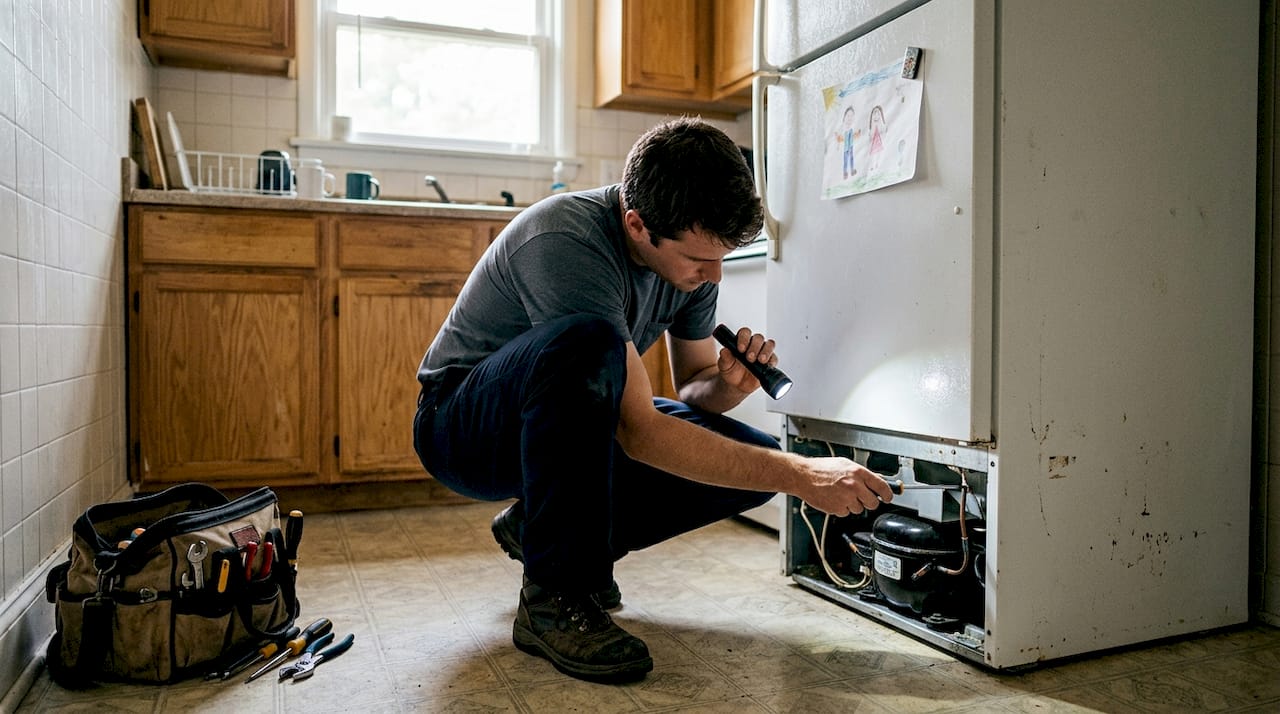
Energy consumption changes signal efficiency loss. If your electricity bill jumps without explanation, your refrigerator may be working overtime to maintain proper temperatures. This overwork accelerates wear on components and increases failure risk. Modern refrigerators should cycle on and off regularly, not run continuously.
Door seal integrity matters more than most homeowners realize. A simple test reveals problems: close the door on a dollar bill and try pulling it out. If it slides easily, your seal needs replacement. Poor seals force your refrigerator to work harder, wasting energy and stressing the cooling system. Check signs your refrigerator needs repair for comprehensive guidance on addressing these issues promptly.
Recognizing failure signs in washing machines
Washing machines handle tremendous mechanical stress through thousands of cycles, making them the second most frequently repaired appliance at 25% of service calls. Their combination of water systems, motors, and electronic controls creates multiple potential failure points that homeowners must monitor.
Vibration and movement during operation reveal balance and suspension problems. Your washer should stay relatively stationary during all cycle phases. Excessive shaking indicates worn shock absorbers, unbalanced loads, or a failing drum bearing. Ignoring this sign leads to internal damage and potential flooding.
Water issues manifest in several ways:
- Visible leaks or puddles forming under or around the machine
- Clothes emerging soaking wet after the spin cycle completes
- Water remaining in the drum after drainage should finish
- Slow filling that extends wash cycle times significantly
- Detergent residue on clothes indicating incomplete rinsing
Sound changes provide early warning of mechanical failures. Grinding or scraping noises suggest foreign objects caught in the pump or drum bearings wearing out. Thumping sounds during agitation often mean suspension springs have failed. Squealing indicates belt wear or motor bearing problems requiring prompt attention.
Drainage and spinning failures represent serious malfunctions. If water doesn’t drain completely or your washer stops mid-cycle, the pump or control board likely needs repair. These issues worsen rapidly, potentially causing water damage to your laundry room. Understanding common washing machine repairs helps you prioritize professional intervention.
Pro Tip: Run an empty hot water cycle with two cups of white vinegar monthly. This maintenance practice prevents buildup that causes odors and mechanical strain, extending your washer’s operational life.
Comparison of common appliance failures: costs, symptoms, and repair timelines
Understanding how different appliances fail helps you budget and prioritize repairs effectively. The average household spends $450 annually on appliance repairs, but costs vary significantly by appliance type and failure severity. This comparison guides your decision-making when multiple appliances show warning signs.
| Appliance | Common Failure Symptoms | Average Repair Cost | Typical Timeline | Urgency Level |
|---|---|---|---|---|
| Refrigerator | Temperature fluctuations, excessive frost, constant running | $200-$400 | 1-3 days | Critical (food safety) |
| Washing Machine | Leaks, won’t spin, excessive vibration, won’t drain | $150-$350 | 2-5 days | High (daily necessity) |
| Dryer | Won’t heat, takes too long, unusual noises, won’t start | $100-$300 | 2-4 days | Medium (alternative drying) |
| Oven/Range | Uneven heating, won’t reach temperature, burners fail | $150-$400 | 3-7 days | Medium (cooking alternatives) |
| Dishwasher | Won’t drain, poor cleaning, leaks, won’t start | $100-$250 | 3-5 days | Low (manual washing) |
Repair urgency depends on both appliance function and failure type. Refrigerator problems demand immediate attention because food spoilage creates health risks and financial loss. Washing machine leaks require quick response to prevent water damage. Dryer issues, while inconvenient, allow more scheduling flexibility since air drying remains an option.
Cost-benefit analysis becomes crucial for older appliances. When repair costs exceed 50% of replacement value, and your appliance has reached 75% of its expected lifespan, replacement often makes better financial sense. Refrigerators typically last 13-17 years, washers 10-14 years, and dryers 10-13 years. Factor in energy efficiency improvements when weighing repair vs replace appliances decisions.
Timeline expectations help you plan accordingly. Simple repairs like replacing a heating element or door seal complete within hours. Complex issues involving compressors, control boards, or transmission systems may require ordering specialized parts, extending repair timelines to a week or more. Discuss realistic timeframes with your technician upfront.
Expert appliance repair services in Orange and Los Angeles Counties
When you’ve identified warning signs in your appliances, professional diagnosis and repair become essential next steps. MDTECH connects Orange and Los Angeles County homeowners with licensed technicians who specialize in all major appliance brands and models. Our experts quickly identify root causes, not just symptoms, ensuring repairs address underlying problems completely.
Our comprehensive services cover everything from emergency refrigerator repairs to routine maintenance that prevents future breakdowns. We offer specialized Samsung appliance repair services for homeowners with this popular brand, understanding their unique diagnostic systems and common failure points. When repairs require new components, our appliance parts replacement guide helps you understand the process and quality standards we maintain.
Facing the repair versus replacement decision? Our technicians provide honest assessments based on appliance age, repair costs, and expected remaining lifespan. We walk you through the repair versus replacement guide considerations, helping you make informed choices that protect your budget and home comfort. Schedule your diagnostic appointment today to restore your appliances to peak performance.
FAQ
What are the earliest signs of appliance failure?
Unusual noises, inconsistent operation, visible leaks, and increased energy consumption represent the most common early warning signs across all appliance types. Performance changes like longer cycle times or incomplete functions also indicate developing problems. Catching these signs early typically reduces repair costs by 30-50% compared to waiting until complete failure occurs.
How often should I have my appliances inspected or serviced?
Annual professional inspections for major appliances like refrigerators, washers, and HVAC systems help detect problems before they cause breakdowns. Regular maintenance extends appliance lifespan by 20-40% on average and prevents costly emergency repairs. Schedule inspections during off-peak seasons when technicians have more availability and potentially better rates.
When should I decide to repair or replace a failing appliance?
Consider replacement when repair costs exceed 50% of a new appliance’s price and your current unit has reached 75% of its expected lifespan. Factor in energy efficiency improvements, as newer models often save $100-$200 annually in utility costs. Age matters too: appliances over 10 years old typically face more frequent failures even after repairs. Review the repair versus replacement guide for detailed decision frameworks.
Can I prevent appliance failures with regular maintenance?
Yes, preventive maintenance significantly reduces failure rates and extends operational life. Simple tasks like cleaning refrigerator coils quarterly, checking washer hoses for wear, and clearing dryer vents prevent 60-70% of common breakdowns. Professional annual servicing catches developing issues before they cause failures, saving you money and inconvenience over your appliance’s lifetime.
Why do some appliances fail more frequently than others?
Usage intensity and mechanical complexity determine failure rates. Refrigerators run continuously, stressing components through constant operation, while washers endure extreme mechanical forces during spin cycles. Appliances with more moving parts and electronic controls face higher failure risks than simpler designs. Proper installation, regular maintenance, and following manufacturer guidelines minimize these risks regardless of appliance type.
Recommended
- Signs You Need Appliance Repair: Don’t Ignore These
- Signs Your Appliance Needs Repair: Common Warnings
- How to Detect Appliance Issues Before Calling Experts
- 7 Must-Know Appliance Repair Tips 2025 for Homeowners – MDTECH APPLIANCE REPAIR
- Emergency Coffee Machine Repair | Same Day Service | Devon Somerset