
Every Orange County or Los Angeles County homeowner wants their family to breathe easy, but concerns often arise when using gas stoves or heaters. The reality is, proper ventilation controls humidity and airborne contaminants from appliances, protecting your household from dangers like carbon monoxide. Many common beliefs about ventilation simply fall short, leaving hidden risks in your kitchen and living spaces. This guide explains how modern ventilation truly keeps your home safer, separating myth from fact.
Table of Contents
- Defining Appliance Ventilation And Common Myths
- Types Of Ventilation Systems For Appliances
- How Ventilation Prevents Gas And Fire Hazards
- Legal Codes And Safety Standards In California
- Risks Of Poor Ventilation And Maintenance Mistakes
Key Takeaways
| Point | Details |
|---|---|
| Understanding Ventilation Importance | Proper ventilation mitigates harmful gases and moisture from appliances, protecting health. |
| Myth Clarification | Ventilation isn’t simply opening windows; effective systems are necessary for safety. |
| Mechanical Ventilation Types | Various systems such as exhaust-only and balanced systems address specific household needs. |
| Regular Maintenance is Critical | Routine inspections and maintenance prevent dangerous accumulation of gases and mold growth. |
Defining Appliance Ventilation and Common Myths
Appliance ventilation removes harmful gases and moisture from your home before they build up to dangerous levels. Most homeowners think ventilation is just “letting air flow,” but it’s actually a system designed to extract specific pollutants at the source.
When your gas stove or oven burns fuel, it produces byproducts including carbon monoxide and nitrogen dioxide. Without proper ventilation, these gases linger in your kitchen and spread throughout your home. Proper ventilation controls humidity and airborne contaminants from appliances, protecting your family’s health.
Understanding Ventilation Types
There are two main ventilation approaches for appliances:
- Spot ventilation removes air directly from problem areas like your kitchen range or bathroom exhaust
- Dilution ventilation brings fresh outdoor air into your home to reduce overall pollutant concentration
In Southern California homes, spot ventilation above your stove is critical during cooking. It captures smoke, steam, and combustion gases before they spread. Dilution ventilation works better for general air quality but doesn’t target specific appliance hazards.
Common Myths About Appliance Ventilation
Most homeowners believe things about ventilation that simply aren’t true. Let’s clear up the biggest misconceptions.
Myth 1: “Opening windows is enough ventilation”
Opening your kitchen window might feel like ventilation, but it’s inconsistent and ineffective. Wind direction changes, weather prevents window opening year-round, and warm air escapes quickly in winter. A properly installed range hood actually works.
Myth 2: “Ventilation solves all indoor air problems”
Ventilation helps significantly, but it can’t fix everything. If your neighbor’s secondhand smoke enters through shared walls, ventilation won’t eliminate it. Neither will ventilation remove existing dust buildup or pet dander.
Myth 3: “My appliance doesn’t need special ventilation”
Gas stoves, ovens, dryers, and water heaters all produce moisture and combustion byproducts. Even electric dryers release moisture. Each appliance type needs appropriate ventilation to operate safely.
Myth 4: “Ventilation wastes energy, so less is better”
Yes, ventilation removes conditioned air you paid to heat or cool. But the health risk of incomplete combustion far outweighs minor energy costs. Your safety comes first.
Proper ventilation removes carbon monoxide and other dangerous gases before they accumulate in your living spaces.
Most Orange County and Los Angeles County homes built before 2000 lack adequate ventilation systems. Older kitchens especially rely on minimal exhaust fans or cracked windows. If your home fits this description, ventilation improvements should be a priority.
Pro tip: Test your range hood’s effectiveness by holding a lit candle near the vent while it runs. The smoke should be drawn toward the hood within 1-2 seconds. If it lingers or blows back into the room, your ventilation isn’t working properly and needs professional inspection.
Types of Ventilation Systems for Appliances
Your home needs a ventilation system that actively removes hazardous gases and moisture from appliances. There are several approaches to accomplish this, and understanding the differences helps you choose the right solution for your Orange County or Los Angeles County home.
Four Main Mechanical Ventilation Types
Mechanical ventilation systems come in distinct categories, each designed for different household needs and appliance setups.
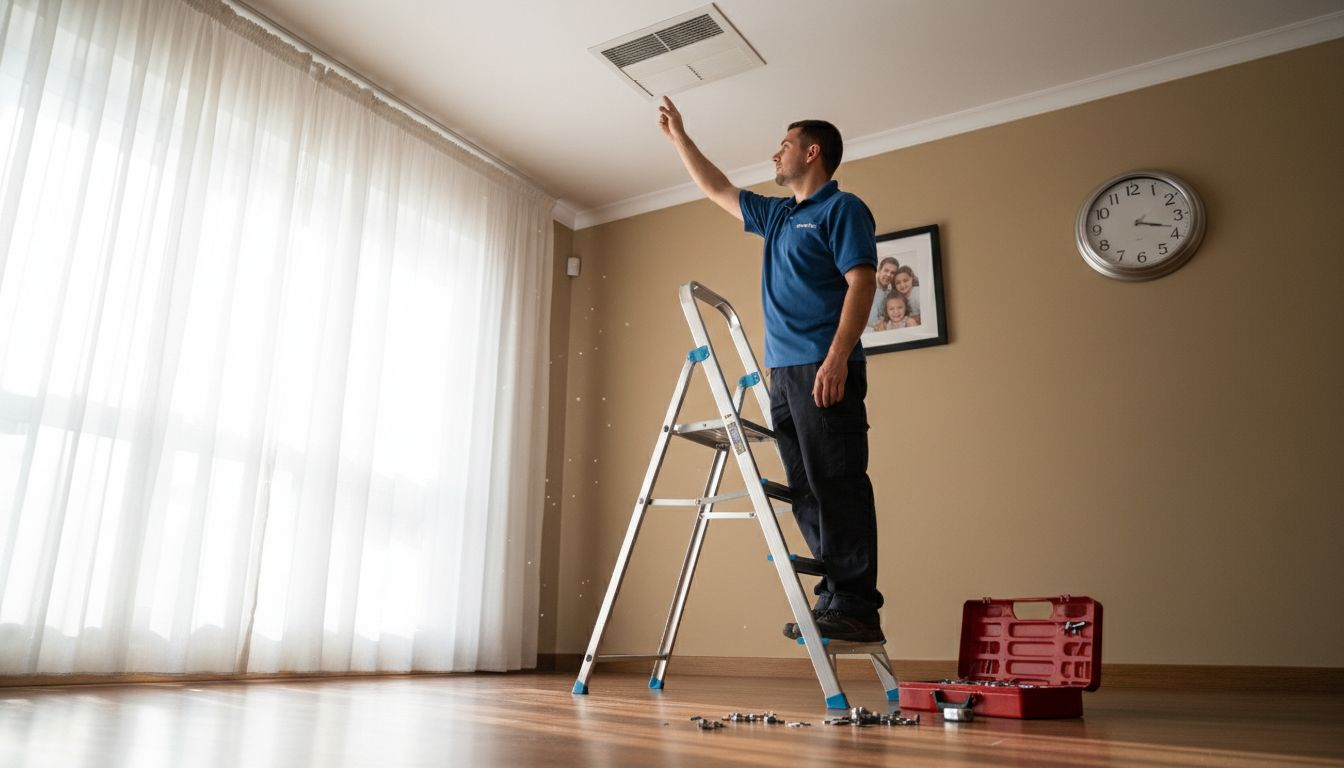
Exhaust-only systems pull stale air directly out of your home through ductwork. They create negative pressure, which means air is removed faster than it enters. Your home draws makeup air through cracks, gaps, and other leaks. These work well for kitchens with gas stoves but require some air leakage to function.
Supply-only systems push fresh outdoor air into your home while stale air escapes through natural pathways. They create positive pressure, which can help prevent outdoor pollutants from entering. These systems work best in tightly sealed newer homes where natural air leakage is minimal.
Balanced systems combine exhaust and supply equally, removing stale air while simultaneously bringing in fresh outdoor air. No pressure imbalance occurs. This approach works reliably in any home type and provides consistent air quality control.
Energy recovery ventilators (ERV) or heat recovery ventilators (HRV) are balanced systems that capture temperature and humidity from outgoing air. They transfer this energy to incoming fresh air, reducing heating and cooling costs. These systems cost more upfront but save money long-term in California’s variable climate.
Here’s a quick comparison of the main types of mechanical ventilation systems for residential use:
| System Type | How It Works | Typical Applications | Upfront Cost |
|---|---|---|---|
| Exhaust-only | Removes indoor air; relies on leaks | Older homes, gas stoves | Low to moderate |
| Supply-only | Brings outdoor air in; pushes stale air out | Modern airtight homes | Moderate |
| Balanced (ERV/HRV option) | Equal fresh and exhaust air; energy saving | Any home, energy-efficient setups | Moderate to high |
| ERV/HRV | Transfers heat/humidity; improves efficiency | Variable climates, new construction | High, but saves long-term |
Appliance-Specific Ventilation Needs
Different appliances require different ventilation approaches:
- Gas ranges and ovens need spot exhaust ventilation (range hoods) or dedicated exhaust systems
- Dryers require direct outdoor venting; recycled air isn’t safe
- Water heaters need adequate combustion air and venting to prevent carbon monoxide buildup
- Dishwashers may need cabinet ventilation to remove moisture
Your appliances shouldn’t compete for the same ventilation system. If your kitchen range hood exhausts indoor air while your water heater draws combustion air from the same space, problems occur.
Whole-house mechanical ventilation systems ensure stale air is exhausted and fresh air supplied consistently, especially in newer tightly sealed homes.
Older Orange County homes often rely on natural ventilation through leaky windows and doors. Modern homes are built tighter for energy efficiency, which means they need mechanical ventilation systems to function properly. Without active ventilation, pollutants accumulate quickly.
Choosing the right system depends on your home’s airtightness, appliance types, and budget. A professional assessment identifies which approach works best for your specific situation.
Pro tip: Ask your service technician whether your current venting system creates negative or positive pressure, and if appliances compete for ventilation air. This information reveals whether upgrades or modifications are necessary for safe operation.
How Ventilation Prevents Gas and Fire Hazards
Proper ventilation is your home’s first defense against two serious threats: poisoning from combustion gases and accelerated fire spread. When ventilation fails, both hazards escalate rapidly, putting your family at immediate risk.
Carbon Monoxide and Combustion Gas Control
Gas appliances burn fuel to produce heat. This combustion creates byproducts including carbon monoxide, nitrogen dioxide, and water vapor. Proper ventilation controls these hazardous airborne contaminants by removing them before they accumulate to dangerous levels.
Without adequate exhaust ventilation, these gases linger in your kitchen and spread throughout your home. Carbon monoxide is odorless and invisible, so you can’t detect buildup without a monitor. Exposure causes headaches, dizziness, nausea, and in severe cases, loss of consciousness or death.
Power-vented gas appliances ensure combustion products exit your home safely through dedicated vents or flues. These systems actively push exhaust outdoors rather than relying on natural draft. Your gas water heater, furnace, and range all benefit from positive venting.
Spot exhaust ventilation above your gas range captures cooking byproducts at the source. A properly functioning range hood removes smoke, steam, and combustion gases before they disperse into living areas. This targeted approach protects your family during cooking, the highest-risk time for exposure.
Fire Dynamics and Ventilation
Ventilation affects how fires behave in your home by controlling oxygen supply and heat movement. Ventilation impacts fire patterns by affecting oxygen availability, which directly influences fire intensity and spread.
Inadequate ventilation can trap heat and smoke in confined spaces, causing rapid fire acceleration. Conversely, well-managed ventilation systems help control where smoke and heat travel, which improves escape routes and firefighter effectiveness.
Maintained ventilation systems:
- Remove excess heat that would otherwise accelerate fire growth
- Reduce toxic gas concentrations in your home
- Create predictable air movement patterns firefighters understand
- Maintain clearer escape routes by controlling smoke flow
A clogged dryer vent is a fire hazard waiting to happen. Lint accumulation blocks airflow, trapping heat inside the appliance. Temperatures rise, lint ignites, and you have a serious fire. Routine dryer vent cleaning prevents fires by maintaining proper heat dissipation and airflow.
Adequate exhaust fans and power-vented gas appliances ensure combustion products are safely removed outdoors, reducing risks of poisoning and fire simultaneously.
Your home’s ventilation works best when all systems function together without competing for air. If your range hood exhausts air while your furnace draws combustion air, pressure imbalances occur. This situation can reverse exhaust flow, pushing dangerous gases back into living spaces instead of outdoors.
Regular maintenance keeps ventilation effective. Check that range hoods pull strongly, dryer vents aren’t blocked, and furnace vents operate properly. Professional service technicians can inspect and test your systems to ensure they meet safety standards.
Pro tip: Install a carbon monoxide detector in your kitchen and near bedrooms. Test it monthly and replace batteries annually. This backup protection alerts you to ventilation failures before exposure becomes dangerous.
Legal Codes and Safety Standards in California
California doesn’t leave appliance ventilation to chance. The state has strict building codes that mandate specific ventilation requirements for all residential properties. Understanding these standards helps you know whether your home meets legal requirements and when upgrades are necessary.
Title 24 and the California Mechanical Code
Title 24, Part 4 governs California ventilation requirements through the California Mechanical Code. This regulation sets mandatory ventilation standards for new construction, renovations, and alterations throughout California.
Title 24 requires homes to comply with ANSI/ASHRAE Standard 62.2, which specifies whole-house mechanical ventilation rates. The required ventilation depends on your home’s size and occupancy. A three-bedroom home needs different ventilation capacity than a five-bedroom house.
These aren’t suggestions. They’re enforceable legal requirements that your home must meet. Building inspectors verify compliance during construction and renovations. Homes that don’t meet Title 24 standards can’t receive occupancy permits.
What Title 24 Actually Requires
Your home’s ventilation system must:
- Supply fresh outdoor air at rates specified by ASHRAE Standard 62.2
- Include spot exhaust ventilation (range hoods) for kitchens
- Provide bathroom exhaust ventilation to the outdoors
- Maintain proper ductwork sizing to ensure air flows effectively
- Include controls that prevent negative pressure situations
Older homes built before Title 24 enforcement may not meet current standards. This doesn’t automatically mean they’re unsafe, but it does mean they lack modern protections. If you’re renovating, you’ll need to upgrade ventilation to current code.
Non-Residential and New Standards
The California Building Standards Code in Title 24 includes the 2025 edition with updated ventilation requirements for new construction and alterations. Standards evolve as technology improves and safety data emerges.
Non-residential buildings (offices, restaurants, retail) have different ventilation rates based on occupant density. A restaurant kitchen requires far more exhaust capacity than a small office. California codes specify outdoor air supply rates per person for different building types.
Updates to Title 24 happen periodically to align with health and safety advances. The 2025 edition reflects current best practices in indoor air quality management.
California’s ventilation codes ensure that new homes and renovated spaces have adequate protection against combustion gases and poor indoor air quality.
When you hire contractors for appliance installation or venting work, they must follow Title 24 standards. Choosing licensed technicians ensures compliance with California codes and proper installation. Licensed professionals understand current requirements and maintain proper certifications.
Non-compliance creates liability issues. If your home causes injury due to improper ventilation, homeowner’s insurance may not cover damages if work wasn’t done to code. Banks also require code compliance before approving mortgages or equity lines.
Your Orange County or Los Angeles County home should meet current Title 24 standards. If you’re unsure about your system’s compliance, a professional inspection identifies any gaps.
Pro tip: Request documentation from contractors showing Title 24 compliance after any venting work. Keep records of inspections and approvals, as these protect your home’s value and your family’s safety.
Risks of Poor Ventilation and Maintenance Mistakes
Neglecting ventilation maintenance is like ignoring a slow leak in your roof. The damage compounds quietly until you face a serious problem. Poor ventilation creates multiple hazards that affect your health, your home’s structure, and your family’s safety.
Health Hazards from Accumulated Gases
Poor ventilation allows accumulation of carbon monoxide and other pollutants from gas appliances. Without proper exhaust, these invisible gases linger in your living spaces and concentrate over time.
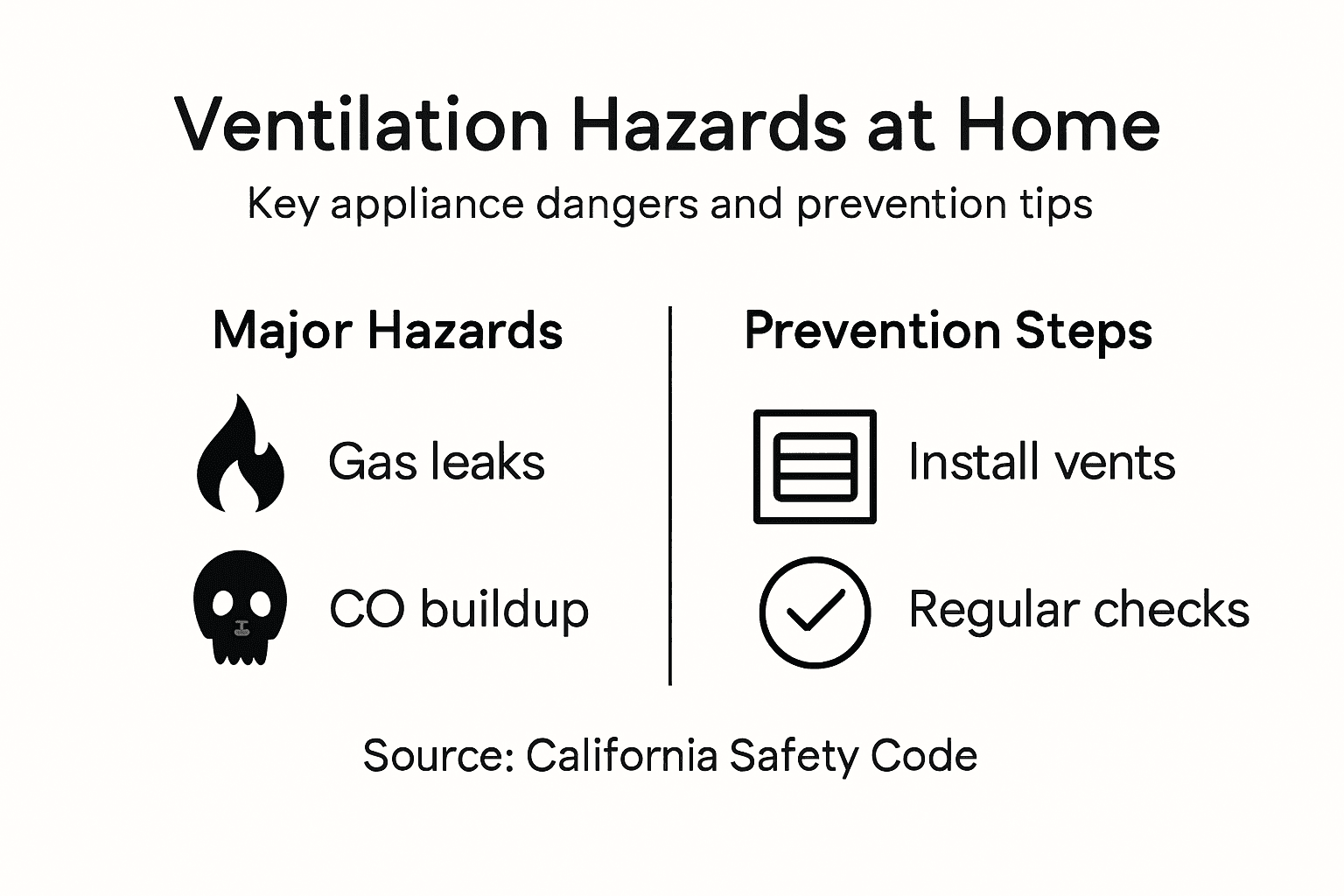
Carbon monoxide exposure causes headaches, dizziness, and nausea. Extended exposure leads to confusion, unconsciousness, and death. The danger is that you can’t see, smell, or taste carbon monoxide, so buildup happens undetected.
Volatile organic compounds (VOCs) from cleaning products, paints, and household items accumulate when ventilation fails. These chemicals cause respiratory irritation, headaches, and allergic reactions. People with asthma face particularly high risk from poor indoor air quality.
Moisture and Mold Problems
Inadequate ventilation causes buildup of humidity that promotes mold growth and structural damage. Your bathroom exhaust fan removes moisture from showers. Your kitchen range hood removes steam from cooking. Skip these, and moisture saturates your home.
Mold thrives in damp environments. It grows on walls, ceilings, under flooring, and inside walls where you can’t see it. Mold spores trigger allergic reactions, asthma attacks, and respiratory infections. Structural damage from moisture costs thousands to repair.
Common Maintenance Mistakes
Most ventilation failures result from simple neglect. Homeowners make these errors repeatedly:
- Blocked vents from lint, dust, or debris prevent air from flowing outdoors
- Faulty exhaust fans that don’t pull strongly or run intermittently
- Clogged filters that restrict airflow through the entire system
- Improper ductwork with kinks, holes, or reversed sections
- Ignoring warning signs like weak suction or backdraft
A range hood that barely pulls smoke is failing. A dryer vent that feels lukewarm instead of hot means lint is accumulating inside. These warning signs demand immediate attention.
This summary shows common maintenance errors and their potential consequences:
| Maintenance Mistake | Why It Happens | Likely Outcome |
|---|---|---|
| Blocked vents | Lint, dust, debris buildup | Reduced airflow, fire risk |
| Faulty exhaust fans | Neglect or age | Ineffective pollutant removal |
| Clogged filters | Rare filter changes | Poor air quality, appliance stress |
| Improper ductwork | DIY errors or aging systems | Backdraft, gas leaks |
| Ignoring weak suction | Failure to inspect | Mold, gas buildup |
The Pressure Problem
When one appliance exhausts air while another tries to draw combustion air, pressure imbalances occur. Your range hood pulls air from the kitchen. Your furnace needs combustion air. If they compete, the furnace may reverse its exhaust, pushing dangerous gases into living spaces instead of outdoors.
This situation is called backdraft and it’s extremely dangerous. It happens most often in homes with multiple gas appliances sharing limited air supply.
Regular maintenance and appropriate ventilation design are critical for preventing respiratory disease, carbon monoxide poisoning, mold growth, and structural damage.
What Maintenance Actually Looks Like
Prevention is simple and affordable. Professional inspection catches problems before they become hazardous. Service technicians test exhaust fans, check ductwork for blockages, and verify proper venting.
You should also replace range hood filters monthly, clean dryer vents twice yearly, and have furnace venting inspected annually. These basic steps prevent most common problems.
Pro tip: Schedule annual professional ventilation inspections before winter heating season begins. Technicians identify blocked vents, faulty fans, and pressure problems while they’re still easy to fix.
Protect Your Home with Expert Appliance Ventilation Services
Proper ventilation is essential to keep your home safe from dangerous gases like carbon monoxide and to prevent costly fire hazards caused by blocked vents or improper airflow. If you are concerned about your range hood not capturing smoke effectively or worry about hidden combustion gas buildup from your gas appliances, you need professional help that understands the critical role of ventilation in appliance safety.

Don’t wait for a hazardous situation to arise. At Appliances Repair MD Tech, our licensed technicians specialize in appliance repair, HVAC, and gas venting solutions across Orange County and Los Angeles County. We ensure your range hoods, dryers, and water heaters are ventilated correctly to meet California safety standards. Schedule your inspection or repair today to protect your family and home from invisible dangers. Visit our website now at Appliances Repair MD Tech and book your trusted local technician.
For professional advice on maintaining proper airflow and preventing backdraft risks, trust our experts to evaluate and upgrade your home’s ventilation system. Your safety is worth acting on immediately.
Frequently Asked Questions
What is the purpose of appliance ventilation?
Proper appliance ventilation removes harmful gases and moisture from your home, preventing dangerous build-up of pollutants like carbon monoxide and nitrogen dioxide.
How can I test if my range hood is functioning effectively?
You can test its effectiveness by holding a lit candle near the vent while it runs. The smoke should be drawn toward the hood within 1-2 seconds. If it lingers, it needs professional inspection.
What are the risks of inadequate ventilation in my home?
Inadequate ventilation can lead to the accumulation of hazardous gases, humidity, and mold growth, posing serious health risks such as respiratory issues and carbon monoxide poisoning.
Why is regular maintenance of ventilation systems important?
Regular maintenance prevents issues like blocked vents, faulty exhaust fans, and pressure imbalances, ensuring safe and effective removal of contaminants from your home.
Recommended
- Why Routine Dryer Vent Cleaning: Prevent Fires & Boost Efficiency
- Technicians’ Role in Appliance Safety Matters Locally
- What Is a Dishwasher Vent: Function & Importance
- Role of Refrigeration in Home: Importance & Benefits
- Health & Safety Benefits of Carbon Steel Pans – Brass & Steel
- Enjeux stockage lessive garderie : sécurité et normes – VØYA