
When your kitchen falls silent or laundry piles up in your Orange or Los Angeles County home, frustration can build fast. Tackling appliance problems is easier when you recognize the most frequent issues, from refrigerators leaking water to dryers that refuse to spin. With the right tools and proper safety practices, you can often diagnose and resolve many common malfunctions before reaching for the phone. This guide gives you practical steps to troubleshoot safely and confidently.
Table of Contents
- Step 1: Gather Required Tools And Safety Gear
- Step 2: Identify Common Appliance Issues
- Step 3: Perform Basic Diagnostic Checks
- Step 4: Apply Simple Troubleshooting Solutions
- Step 5: Test Appliance Function And Confirm Repair
Quick Summary
| Key Point | Explanation |
|---|---|
| 1. Gather essential tools and safety gear | Collect screwdrivers, wrenches, multimeters, and safety equipment to ensure safe and effective appliance repairs. |
| 2. Identify common appliance issues | Recognize signs of appliance problems, such as leaks or strange noises, to diagnose issues quickly before they worsen. |
| 3. Perform basic diagnostic checks | Methodically inspect electrical connections, look for damage, and use diagnostic modes to troubleshoot appliance failures efficiently. |
| 4. Apply simple troubleshooting solutions | Many appliance issues can be resolved with practical approaches like filter replacement or power resets, saving time and money. |
| 5. Test appliance function after repairs | Thoroughly test the appliance after repairs to confirm its functionality and ensure no issues persist, preventing future breakdowns. |
Step 1: Gather Required Tools and Safety Gear
Before diving into appliance troubleshooting, you’ll need the right tools and protection. Preparing correctly means safer, more effective repairs that protect both you and your equipment.
Start by collecting your essential toolkit. You’ll want a comprehensive set of hand tools that includes screwdrivers (flathead and Phillips), adjustable wrenches, pliers, multimeter, flashlight, and work gloves. Safety is paramount when working with electrical and mechanical systems, so don’t skip your protective gear.
Safety equipment is non-negotiable when handling appliance repairs. Proper tool safety practices involve more than just grabbing random tools. Here’s a comprehensive checklist:
- Safety glasses to protect your eyes from debris
- Work gloves that provide grip and hand protection
- Non-slip closed-toe shoes to prevent accidental slips
- Electrical-rated rubber gloves for extra protection during electrical work
- Tight-fitting clothing that won’t get caught in moving parts
Inspect each tool before use. Look for signs of damage like frayed electrical cords, loose handles, or cracked components. Never use damaged equipment, as this can lead to serious injury or further appliance damage.
Your safety gear is as important as the tools themselves. Treat protection like a mandatory first step, not an optional extra.
Organize your tools in a portable toolbox or rolling cart for easy access. Keep everything clean, dry, and within reach before starting any repair work.
Pro tip: Keep a small first aid kit nearby in case of minor cuts or injuries during your appliance troubleshooting journey.
Step 2: Identify Common Appliance Issues
Troubleshooting appliances starts with recognizing the telltale signs of potential problems. By understanding the most frequent malfunctions, you can quickly diagnose and potentially resolve issues before they escalate into costly repairs.
Common household appliance problems range from minor inconveniences to major system failures. Each appliance type has unique warning signs that signal underlying issues:
- Refrigerator problems: Water leaks, inconsistent cooling, icemaker not producing ice
- Oven issues: Uneven heating, burners not igniting, temperature control malfunctions
- Washer difficulties: Slow water flow, drum not spinning, excessive vibration
- Dryer complications: No heat production, drum not rotating, unusual noises
- Dishwasher troubles: Poor cleaning performance, water drainage problems
Careful observation is key. Listen for unusual sounds, watch for performance changes, and note any visual irregularities. Each symptom provides valuable diagnostic information about potential component failures.
A keen eye and attentive ear can often reveal an appliance’s underlying mechanical or electrical issues before they become serious problems.
Pay close attention to warning signs like strange noises, unexpected shutdowns, or performance inconsistencies. These early indicators can help you address problems quickly and potentially avoid expensive repairs.
Here’s a quick reference comparing common appliance issues and what they may indicate:
| Appliance Type | Typical Symptom | Possible Underlying Cause |
|---|---|---|
| Refrigerator | Water on floor | Blocked drain or seal issue |
| Oven | Uneven heating | Faulty element or thermostat |
| Washer | Drum not spinning | Broken belt or motor issue |
| Dryer | No heat | Failed heating element |
| Dishwasher | Poor cleaning | Clogged spray arms or filter |
Pro tip: Keep a maintenance log for each appliance to track recurring issues and performance patterns over time.
Step 3: Perform Basic Diagnostic Checks
Diagnostic checks are your first line of defense in understanding what might be going wrong with an appliance. By methodically examining key components and systems, you can often pinpoint issues before they become major problems.
Modern appliance diagnostic modes provide powerful tools for identifying potential malfunctions. Here’s a comprehensive approach to checking your appliance’s health:
- Electrical connections: Verify all power cords are securely plugged in
- Visual inspection: Look for obvious signs of damage or wear
- Mechanical movement: Test moving parts like drum rotation or fan blades
- Error code reading: Check control panel for any displayed diagnostic codes
- Sensor functionality: Verify temperature and pressure sensors are responding
Start by unplugging the appliance and performing a careful physical examination. Look for signs of wear such as frayed wires, rust, or mechanical stress. Check water supply lines for any leaks or potential blockages. Listen carefully for unusual sounds that might indicate internal component issues.
Diagnostic checks are like a medical checkup for your appliances – early detection can prevent costly breakdowns.
Many modern appliances have built-in diagnostic modes that can help you understand potential problems. Consult your user manual for specific instructions on accessing these diagnostic features, as they vary between different brands and models.
Pro tip: Take clear photos of any damage or error codes you discover to help repair technicians diagnose the issue more quickly.
Step 4: Apply Simple Troubleshooting Solutions
Not every appliance problem requires a professional repair. Many issues can be resolved with simple, cost-effective solutions that save you time and money. Understanding these basic troubleshooting techniques can help you quickly restore your appliance’s functionality.
Common appliance repair strategies focus on straightforward fixes that most homeowners can handle. Here are some practical troubleshooting approaches:
- Filter replacement: Clean or swap out clogged filters in refrigerators, washers, and dryers
- Power reset: Unplug the appliance, wait 60 seconds, then reconnect to reset electronic systems
- Cleaning maintenance: Clear dust from coils, vents, and internal components
- Gasket inspection: Check and replace worn door seals to ensure proper closure
- Connection verification: Tighten loose electrical connections and water supply lines
Before attempting any repair, always disconnect the appliance from power and consult the user manual. Some solutions are surprisingly simple – a loose connection or dirty component can often cause performance issues that seem more complex at first glance.
Small, targeted interventions can frequently resolve appliance problems without expensive professional service.
Remember that while these solutions work for minor issues, complex electrical or mechanical problems still require professional expertise. Know your limits and don’t hesitate to call a technician if you’re unsure about a repair.
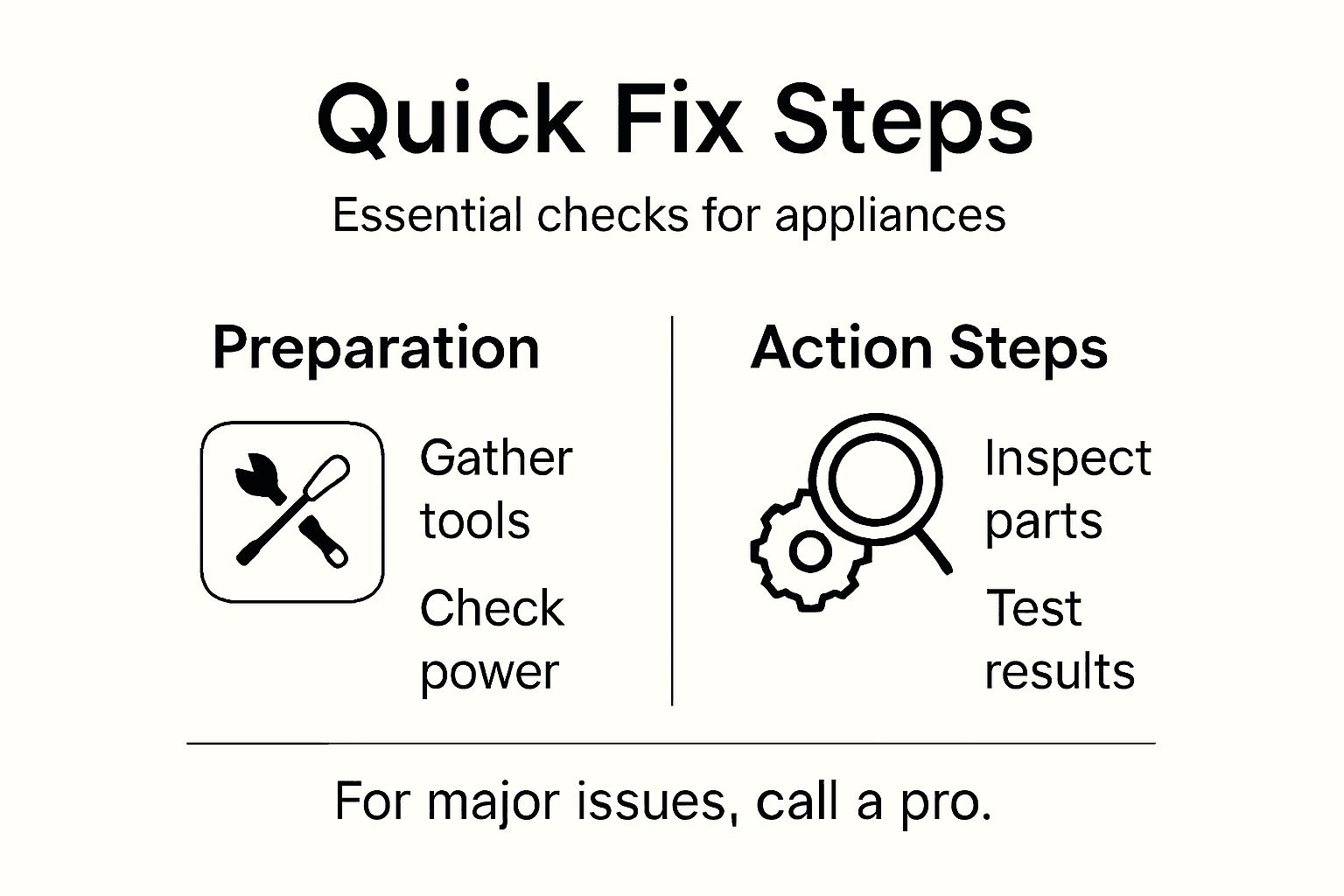
Use this table to understand when to try a DIY fix versus calling a professional:
| Situation | DIY Troubleshooting | Seek Professional Help |
|---|---|---|
| Simple cleaning tasks | Safe and recommended | Not necessary |
| Resetting appliance | User can perform | Not required |
| Major leak or wiring issue | Risky without experience | Essential for safety |
| Unusual smells (burning) | Unplug immediately | Technician needed |
Pro tip: Take photos of your appliance’s internal components before disassembling anything, so you can easily remember how to reassemble them.
Step 5: Test Appliance Function and Confirm Repair
After performing troubleshooting repairs, thoroughly testing your appliance ensures the problem is genuinely resolved and prevents potential future issues. A systematic approach helps verify that your repair was successful and the appliance operates safely.
Portable appliance testing involves comprehensive safety and functional checks that go beyond simple visual inspections. Here are key steps to confirm your repair:
- Power connection: Verify stable electrical connection
- Operational cycles: Run complete manufacturer-recommended test cycles
- Performance monitoring: Check for consistent temperature, speed, and function
- Sound evaluation: Listen for unusual noises during operation
- Safety inspection: Ensure all safety mechanisms are functioning correctly
Begin by carefully reconnecting the appliance and running a full operational cycle. Pay close attention to any previous symptoms and monitor for their potential recurrence. Some repairs might require multiple test runs to confirm complete resolution.
A thorough test today prevents costly breakdowns tomorrow.
If you notice any persistent issues or unusual behavior during testing, stop using the appliance immediately. Consider consulting a professional technician who can perform a more detailed diagnostic evaluation.
Pro tip: Keep a repair log documenting the specific issue, repairs performed, and test results for future reference and potential warranty claims.
Fast Relief for Your Appliance Troubles With Local Expert Help
If you have followed the essential troubleshooting steps but still face issues like unusual noises or inconsistent appliance performance it is time to reach out for professional support. Appliances such as refrigerators washers and dryers require not only the right tools and safety but also expert diagnostic checks and repair solutions to get them running smoothly again. Avoid the frustration of prolonged downtime and potential safety risks by connecting with trusted technicians near you.
Trust Appliances Repair MD Tech to provide quick reliable repairs across Orange County and Los Angeles County Our licensed professionals specialize in a wide range of household appliance problems from faulty heating elements to clogged filters and sensor failures. Whether you need urgent service or scheduled maintenance our team is ready to assist. Take action now to protect your home and ensure your appliances work at peak performance Learn more about our repair services and conveniently book your appointment online for fast local assistance.
Frequently Asked Questions
What tools do I need for basic appliance troubleshooting?
To troubleshoot appliances effectively, gather essential tools such as screwdrivers, wrenches, pliers, multimeters, and safety gear. Be sure to organize your tools in a portable toolbox to ensure you have quick access while working.
How can I identify common issues with my appliance?
Look for typical symptoms such as water leaks, inconsistent cooling, or unusual noises. Observing these signs can help you pinpoint potential problems before they escalate into costly repairs.
What steps should I take for basic diagnostic checks?
Start by unplugging the appliance and visually inspecting for damage, checking electrical connections, and running any built-in diagnostic modes. This systematic approach helps you identify issues before they become major problems.
How can I apply simple troubleshooting solutions effectively?
Many minor issues can be resolved by checking filters, resetting power, or inspecting door seals. For instance, cleaning or replacing a clogged filter can improve performance significantly within just a few minutes.
How do I test my appliance after performing repairs?
After completing repairs, reconnect your appliance and run a full operational cycle to confirm everything works properly. Pay close attention to previous symptoms and monitor for any unusual noises during operation.
When should I consider calling a professional for appliance issues?
If you encounter major leaks, electrical problems, or persistent issues after your troubleshooting efforts, it’s best to seek professional help. Don’t hesitate to reach out if you notice any unusual smells or risks that could compromise safety.