
A single overlooked recall notice can put your entire household at risk without warning. For homeowners in Orange and Los Angeles Counties, understanding what a recall notice really means is not just a formality but a serious step toward preventing injuries, fires, and other hazards. Recognizing the difference between urgent government alerts and routine updates empowers you to act quickly, protect your family, and avoid unnecessary legal headaches in your own home.
Table of Contents
- What Appliance Recall Notices Mean
- Types of Recalls and Safety Hazards
- How Recall Notifications Are Issued
- Legal Duties for California Homeowners
- Responding to Recalls and Avoiding Risks
Key Takeaways
| Point | Details |
|---|---|
| Understand Recall Notices | Recall notices are mandatory communications that inform consumers about defects posing hazards, requiring immediate action to ensure safety. |
| Categorize Recalls by Severity | Recalls are classified as Class I, II, or III based on hazard severity, with Class I requiring immediate cessation of use. |
| Legal Responsibilities | California homeowners are legally obligated to address recalled appliances and can face liability for neglecting recall notices. |
| Proactive Measures | Register appliances with manufacturers to receive recall alerts directly and regularly check recall databases to stay informed. |
What Appliance Recall Notices Mean
When a manufacturer or regulatory agency issues a recall notice, they are essentially warning consumers to stop using a potentially dangerous appliance. A product recall is an official request by a manufacturer or regulatory body for consumers to return or dispose of a product after discovering defects or safety issues. For homeowners in Orange County and Los Angeles County, this could involve refrigerators, dryers, ovens, washing machines, or dishwashers that contain hidden risks capable of causing fires, injuries, electrical shocks, or property damage.
These notices are not casual recommendations. They are formal safety communications intended to protect your household from immediate or long-term hazards. Manufacturers are legally required to notify consumers through SaferProducts.gov and public announcements once defects are identified. Depending on the issue, the notice may instruct you to stop using the appliance immediately, schedule a repair, request a replacement, or seek a refund.
Why Recall Notices Matter
Many homeowners assume recalls are minor inconveniences, but the risks can be severe. Faulty wiring in refrigerators may trigger house fires. Defective heating elements inside ovens can overheat and create burn hazards. Washing machines with electrical failures may expose users to dangerous shocks during operation.
Ignoring these notices increases the chance of accidents inside your home. In busy households, one family member may know about the recall while another continues using the appliance unaware of the danger. This is why reading the full notice carefully is essential.
Important Information Inside a Recall Notice
Every recall notice contains details homeowners should review immediately:
- Specific model and serial numbers affected
- Manufacturing dates or production batches involved
- Description of the safety hazard
- Instructions for stopping use or limiting operation
- Repair, replacement, or refund procedures
- Manufacturer contact information
Some recalls affect only appliances produced during a limited manufacturing period, while others involve entire product lines. Carefully matching your appliance model number prevents confusion and helps you determine whether your unit is included.
Pro tip: Register all major household appliances immediately after installation so manufacturers can contact you directly if a recall is issued later.
Types of Recalls and Safety Hazards
Not all appliance recalls carry the same level of urgency. The Consumer Product Safety Commission categorizes recalls into three different classes based on how dangerous the defect is.
Class I Recalls
Class I recalls are the most serious. These involve products capable of causing severe injury or death. Examples include refrigerators with electrical fire risks, gas ranges leaking dangerous fumes, or washing machines that may explode during operation.
If your appliance receives a Class I recall notice, you should stop using it immediately and follow manufacturer instructions without delay.
Class II Recalls
Class II recalls involve moderate risks that may cause temporary injuries or non-life-threatening hazards. A dryer overheating during long cycles or a dishwasher spray arm breaking unexpectedly would fit this category.
These recalls still require prompt action, although temporary continued use may sometimes be permitted while repairs are arranged.
Class III Recalls
Class III recalls involve products that violate regulatory standards but are unlikely to cause significant health risks. Although the danger level is lower, repairs or updates are still necessary to maintain compliance and proper operation.
Here is a quick comparison of recall classes and response urgency:
| Recall Class | Hazard Severity | Recommended Action | Urgency |
|---|---|---|---|
| Class I | Severe injury or death risk | Stop use immediately | Immediate |
| Class II | Moderate injury risk | Arrange repair quickly | As soon as possible |
| Class III | Minor regulatory issue | Follow repair guidance | Within reasonable timeframe |
Common Appliance Hazards
Different appliances tend to develop different safety concerns. Manufacturers frequently issue recalls for the following problems:
- Electrical fires caused by faulty wiring
- Overheating components inside dryers and ovens
- Refrigerant leaks from refrigerators or freezers
- Broken moving parts creating injury risks
- Water leaks causing electrical hazards
- Burn risks from defective heating systems
Here is a helpful overview of appliance recall hazards:
| Appliance Type | Typical Hazard | Possible Consequence |
|---|---|---|
| Refrigerator | Electrical failure | House fire |
| Dryer | Lint ignition | Property damage |
| Washing Machine | Electrical shock | Burns or electrocution |
| Dishwasher | Broken spray arms | Cuts or water leaks |
| Oven or Range | Heating malfunction | Burn injuries |
| Freezer | Refrigerant leaks | Chemical exposure |
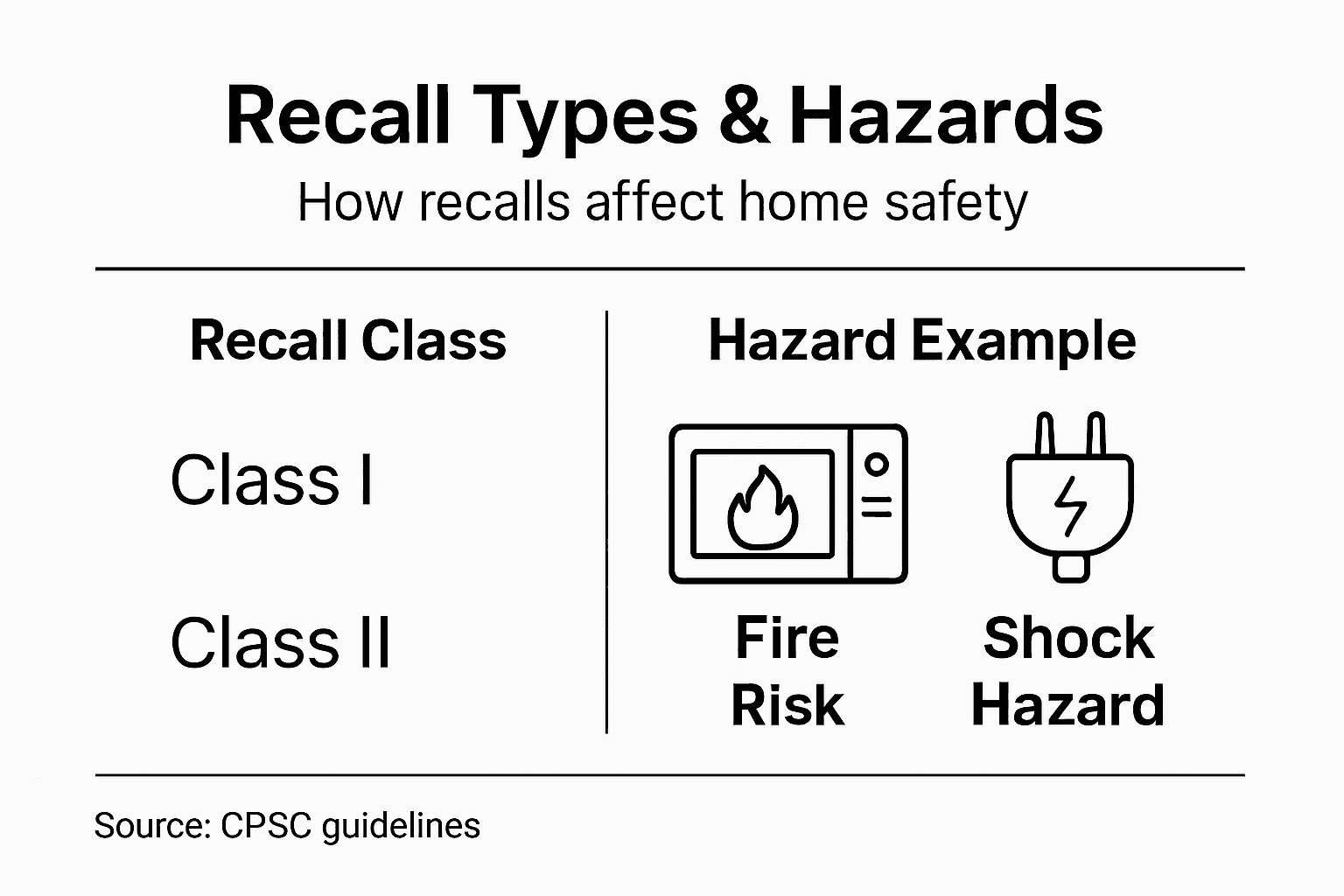
Pro tip: Check the recall classification first so you know whether you must stop using the appliance immediately or schedule repairs within a short timeframe.
How Recall Notifications Are Issued
Recall notices follow a structured process managed by regulatory agencies and manufacturers. Once a defect or hazard is identified through customer complaints, testing, or accident reports, the Consumer Product Safety Commission evaluates the risk level and coordinates with the manufacturer to announce corrective actions.
Where Recall Information Appears
Consumers may learn about recalls through several channels:
- Official CPSC website announcements
- Email alerts from manufacturers
- Retailer notifications
- Local and national news coverage
- Social media alerts
- Online recall databases
The CPSC publishes public recall releases and database updates that include hazard descriptions, affected models, and repair instructions.
Details Provided in Recall Alerts
Each recall notification typically includes:
- Product brand and appliance model
- Serial number ranges
- Nature of the defect
- Potential injuries or hazards
- Recommended corrective action
- Repair or refund procedures
Some recalls include photographs of affected appliances to help homeowners identify products more easily. Others list production dates or manufacturing codes.
Manufacturers and agencies continue monitoring recall effectiveness even after notifications are issued. They track repairs, replacements, and customer responses to ensure dangerous products are removed from homes quickly.
Pro tip: Subscribe to CPSC email alerts so recall notifications arrive directly in your inbox as soon as they are announced.
Legal Duties for California Homeowners
California homeowners have legal responsibilities regarding recalled appliances. State consumer protection laws require property owners to maintain safe living conditions, and that includes responding appropriately to product recalls.
Why Homeowners Can Face Liability
If a homeowner knowingly ignores a recall notice and someone is injured because of the defective appliance, legal consequences may follow. Insurance providers may deny claims if investigators determine the homeowner ignored a known safety hazard.
For example, continuing to use a recalled dryer with a known fire risk could expose the homeowner to liability if a fire damages neighboring property or injures someone inside the home.
Under federal and California safety regulations, homeowners are expected to take reasonable corrective action once informed of a recall.
Important Records to Keep
Maintaining proper documentation helps protect you legally:
- Save all recall emails and letters
- Keep repair invoices and receipts
- Document replacement approvals
- Take screenshots of registration confirmations
- Record dates of manufacturer communication
These records demonstrate that you acted responsibly after receiving the notice.
Pro tip: Create a digital folder for appliance records, warranty documents, and recall notices so everything remains organized and easy to access during emergencies.
Responding to Recalls and Avoiding Risks
When a recall notice arrives, responding quickly reduces risk and protects your household. Instead of panicking, follow a step-by-step process to address the issue properly.
Step-by-Step Response Plan
- Read the full recall notice carefully
- Verify your appliance model and serial number
- Determine the recall classification
- Stop using the appliance if instructed
- Contact the manufacturer immediately
- Schedule repairs or request replacement
- Save all communication and receipts
Following these steps ensures your response is organized and effective.
Importance of Appliance Registration
Many homeowners skip product registration because it feels unnecessary. However, registration is the fastest way to receive recall alerts directly from manufacturers.
Without registration, you may discover recalls months later through online searches or news reports. By that point, the appliance could already have caused damage.
Building a Home Appliance Inventory
Creating a simple appliance inventory helps you monitor recalls efficiently. Include:
- Brand names
- Model numbers
- Serial numbers
- Purchase dates
- Warranty information
Store this inventory digitally and update it whenever you replace appliances.
Pro tip: Set a recurring calendar reminder every three months to search your appliance models in current recall databases and confirm no new safety alerts have been issued.
Keep Your California Home Safe With Expert Appliance Repair Services
Appliance recalls can create serious safety hazards ranging from electrical fires to mechanical failures. Acting quickly when a recall notice appears helps protect your family, your property, and your legal responsibilities as a homeowner. Ignoring these notices increases the risk of injuries, costly repairs, and insurance complications.
At MD Tech, our licensed technicians provide professional appliance inspections, repairs, and replacement services throughout Orange County and Los Angeles County. Whether you need help identifying recalled products, scheduling urgent repairs, or replacing hazardous appliances, our experienced team delivers reliable support that keeps your household safe.
Do not wait for a small defect to become a major emergency. Contact MD Tech today to schedule appliance repair services and ensure your home remains protected from hidden hazards associated with recalled appliances.
Frequently Asked Questions
What does an appliance recall notice mean?
An appliance recall notice is an official warning from a manufacturer or regulatory agency informing consumers that a product contains defects or hazards requiring corrective action such as repairs, replacement, or discontinued use.
What should I do if I receive a recall notice for my appliance?
Read the notice carefully, verify your appliance model number, determine the recall severity, and follow manufacturer instructions immediately. This may involve stopping use, scheduling repairs, or requesting a replacement.
How can I find out if my appliance has been recalled?
You can check recall databases on the Consumer Product Safety Commission website, register appliances with manufacturers, and subscribe to official recall alerts to stay informed about product safety issues.
What are the different classes of appliance recalls and their significance?
Class I recalls involve severe hazards requiring immediate action, Class II recalls involve moderate hazards requiring prompt attention, and Class III recalls involve lower-risk regulatory issues that still require corrective action.