
Most American households rely on appliances filled with Freon to keep cool, but few realize that improper handling can trigger costly repairs and even legal headaches. In Orange and Los Angeles Counties, state regulations make using the wrong refrigerant a potential violation. Understanding the types and safety concerns of Freon helps homeowners protect their family, wallet, and the environment while keeping their cooling systems running smoothly.
Table of Contents
- Freon Explained—Coolant In Household Appliances
- Common Types Of Freon And Their Differences
- How Freon Works In Refrigerators And Ac Units
- Legal Restrictions On Freon Use In California
- Risks, Safe Handling, And Modern Alternatives
Key Takeaways
| Point | Details |
|---|---|
| Freon Types and Regulations | Various refrigerants have differing environmental impacts and legal statuses, with CFCs entirely phased out and newer alternatives like HFOs being preferred. |
| Safe Handling of Refrigerants | Exposure to Freon can cause health issues; proper safety protocols must be followed, including using protective gear and proper ventilation. |
| Refrigeration Cycle | Understanding the refrigeration cycle is crucial for effective cooling; it involves the evaporator, compressor, condenser, and expansion valve. |
| Consult Professionals | Homeowners should always consult licensed HVAC technicians for safe handling and to ensure compliance with current regulations. |
Freon Explained—Coolant in Household Appliances
A Freon is a specialized type of refrigerant chemical used extensively in cooling systems throughout household appliances. Chlorofluorocarbons (CFCs) represent a specific family of these compounds designed to efficiently absorb and release heat, making them crucial for refrigeration technologies.
These colorless and odorless gases are engineered from volatile derivatives of methane, ethane, and propane. In practical applications like refrigerators and air conditioners, Freon circulates through closed systems, transitioning between liquid and gaseous states to facilitate temperature regulation. Homeowners in Orange and Los Angeles Counties frequently encounter these chemicals in their everyday cooling appliances.
While Freon has been a standard cooling agent for decades, modern environmental regulations have significantly shifted its usage. Refrigerant exposure can potentially cause health complications such as skin irritation and frostbite if direct contact occurs. Professional technicians understand the intricate handling requirements and safety protocols associated with these specialized chemicals.
Pro tip: Always contact a licensed HVAC professional when dealing with refrigerant systems to ensure safe handling and compliance with current environmental regulations.
Common Types of Freon and Their Differences
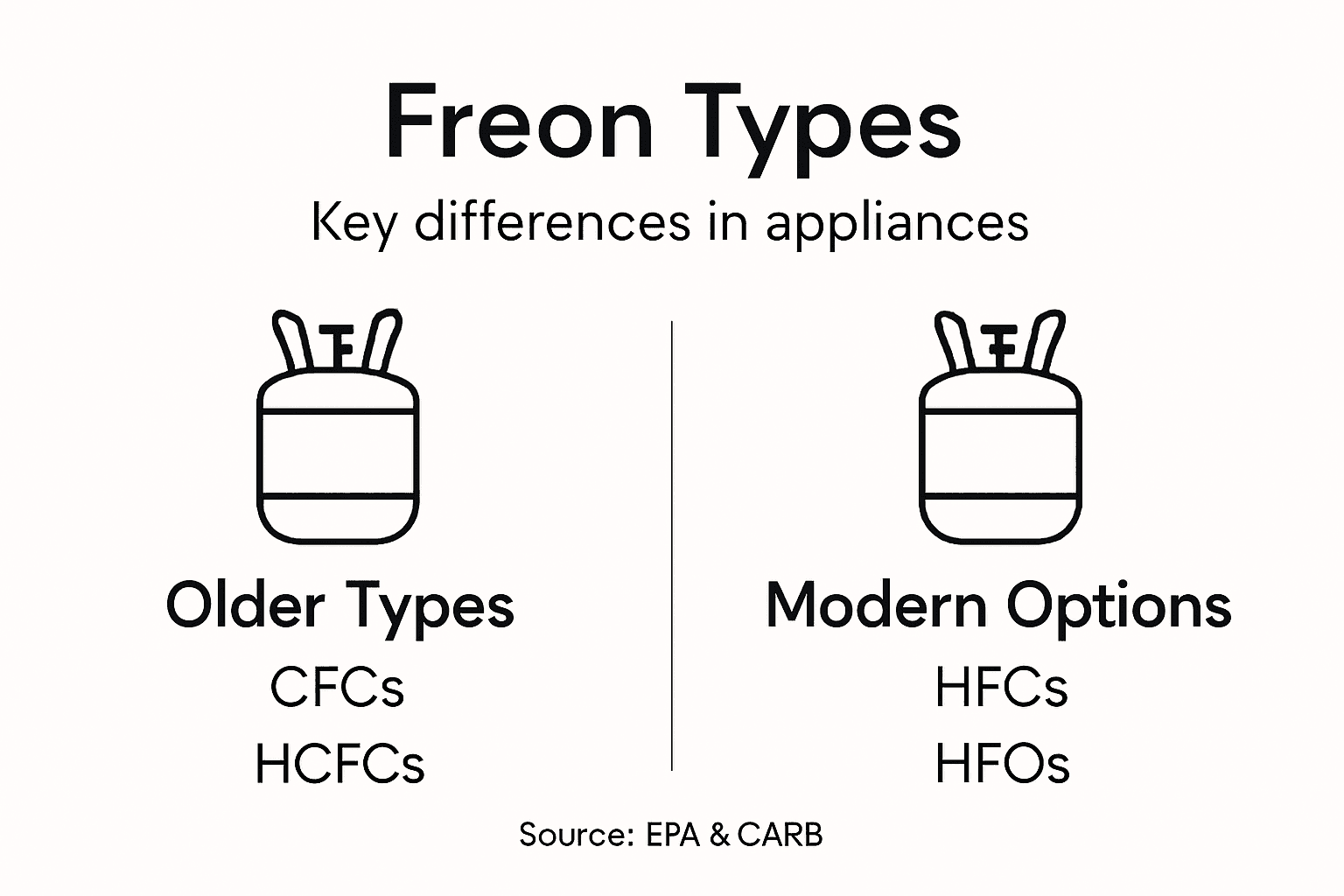
Freon encompasses several distinct refrigerant chemical groups, each with unique environmental and performance characteristics. Chlorofluorocarbons (CFCs) represent the original generation of these compounds, which were widely used but ultimately discovered to severely damage the ozone layer.
Modern refrigerant classifications include multiple types with varying environmental impacts. The main categories are:
- Chlorofluorocarbons (CFCs): Completely phased out due to ozone depletion
- Hydrochlorofluorocarbons (HCFCs): Transitional replacements being gradually eliminated
- Hydrofluorocarbons (HFCs): Ozone-friendly but with high global warming potential
- Hydrocarbons (HCs): Environmentally friendly but potentially flammable
- Hydrofluoroolefins (HFOs): Newest generation with low environmental impact
Refrigerant types differ significantly in their molecular structure, environmental consequences, and practical applications. HVAC professionals in Orange and Los Angeles Counties must carefully select refrigerants that balance performance, safety, and environmental considerations. For instance, R-22 (an HCFC) is being phased out, while R-410A (an HFC) has become a common replacement in residential cooling systems.
Pro tip: Always confirm the specific refrigerant type in your appliance with a licensed technician to ensure proper maintenance and environmental compliance.
Here’s a quick comparison of major refrigerant types used in household appliances:
| Refrigerant Type | Environmental Impact | Common Applications | Regulatory Status (CA) |
|---|---|---|---|
| CFCs | Damages ozone layer | Old ACs, fridges | Banned/Phased Out |
| HCFCs | Reduced ozone impact | Transitional units | Scheduled phase-out |
| HFCs | High global warming | Newer ACs, fridges | Limited/Restricted |
| HFOs | Low environmental risk | Modern systems | Approved/Preferred |
| Hydrocarbons | Minimal impact, flammable | Select appliances | Permitted; safety limits |
How Freon Works in Refrigerators and AC Units
Refrigerant systems operate through a sophisticated heat transfer process that transforms Freon from liquid to gas and back again. This continuous cycle allows cooling appliances to remove heat from interior spaces efficiently. The entire process depends on carefully controlled pressure and temperature changes that manipulate the refrigerant’s physical state.
The refrigeration cycle involves four primary components:
- Evaporator: Where Freon absorbs heat and transforms into a low-pressure gas
- Compressor: Increases the refrigerant’s pressure and temperature
- Condenser: Releases absorbed heat to the surrounding environment
- Expansion Valve: Reduces refrigerant pressure, enabling rapid cooling
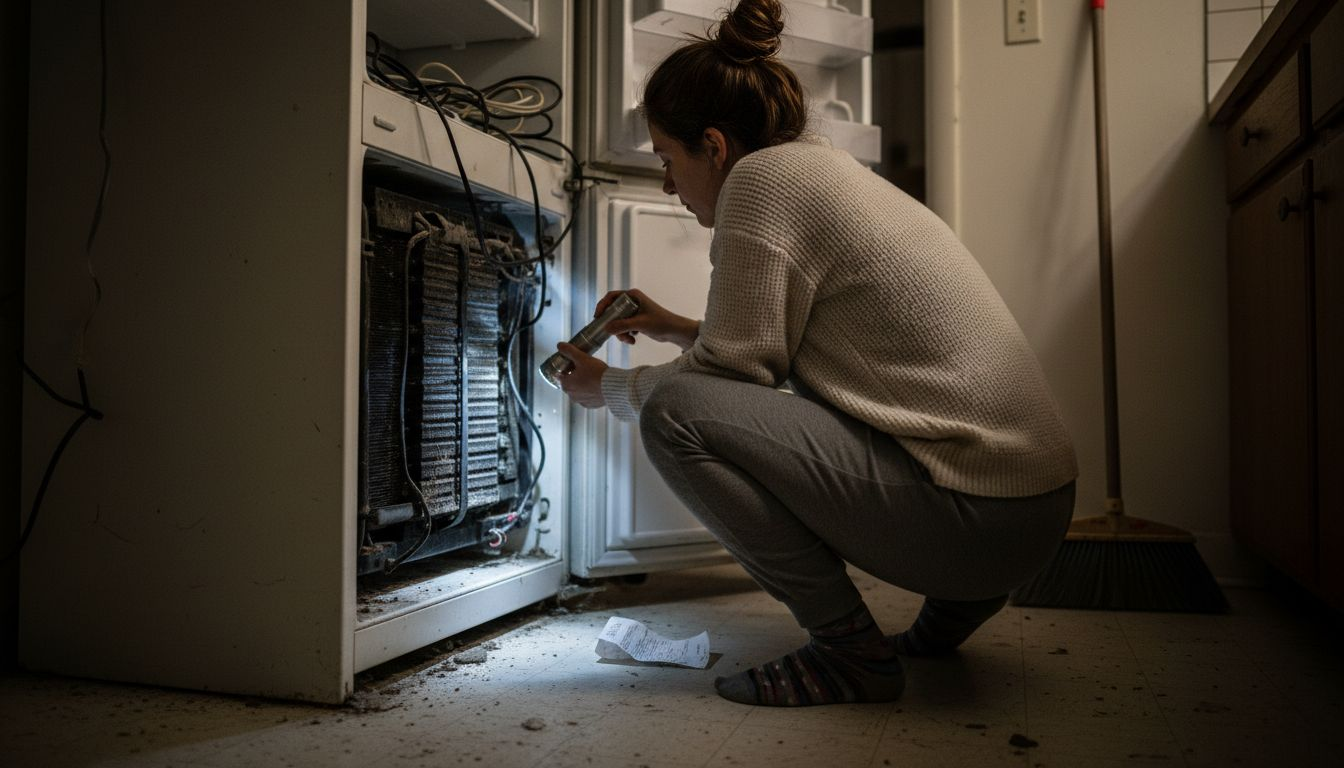
Heat pump principles drive the refrigeration mechanism/University_Physics_II_-Thermodynamics_Electricity_and_Magnetism(OpenStax)/04%3A_The_Second_Law_of_Thermodynamics/4.04%3A_Refrigerators_and_Heat_Pumps), creating a continuous thermal exchange. When Freon passes through the evaporator coils, it absorbs interior heat and evaporates, cooling the surrounding air. The compressor then pressurizes the gas, transforming it into a high-temperature vapor that releases heat when passing through the condenser coils. This intricate process ensures consistent temperature regulation in refrigerators and air conditioning units.
Pro tip: Schedule annual maintenance with a professional HVAC technician to ensure your cooling system’s Freon circulates efficiently and maintains optimal performance.
Legal Restrictions on Freon Use in California
California has implemented stringent regulations targeting hydrofluorocarbon (HFC) emissions to combat climate change. These legal restrictions directly impact how refrigerants are manufactured, sold, and used throughout the state, creating significant challenges for homeowners and HVAC professionals in Orange and Los Angeles Counties.
The key legal restrictions include:
- Prohibitions on HFCs in new equipment
- Limitations on stationary refrigeration systems
- Restrictions in air conditioning installations
- Bans on specific refrigerants with high global warming potential
- Mandatory phase-out schedules for certain refrigerant types
The California Air Resources Board (CARB) oversees these comprehensive regulations, which often extend beyond federal guidelines. Specific refrigerants like R-22 are being systematically eliminated, requiring homeowners to upgrade or modify existing cooling systems to remain compliant. The regulations aim to reduce greenhouse gas emissions while promoting more environmentally friendly cooling technologies.
Pro tip: Consult with a licensed HVAC technician who understands California’s current refrigerant regulations before replacing or servicing any cooling system.
Risks, Safe Handling, and Modern Alternatives
Freon exposure presents potential health risks that homeowners and technicians must understand. This colorless, nonflammable gas can cause serious complications if mishandled, including dizziness, headaches, and in severe cases, frostbite. Residents of Orange and Los Angeles Counties should be particularly aware of the potential dangers associated with refrigerant leaks in household appliances.
Safe handling requires careful attention to several critical protocols:
- Use only in well-ventilated areas
- Wear appropriate protective equipment
- Avoid direct skin and eye contact
- Immediately move to fresh air if exposure occurs
- Seek medical attention for significant exposure
- Schedule regular professional maintenance
Safety data sheets recommend specific precautions when dealing with refrigerants. Modern alternatives like hydrofluoroolefins (HFOs) and natural refrigerants such as propane offer more environmentally friendly options with reduced health and ecological risks. These newer technologies provide improved cooling performance while dramatically minimizing potential hazards associated with traditional Freon-based systems.
Pro tip: Keep a record of your appliance’s refrigerant type and maintain the contact information for both your local poison control center and a licensed HVAC technician.
Below is a summary of key risks and safety protocols associated with refrigerant handling:
| Risk Type | Main Symptoms | Safety Protocol | Best Response |
|---|---|---|---|
| Skin contact | Irritation, frostbite | Wear gloves, eye protection | Wash, seek medical help |
| Inhalation | Dizziness, headaches | Ventilate area, avoid leaks | Move to fresh air |
| Eye exposure | Severe irritation, pain | Use protective eyewear | Rinse, seek treatment |
| Environmental leak | Air pollution, climate risk | Regular maintenance checks | Professional repair |
Protect Your Home with Expert Freon and Appliance Services
Understanding the importance of Freon in your household appliances highlights the need for skilled handling and timely maintenance. If you face issues like refrigerant leaks, cooling inefficiency, or worry about environmental compliance in Orange County or Los Angeles County, getting professional support is essential. Key challenges include safely managing refrigerants like HFCs or HFOs and ensuring your systems meet California’s strict regulations.
Trust the team at Appliances Repair MD Tech for reliable Freon-related repairs and HVAC services. Our licensed technicians specialize in proper refrigerant handling, leak detection, and eco-friendly appliance solutions that safeguard your family and the environment. Don’t wait until a minor refrigerant problem causes major damage. Book your service today to ensure safe, efficient cooling and peace of mind. Visit our homepage or learn more about scheduling your appointment now.
Frequently Asked Questions
What is Freon and how does it work in appliances?
Freon is a type of refrigerant used in cooling systems of household appliances, such as refrigerators and air conditioners. It circulates through a closed system, changing from liquid to gas to absorb and release heat, which helps regulate temperature.
What are the different types of Freon and their environmental impacts?
There are several types of Freon, including CFCs, HCFCs, HFCs, hydrocarbons, and HFOs. CFCs are banned due to their ozone-depleting effects, while HCFCs are transitional and being phased out. HFCs have high global warming potential, while HFOs and hydrocarbons are newer alternatives with less environmental impact.
What are the health risks associated with Freon exposure?
Freon exposure can cause health issues such as skin irritation, frostbite, dizziness, and headaches. If there is significant exposure, it is essential to seek medical attention immediately.
What safety precautions should be taken when handling Freon?
When handling Freon, ensure you work in well-ventilated areas, wear protective equipment, avoid direct contact, and seek immediate medical help if exposed. Regular professional maintenance is also crucial to prevent refrigerant leaks.