
A washing machine that fills past its proper limit can turn a simple chore into a costly headache for any Orange or Los Angeles County homeowner. This type of washer overfilling problem is more than just a wet floor—it often points to trouble with water level sensors, pressure switch tubes, or inlet valves, not just a mechanical failure. Quick action and the right information can help you avoid water damage and know when to call a trusted appliance technician for help.
Table of Contents
- Washer Overfilling Defined and Common Myths
- How Washers Fill: Sensors and Valves Explained
- Causes of Overfilling in Modern Washers
- Warning Signs and Damage Risks of Overfilling
- DIY Steps and When to Call a Technician
Key Takeaways
| Point | Details |
|---|---|
| Overfilling Causes | Washer overfilling can result from multiple components, including faulty inlet valves, misaligned sensors, and control board issues. Understanding these causes is essential for homeowners to prevent potential disasters. |
| Warning Signs | Key indicators include water pooling, unusual fill cycles, and strange noises during operation. Recognizing these signs early can help mitigate water damage and repair costs. |
| DIY and Professional Help | Homeowners should perform basic diagnostics but call a technician for complex electrical issues or persistent overfilling. Proper documentation of symptoms can aid in faster repairs. |
| Prevention Tips | Regular inspections of pressure tubes and inlet valves can prevent overfilling. Additionally, installing leak detection sensors offers an extra layer of protection against potential overflow incidents. |
Washer Overfilling Defined and Common Myths
Washer overfilling represents a frustrating plumbing issue that can transform a routine laundry task into a potential home disaster. At its core, washer overfilling occurs when a washing machine fills beyond its intended water capacity, potentially causing significant water damage and operational complications.
Contrary to popular belief, overfilling isn’t always a simple mechanical failure. Common washing machine myths suggest that inlet valve problems are the sole culprit, but the reality is far more nuanced. Multiple components can contribute to this issue:
- Water Inlet Valve: Can malfunction and allow excessive water flow
- Water Level Sensors: May provide incorrect readings
- Pressure Switch Tubes: Can become clogged or misaligned
- Control Board: Might send incorrect signals to filling mechanism
Modern washers incorporate complex electronic systems designed to regulate water levels precisely. Sensor malfunctions in modern washers can cause unexpected overfilling, challenging the simplistic notion that mechanical failures are always to blame.
Understanding these potential causes is crucial for homeowners. Overfilling isn’t just an inconvenience – it can lead to significant water damage, potential electrical issues, and costly repairs if left unaddressed. Recognizing the signs early and understanding the potential root causes can save both time and money.
Pro tip: Keep a close eye on your washer during its fill cycle and immediately investigate any unusual water levels or unexpected filling patterns.
How Washers Fill: Sensors and Valves Explained
Understanding how washers fill involves exploring a complex interplay between mechanical and electronic components. Water inlet systems represent a sophisticated network of sensors and valves designed to precisely control water flow during each wash cycle.
The primary components responsible for water filling include:
- Water Inlet Valves: Control water entry into the washing machine
- Pressure Sensors: Detect and monitor water levels
- Vinyl Tubes: Connect pressure switches to measure water depth
- Control Panel: Coordinate and manage filling process
Modern washing machines utilize an intricate air pressure detection system. Pressure switch mechanisms work by monitoring air pressure changes through a small vinyl tube connected to the washer’s tub. As water rises, the air pressure inside the tube changes, signaling the control panel to stop water intake.
Precise water level control is crucial for effective washing and preventing potential water damage.
The entire filling mechanism relies on split-second communication between mechanical and electronic components. A malfunction in any part – whether a sticky valve, blocked sensor tube, or faulty control board – can disrupt the delicate balance and cause overfilling.
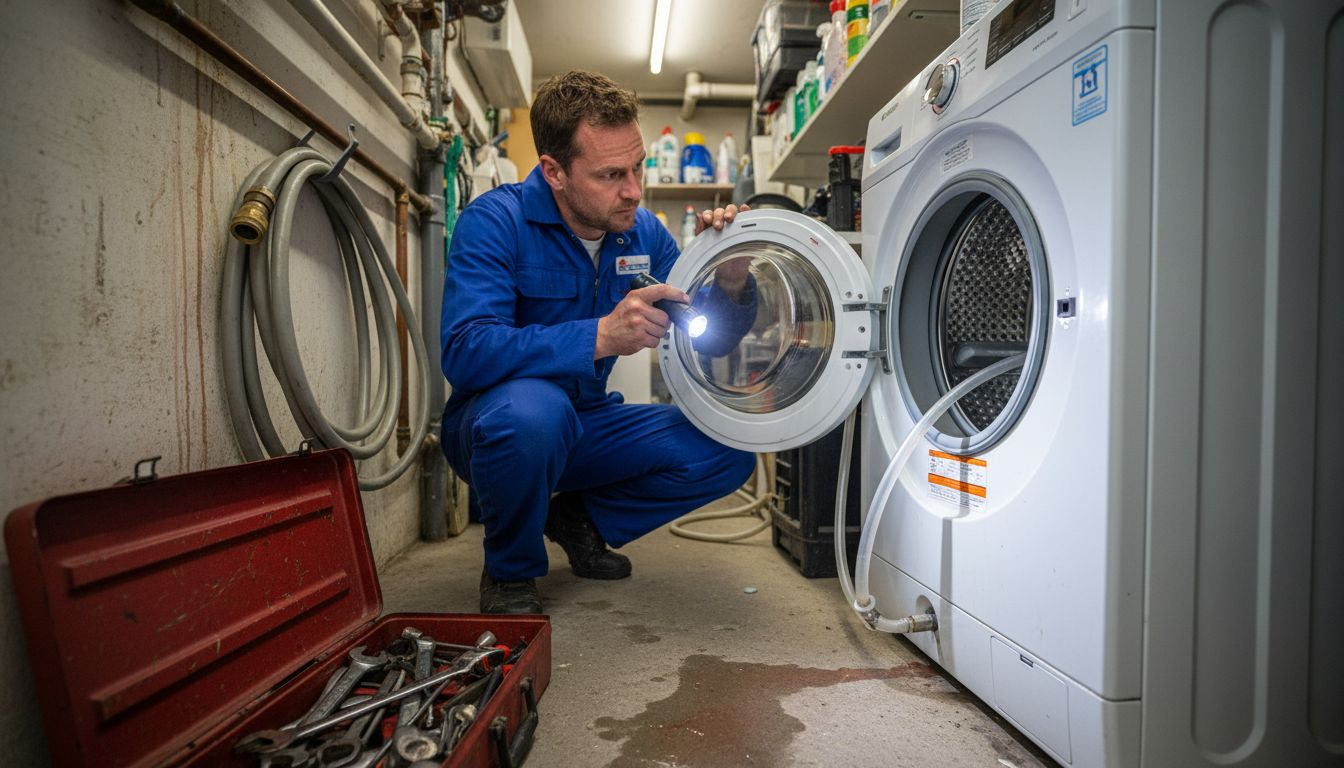
Pro tip: Periodically check the vinyl pressure tube for blockages or kinks to ensure accurate water level monitoring.
Causes of Overfilling in Modern Washers
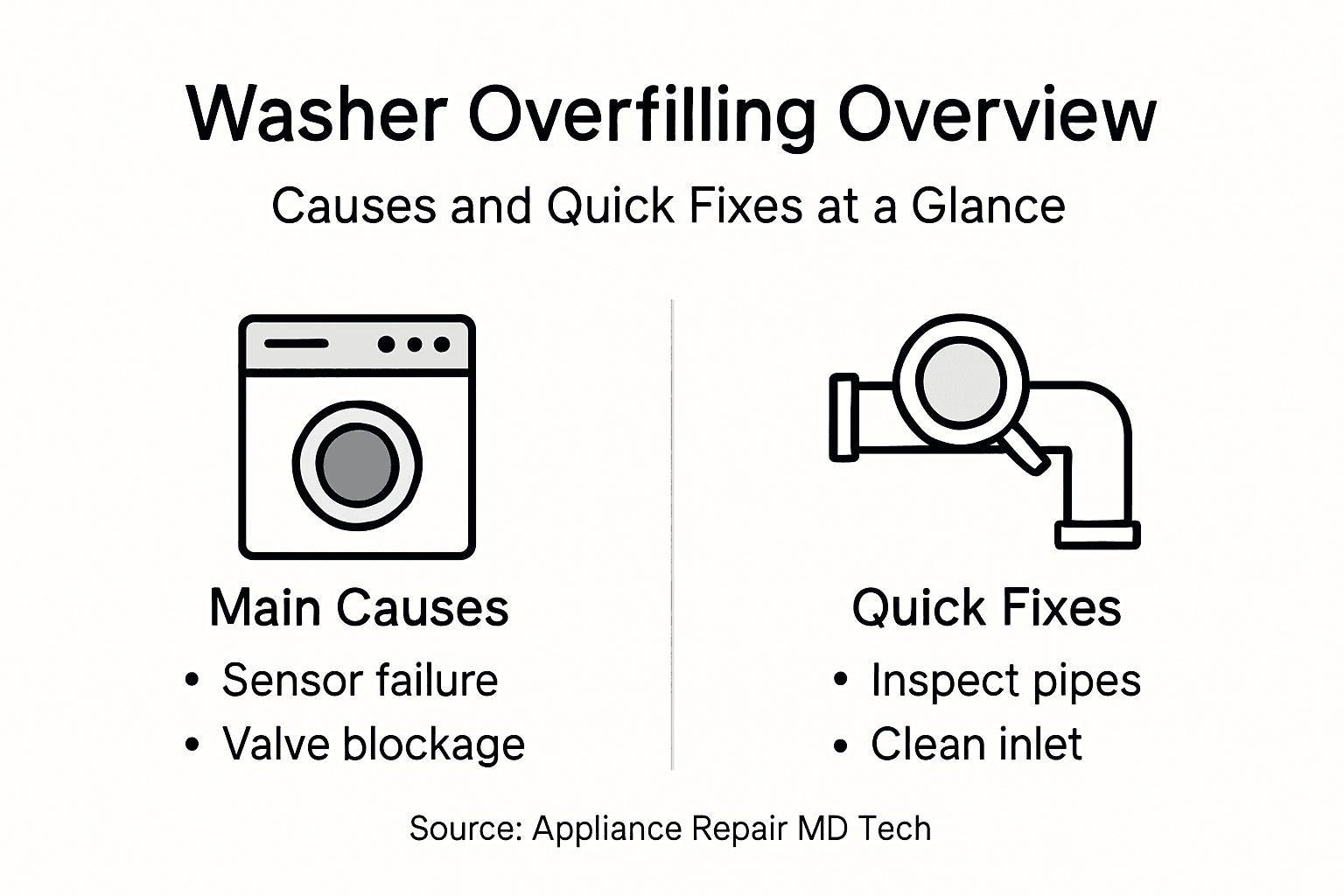
Modern washing machines, despite their advanced technology, can experience multiple complex issues leading to water overflow. Common washer overfilling causes reveal a range of technical malfunctions that disrupt proper water level management.
The primary mechanical and electronic components prone to overfilling include:
- Water Inlet Valves: Can become stuck in open position
- Pressure Switches: May provide incorrect water level readings
- Sensor Air Tubes: Might become clogged or damaged
- Control Board: Could send incorrect signals
- Calibration Mechanisms: Potentially miscalibrated
High-efficiency washer problems often stem from more nuanced technical issues. Siphoning problems caused by improperly positioned drain hoses can create unexpected water flow complications. Loose or damaged pressure switch air hoses represent another critical factor that interferes with accurate water level detection.
Overfilling is rarely a single-component failure, but typically a complex interaction of multiple system elements.
Technical diagnostics reveal that washer overfilling can result from cascading system failures. A seemingly minor issue like a slightly blocked sensor tube can trigger a chain reaction leading to significant water overflow. Understanding these intricate interactions helps homeowners diagnose and address potential problems before they escalate.
Pro tip: Conduct a quarterly inspection of your washer’s pressure tubes and inlet valves to catch potential overfilling risks early.
Warning Signs and Damage Risks of Overfilling
Washer overfilling represents more than a mere inconvenience – it’s a potential home disaster waiting to unfold. Washer overflow warning signs reveal a range of critical indicators that homeowners must recognize to prevent extensive damage.
The most prominent warning signs of washer overfilling include:
- Water Pooling: Liquid collecting around washer base
- Unusual Fill Cycles: Longer than normal water intake times
- Strange Mechanical Sounds: Irregular noises during filling
- Floor Dampness: Unexpected moisture near appliance
- Detergent Dilution: Noticeably weak cleaning performance
Potential water damage risks extend far beyond immediate visual indicators. Persistent moisture can trigger devastating consequences, including structural damage, mold growth, and electrical system compromises. Water seeping into subflooring, walls, and adjacent areas can create long-term repair challenges that far exceed the cost of a simple washer fix.
Unchecked washer overfilling can transform a minor mechanical issue into a catastrophic home repair scenario.
The financial implications of washer overfilling are significant. Damage can quickly escalate from simple floor moisture to comprehensive structural repairs, potentially costing homeowners thousands of dollars in restoration expenses. Electronic components, motors, and internal mechanical systems are particularly vulnerable to water exposure, making early detection crucial.
Here’s a comparison of key washer overfilling causes and their unique warning signs:
| Cause of Overfilling | Distinctive Warning Sign | Typical Repair Approach |
|---|---|---|
| Faulty inlet valve | Constant water flow | Replace the valve |
| Damaged pressure tube | Erratic water level detection | Clear or reconnect tubing |
| Sensor malfunction | Inconsistent filling cycles | Test and replace sensors |
| Misaligned drain hose | Unusual water backflow | Reposition or secure drain hose |
| Faulty control board | Random cycle interruptions | Professional board diagnostics |
Pro tip: Install a water leak detection sensor near your washer to provide an early warning system against potential overflow incidents.
DIY Steps and When to Call a Technician
Addressing washer overfilling requires a strategic approach that balances careful self-diagnosis with professional intervention. DIY diagnostic steps can help homeowners determine whether they can resolve the issue independently or need expert assistance.
Before attempting repairs, follow these critical DIY investigation steps:
- Unplug the washer completely
- Inspect pressure switch hose for blockages
- Check water inlet valve operation
- Test water level sensor functionality
- Verify drain hose positioning
Washer troubleshooting techniques suggest specific diagnostic protocols. Homeowners should use a multimeter to test sensor electrical continuity, carefully clean pressure tubes, and observe fill cycle behaviors. Complex electrical diagnostics or control board issues typically signal the need for professional intervention.
Professional technicians can quickly diagnose intricate washer system failures that exceed typical homeowner repair capabilities.
Technical complexity increases with modern washers, making some repairs risky for untrained individuals. Electrical component replacements, advanced sensor calibrations, and comprehensive system diagnostics require specialized knowledge and tools. Major warning signs demanding immediate professional attention include persistent overfilling despite DIY attempts, unusual electrical behaviors, or visible damage to internal components.
Pro tip: Always photograph and document your diagnostic steps before calling a technician to provide comprehensive context about the issue.
This table summarizes when DIY steps are sufficient and when to call a technician:
| Situation | DIY Actions Suitability | When to Call a Technician |
|---|---|---|
| Simple blockages | Usually safe | Not required unless persistent |
| Electrical or sensor issues | Risky for DIY | Required for safe, accurate repair |
| Obvious visible damage | Limited DIY fixes | Immediate professional service needed |
| Unresolved after DIY checks | Not recommended | Essential for advanced troubleshooting |
Protect Your Home from Washer Overfilling with Trusted Local Experts
Washer overfilling can lead to costly water damage and complex appliance failure. If you are facing issues like unusual water pooling, faulty inlet valves, or sensor malfunctions, you are not alone. Understanding the risks and warning signs is only the first step. For reliable and fast solutions, turn to professionals who specialize in diagnosing and fixing these exact problems.
Don’t wait for the next wash cycle to cause irreversible damage. At Appliance Repair MD Tech, our licensed technicians provide expert washer repairs in Orange County and Los Angeles County. Whether you need help with sensor calibrations, inlet valve replacement, or pressure tube inspections, we offer quick, dependable service ready to restore your washer’s performance. Visit our service page now to schedule your appointment and protect your home from washer overfilling today.
Frequently Asked Questions
What causes a washing machine to overfill?
Washer overfilling can occur due to several issues, including malfunctioning water inlet valves, faulty pressure switches, clogged sensor air tubes, and problems with the control board. These components work together to regulate water levels, and a failure in any part can lead to overfilling.
How can I detect if my washing machine is overfilling?
Warning signs of washer overfilling include water pooling around the washer, unusually long fill cycles, strange mechanical sounds during operation, dampness on the floor near the appliance, and poor cleaning performance due to diluted detergent.
What risks are associated with washer overfilling?
Overfilling can lead to significant water damage in your home, including mold growth, structural damage, and damage to electronic components of the washer. These issues can result in costly repairs and long-term problems if not addressed promptly.
What DIY steps can I take to fix washer overfilling?
To address washer overfilling, start by unplugging the appliance and inspecting the pressure switch hose for blockages. Check the functionality of the water inlet valve and water level sensors. Also, ensure that the drain hose is correctly positioned. If problems persist, consult a professional technician for further assistance.